Members of the Boys were born in Lower Silesian Voivodeship, Poland.
The Boys were teenage and child-Holocaust survivors, who were brought to the UK after the war for rest and rehabilitation.
Members of the Boys were held in Nazi labour and concentration camps and used as slave labourers. They had also survived World War II in hiding or as lone children.
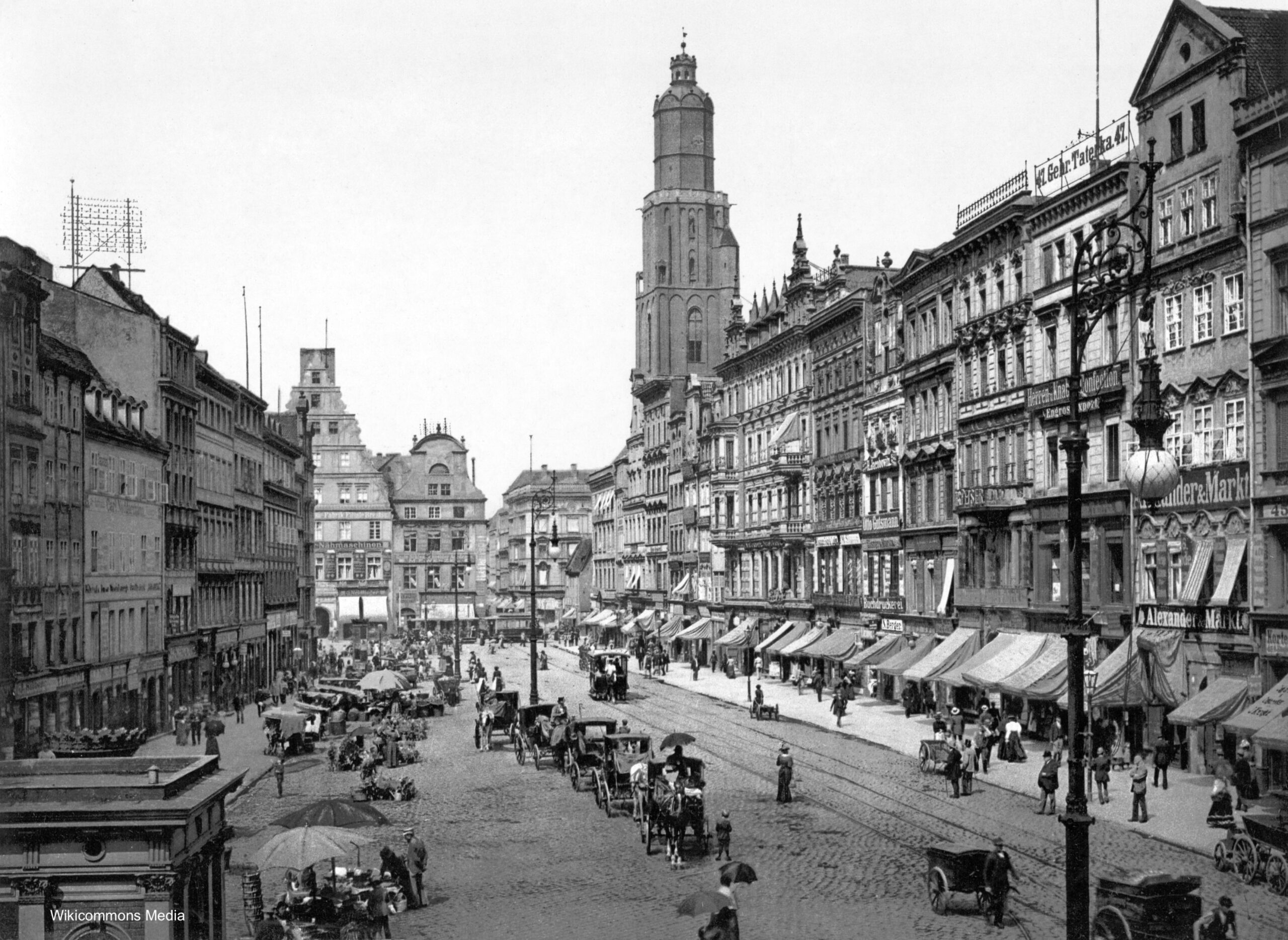
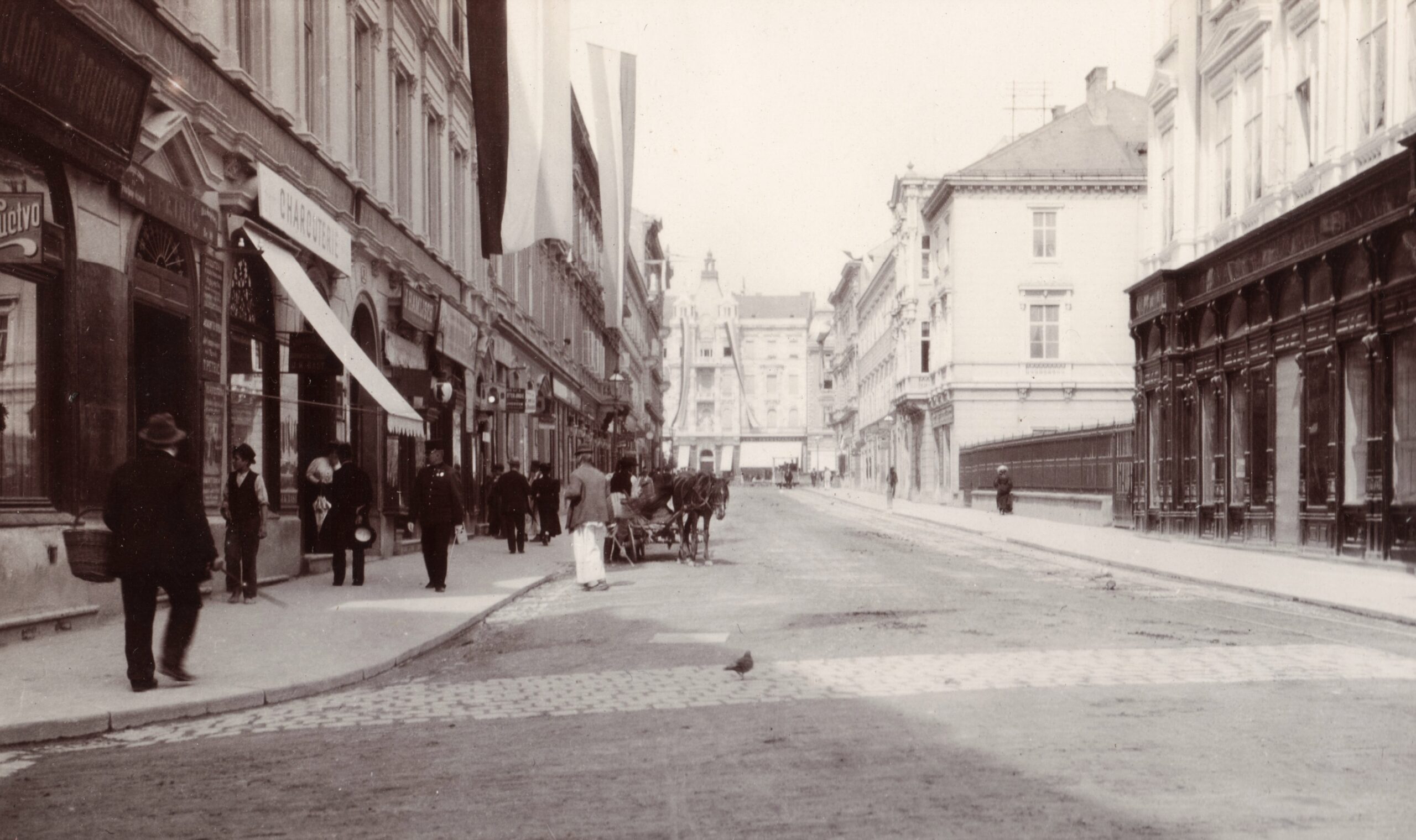
Breslau, Germany (now Wrocław, Poland), Ring Ostseite (1890-1900).
Lower Silesian Voivodeship is located in south-western Poland. Its modern-day capital is Wrocław, a city that was historically known as Breslau, home to members of the Boys.
To find out more about the history of Wrocław and its Jewish heritage click here.
The Lower Silesian Voivodeship was created on 1 January 1999 from the former Wrocław, Legnica, Wałbrzych, and Jelenia Góra Voivodeships.
Before the war, Lower Silesia was home to long-established Jewish communities. The region played a key part in the story of the Boys as it was home to many of concentration camps, notably Gross Rosen and subcamps of Auschwitz, in which they were held and was also the site of numerous death marches.
After 1945, Lower Silesia was incorporated into Poland and became a key resettlement area for survivors from across Eastern Europe. Wrocław, in particular, emerged as a post-war centre of Jewish life in Poland during the immediate aftermath of the Holocaust.
Visiting Lower Silesian Voivodeship
>
The point of entry is Wrocław. For details of how to get there click here.
The city is the best base for exploring the region and has many hotels.
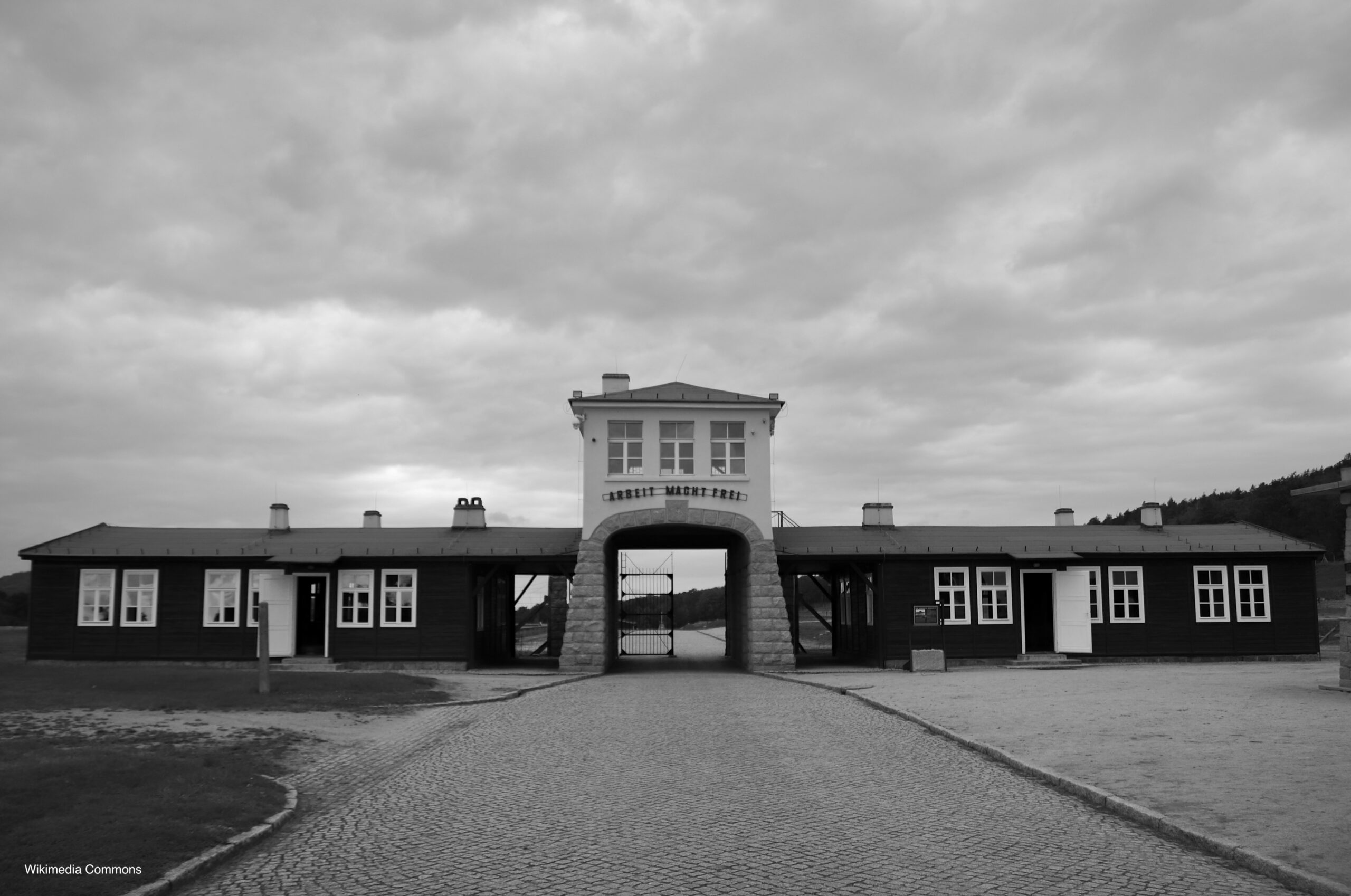
The main site of interest for the story of the Boys is the Gross Rosen concentration camp. Subcamps of Auschwitz where the Boys were held are also located in the region.
Visiting Gross Rosen
Muzeum Gross-Rosen (Muzeum Gross-Rosen w Rogoźnicy; Ofiar Gross Rosen; w gross-rosen.eu; free) Initially a satellite of Sachsenhausen, Gross Rosen became an independent camp in 1941. Until 1943, it held mostly Polish and German political prisoners, when 57,000 Jewish prisoners were imprisoned here. Prisoners worked in the granite quarry. It was also a destination for many of the death marches endured by the Boys.
The camp was evacuated in February 1945; some of the original buildings remain.
Note that Gross-Rosen and its subcamps are not easy to visit if you don’t have a car.
Members of the Boys were born in the Kuyavian-Pomeranian Voivodeship, Poland.
The Boys were teenage and child-Holocaust survivors, who were brought to the UK after the war for rest and rehabilitation.
Members of the Boys were held in Nazi labour and concentration camps and used as slave labourers. They had also survived World War II in hiding or as lone children.
Dolina, Poland.
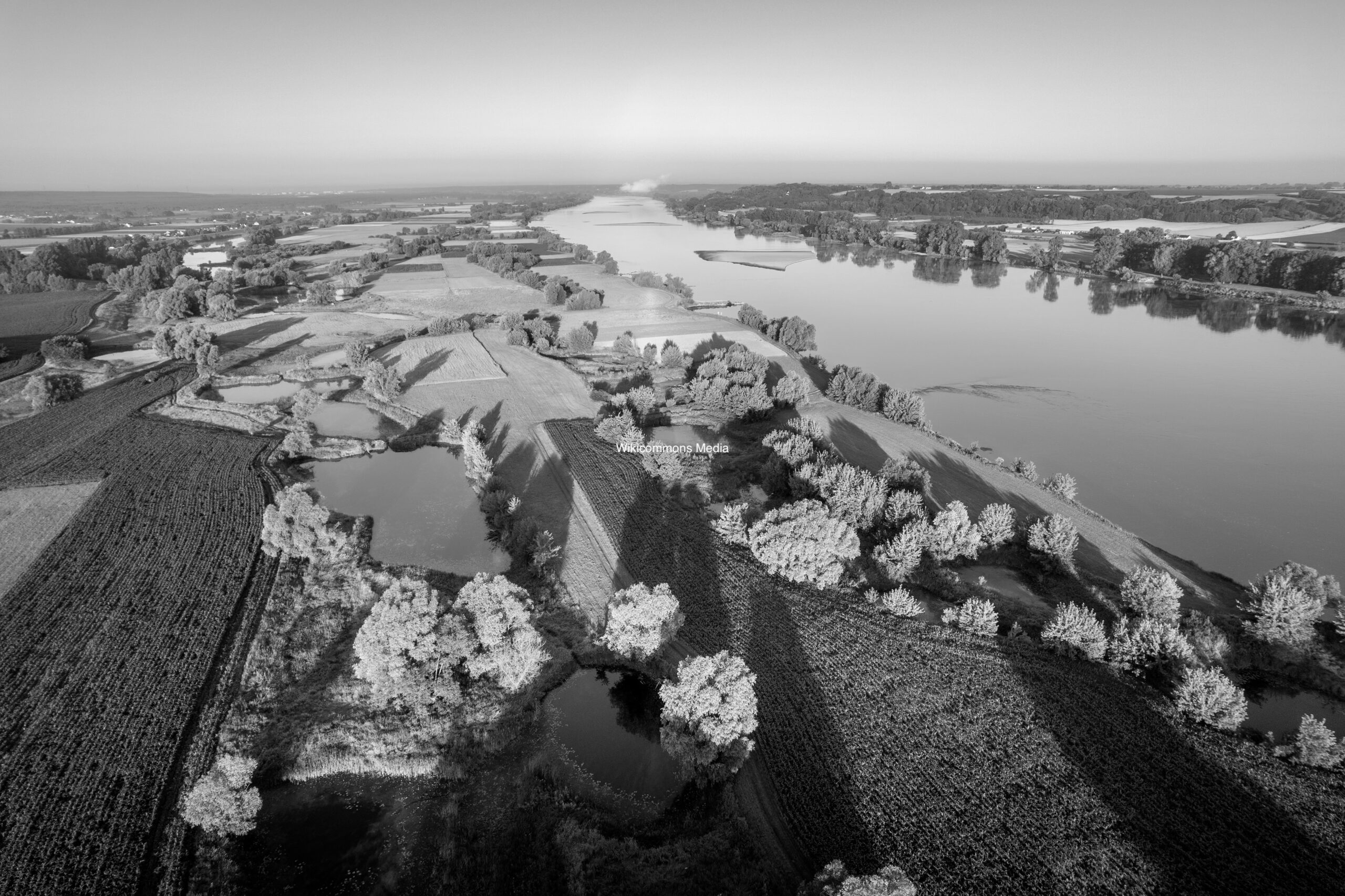
The Kuyavian-Pomeranian Voivodeship is located in north-central Poland. It has two capitals: Bydgoszcz and Toruń.
Wartime
Following the German invasion in 1939, the region was annexed directly into the Third Reich and incorporated into the Reichsgau Danzig-West Prussia.
The Jewish population was subjected to immediate persecution, including arrests, forced expulsions, and the destruction of communal institutions. Many were deported to ghettos in the General Government or sent directly to the extermination camps of Chełmno and Auschwitz-Birkenau, with many passing through the Łódź Ghetto.
Aftermath
After the war, few Jewish survivors returned to the area, and most of the region’s pre-war Jewish life was not re-established.
Visiting Kuyavian-Pomeranian Voivodeship
>
Getting there Fly to Bydgoszcz or take the train from Warsaw or Poznań.
Bydgoszcz In the home of Herman Rosenblat, a stone commemorates the Jewish community. It was unveiled in 2012 at the site of the former synagogue (Jan Kazimierz ul), which was burned down in 1939.
Chodecz There is little left to see of the Jewish heritage in Roman Halter’s hometown.
What to read
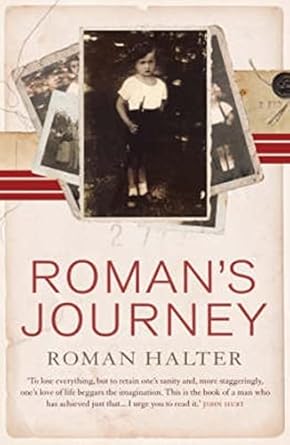
Roman’s Journey (Granta, 2007) Roman Halter. Roman Halter was one of the Boys. He was a celebrated architect and artist. He designed the gates to Israel’s holocaust memorial, Yad Vashem, and his paintings, testifying to his experiences during WW2, have been shown widely, including at Tate Britain. to find out more about the book click here.
Members of the Boys were born in the Subcarpathian Voivodeship in Poland.
The Boys were teenage and child-Holocaust survivors, who were brought to the UK after the war for rest and rehabilitation.
Members of the Boys were held in Nazi labour and concentration camps and used as slave labourers. They had also survived World War II in hiding or as lone children.
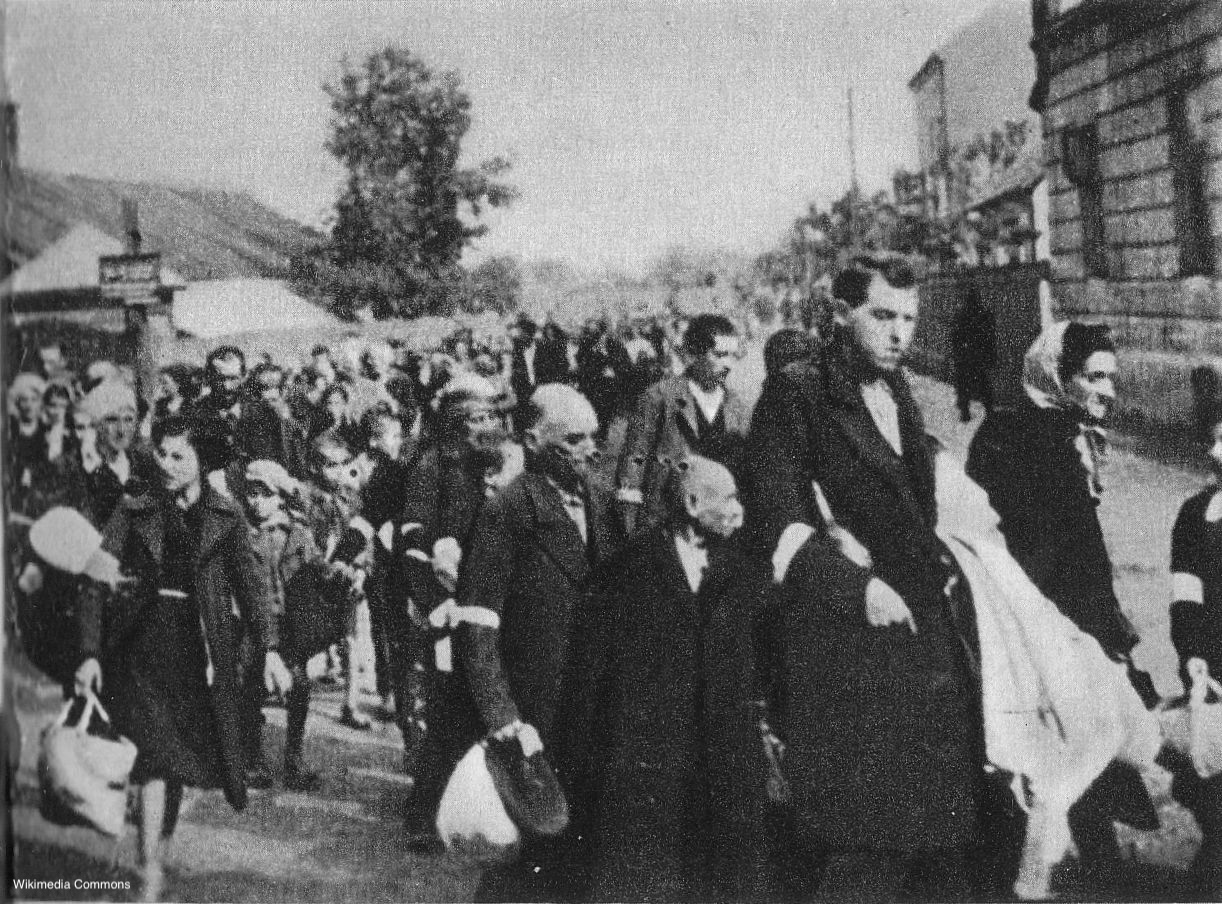
Deportation of Jews from Rzeszów Ghetto in 1942.
The Subcarpathian Voivodeship is located in south-eastern Poland. Its main city is Rzeszów. Other major towns include Przemyśl, Krosno, Jarosław, and Leżajsk. The Subcarpathian Voivodeship was created on 1 January 1999 out of the former Rzeszów, Przemyśl, Krosno, Tarnów and Tarnobrzeg Voivodeships.
Besides the Boys who grew up in the region many of the Boys were interned in the local ghettos and endured slave labour in the Nazi camps set up in the region.
Interwar Years
The Subcarpathian Voivodeship had a significant Jewish population prior to World War II. Jewish communities existed in various towns and cities within the Voivodeship, with some towns having Jewish populations as high as 55.6% of the total. These communities had their own synagogues, schools, and other institutions. Some notable towns with Jewish communities included Przemyśl, Jarosław, Jasło, and Rzeszów.
During the interwar period, the region under went a massive program of industrialisation, and was known as the Central Industrial Region. The program created several major armament factories, including PZL Mielec, PZL Rzeszów, Huta Stalowa Wola, and factories in other Subcarpathian towns such as Dębica, Nowa Dęba, Sanok, Tarnobrzeg and Nowa Sarzyna.
Wartime
Following the joint German-Soviet invasion of Poland, most of the current province was occupied by Nazi Germany with the eastern outskirts occupied by the Soviet Union. The city of Przemyśl divided between the occupiers until 1941. The entire region was then occupied by Germany until 1944.
The area occupied by Nazi Germany was incorporated into the General Government. The armaments factories were used for the German war effort and staffed by forced and slave labourers.
Jewish communities across the region faced persecution, ghettoisation, forced labour, and deportation to extermination camps. Many were sent to Bełżec and Auschwitz.
Aftermath
While some Jews returned after the war, most did not. There was considerable antisemitism in the region in the aftermath of the Holocaust and anti Jewish riots, notably in Rzeszów.
Visiting Subcarpathian Voivodeship
>
Getting there Rzeszow has an international airport and there are good train services to Kraków. To explore the region it helps to have a car.
There are traces of the region’s Jewish heritage in the following Boys’ hometowns:
Bircza
Jewish Cemetery Located near the local cemetery, the Jewish cemetery contains graves dating back to 1804.
Dukla
Synagogue Built in 1758, the Baroque-style synagogue was burned by the Nazis in 1940. It was listed as a monument in 1989 and its ruins are a major focal point of Jewish heritage in the town.
Jewish Cemetery (Kirkut) Located in the southern part of town, this site consists of an older section (18th century) and a newer section (1870).
Przemysl
New Synagogue (Jagiellońska Street) Built in the 1890s in a stunning Moorish Revival style. It was heavily damaged during the war and now serves as a library.
Jewish Cemeteries Two cemeteries exist, which serve as memorial sites for the community, including victims of the Holocaust (between Wandy Street and Rakoczego Street) and (Słowacki Street).
Ghetto Location (Kopernika Street) The area around the former ghetto, which witnessed the tragic deportation of over 9,850 Jews to the Bełżec extermination camp in 1942, is marked by memorial plaques.
Rzeszow
Old Town Synagogue (Staromiejska) Located near the market square, this 17th-century synagogue, despite being burned and damaged by the Nazis, has been restored and now serves as a community centre.
New Synagogue (Nowomiejska) Built in the 18th century, it was used by the Nazis as a warehouse but has since been restored.
Ghetto Location The Ghetto area was centred around the Market Square and Baldachówka Street
Zmigrod Nowy
Jewish Cemetery (Jasielska Street) Dating back to the turn of the 16th and 17th centuries, it holds approximately 250 surviving tombstones, some dating back to 1742. A monument was erected in 2012 to honour the Holocaust victims buried in a mass grave at the site.
Halbów Forest Monument A memorial marks the mass grave of 1,250 Jewish men, women, and children murdered by the Nazis on 7 July 1942, among them the family of Chaim Kohn.
Members of the Boys were born in Praska in Poland.
The Boys were teenage and child-Holocaust survivors, who were brought to the UK after the war for rest and rehabilitation.
Members of the Boys were held in Nazi labour and concentration camps and used as slave labourers. They had also survived World War II in hiding or as lone children.
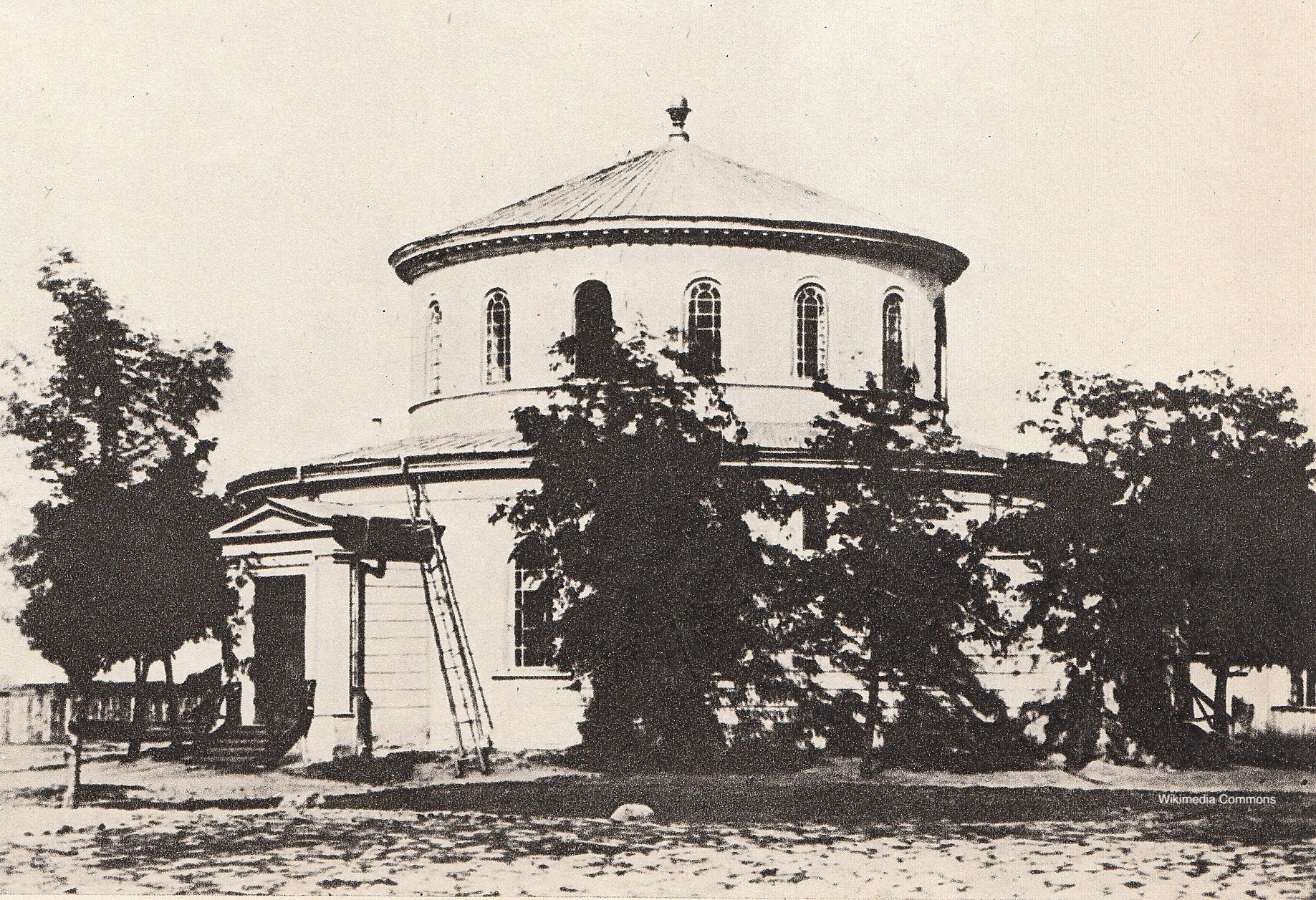
Praszka synagogue before World War II.
Praszka is in southern Poland. According to the 1921 census, the town had a population of 4,478, a third of whom were Jewish.
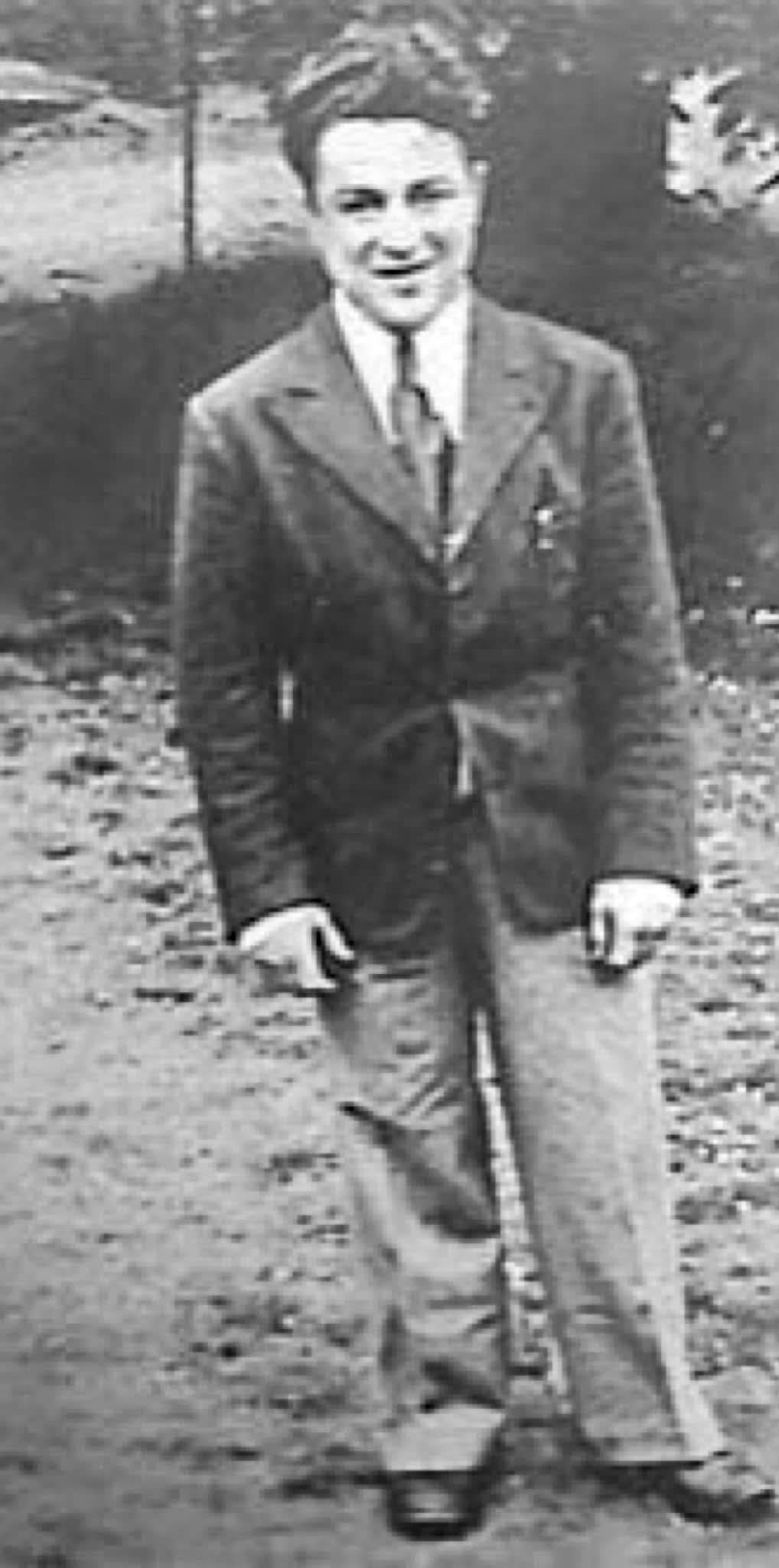
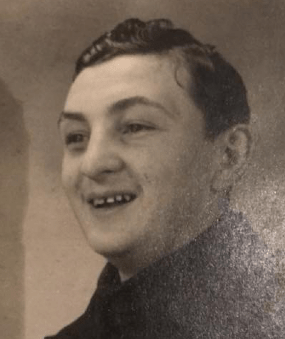
Josef NeumarkJerzy Poznanski.Artek-Poznanski
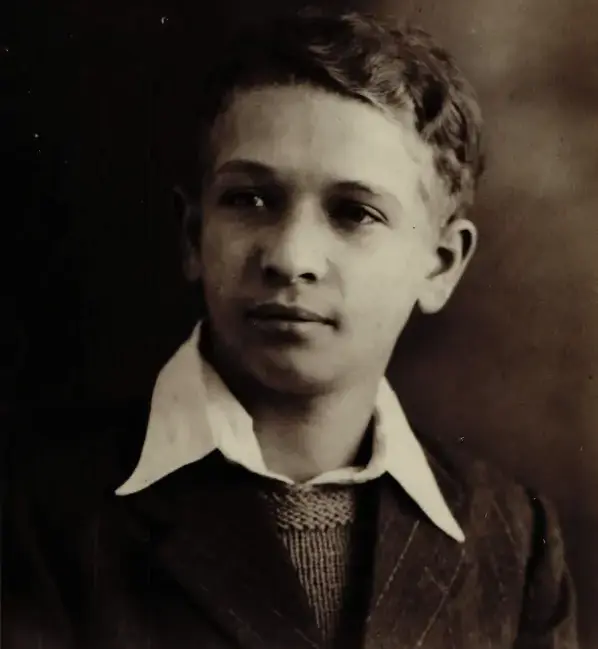
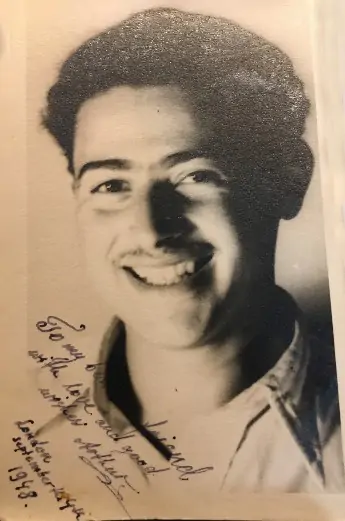
The Boys from Praszka. These photographs were taken after World War II.
In September 1939, Praska was occupied by Germany. The Jewish population were forced into a ghetto, and then murdered. Most were deported to the Chełmno extermination camp where they were immediately gassed. Others were murdered in the town or at the Jewish cemetery. To find out more about the Praszka Ghetto click here.
Only about 10 of Praszka’s pre-war Jewish population is thought to have survived the war.
Visiting Praszka
>
Getting there To get to Praszka take the bus from Częstochowa or Wieluń.
What to See
Synagogue (27 Piłsudskiego Street) The synagogue was built around 1850 in a Neo-Classical style. It was reconstructed in 1964 and remains one of the two primary Jewish heritage sites preserved in the town. Jewish Cemetery (Wyszyńskiego Street) The cemetery covers approximately 1.25 hectares. Although destroyed during WWII, it contains a commemorative stone plaque (erected in 1993) marking a mass grave of Jews murdered during the ghetto’s liquidation in August 1942.
Members of the Boys were born in Miskolc in Hungary and the surrounding Borsod-Abaúj-Zemplén County.
The Boys were teenage and child-Holocaust survivors, who were brought to the UK after the war for rest and rehabilitation.
Members of the Boys were held in Nazi labour and concentration camps and used as slave labourers. They had also survived World War II in hiding or as lone children.
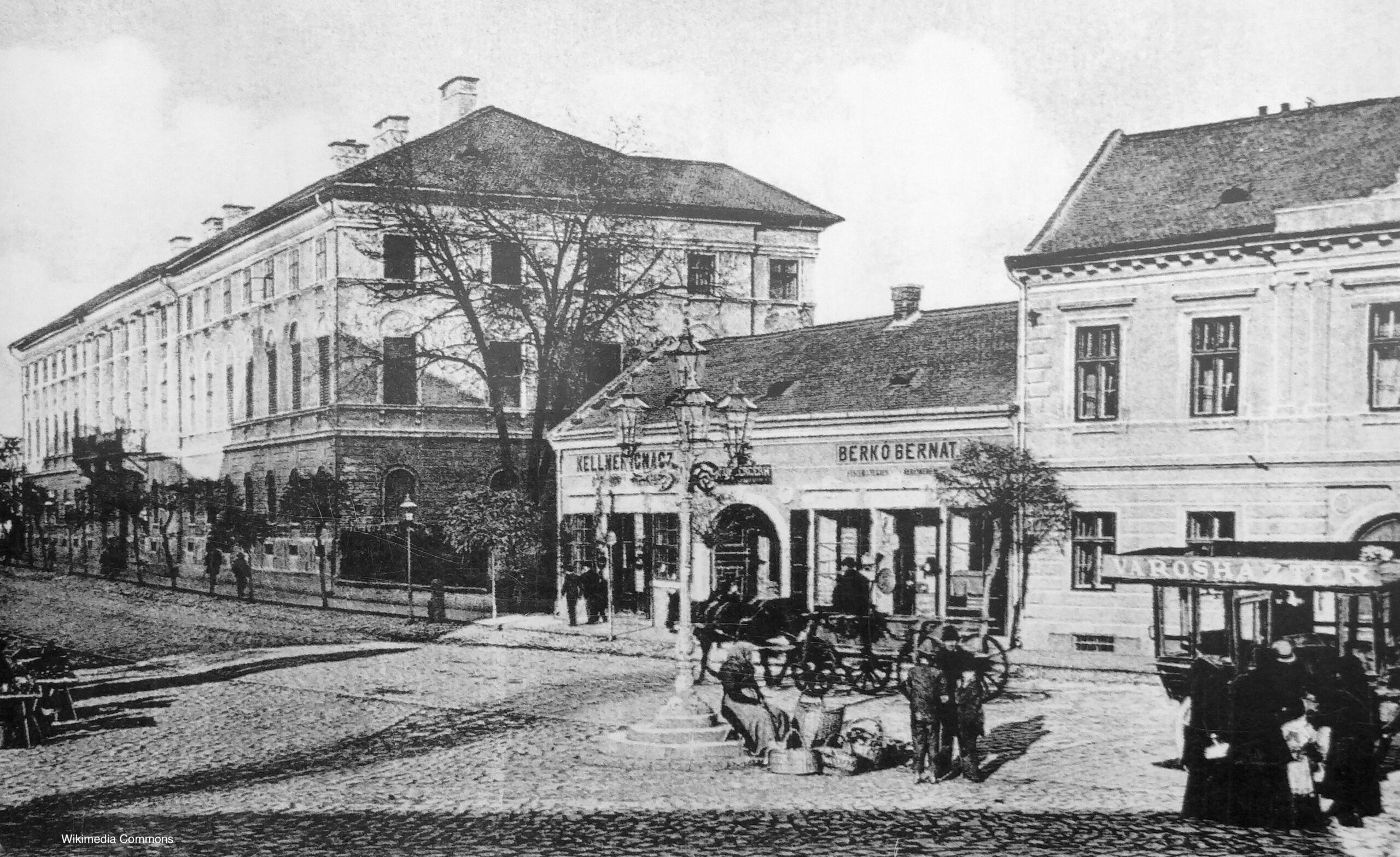
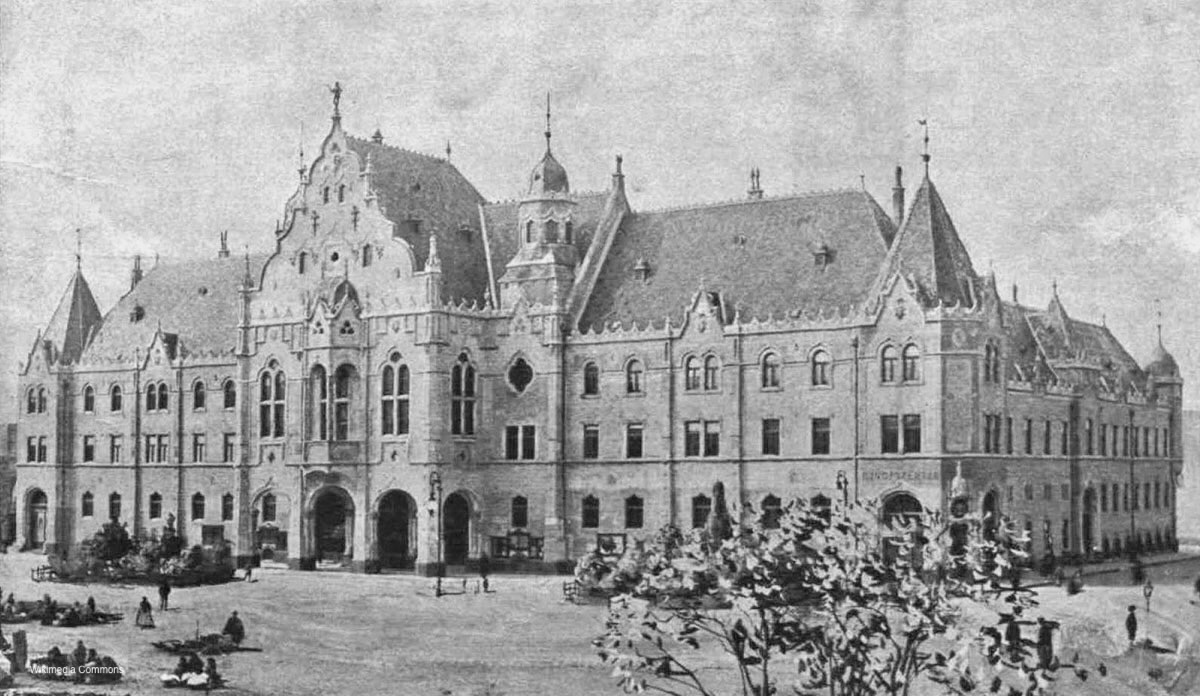
Városház Square, Miskolc, 1897.
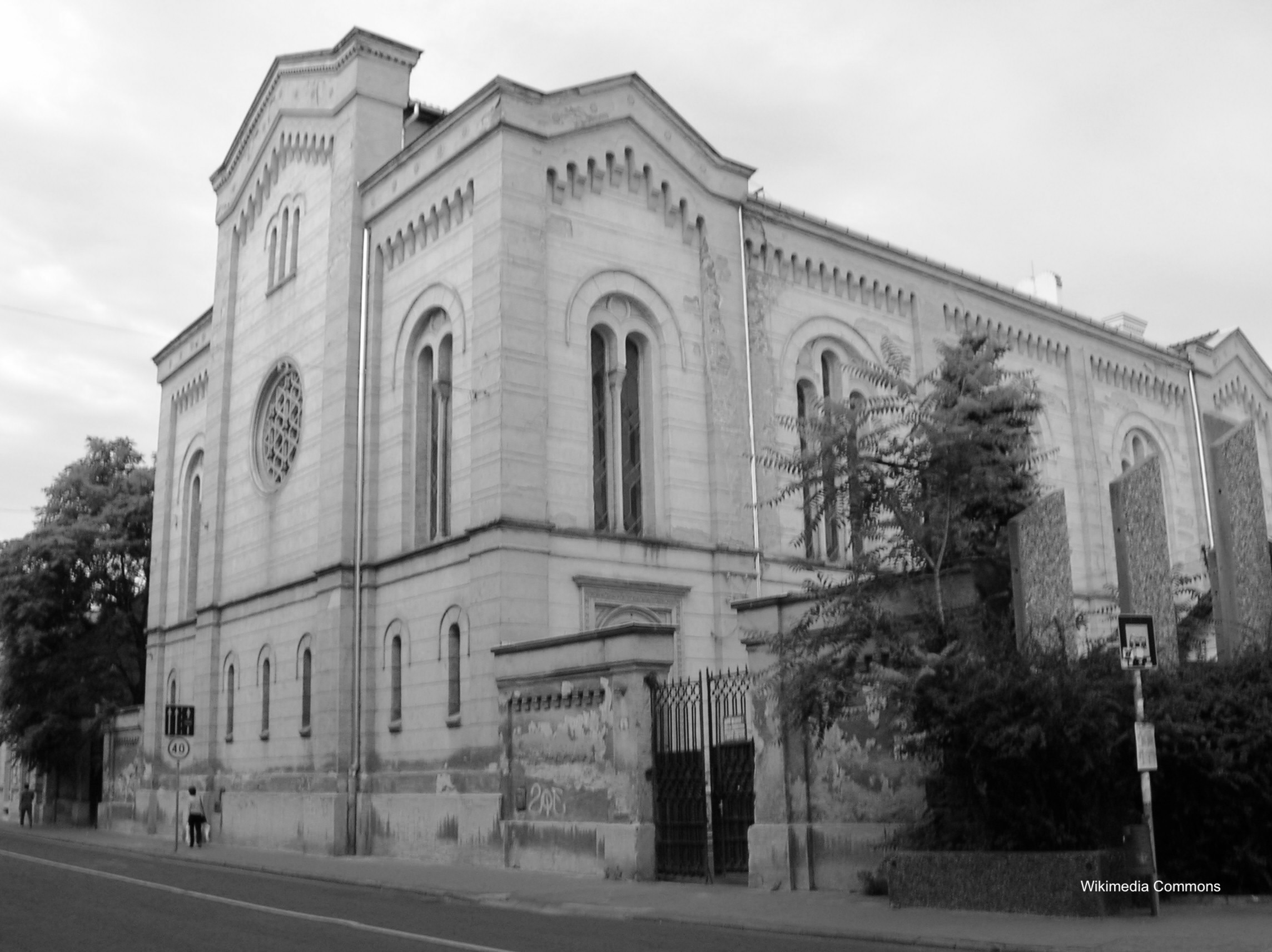
Miskolc is in northeastern Hungary. Jews settled in Miskolc in the 18th century. The Great Synagogue was built in 1861. It was home to three of the Boys. Magda Bloom was born in Nagyrozvagy. For more about Bodrogkeresztúr click here.
Over the course of time, the percentage of Jews of the general population became the highest in Hungary (around 20%), numbering 1,096 in 1840, 3,412 in 1857; 4,117 in 1880, 10,029 in 1910, and 11,300 in 1920.
Deportation
After the German occupation of Hungary in March 1944, the Jews of the town, about 10,000 in number, were deported to the Auschwitz extermination and concentration camp; only 400 of them survived. To find out more about the camp click here.
After the liberation, Miskolc became an important transit centre for those who returned from the concentration camps.
Aftermath
The reconstituted community had 2,353 members in 1946 but dropped to around 300 in the 1970s as most left for Israel.
Visiting Miskolc and Borsod–Abaúj–Zemplén County
>
Getting there The trains going through northern Hungary all stop in Miskolc.
Good to Know Miskolc is a key stop on the Hungarian Jewish Heritage Route in Eastern Hungary, an EU-funded initiative.
Miskolc
Synagogue
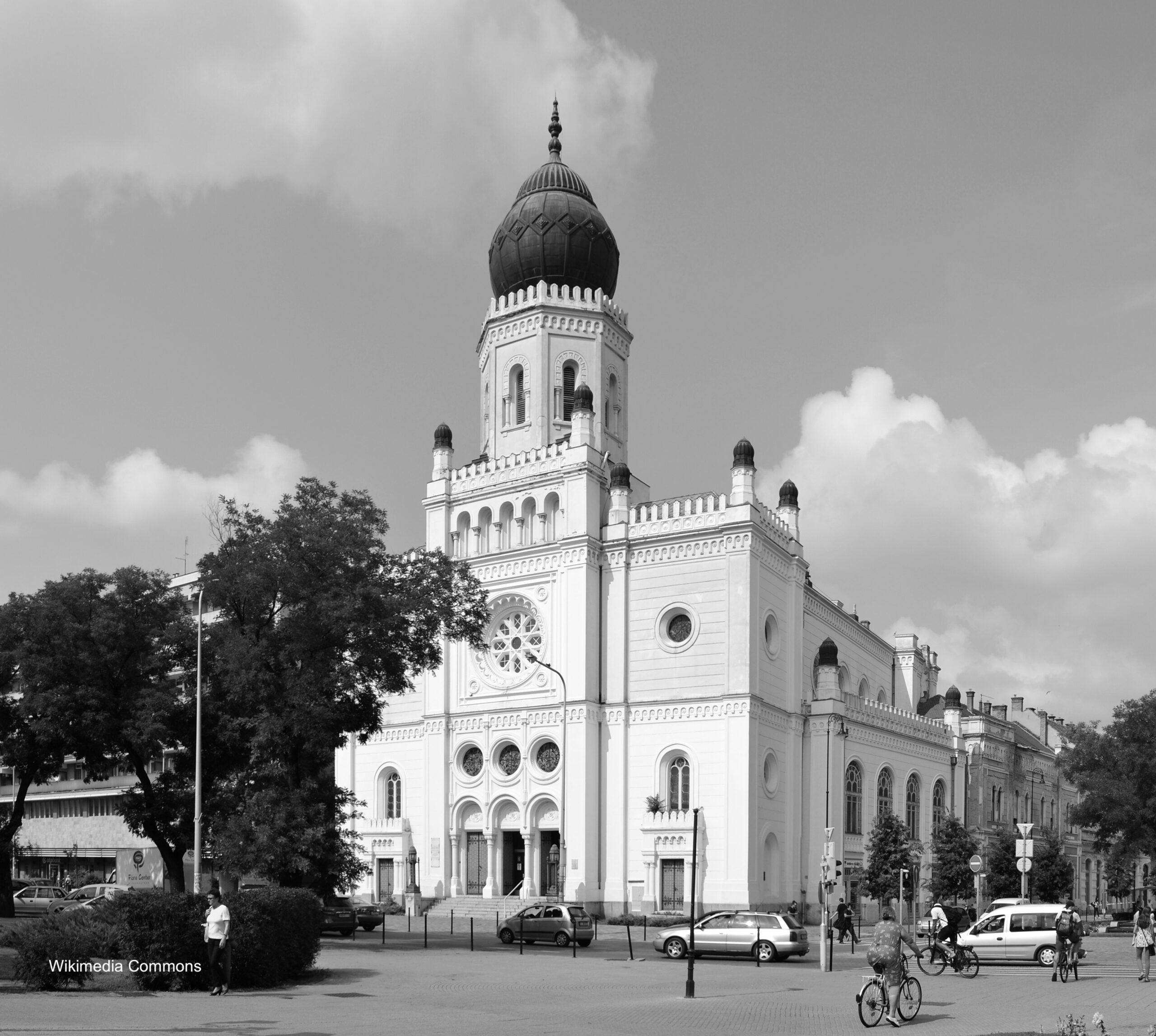
Kazinczy Street Synagogue (Great Synagogue) This is the only functioning synagogue in the region. Designed by Ludwig Förster (who also designed Budapest’s Dohány Street Synagogue), it features a unique blend of Neo-Romanesque and Neo-Moorish styles. The synagogue was rededicated in 2025 following extensive renovations. It houses marble tablets commemorating the over 10,000 local Jews murdered in the Holocaust.
Cemetery Jewish Cemetery (Avas Hill) One of the most significant Jewish burial grounds in Hungary, with gravestones dating back to the mid-18th century. It includes a major Holocaust Memorial
designed by survivors in the immediate post-war period.
Memorial
Ghetto Memorial (János Arany Street) A commemorative plaque marks the location of the former ghetto where Jews were concentrated before deportation in 1944.
Nagyrozvagy In the home of Magda Bloom there is no trace of the Jewish community she grew up in.
Members of the Boys were born in Košice in Czechoslovakia.
The Boys were teenage and child-Holocaust survivors, who were brought to the UK after the war for rest and rehabilitation.
Members of the Boys were held in Nazi labour and concentration camps and used as slave labourers. They had also survived World War II in hiding or as lone children.
Košice Synagogue, Slovakia.
The capital of eastern Slovakia, Košice is a large industrial city of 250,000 inhabitants. Its l`rge Jewish community was almost totally annihilated during World War II. The city is now home to 800 Jews.
The first Jews settled in Košice in 1843 yet they have lived in the Slovakian region since the 11th century.
Prior to Word War II, 11,500 Jews lived in Košice, making up 16.4% of the city’s total population.
The Story of the Boys’ Families: The Friedmann Family
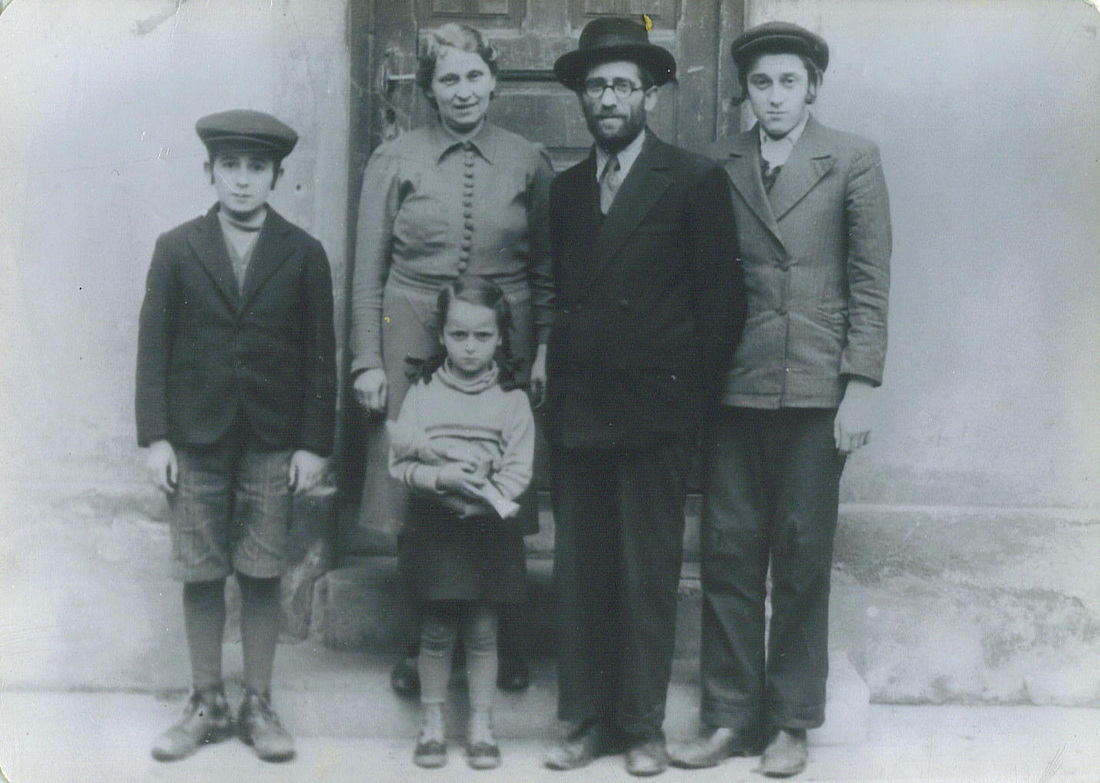
The Friedmann family lived in Košice. Anton and Magda Friedmann had three children Alexander (b. 1929), Avrom (b. 1925) and Rachel (b. 1935).
The family were imprisoned in the Košice Ghetto before being deported to Auschwitz. Alexander Friedmann survived the Holocaust and became one of the Boys. To find out more about his life click here.
Wartime
Slovakia proclaimed its independence in March 1939. The first anti-Jewish law was passed in Slovakia in April of that year. A few days later, Jews were excluded from all government positions and service. By 19 September 1939, all Jews were expelled from the military.
By 1940, over 6,000 Jews had emigrated either legally or illegally. On 9 September 1941, Jews were met with a proclamation of 270 articles, including having to wear a yellow armband with a Star of David, and forced labour camps. Soon after they began being sent to concentration camps. By 1942, nearly three-quarters of all Slovakian Jewry had been murdered.
Košice played an important part in lives of members of the Boys after the liberation, when the city became a hub for Jewish survivors.
Aftermath
Košice was liberated on 19 January 1945 by Czechoslovak and Soviet forces. Until the liberation of Prague in May 1945, it was the seat of the new Czechoslovak government and all the countries principal organisations. Jewish groups across a broad spectrum of political and religious affiliations also made Košice their Slovak headquarters. To find out more about the role played by the Jewish community in Košice in the lives of the Boys after the liberation click here.
In 1947, there were 2,542 Jews in Košice registered at the synagogue but there were many more survivors in the city who had not done so. After the foundation of the state of Israel and the communist takeover the Jewish population declined considerably.
Present-day
Košice has a small active Jewish community.
Visiting Košice
>
Getting there Slovakia’s second-largest city, is as a major transport hub for the eastern part of the country with excellent air, road and rail connections.
What to see
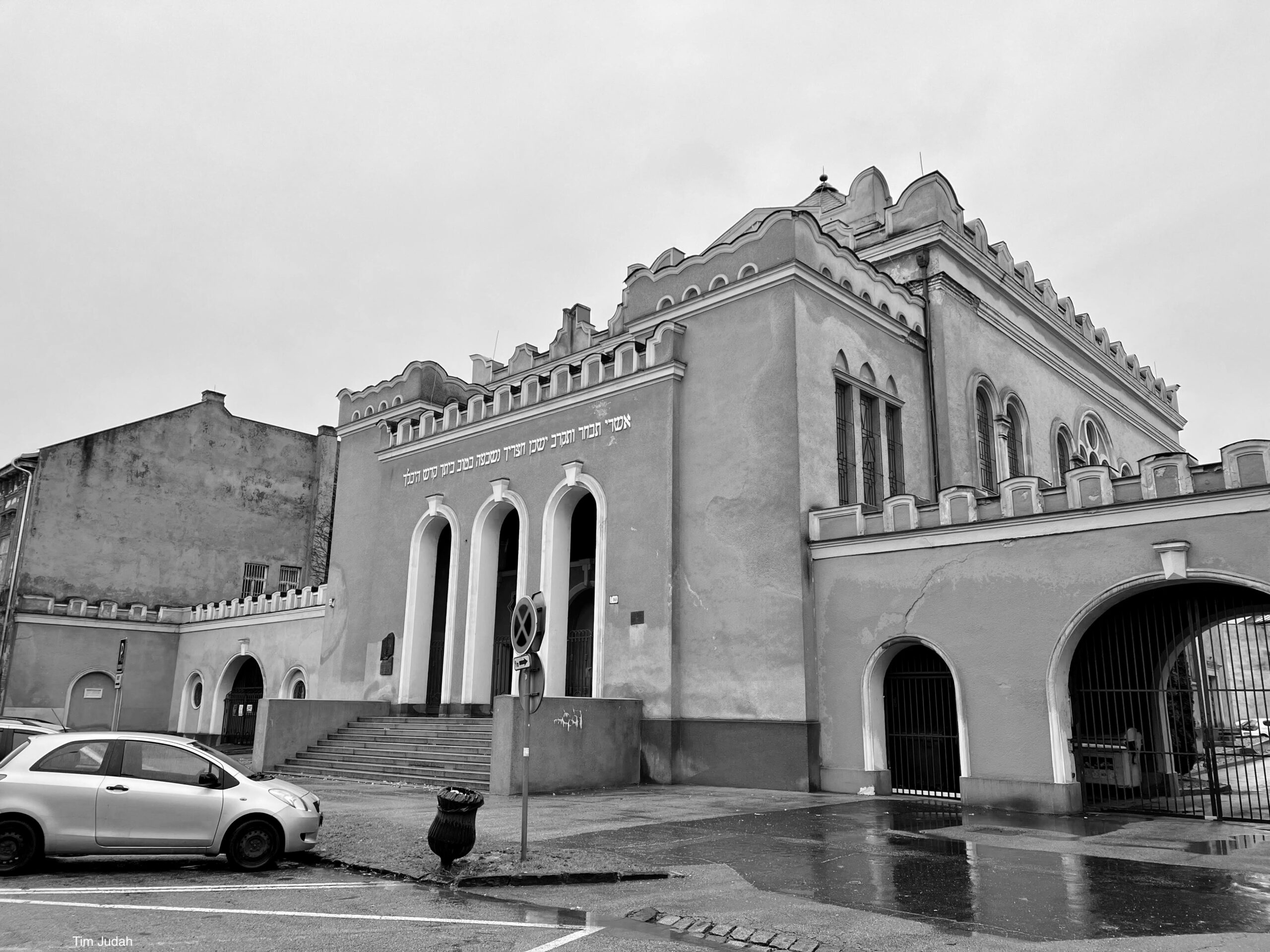
Orthodox Synagogue (Puškinova Street) Built in 1927, this modern urban synagogue features Byzantine and Moorish architectural influences. It remains an active house of worship and houses the Ľudovít Feld Cultural Centre. Orthodox Jewish Compound (Zvonárska Street) This historic site includes an 1899 Moorish-style synagogue, a mikveh (ritual bath) from the mid-19th century, community offices, and a small prayer hall still used for regular services. Former Neolog Synagogue (Moyzesova Street) Known for its massive dome reminiscent of the Pantheon, this 1927 masterpiece was converted into the House of Art in the 1950s and now serves as the seat of the State Philharmonic Orchestra. Jewish Cemetery (Rastislavova Street) One of the largest Jewish cemeteries in Slovakia, it includes both Orthodox and Neolog sections. It features a Holocaust memorial made from the Star of David that originally topped the Neolog synagogue’s dome.
Members of the Boys were born in Novogródek in Poland, now Navahrudak, Belarus.
The Boys were teenage and child-Holocaust survivors, who were brought to the UK after the war for rest and rehabilitation.
Members of the Boys were held in Nazi labour and concentration camps and used as slave labourers. They had also survived World War II in hiding or as lone children.
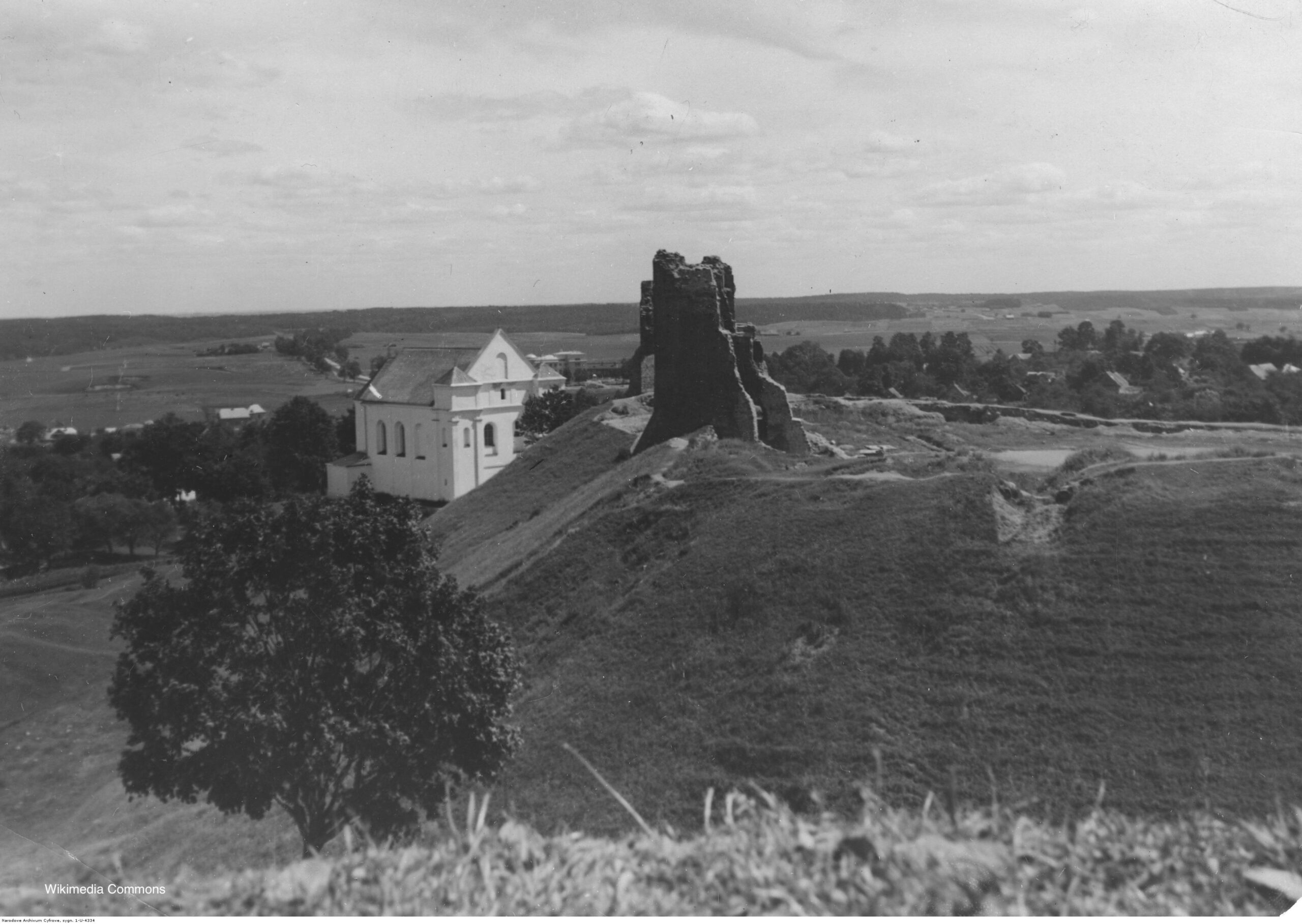
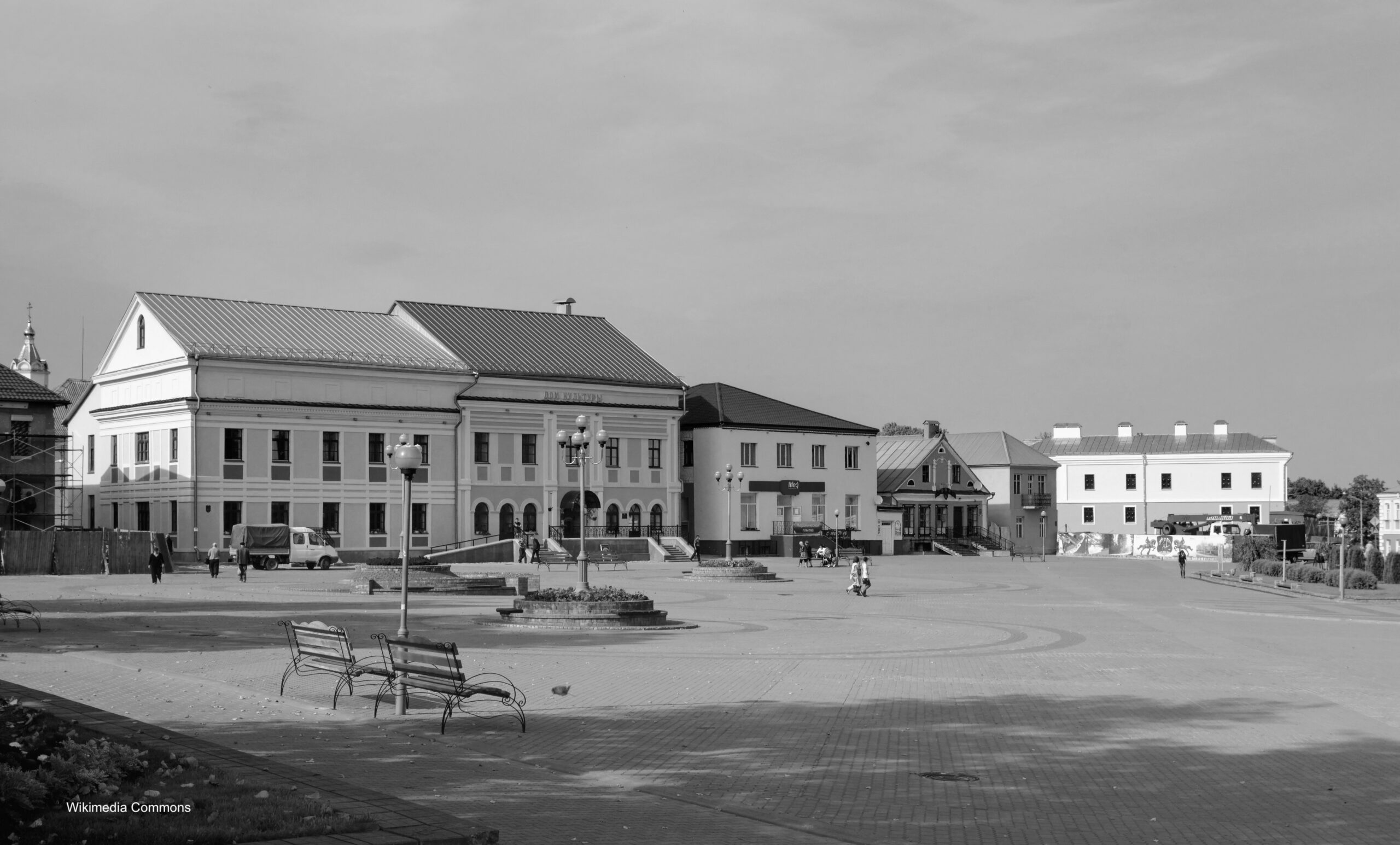
Novogradok, Belarus.
Jews settled in Novogrudek in the 16th century and the community numbered over 6,000 in 1931. In 1941, half of Novogrudek’s population were Jewish. In September 1939, under the Ribbentrop-Molotov Pact, Novogrudek was absorbed into the Soviet Union. During this period many Jewish refugees took refuge in the town.
The vast majority of Jews who lived in the area were murdered between July 1941 and May 1943. There was a significant Jewish partisan movement in the area.
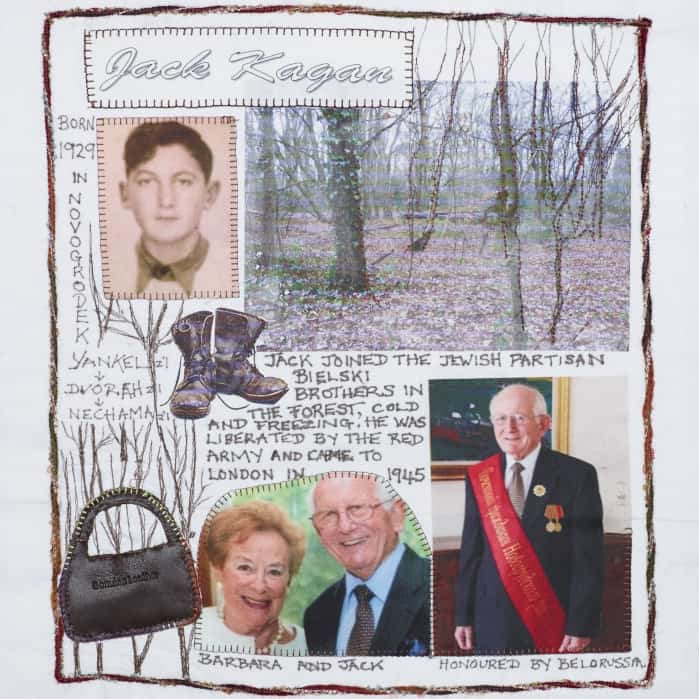
Today, there is no Jewish community in Navahrudak but there are some important Holocaust sites. Remembrance in the area was driven by the Boys’ Jack Kagan.
Visiting Navahrudak
>
Getting there
Owing to the current political situation and ongoing war in Ukraine, it is necessary to check the most up-to-date information on which border crossings are open. Normally, there are trains from Warsaw to Minsk and good international connections by air to Minsk.
Buses run from Navahrudak to Minsk via Mir. To see the Naliboki Forest, you need your own transport.
Navahrudak, Belarus
Jewish Resistance Museum in Navahrudak (Музей еврейского сопротивления на Новогрудчине; 68/5 ul. Minskaya; entry fee) This museum, which opened in 2007, tells the story of the mass escape from the Korelicka labour camp and the remarkable rescue operation run by the Bielski Brothers. The exhibition is housed in the original barracks where the prisoners dug their 200m-long escape tunnel and includes a reconstruction of the interior living spaces, the entrance to the tunnel and a series of outdoor memorials.
The museum was created with the support of Jack Kagan, one of the Boys, who was a former prisoner in the Navahrudak Ghetto and a Bielski partisan.
Memorials
Kagan also financed and organised the construction of several monuments in and around Navahrudak, replacing Soviet memorials that did not mention that the victims were Jewish.
On the P10 highway that heads southwest from Navahrudak, a monument commemorates the 18,000 citizens killed by the Germans, among them 5,100 Jews, who were shot in December 1941 by Germans and Lithuanian collaborators behind the military barracks in Skrydlevo.
On the P5 that leads north to Vselyub from Navahrudak, another memorial, inaugurated in 2022, marks the site of the former home of František and Františka Bobrovský. The couple were murdered by the Nazis for helping Jews. The monument is dedicated to the 11 families of Navahrudak and the region’s residents who have been awarded the title of Righteous Among the Nations.
Further along the P5 near the village of Litovka, a memorial remembers 4,000 Jews shot here by Estonian police in August 1942 and a further 500 Jews who were also shot here in February 1943, during the liquidation of the Navahrudak Ghetto.
On the P11 road that heads east out of Navahrudak in the direction of Selets, just past the petrol station, there is a memorial on the mass grave where in May 1943 more than 250 Jews from the Korelicka labour camp were murdered.
What to read
>
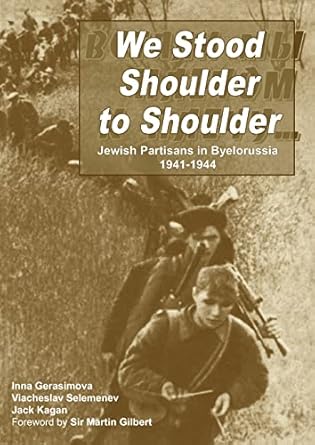
We Stood Shoulder to Shoulder (2010) Jack Kagan Kagan fought with the Jewish partisans and was one of the Boys. To find out more about the book click here.
Surviving the Holocaust With the Russian Jewish Partisans (2023) Dov Cohen and Jack Kagan Two cousins relate their experiences with Bielski’s partisan brigade in war-torn Russia World War II. To find out more about the book click here.
Members of the Boys were born in Bács-Kiscun County in Hungary.
The Boys were teenage and child-Holocaust survivors, who were brought to the UK after the war for rest and rehabilitation.
Members of the Boys were held in Nazi labour and concentration camps and used as slave labourers. They had also survived World War II in hiding or as lone children.
Old Photograph of the town hall in Kecskemét, Hungary.
Jews settled in the area in the 18th century.
Holocaust
The town of Baja was the main point for the concentration of Jews after the Nazi invasion of Hungary in March 1944. In the months that followed, 8,200 Jews were deported to the Auschwitz II-Birkenau concentration and extermination camp in occupied Poland.
Present-day
Only a handful of Jews live in the area today. There is little trace of the Jewish past in the birthplace of Isztvan Kanitz, which was a small rural community near the Serbian border.
Visiting Bács-Kiskun County
>
Bács-Kiskun is a county located in southern Hungary on the Great Hungarian Plain.
Getting there
The nearest airport to Kecskemét is Budapest. From there take the train.
Getting around
Public transport is complicated so a car is useful.
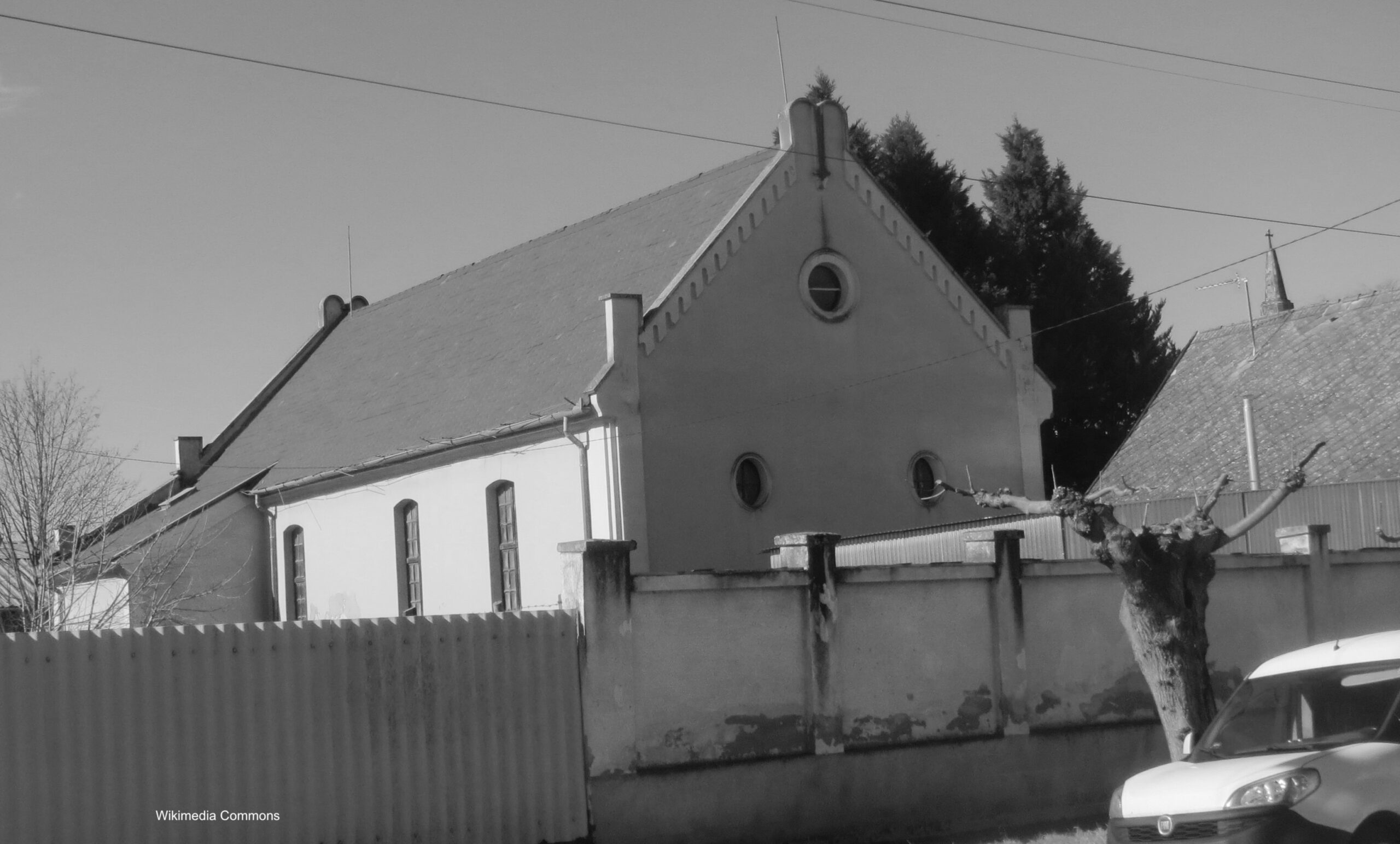
Janoshalma Synagogue
Synagogues
Apostag The historic synagogue (1822) restored in 1987 is now a community centre (Iskola u. 5).
Baja The Neoclassical synagogue built in 1842 (Munkácsy Mihály u. 9) is now a library.
Kalocsa The synagogue (Hunyadi János u. 30) is now a library. There is a Holocaust memorial.
Kecskemét The Orthodox synagogue is now a photography museum (Rákóczi u. 2.) .
Kiskunhalas The synagogue built in 1860 is still a functioning sysnagogue (Beke u.). The Holocaust memorial dates from 1949.
Jánoshalma The synagogue (1860) was renovated in 2000 (Petöfi u. 3). It is now a cultural centre.
Ghetto Locations
Baja Served as a major concentration point, with 8,200 Jews deported from here to Auschwitz in 1944.
Kecskemét A major centre where Jews were gathered from surrounding areas, including Kiskörös, Kiskunfélegyháza, and Soltvadkert, before the deportation of over 5,400 Jews to Auschwitz in June 1944. Ghettoes were located the area around the former synagogue and in Cifra Palota.
Bácsalmás The local flour mill was converted into a ghetto, holding about 3,000 Jews by June 1944.
Soltvadkert The ghetto was situated near the market square.
Cemeteries
The following cemeteries have survived:
Baja (Fusfa u.)
Bácsalmás (Outside the village)
Jánoshalma (József Attila u.)
Kiskőrös (Drégely u.)
Archives
Research into families from this region can be conducted in the Bács-Kiskun County Archives in Kecskemét (Klapka u. 13-15).
Members of the Boys were born in Leipzig in Germany.
The Boys were teenage and child-Holocaust survivors, who were brought to the UK after the war for rest and rehabilitation.
Members of the Boys were held in Nazi labour and concentration camps and used as slave labourers. They had also survived World War II in hiding or as lone children.
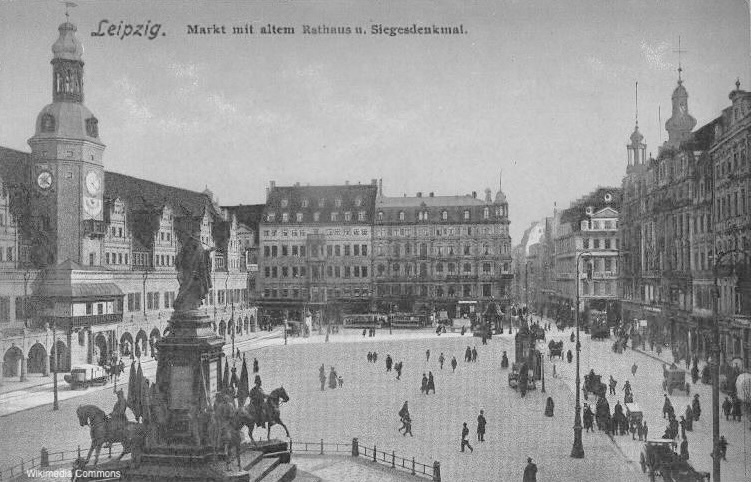
Old Postcard of Leipzig Town Hall, 1900.
Leipzig, in the German state of Saxony, has had a Jewish community since the 13th century.
Background As far back as 1349, the Jews of Leipzig began to face discrimination. They were blamed for the Black Death (1348–1349) and briefly expelled from the city. The establishment of a permanent Jewish community was restricted.
The beginning of the 19th century, however, marked a revival of the Leipzig Jewish community, which became an officially state-recognised organisation in 1847, when Jews were allowed to settle in Leipzig without any restrictions. Towards the end of the 19th century, antisemitism began to intensify but the community continued to grow. By the beginning of the 20th century, there were approximately 6,000 Jewish inhabitants in Leipzig
Third Reich
As a result of the Nazi’s rise to power, Leipzig’s Jewish population decreased. The Schnitzer Family (Joe Carver was originally Joseph Schnitzer) were expelled from Leipzig in the 1938 ‘Polenaktion’ and deported to Poland. His parents were Polish born Jews who were living and working in Germany. The deportation led to the Kristallnacht pogrom, after which 553 Jewish men were arrested.
The German Reich completed a population census on May 19, 1939, in which they determined that 0.5% of Leipzig’s citizens were Jewish: 4,470 were Jews by descent and 4,113 by religion.
In mid-1938, Jews were first banned from using park benches in the Rosenthal Park. By the end of the year, Jews were banned from all public parks in the city.
Deportations
Synagogue Memorial Leipzig
The deportations of German-Jewish citizens from Leipzig began on 21 January 1942 and lasted until 13 February 1945, when the last 220 Jews were deported to Theresienstadt. In total, about 2,000 Jews were deported from Leipzig.
Aftermath
By 1945 there were only 15 Jews remaining in the city at which point 200 came back from Theresienstadt to re-establish the Jewish community.
Present-day
Leipzig has the most active Jewish community in central Germany.
Visiting Leipzig
>
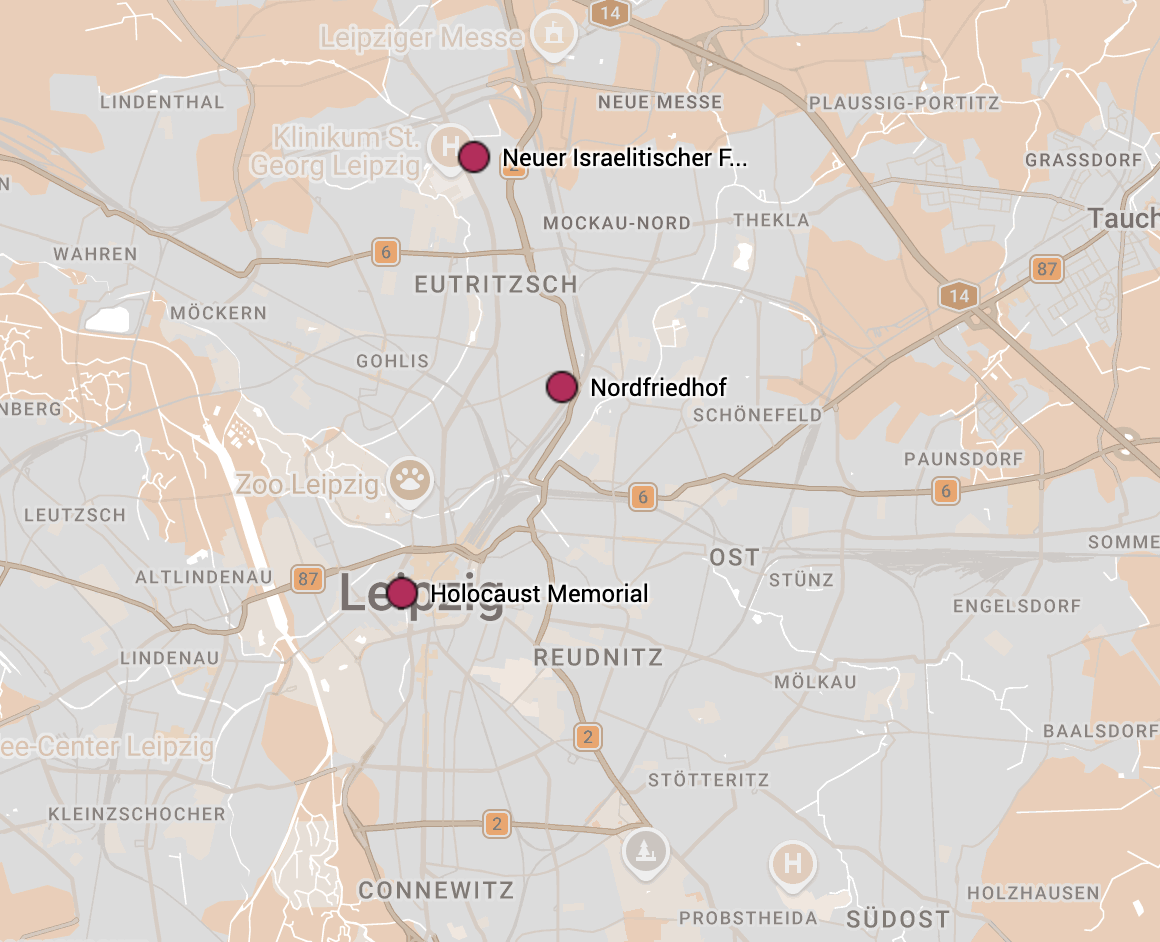
Jewish heritage sites in Leipzig
Leipzig is the largest city in the German federal state of Saxony, with a population of approximately 560.000.
Getting there
Leipzig is easily reached by train from Berlin.
Getting around
The best way to get around is by using the public bike sharing system or the tram.
What to See
Synagogues
Brody Synagogue (Keilstrasse 4) This is the only synagogue in Leipzig to survive the 1938 pogroms because Nazis feared fire would spread to adjacent buildings. It remains the community’s active place of worship and is the hub of the Jewish community.
Memorials
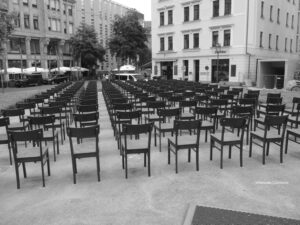
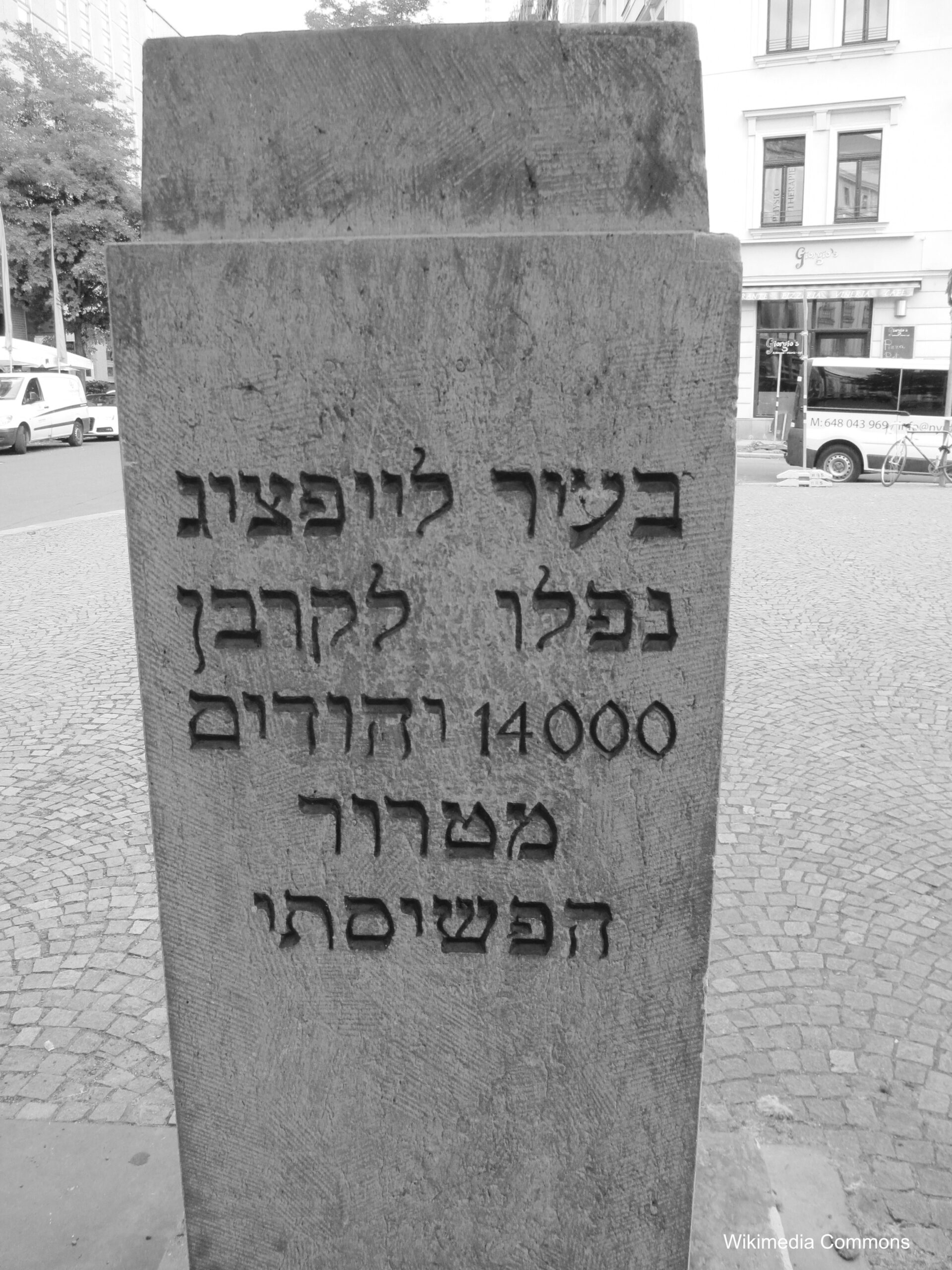
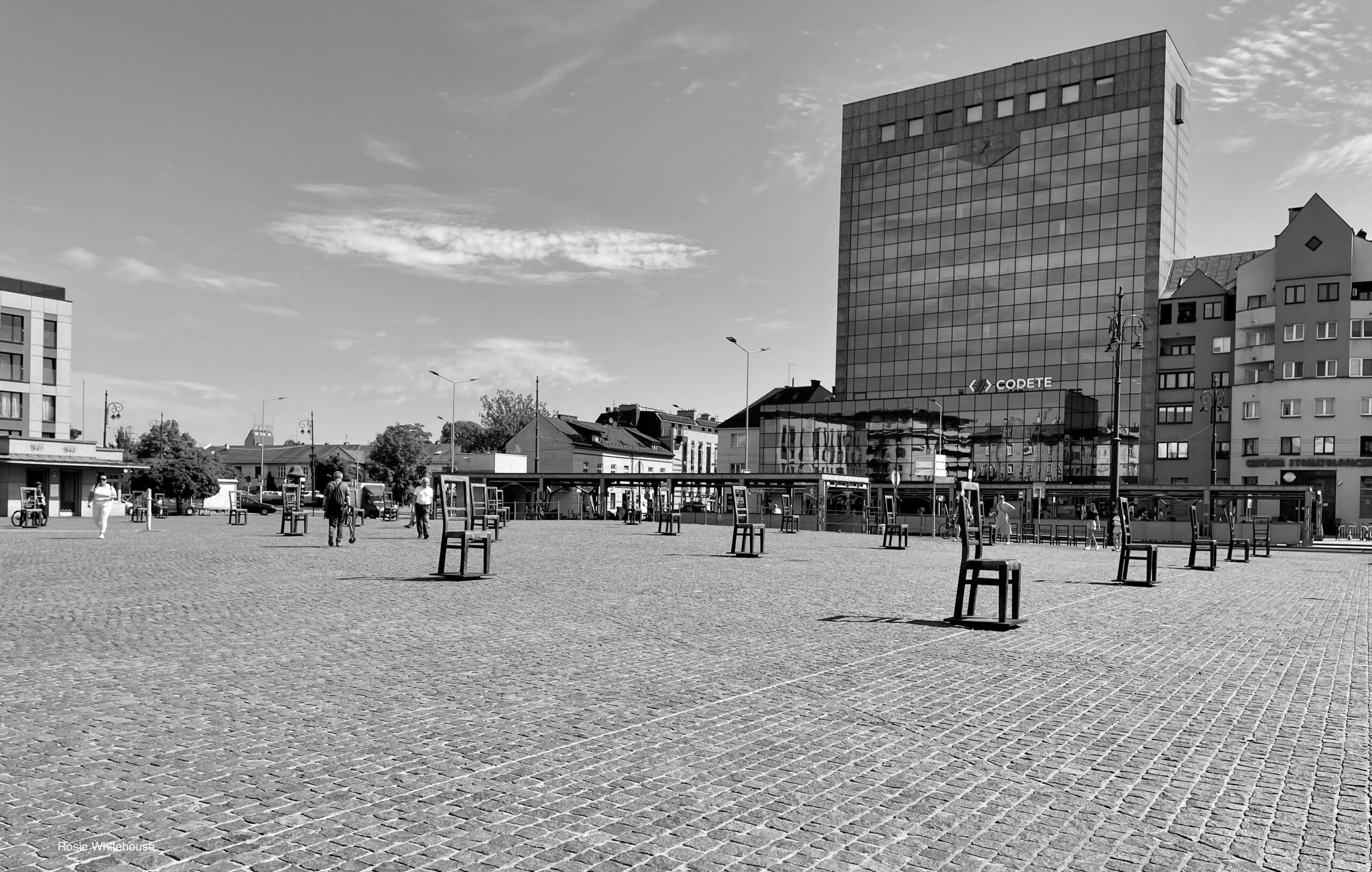
Memorial to the Destroyed Synagogue (Gottschedstrasse) The memorial at the site of the main 19th-century synagogue (Moorish Revival style) was designed by architects Sebastian Helm and Anna Dilengite in 2001, the installation features 140 empty bronze chairs, representing the absence of the vibrant Jewish community. It functions as the city’s Holocaust memorial.
Stolpersteine Numerous brass plaques are embedded in the pavement throughout the city, commemorating victims of the Holocaust at their last known homes.
Cemeteries
Old Jewish Cemetery (Alter Israelitischer Friedhof, Berliner Strasse) Founded 1864.
New Jewish Cemetery (Neuer Israelitischer Friedhof, Delitzscher Strasse) Opened in 1928, it contains significant historical graves and memorials to the deported and murdered Jewish population.
Archives
Anne Frank Shoah Library (German National Library (Deutsche Bücherei)Deutscher Pl. 1) The collection houses a massive collection of literature on the persecution and murder of German Jews.
The Boys were teenage and child-Holocaust survivors, who were brought to the UK after the war for rest and rehabilitation.
Members of the Boys were held in Nazi labour and concentration camps and used as slave labourers. They had also survived World War II in hiding or as lone children.
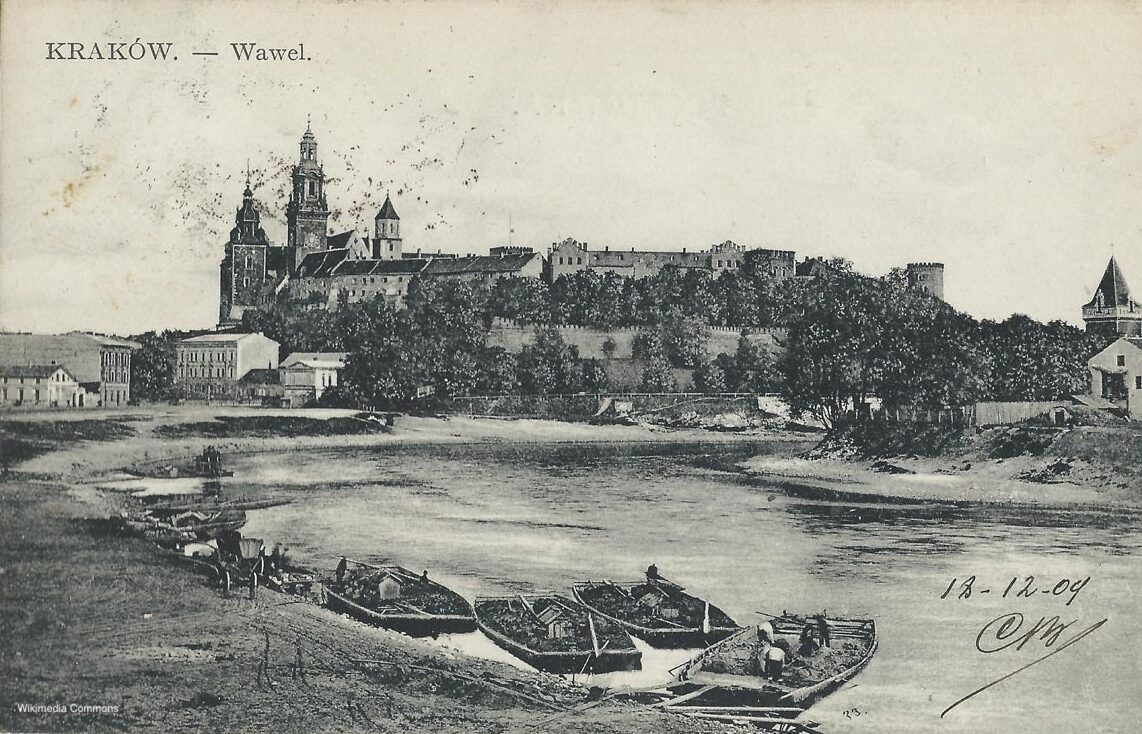
Old Postcard showing Wawel castle, Krakow, Poland, 1909.
Kraków is a major centre of Polish academic, cultural, and economic life.
Kraków had a thriving Jewish community for centuries, with the Jewish District of Kazimierz containing the largest complex of synagogues in Europe, second only to Prague.
Kraków is an important location in the history of the Boys.
Besides the Boys who grew up here, many of them were incarcerated in the ghetto and endured slave labour at the Kraków-Plaszow labour camp.
Nearby Auschwitz is also one of the most important sites associated with the story of the Boys. Not only did they survive slave labour in the camp and the death marches when it was evacuated – Auschwitz was the place where their families were murdered.
Pre-war Before the German invasion in 1939, Kraków was home to an estimated 60,000-80,000 Polish Jews.
Wartime
Immediately after the German invasion, Jews faced persecution, including forced labour, the wearing of identifying armbands, and the closure of synagogues. Kraków was designated the capital of the General Government, and the German authorities aimed to make it “racially clean”. Massive deportations of Jews ensued, with most of the 68,000 Jews in Kraków expelled. Only 15,000 workers and their families were allowed to remain, confined to the Kraków Ghetto.
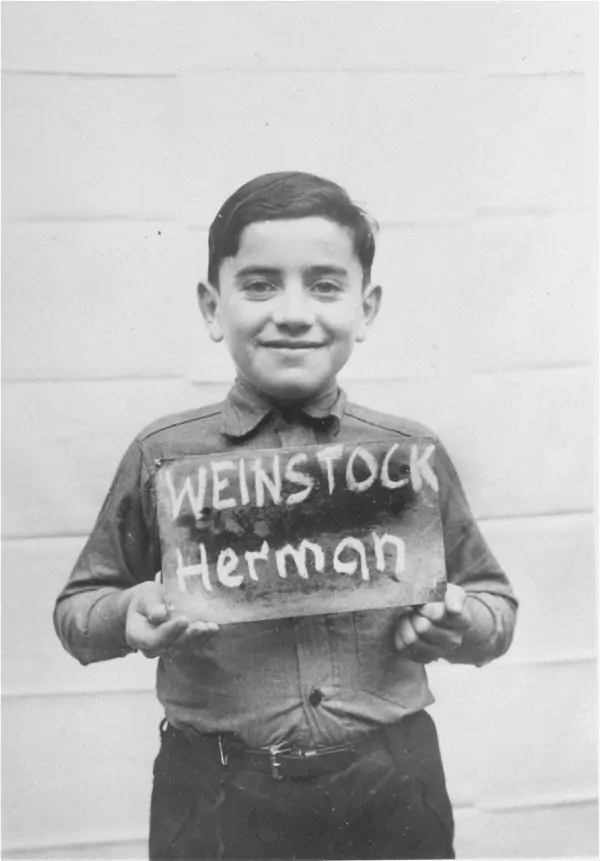
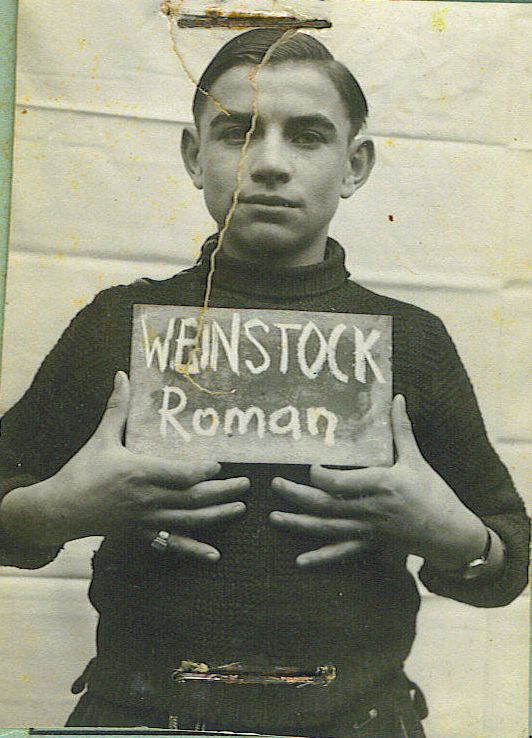
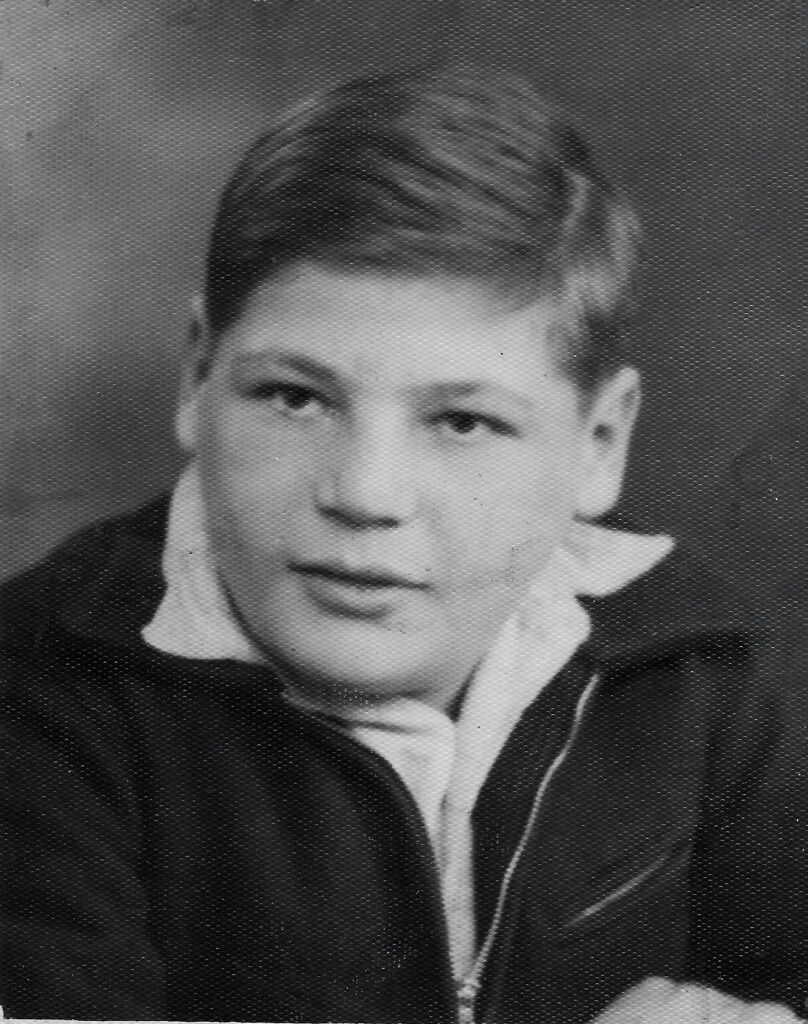
Herman Weinstock Roman WeinstockBenek Englard
Some of the Boys for whom Kraków was home. These photographs were all taken after the liberation.
Ghetto
Established in May 1940, the Kraków Ghetto was the designated area where Jews were forced to live. Conditions in the ghetto were harsh, with limited resources and the constant threat of deportation. In 1943, the remaining Jews in the ghetto were deported to the Bełżec extermination camp, where they were murdered. To find out more about the ghetto and one of the Boy’s extraordinary photograph collections click here.
Aftermath
The city was a magnate for many survivors but there was still considerable antisemitism. A pogrom took place in Kraków in August 1945. Many members of the Boys passed through Kraków after the liberation.
Present-day
Today, there are roughly 1,000 Jews living in Kraków, but experts believe that many Poles have Jewish roots and heritage that they are unaware of.
Visiting Kraków
>
Getting there
Kraków is easily accessible by air, bus, road and train.
Getting around
Sites in Kraków are all accessible on foot. Take a taxi to see the site of the former Plaszów camp.
Visiting the Auschwitz-Birkenau complex
The camp is 60km to the east of Kraków.
There are regular trains from Kraków to Oświcięm, where the former camp is located. There are buses from the station to Auschwitz I and Auschwitz Birkenau II.
If driving, there are car parks at both Auschwitz I and Auschwitz II. Guided tours leave from Kraków and are advertised in hotels but are expensive. It is better to take the train and reserve a ticket online.
What to see
Synagogues
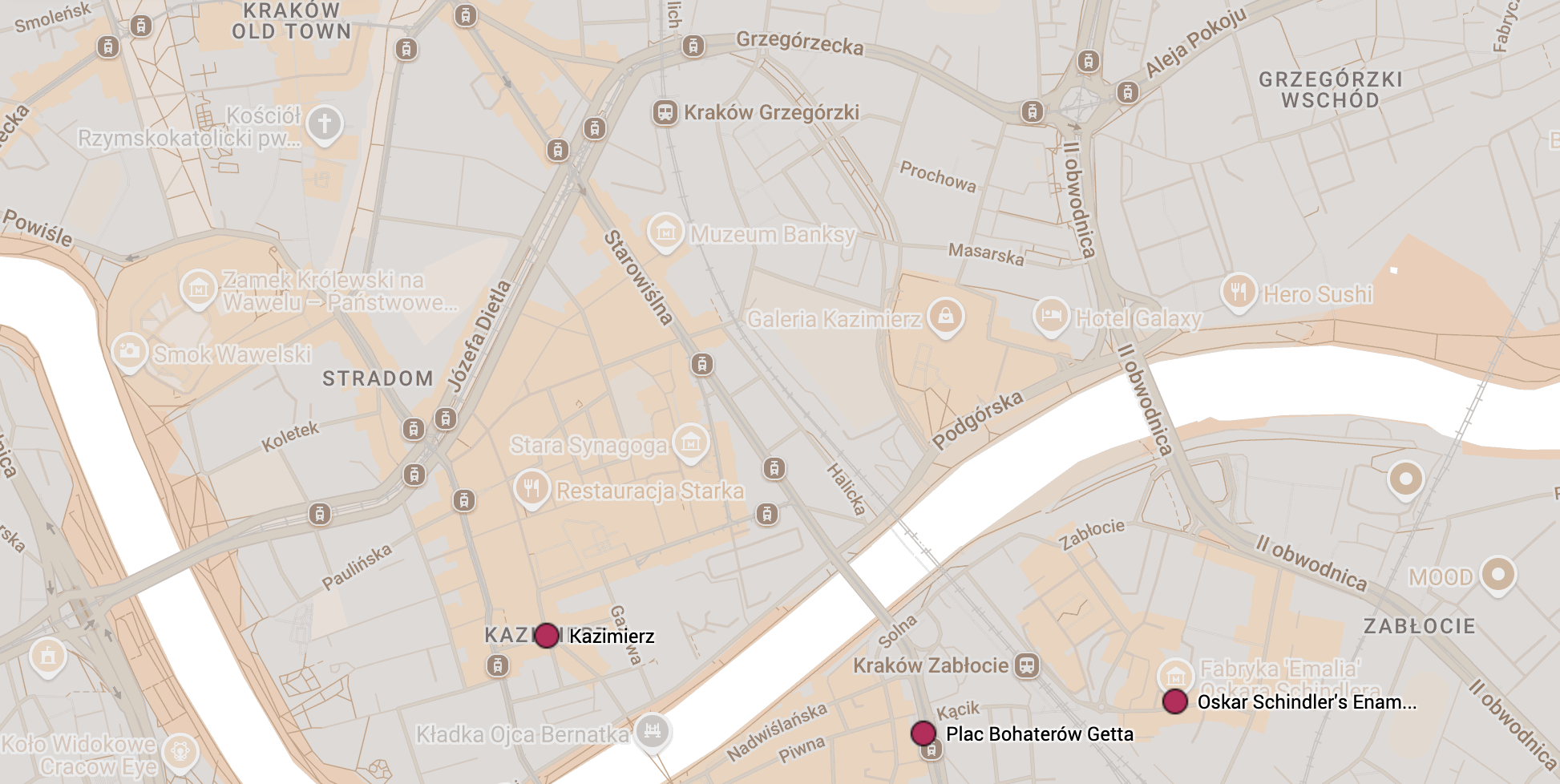
The Jewish district of Kazimierz was an island in the Middle Ages. It is a bustling tourist attraction that centres on ul. Szeroka, a large rectangular town square. The area is unique as a preserved Jewish settlement and is home to some of the oldest surviving synagogues in Poland.
Old Synagogue (Seroka 24; entry fee) The 16th–century synagogue houses a Museum of Jewish History that covers the Nazi period.
Remuh Synagogue (Seroka 40; entry fee) The only active synagogue in Kraków. Services are held here on the Sabbath and High Holidays. In the cemetery there is a wall made up of shattered tombstones known as the Wailing Wall. Outside the Remuh Synagogue is a statue of Jan Karski, a leading member of the Polish resistance.
Museums
The Jewish Museum of Galicia (Dajwór, 18; entry fee) Also in Kazimierz, this museum is worth visiting if you intend to explore the Galicia region. On display is an exhibition of photographs by the British photographer Chris Schwartz. The catalogue Rediscovering Traces of Memory: The Jewish Heritage of Galicia by Jonathan Webber and Chris Swararz is an invaluable companion for a detailed tour of the region.
Ghetto Location
The Jewish ghetto was in the suburb of Podgórze on the opposite bank of the Vistula River. The only surviving remnants of the ghetto walls are at ul. Lwowska 25–29 and behind the school building at ul. Limanowskiego 60/62. The latter is in the shape of Jewish tombstones.
Ghetto Memorials
The main memorial is in the large Plac Bohaterów Getta, Ghetto Heroes Square, which was the assembly point for deportations, mainly to Bełżec and Auschwitz-Birkenau. Deportation trains left from nearby Zabłocie station. Every year, the March of Memory follows the route they took from Plac Bohaterów.
A plaque at No. 6, put up in 1948, on the western side of Plac Bohaterów Getta marks the headquarters of the ghetto’s significant underground resistance movement, which radicalised after deportations to the Bełżec extermination camp began in June 1942. Before this it had centred on continuing education for children and cultural resistance. Their most famous attack was carried out on the Cyganeria Café in the city centre, killing 12 German officers. A plaque was placed at the site at Szpitalna 38 in 2022.
Eagle Pharmacy (Apteka pod Orłem; Bohaterów 18; entry fee). On the southwestern corner of the square the Polish pharmacist Tadeusz Pankiewicz and his staff, the only Poles allowed to live and work in the ghetto, ran a pharmacy. The shop became an important centre of social life, as well as the place to access food and medicine as well as acquire false papers. The shop has been recreated to look as it did during the Nazi occupation and has a small museum.
Oskar Schindler’s factory (ul. Lipowa 4; entry fee) There are long queues at the museum, so it pays to buy a ticket in advance. Schindler is not the focus of the exhibition here; the building contains a multimedia exhibition on the German occupation and an art museum.
Plaszów
Little of the camp remains and the area is now a public park. High on a hill above the former camp there is a vast communist era monument on the site of one of the mass graves from which there is a view on the commercial shopping district and the arterial roads that encircle it. To the right is the Jewish memorial and a statue that honours Hungarian women who were taken from Plaszów to Auschwitz. The quarry where prisoners worked is behind it. Amon Göth’s house remains at ul. Heltmana 22 but is a private residence.
A new memorial museums at Kamieńskiego and in the Grey House, which served as the SS living quarters at Jerozolimska 3, are due to open in 2026.
Visiting Auschwitz
>
Auschwitz-Birkenau State Museum (Miejsce Pamięci i Muzeum Auschwitz-Birkenau; Więźniów Oświęcimia 55, Oświęcim; w auschwitz.org; free)
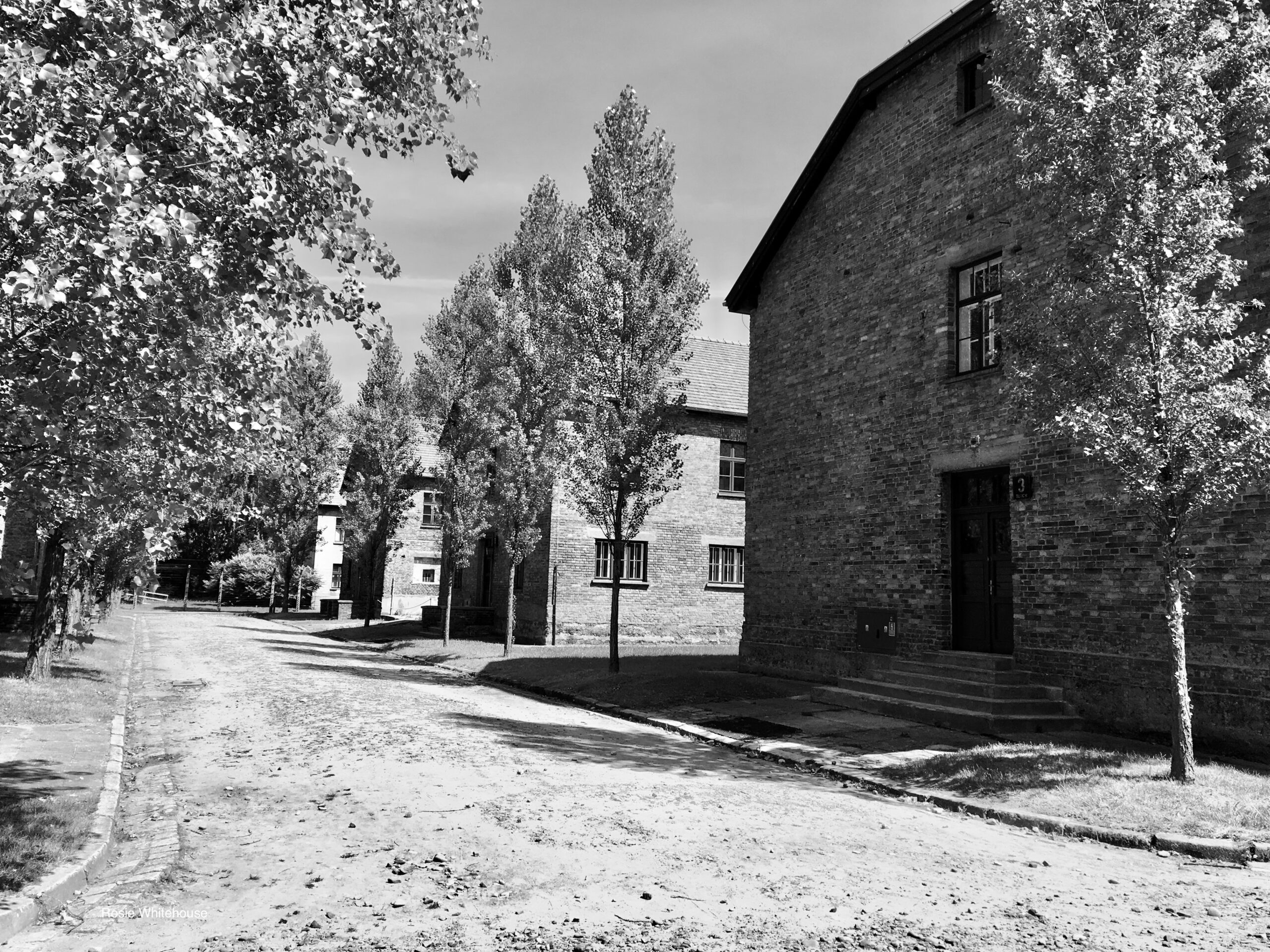
Barracks in the former Auschwitz I, Poland.
The Tour
The visit starts at the former Auschwitz I site. At the end of the tour, a bus takes visitors to Auschwitz II-Birkenau, the site of the extermination camp 2km away; but, if you have your own car, you can drive.
If you take the bus, however, you will not see the Old Jewish Ramp (Alte Judenrampe), a former freight station in an open field 900m from Birkenau’s main gate. From here, prisoners unable to walk were loaded into lorries and driven directly to the gas chambers. This memorial is moving but rarely visited. If you want to see this, you will have to take a taxi or your own car.
Allow 4 hours to see Auschwitz I and II.
Auschwitz I Individual visits are possible at Auschwitz I, but at restricted times; otherwise you must join a guided tour. Tours are tailored to the interests of each national group, and the guide listened to via headphones.
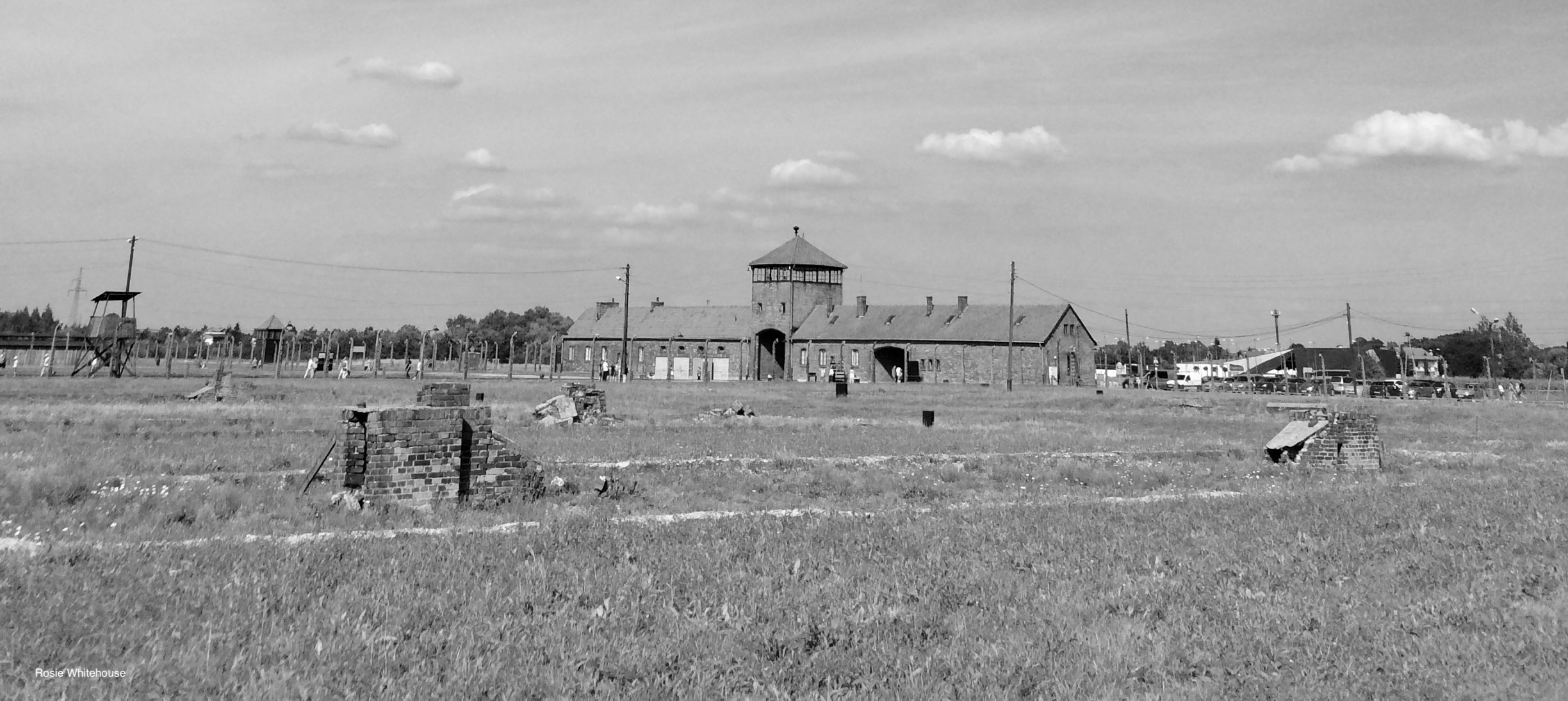
Auschwitz II-Birkenau Birkenau is a vast site and the most significant part of the whole complex, as it was the heart of the killing machine.
Next to the main gate there is a car park and visitors’ centre that looks like a motorway service station. Although it seems totally out of place here, visiting the camp is an emotional experience and can be exhausting in the cold of winter or the heat of summer. The café is a good place to warm up, cool down and gather yourself.
There are no queues at Birkenau, and you do not have to join a guided tour.
A surprise for visitors is the large black memorial by the main gate that remembers the Polish inhabitants of the village on which the camp is built, who were expelled from their homes.
Tip To gauge the scale of the camp, climb up to the top of the gate tower. The gateway, used as the main SS guardhouse, and the spur of the railway that runs under it were built in the spring of 1944 to receive the Hungarian Jews due for deportation. The ramp sits between the two parts of the camp known as BI and BII. Half a million Jews, as well as 13,000 Poles captured in the Warsaw Uprising, arrived here in 1944. In the summer alone, 10,000 Hungarian Jews arrived every day.
Good to Know
The sheer number of tourists can come as a shock if you are visiting the memorial to remember family members who were murdered here. Some survivors say that they have found the place too commercialised.
The most shocking addition to the mass tourism at the site is an ice cream van that sells fridge magnets near the gate at Auschwitz II. It is not on land owned by the memorial, who have asked the local council to remove the van, but you will also encounter people eating sandwiches in the visitors centre at Auschwitz I which has a shop selling chocolates and snacks.
If you are visiting because you lost family here it is best to avoid peak season and, if that is not possible, visit Birkenau first thing in the morning or late in the afternoon when the tour groups are less likely to be there.
Although there is intense security at Auschwitz I, there is none at Auschwitz II.
At Auschwitz II there is little shade in summer and the site can be extremely cold in winter. No food or drinks are available inside the site, but you can bring a small bottle of water.
If you take an individual ticket without a guide, there is a useful guide on sale in the shop The Auschwitz-Birkenau Memorial: A Guidebook. The memorial’s website (w visit.auschwitz.org) also offers virtual tours.
Auschwitz: What to watch & read
>
Film
The experience of the Sonderkommando was caught in the award-winning Hungarian film Saul Fia (Son of Saul; 2015), while Zone of Interest (2023) focuses on the daily life led by commandant Rudolf Höss and his family, who lived next to the camp.
Books
There are many fictional and non-fiction accounts of Auschwitz; among the most famous are Primo Levi’s If This Is a Man… (Penguin, 2000) and Elie Wiesel’s Night (Penguin, 2006), both of which are on sale in the bookshop at the museum.
Books by the Boys
Andra & Tatiana Bucci, Always Remember Your Name: The Children of Auschwitz (Manilla, 2022) The Bucci sisters were among the youngest survivors of the Auschwitz camp. To find out more click here.
Arek Hersch, A Detail of History (Beth Shalom, 1998) Hersch was deported from the Łódź Ghetto in 1944. To find out more click here.
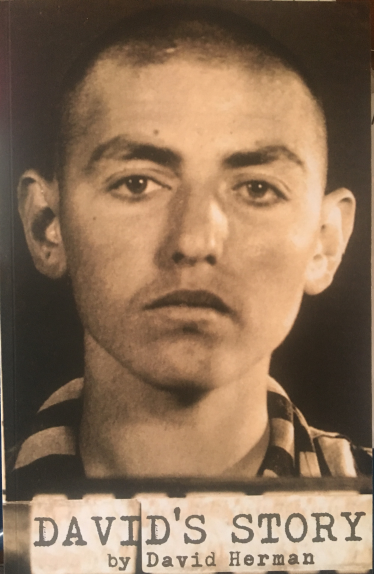
David Herman, David’s Story (2016) Herman was deported from the Carpathian Mountains and endured slave labour in Auschwitz III. To find out more click here.
Hugo Gryn, with Naomi Gryn, Chasing Shadows (Penguin, 2001) Gryn was deported from Berehove with his family in 1944. To read more click here.
To discover other books written by the Boys who were in Auschwitz click here.
 About
About History
 Education
 Quilts
 FIlms
FIlms Photos
 News Media & Events
 Publications
 Donate