The Boys were teenage and child-Holocaust survivors, who were brought to the UK after the war for rest and rehabilitation.
Members of the Boys were held in Nazi labour and concentration camps and used as slave labourers. They had also survived World War II in hiding or as lone children.
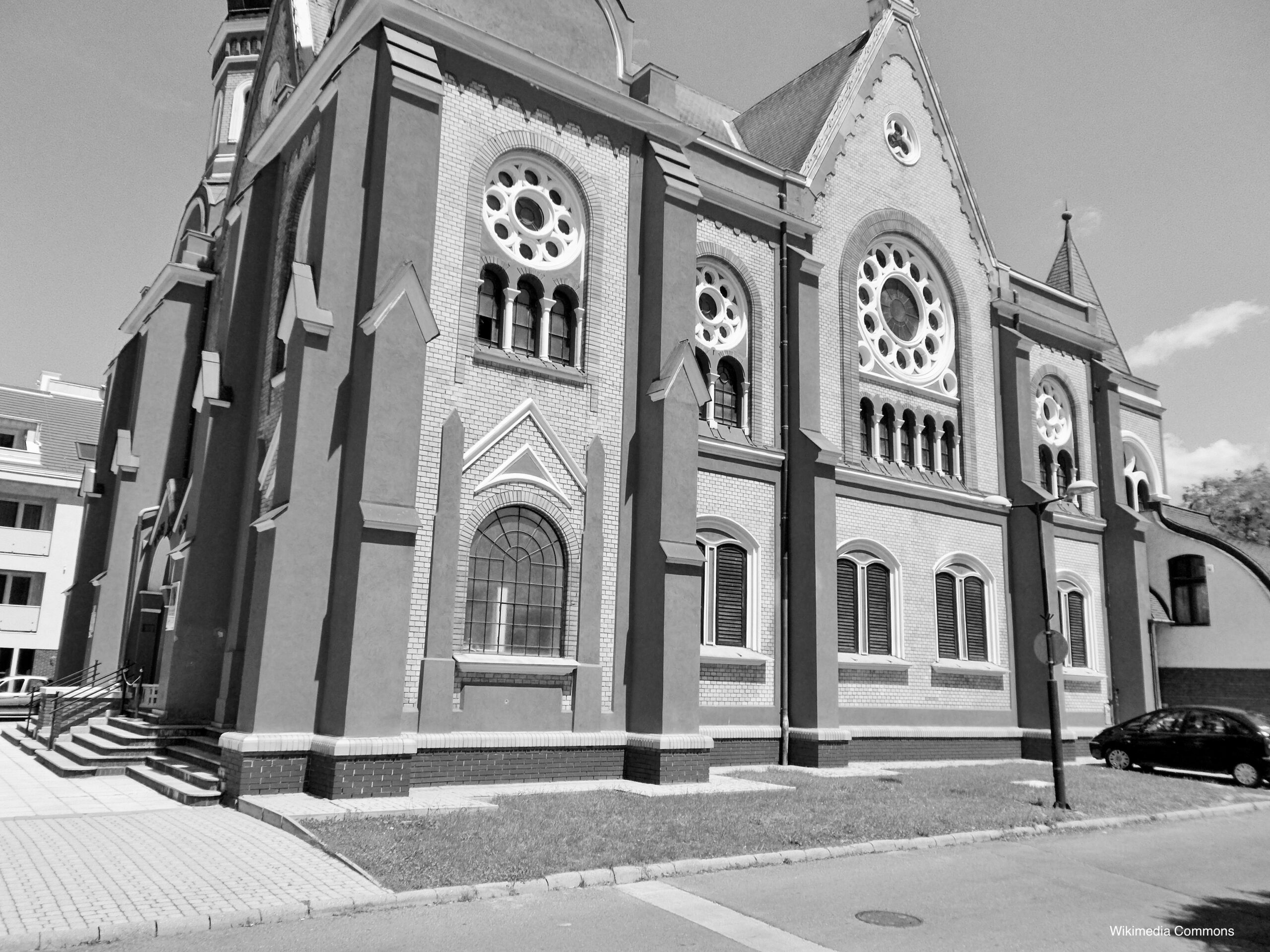
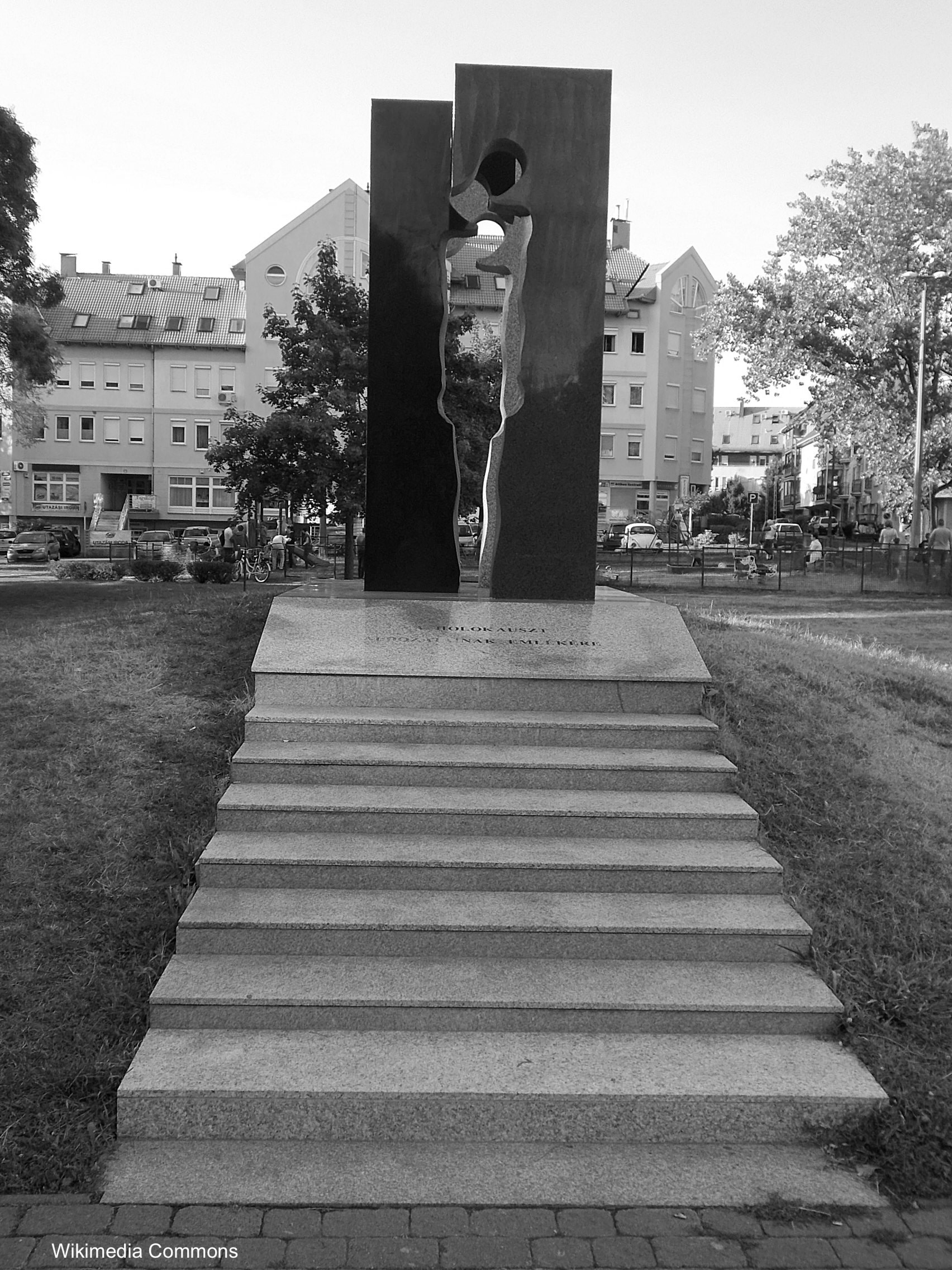
Györ, Hungary.
Györ-Moson-Sopron County borders Austria and Slovakia in the north-west of Hungary. Most of the Jews who lived in the area before World War II were merchants and industrialists.
Before Hungary was occupied by the Germans, the Jews suffered from anti-Jewish legislation. In 1942, most of the Jewish men in the county were recruited into forced labour in the Hungarian army on the eastern front, where many lost their lives.
On 19 March 1944, Germany occupied Hungary. Two months later the Jews of Györ-Moson-Sopron county were imprisoned in the ghetto in Györ. Over 5,000 people were deported in two transports to the Auschwitz II-Birkenau concentration and extermination camp in occupied Poland.
After the Holocaust, hundreds of Jews who had been expelled from the city returned to Györ and re-established a Jewish community. In 1949, there were 459 Jews in the city but after the 1956 Hungarian Revolution in 1956 the overwhelming majority of the Jews left.
Visiting Györ
>
Getting there Located in northwestern Hungary between Budapest, Vienna, and Bratislava, Györ is easily accessible by train, bus, or car. It is a major stop on the main railway line connecting Vienna and Budapest
What to see
Synagogue Completed in 1870, this massive grey-domed building in the Újváros district now serves as a museum and cultural center. It houses the Exhibition of Jewish Excellence, celebrating over 400 world-renowned Jewish figures. Jewish Cemetery Located in Győr-Sziget, it is exceptionally well-maintained and features a Martyrs’ Monument (a small pyramid) dedicated to Holocaust victims.
Members of the Boys were born in Crisana Province in Romania.
The Boys were teenage and child-Holocaust survivors, who were brought to the UK after the war for rest and rehabilitation.
Members of the Boys were held in Nazi labour and concentration camps and used as slave labourers. They had also survived World War II in hiding or as lone children.
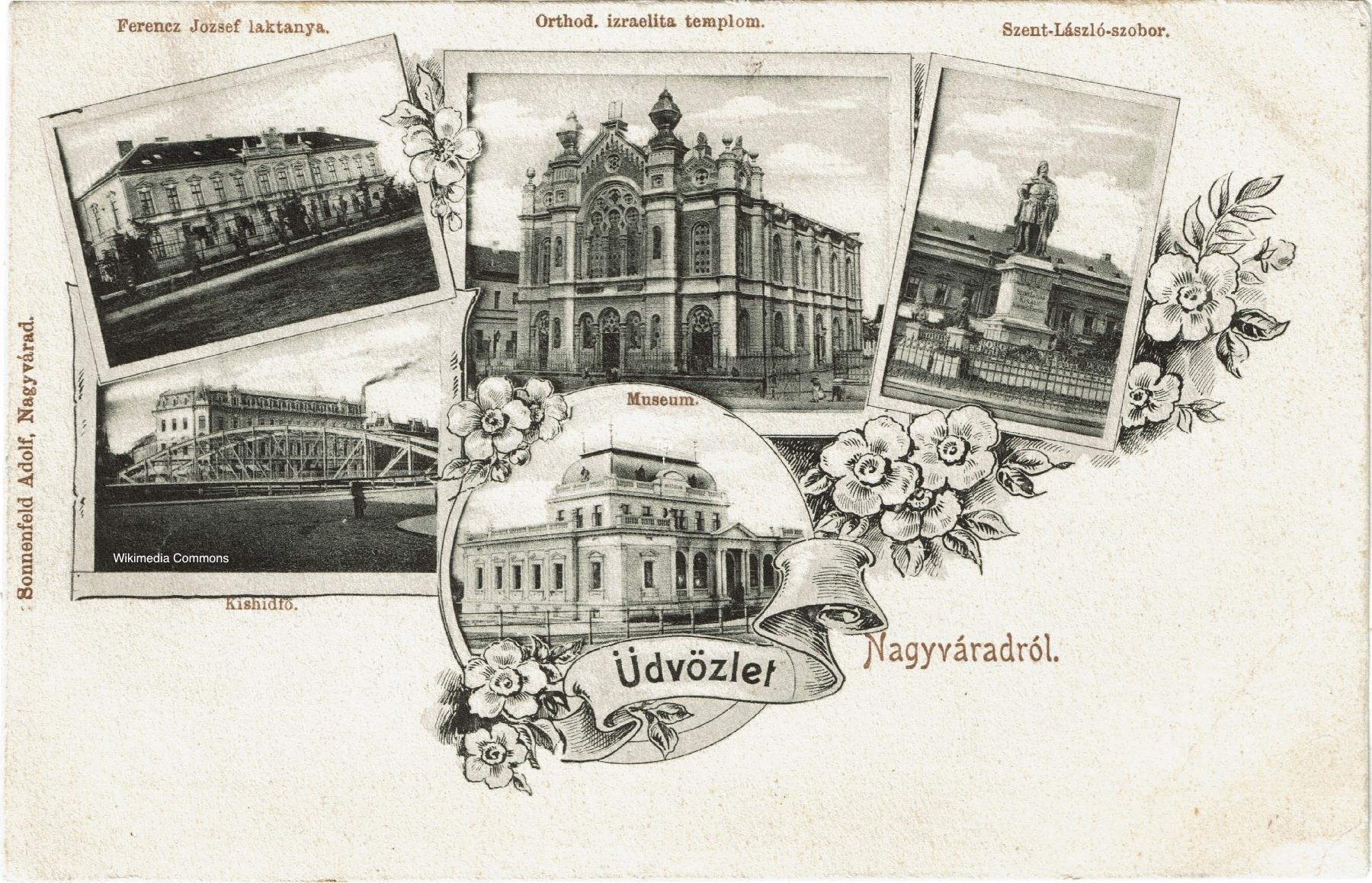
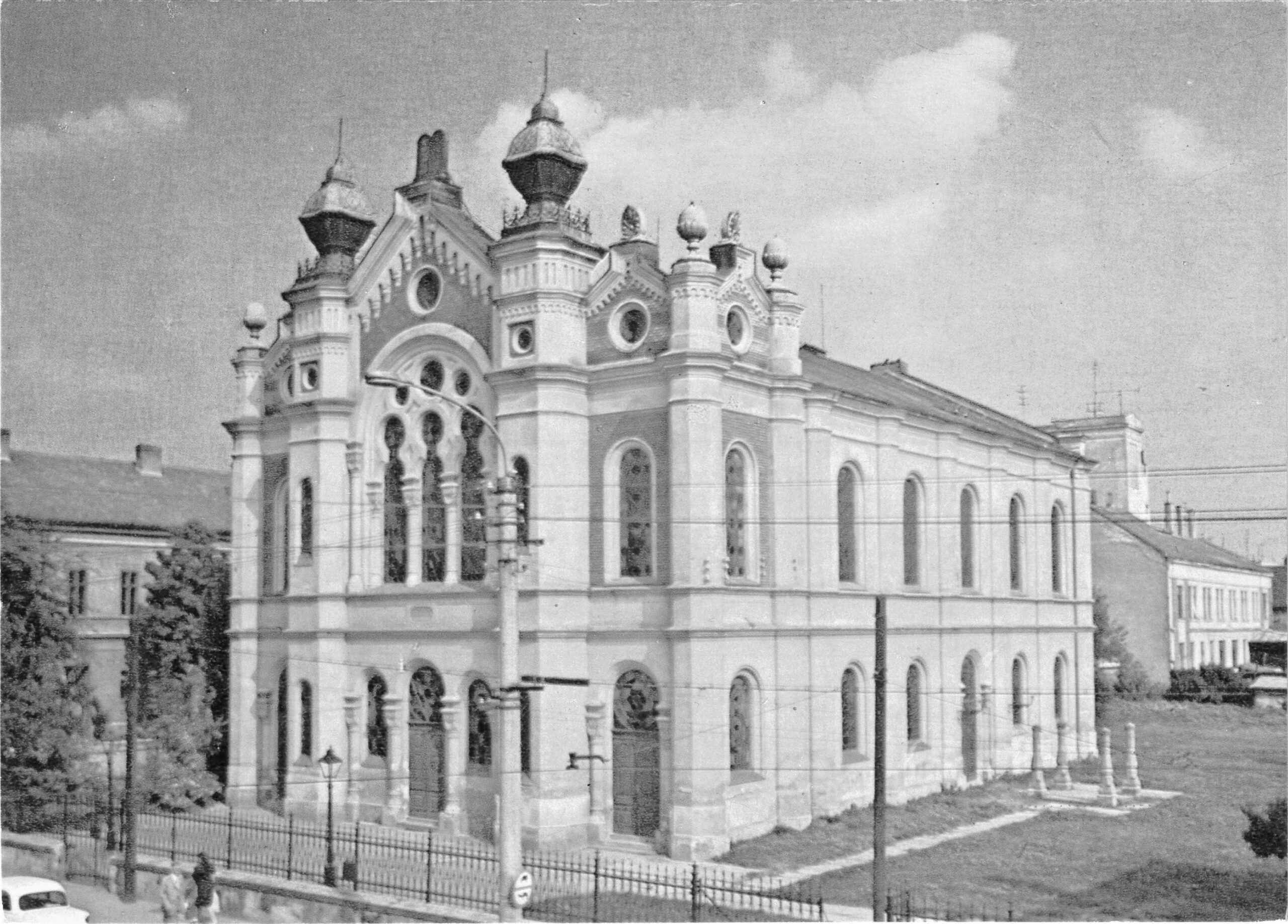
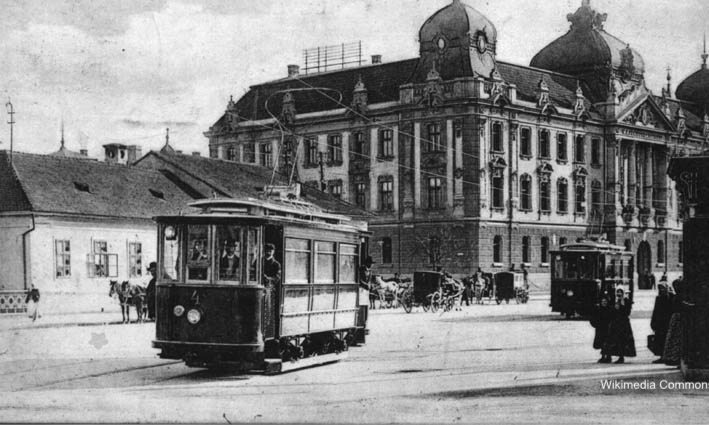
Postcard of Nagyvárad/Oradea, views of the Synagogue.
Crisana Province is in north western Romania and its principal city is Oradea. The region, which has a rich Jewish heritage, is part of Transylvania, which was awarded to Romania after World War I.
Two members of the Boys came from the region. Imre Hitter was born in Oradea and Eva Steinberg was born in Valea-lui-Mihai. Both of them were held in the ghetto in Oradea.
Jews have probably lived in the region since the 10th century, but it was only in the 19th century that the Jewish population grew steadily.
Oradea The city had a Jewish hospital and a number of schools. Significantly, the Jewish community embraced the Hungarian language and culture. During the interwar period this made them a target for Romanian nationalists and fascists. After the creation of the fascist Iron Guard in 1927, the Jews of Oradea suffered from violent attacks and synagogues were vandalised.
Valea-lui-Mihai had a significant, deeply rooted Jewish community, with over 1,600 Jewish residents (roughly 15–20% of the population) before the Holocaust.
Wartime
1940 The area was given to Hungary under the second Vienna Awards. Oradea assumed its Hungarian name of Nagyvarad. Similarly, Valea-lui-Mihai was known by its Hungarian name of Ermihályfalva.
The state’s anti-Jewish laws meant that situation of the Jews of Crisana deteriorated further. From 1942, Jewish men in the area were forcibly recruited into labour battalions in the Hungarian army and Jewish businesses were confiscated.
German Invasion March 1944 In 1944, about 30,000 Jews lived in Oradea, a third of the city’s population. In May 1944, they were forced into a ghetto alongside 8,000 Jews from the surrounding area including those from Valea-lui-Mihai. Nine transports left for the Auschwitz II-Birkenau concentration and extermination camp in the weeks that followed.
Aftermath
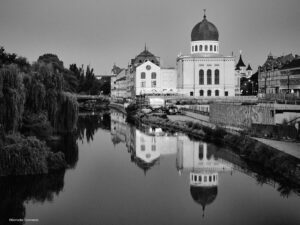
Neolog Synagogue, Oradea.
After the liberation Oradea became a regional hub for survivors and had a Jewish population of 8,000. Many Jews passed through the city on their journey out of eastern Europe.
After World War II, Crisana province once again became part of Romania.
Present-day
Today, there are only a few hundred Jews living in the city but there is a functioning Jewish community.
Visiting Crisana Province
>
Getting there Oradea, the principal city, is just 8km from the Hungarian border and is a good place to start exploring Romania if you are arriving by car or train.
Romania is a large country, so to travel to Oradea from the capital it’s better to fly or take the train. Oradea is 642km northwest of Bucharest.
Getting around Valea-lui-Mihai is 75km north of Oradea. It is accessible by train.
What to See
Oradea
Museum of Jewish History (Muzeul Istoriei Evreilor din Oradea; Str. Primăriei 25; entry fee) Opened in 2018 in the Aachvas Rein Synagogue, the museum charts the history of the Jewish community of Oradea from the 15th century. The first floor of the museum has a permanent exhibition and Holocaust memorial.
Jewish Cemetery (Strada Rǎzboieni) The size of five football fields, it is one of central Europe’s largest surviving Jewish cemeteries. It also contains a Holocaust memorial.
Jewish Community The present-day Jewish community is based in the Sinagoga Neologă Sion (Str. Independenței 22).
Valea-lui-Mihai
Synagogue (19 Mures Street) The town’s primary synagogue was built around 1830 and later renovated in a Hungarian Secession style. While it is no longer in regular use, it hosts cultural events.
Jewish Cemetery The cemetery remains a key physical reminder of the community, containing roughly 340 graves.
What to watch & read
>
Instagram
Eva’s Stories Thirteen-year-old Eva Heyman left behind an important testament of this period. In her dairy she describes the deteriorating situation in Oradea. Heyman was a highly assimilated middle-class teenager. The Eva Stories project tells her story on Instagram. Heyman was murdered in Auschwitz in October 1944.
There is a sculpture of Eva Heyman in the eastern side of Nicolae Bălcescu Park on Evreilor Deportati.
Members of the Boys were born in Dresden in Germany.
The Boys were teenage and child-Holocaust survivors, who were brought to the UK after the war for rest and rehabilitation.
Members of the Boys were held in Nazi labour and concentration camps and used as slave labourers. They had also survived World War II in hiding or as lone children.
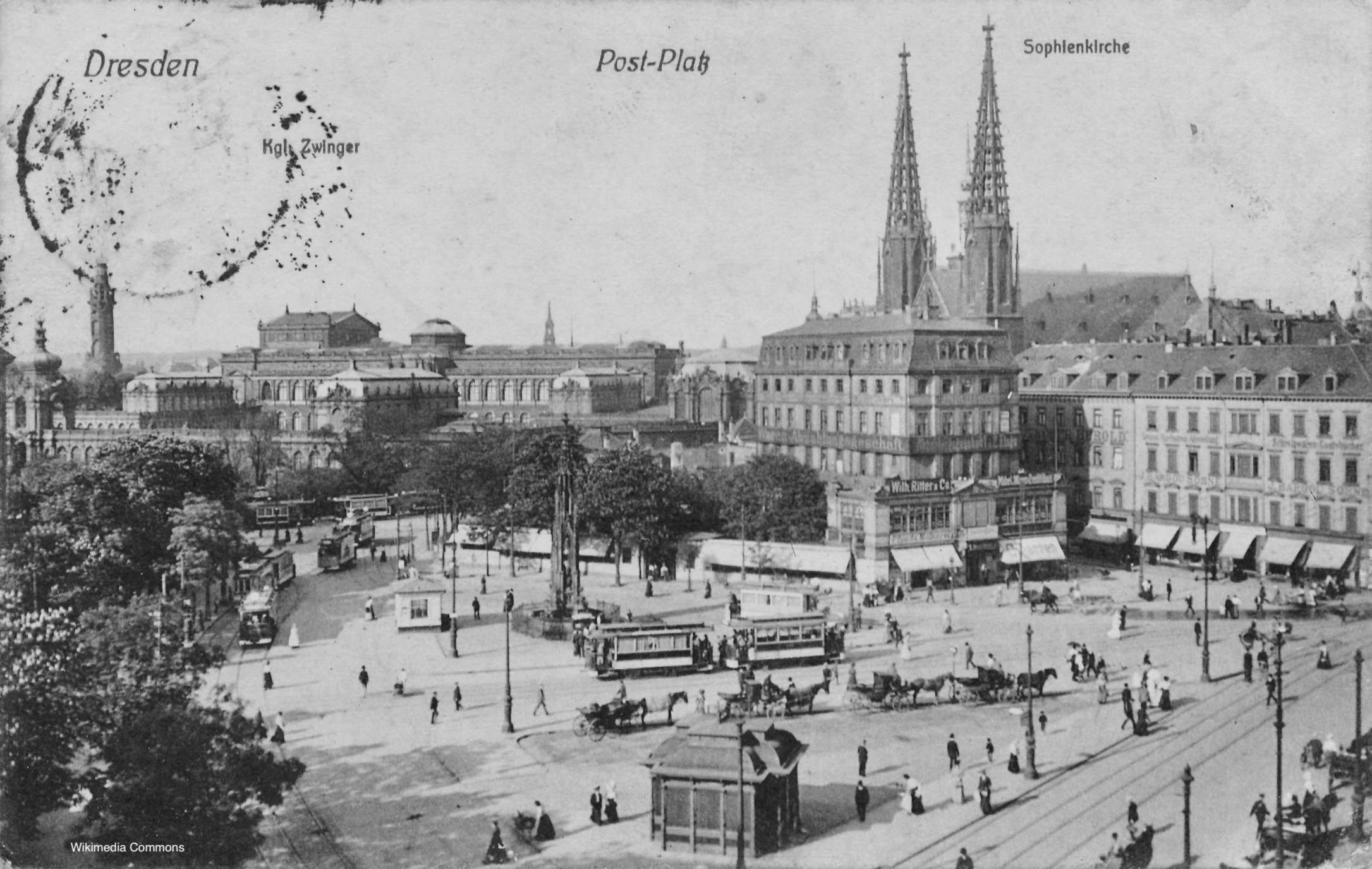
Old postcard of Dresden, Germany in 1913.
Dresden is the capital of the German state of Saxony. The city was famous for its baroque and rococo architecture but the Allied bombing towards the end of the war destroyed the city centre and killed over 25,000 people.
Although only one member of the Boys was born in Dresden, many of the Boys were held in the labour camps in the city and then endured death marches to the Theresienstadt Ghetto.
Background
The Jewish community in Dresden has a long and complex history, marked by periods of growth, persecution, and resurgence. Initially, Jewish communities were established in Dresden during the 13th century, but were later expelled between 1500 and 1700. Following the granting of equal rights in 1837, the community grew to almost 6,000 members, playing a significant role in Dresden’s social life.
Many Jews from East Europe settled there after World War I. A prosperous and well-endowed community, it owned a valuable library and maintained numerous social and charitable organisations.
Third Reich
In October 1938, 724 Jews of Polish citizenship were deported from Dresden. On Kristallnacht in November 1938, 151 Jews were arrested and taken to Buchenwald. The synagogues were burned, and the Jewish community was presented with a bill for their demolition.
By May 1939, the community had been reduced to 1,600 people because of emigration, deportation, and arrests. There were 12 deportations of Jews between January 1942 and January 1944. The final deportation was scheduled for February 1945. The Allied bombing of Dresden allowed the deportees to escape.
Aftermath
A small group of survivors, along with former concentration camp prisoners, began to rebuild the community after the war.
The community continued to grow and thrive, eventually establishing a new synagogue in 2023.
Visiting Dresden
>
Getting there Take the train from either Berlin or Prague.
What to see
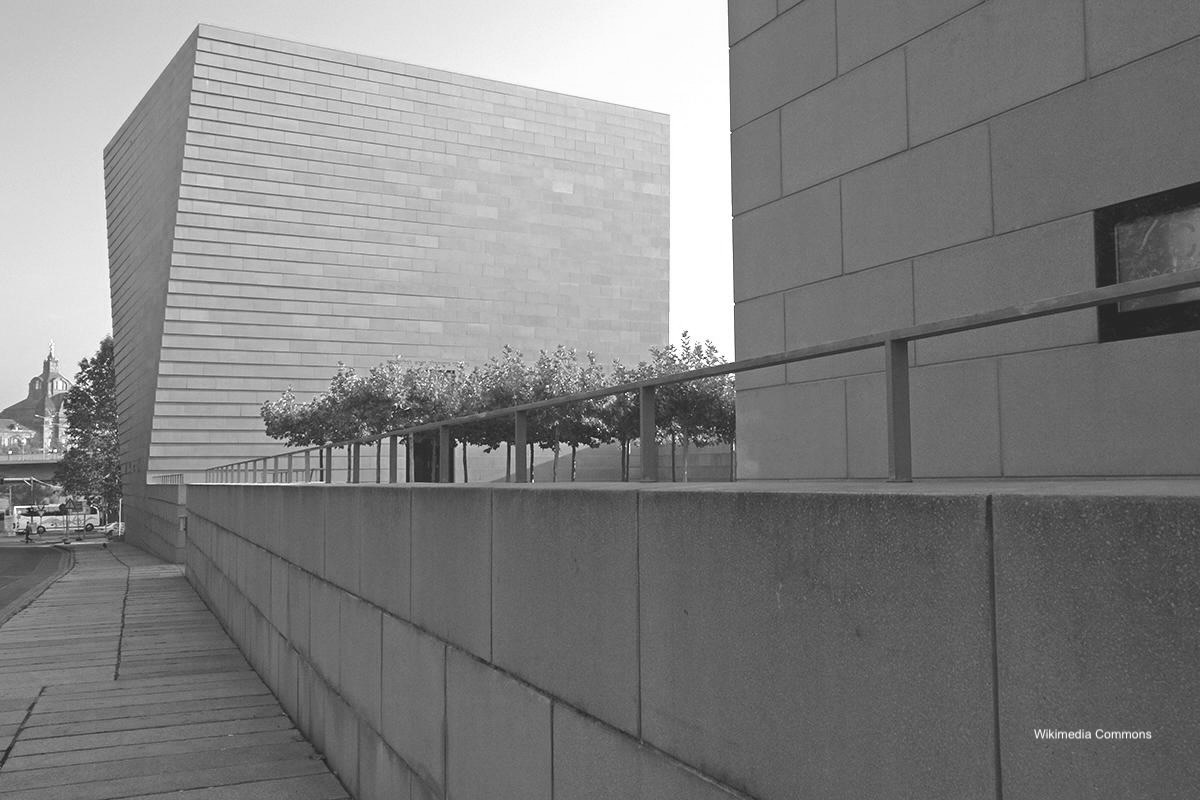
New Synagogue Completed in 2001, this modern, cube-shaped structure is a focal point of Jewish life, located on the Elbe riverbank. It was built on the site of the Semper Synagogue destroyed in 1938 and incorporates a salvaged Star of David from the original building.
Old Jewish Cemetery Near the Neustadt train station, this site is historically significant, with some graves dating back to the 18th century.
Labour camp (Schandauer Strasse 68) There is a commemorative plaque on the former Bernsdorf labour camp where many of the Boys were slave labourers. It is now a cigarette factory.
Members of the Boys were born in Zala County in Hunagry.
The Boys were teenage and child-Holocaust survivors, who were brought to the UK after the war for rest and rehabilitation.
Members of the Boys were held in Nazi labour and concentration camps and used as slave labourers. They had also survived World War II in hiding or as lone children.
Synagogue in Zalaegerszegi.
Zala County, Hungary is close to the Croatian border and was a key trading route in the Austro-Hungarian Empire.
Background
Jews settled in the area in the 18th century but relations with other inhabitants remained tense. In the years after World War I, a number of Jews were lynched by gangs and arrested for security reasons.
In the 1930s, the Croatian fascist Ustasha ran a training camp in Belezna. After the Discrimination Laws were passed in 1938 many Jews suffered persecution. In 1941, Jewish men in the area were conscripted into labour battalions. In May 1944 the Jews of Zala county were rounded up into ghettos and in July deported to the Auschwitz II-Birkenau concentration and extermination camp.
Aftermath
After the war about 100 survivors returned. They tried to re-establish the community in the administrative capital of Zalagerszeg but the overwhelming majority left to start a new life elsewhere.
Visiting Zala County
>
In Belezna, the birthplace of Wladislaus Fischer, there is no trace of the villages Jewish heritage.
Members of the Boys were born in Świętokrzyskie Voivodeship, Poland.
The Boys were teenage and child-Holocaust survivors, who were brought to the UK after the war for rest and rehabilitation.
Members of the Boys were held in Nazi labour and concentration camps and used as slave labourers. They had also survived World War II in hiding or as lone children.
Ghetto Memorial in Kielce, Poland.
Świętokrzyskie Voivodeship is a province in south-central Poland, with the city of Kielce as its regional capital. Other cities in the region include: Ostrowiec Świętokrzyski, Starachowice, Skarżysko-Kamienna, Sandomierz, and Busko-Zdrój.
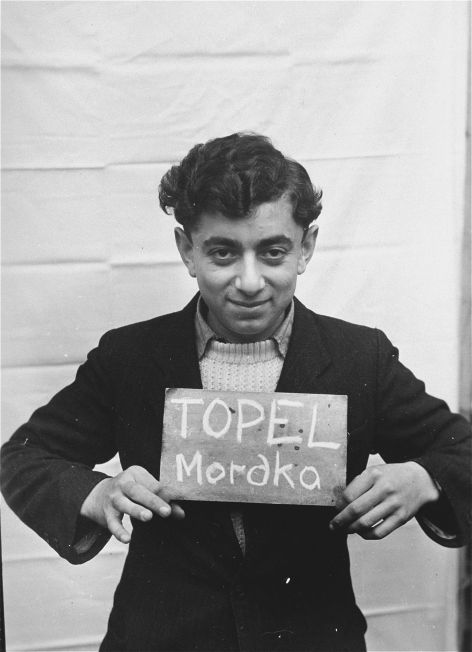
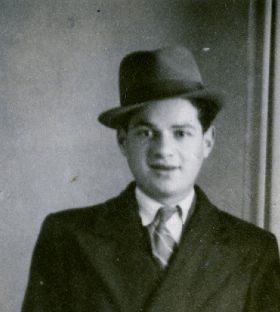
Mordechai Topel Abraham KirszbergIsaac PomeranceFischel KampelSalek OrensteinAbraham Shulzinger
Six of the Boys from Świętokrzyskie Voivodeship. These photographs were all taken after World War II.
Świętokrzyskie Voivodeship was not only home to a number of the Boys but many more were incarcerated as slave labourers in its system of labour camps notably the Skarżysko-Kamienna labour camp.
History
During the partition of Poland, which lasted from the late 18th century until World War I, Kielce was part of the Russian empire. During this period, the area became an important centre for the production of armaments and there were a number of large munitions factories in the the city and its surrounding towns.
After World War I, Poland regained its independence and Kielce became the capital of the Świętokrzyskie Voivodeship.
Kielce had a significant Jewish population before World War II. According to the Russian census of 1897, among the total population of 23,200 inhabitants, there were 6,400 Jews in Kielce around 27% of the total population.
The Story of the Boys’ Families: The Bekierman Family
Sidney Baker, centre, with his three brothers.Bluma Bekierman
Ksil Yehezkiel and Bluma Bekierman had four sons Shaul (b. 1927), Shlomo (b. 1929), Haskiel (1931) and Shmuel (1933). Ksil ran a mill in Chmielnik where the family lived.
Chmielnik was a vibrant Jewish centre with a large population. The town had a a strong Hasidic presence. The Bekiermans were an Orthodox but not strictly religious family. Shaul Bekierman recalled that he did not like going to cheder, the Jewish school, and used to run away to work at his father’s mill.
After the German invasion of Poland, a ghetto was set up in Chmielnik, in which the Bekierman family were imprisoned. Ksil Bekierman’s factory was confiscated and the family lost their living. Life was extremely hard.
In October 1942, Ksil and Bluma Bakierman and three of their sons were deported to the Treblinka extermination camp. Their oldest son Shaul was taken as a slave labourer and was the only member of the family to survive the Holocaust. He later changed his name to Sidney Baker. To find out more about his life click here.
Interwar Period
During the interwar years, Zionist parties were active in the city, as were Agudath Israel, the Bund, and Polish- Communist Jews. The parties ran youth movements and the Zionists also operated pioneer training facilities.
Kielce had cultural societies that promoted the study of Hebrew and Yiddish culture. The Jewish community had three libraries and a small Jewish theatre; four Yiddish newspapers were published in Kielce. The city also boasted a number of Jewish sports clubs.
On 11-12 November 1918, just after the First World War had ended, a pogrom occured in Kielce. About 400 Jews were injured and ten murdered. In the 1930’s, violent anti-Semitic incidents occurred in the city. In November 1934, three Jews were murdered near Kielce, and in 1937, a pogrom was carried out in the city, during which the homes of 50 Jewish families were burnt down and five Jews lost their lives.
In 1938, there were 20,942 Jews living in Kielce, out of a total population of 67,634.
1939-1945
After the German invasion of Poland in 1939, the local armament factories were integrated into the economy of the Third Reich and many of the Boys were held in them slave labourers.
Immediately after the German occupation, all Jews were ordered to wear a Star of David on their outer garments. Jewish–owned factories and businesses in the region were confiscated by the Gestapo.
Ghetto were set up across Świętokrzyskie Voivodeship, which were liquidated in 1942. The majority of the Jews held in the ghettos were murdered in the Treblinka extermination camp.
Aftermath
After the liberation Kielce was the scene of a major program in July 1946 in which almost 40 Jews lost their lives and many more were injured. It was one of the key factors that prompted a mass exodus of Holocaust survivors from Poland.
Visiting Świętokrzyskie Voivodeship
>
Getting there & around
Świętokrzyskie Voivodeship is accessed primarily through Kielce, its capital. The nearest major international airport is Warsaw. Kielce is well-connected by road and rail.
Kielce
Synagogue The former synagogue sits on a traffic island in the middle of a busy dual carriageway, Aleja IX Wieków.
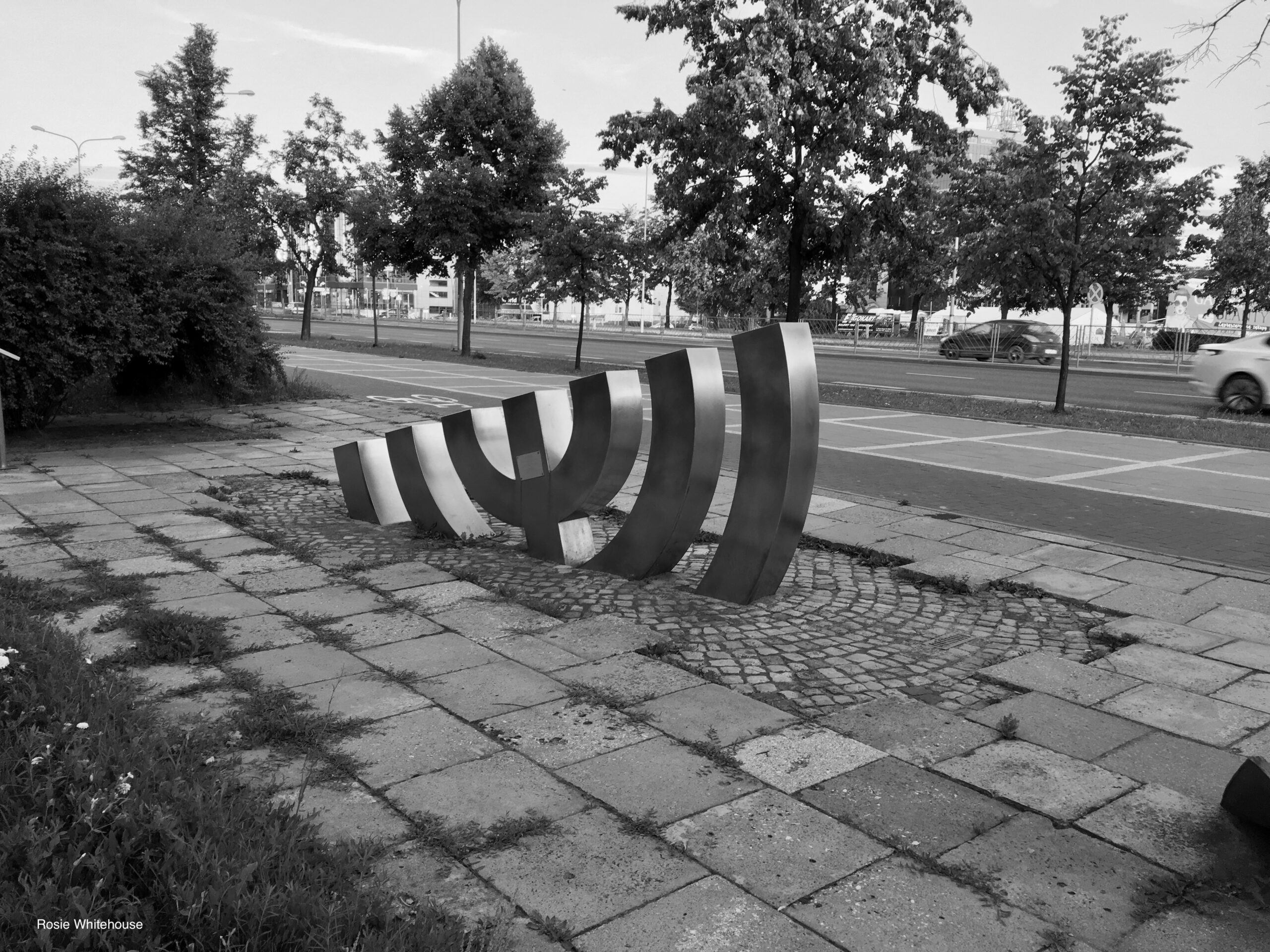
Memorial A few minutes’ walk east from the former synagogue, a memorial marks the location of the former ghetto. It is a menorah that is either sinking into or rising out of the ground depending on which way you look at the story of what happened here.
Museum
The Jan Karski Society (ul. Planty) Named after the Polish underground courier, the museum recounts the 1946 pogrom that occurred in the city. The centre has worked for recognition of the role played by local Poles in the 1946 pogrom and was founded by Bogdan Białek. There is a documentary film about his work: Bogdan’s Journey (2016).
Ożarów Jewish Cemetery
The Boys’ other hometowns
Chmielnik
The Synagogue of Glass (Świętokrzyski Sztetl Museum) Located in a restored 17th-century synagogue, this centre features a unique glass bimah, which symbolises the destroyed original wooden structure, and serves as an educational hub for Jewish life. The Mikveh A well-preserved ritual bath with original tiles was discovered in 2015 in a private building’s basement, highlighting the hidden remnants of the community. The “Shadow House” and Cemeteries The old Jewish cemetery was destroyed during the war, but a modern monument known as the “Shadow House” was erected in 2014 to honour the lost community. The new cemetery also features a lapidarium made from recovered, shattered tombstones (matzevot).
Skarzysko
Jewish Cemetery (Łyżwy Street) The cemetery contains some traditional, mostly broken, matzevot (tombstones). Memorial (Intersection of 1 Maja Street and Czerwonego Krzyża Street) A monument commemorating the Jews of Skarżysko-Kamienna murdered by the Nazis (1939–1945) was erected in 1987.
There are Jewish cemeteries in the following towns:
Bodzentyn, Brzesko, Jędrzejów, Koprzywnica, Kozienice, Magnuszew, Ostrowiec Staszow, and Szydlowiec.
Repurposed synagogues stand in:
Brzesko, Kielce, Sandomierz. The synagogue in Działoszyce is a ruin.
Members of the Boys were born in the Masovian Voivodeship in Poland.
The Boys were teenage and child-Holocaust survivors, who were brought to the UK after the war for rest and rehabilitation.
Members of the Boys were held in Nazi labour and concentration camps and used as slave labourers. They had also survived World War II in hiding or as lone children.
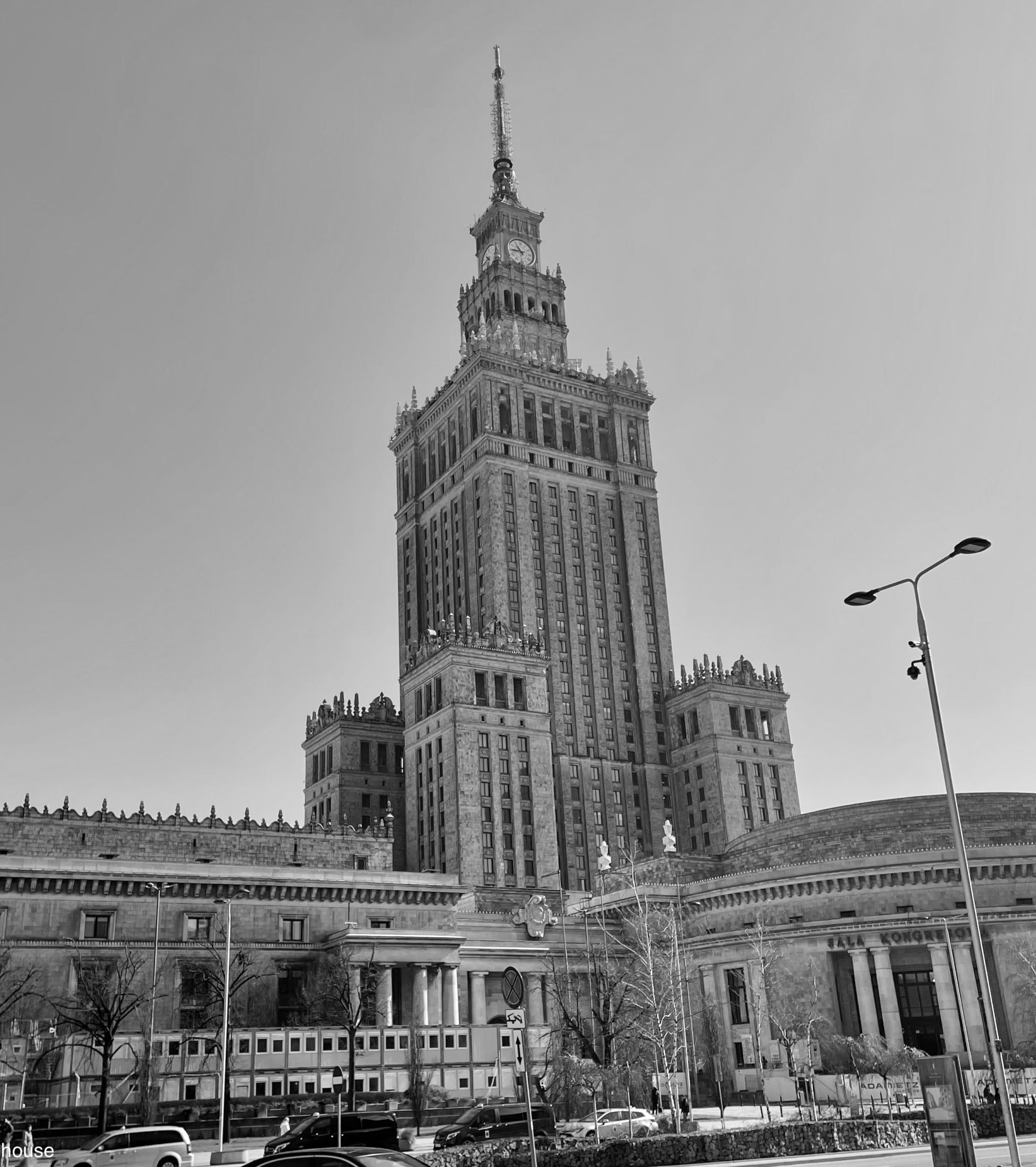
Palace of Culture and Science in Warsaw, Poland.
The Masovian Voivodeship (also known as Mazovia) is the largest and most populous province in Poland. Its main city is the Polish capital of Warsaw. To find out more about Warsaw and the story of the Boys who grew up there click here.
Jewish communities in Masovia faced widespread destruction during World War II. The Treblinka camp was located in Masovia. It was a major site of extermination during the Holocaust, where an estimated 900,000 people were murdered, primarily Polish Jews. This site is of particular importance in the story of the Boys as it was where so many of their families were murdered.
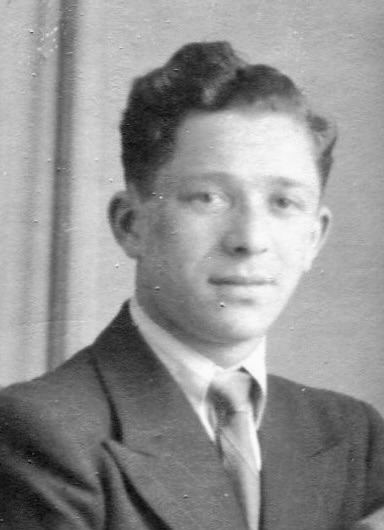
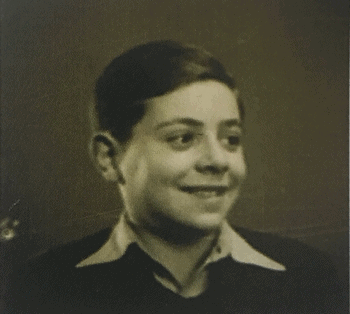
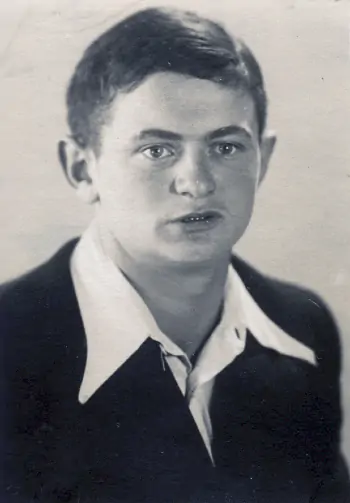
Jack Bajer Jacob FersztandMoniek Goldberg
Three of the Boys born in the Masovian Voivodship. These photographs were taken after World War II.
Background
Masovia was annexed by Prussia in the 1795 during the third partition of Poland. In 1807 it became part of the Duchy of Warsaw during the Napoleonic Wars and later part of the Congress Poland after the Congress of Vienna. In 1918 Masovia was included within the newly formed the Second Polish Republic.
The Masovian Voivodeship historically had a significant Jewish population, with many towns and cities serving as shtetls or Jewish settlements.
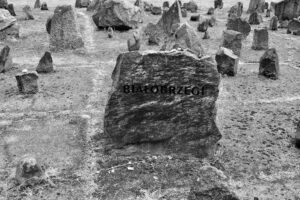
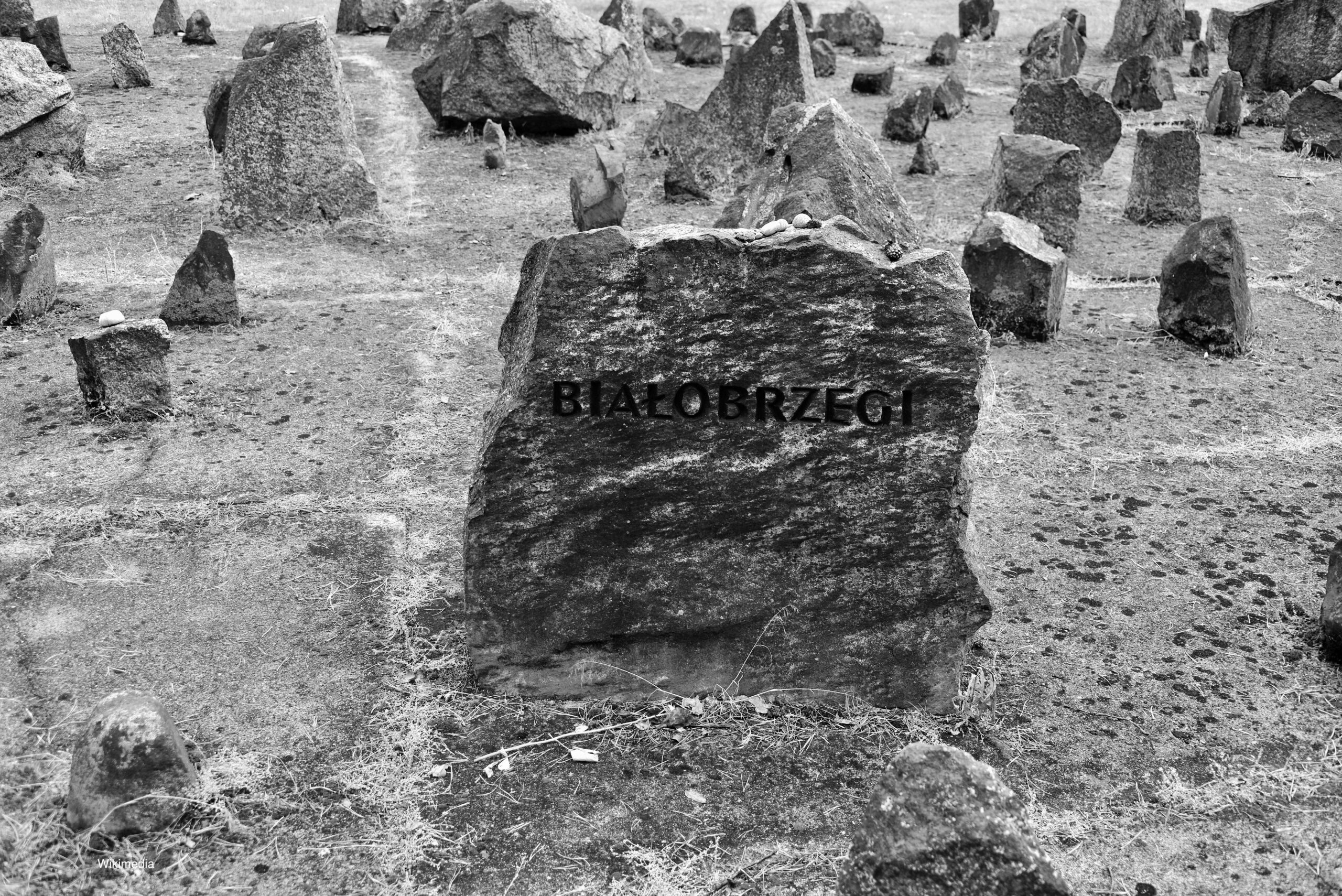
Białobrzegi memorial at the former Treblinka extermination camp.
The Boys from the region grew up in Glowaczow, Gora Kalwaria, Jeziorna, Kozienice, Piaseczno, Płock, Siedlce, and Wiskitki. For more information on Białobrzegi click here.
World War II
During World War II, Nazi Germany occupied Poland and Masovia was divided between the General Government and the Province of East Prussia.
Ghettos were set up across the region in which the Boys and their families were held. For information on ghettos in the region click here: Białobrzegi, Kozienice,Płock and Warsaw.
Three Minutes
In the summer of 1938, David Kurtz, a New Yorker visiting his hometown of Nasielsk 53km north of Warsaw, filmed the people who lived there. Nasielsk was also the birthplace of Salomon Pantoffelmacher, one of the Boys.
The footage sat in a closet in Palm Beach in Florida until it was found by Kurtz’s grandson Glenn in 2009 – and just in time, as the film was about to be lost to the menace known as ‘vinegar syndrome’. It was rescued by the United States Holocaust Memorial Museum.
In 2014, Glenn Kurtz wrote a book about his grandfather’s experience, Three Minutes in Poland. An hour-long documentary made out of the footage, Three Minutes: A Lengthening (2022), recreates the story behind the people in the film, nearly all of whom were murdered in Treblinka. Shot in colour, the film has a vivid immediacy that brings the lost world of the Boys to life.
Present-day
Efforts are underway to remember and preserve Jewish history in the region, through museums like Warsaw’s POLIN Museum of the History of Polish Jews and the preservation of Jewish cemeteries.
Visiting Masovian Voivodeship
>
Getting there & around Warsaw is both a major international air and railway hub. The region can be visited by public transport.
What to See
Glowaczow In 1940, the Nazis created a ghetto between Mariampol and Jasieniec streets. There are no other traces of Jewish life in Moniek Goldberg’s hometown.
Gora Kalwaria (Yiddish: Ger/Gur) In Abraham Wertman’s birthplace south of Warsaw, the Jewish Cemetery (Zakalwaria Street) contains the rebuilt ohel (tomb) of the Gerer Rebbes, which remains a site of pilgrimage for Hasidim. Two former synagogue buildings remain on Pijarska Street (5 & 10-12).
Jeziorna There is no trace of the Jewish community in Jeziorna, the hometown of Sam Freiman.
Kozienice Jacob Fersztand grew up in Kozienice, where the Jewish Cemetery (Radomska Street) devastated during the war has been partially restored. It contains a rebuilt ohel (tomb) of the Magid of Kozhnitz and a monument to Holocaust victims.
Nasielsk There are no traces of the Jewish community in Salomon Pantoffelmacher’s former home.
Piaseczno In Fishel Blumsztajn’s hometown, it is possible to see the Jewish cemetery (Tuwima Street). During 1942-1944, the Nazis used it as a site for mass executions of both Jewish and Polish citizens, with over 600 believed to be murdered there. A monument marks the site, and about 40 tombstones remain.
Plock Abraham Zwirek and Heniek Golde were both from Płock. The Museum of Mazovian Jews (Józefa Kwiatka Street, 7) is housed in a former synagogue. It was previously used as a warehouse. Today, it features exhibits on religious traditions, local Jewish life, and architectural drawings of buildings once owned by Jews. Józefa Kwiatka Street (formerly known as Szeroka Street) was the heart of the Jewish district.
Serock In David Jonisz’s birthplace there is no trace of the Jewish community he grew up in.
Siedlce In Jacob Bajer’s hometown the New Jewish cemetery (Szkolna street) established in 1825 remains. The oldest Jewish cemetery in Siedlce established in the 17th century was located next to the former horse market near the synagogue, between what are now Biskupa Świrskiego Street (formerly Długa Street), Berka Joselewicza Street (formerly Żydowska Street), and Józefa Piłsudskiego Street. It is marked by a monument.
Wiskitki Moshe Pinczewski’s hometown still has its Jewish Cemetery (Spółdzielcza Street) The cemetery was established in the first half of the 19th century. It contains about 60–80 preserved tombstones.
For more information on visiting Białobrzegi, Poland click here.
Visiting Treblinka
>
Treblinka
Treblinka was the site of one the Germans’ deadliest extermination camps, and between 800,000 and 920,000 Jews from ten different countries were murdered here between 1942 and 1943.
Close to the Bug River in remote countryside, Treblinka was chosen for the site of the camp as it was close to the main Warsaw–Białystok railway line. Today, it is a quiet, lonely place which gets few visitors.
Getting there It is much cheaper to visit Treblinka on your own steam. If you do not have a car take a taxi from the station in Małkinia Górna (7km away) and ask the driver to wait. Be sure to arrange the price first. It takes under an hour to see the site. Be aware that the route follows that taken by the trains to Treblinka.
What to see
Białobrzegi memorial at the former Treblinka extermination camp.
The site at Treblinka is over 2km long. The main area which was once the extermination camp, Treblinka II, is a short walk from the car park. The labour camp, Treblinka I, is at the other end of the forest complex from the museum and main memorial. It is possible to drive there, where there is a second car park.
There is no need to book in advance to visit Treblinka, access is 24 hours and free.
The Treblinka Museum (open daily; free) is next to the main car park.
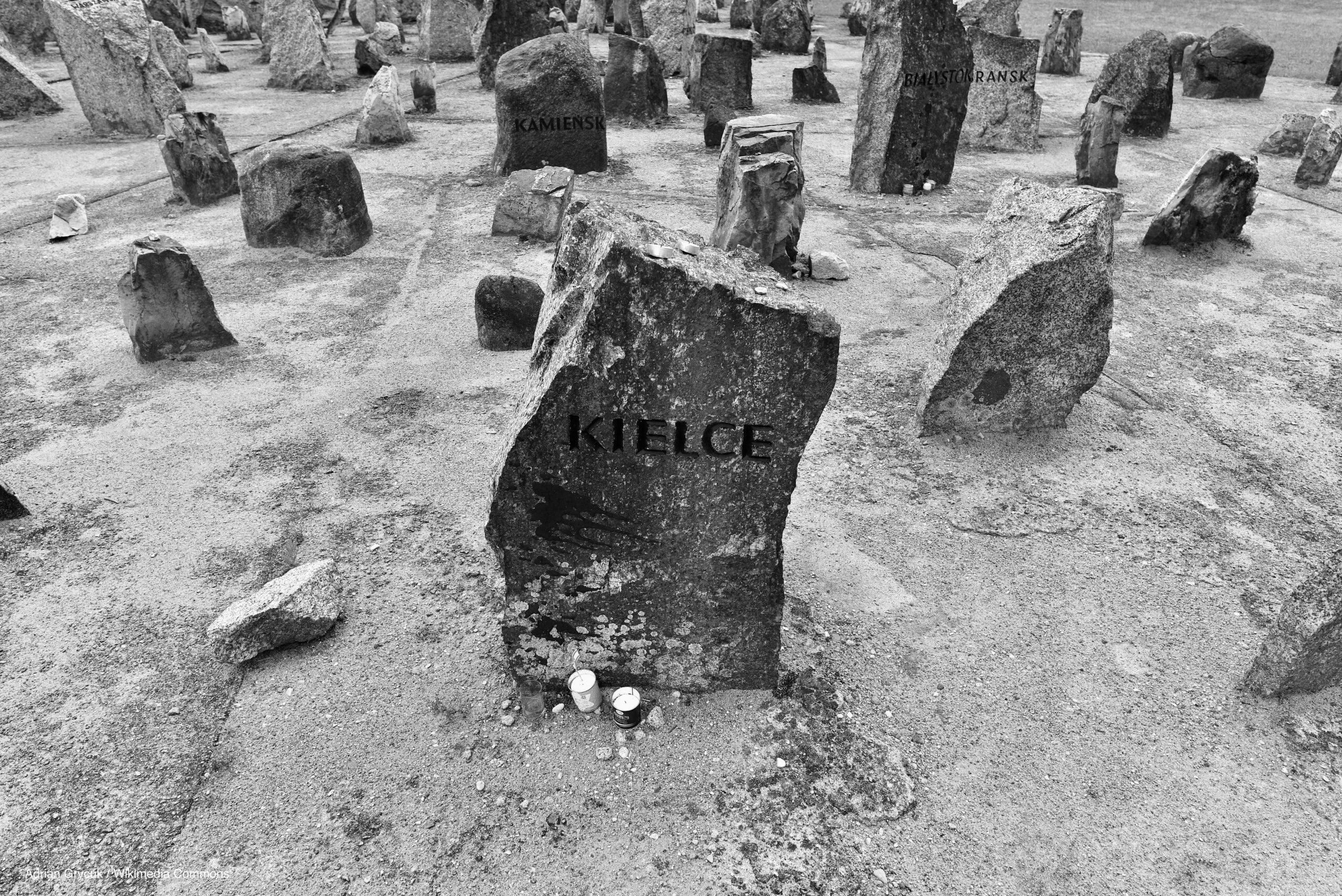
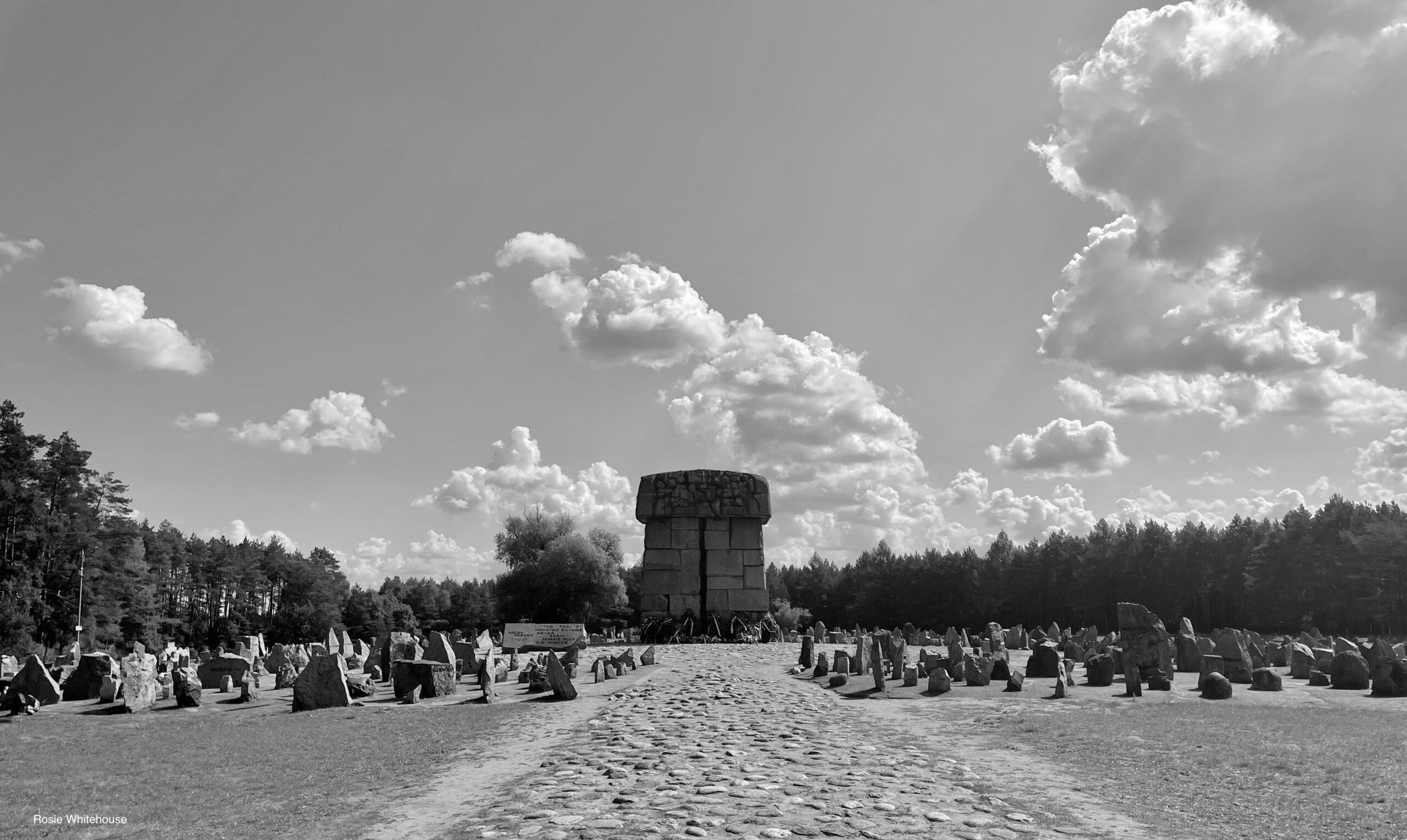
Nothing remains of the camp, which is now covered by 17,000 stones, 216 of which are marked with the names of communities destroyed by the mass murder in Treblinka. They stand on the site of the mass graves and buried ashes.
The path from the car park takes you past the memorial. The railway line is marked by stone slabs that lead to the ramp. The path continues behind the main monuments and curves back to the car park and visitors’ centre.
Members of the Boys were born in Vilnius, Poland, now in Lithuania.
The Boys were teenage and child-Holocaust survivors, who were brought to the UK after the war for rest and rehabilitation.
Members of the Boys were held in Nazi labour and concentration camps and used as slave labourers. They had also survived World War II in hiding or as lone children.
Background Jews have lived in Lithuania since the 14th century, and by the 18th century, Vilnius (also known as Wilno) had become a major centre of Jewish religious and cultural life. The city was home to Elijah ben Solomon Zalman (1720–1797), known as the Vilna Gaon, one of the most influential Torah scholars in Jewish history.
In 1795, following the Third Partition of Poland, Vilnius became part of the Russian Empire, ending the existence of the Polish–Lithuanian Commonwealth. Widespread antisemitism and pogroms under Russian rule prompted waves of Jewish emigration from Lithuania in the late 19th century.
Interwar Period (1919–1939) After World War I, Vilnius became part of Poland in 1922 and remained under Polish control until 1939. The city had a large and vibrant Jewish population, known for its synagogues, schools, libraries, theatres, and political activism, earning it the nickname “Jerusalem of the North.”
World War II In 1939, following the Nazi-Soviet Pact, the USSR seized Vilnius and soon transferred it to Lithuanian control, though Soviet occupation resumed shortly thereafter. In 1941, Germany invaded the Soviet Union and occupied Vilnius.
The city’s Jewish population was confined to the Vilna Ghetto, where a strong underground resistance movement emerged. Many residents were murdered in the Ponary (Paneriai) forest, where approximately 70,000 Jews from Vilnius and the surrounding region were executed in mass shootings—part of what is now called the “Shoah by Bullets.”
Aftermath After Vilnius was liberated by the Red Army in 1944, a small number of survivors attempted to rebuild the community. However, most emigrated due to continued Soviet repression. The city was incorporated into the Lithuanian SSR under Soviet rule.
Present-day
The city still has a small Jewish community
Visiting Vilnius
>
Getting there
Vilinius has good air and road connections. Trains also run to Riga and Warsaw.
What to see
Ghetto Location
The Little Ghetto was located at the beginning of Stiklių gatve to the right of Vilnius Town Hall, where there is a map and memorial plaque.
Former Great Synagogue was on Žydų gatve. Take the second left turn on Stiklių gatve. Next to it stood the famous Strašūnas Library. The complex was damaged in World War II, though not irrevocably, and it is now undergoing restoration.
The Great Ghetto
Vokiečiu gatve ran between the two ghettos. Now far wider than originally laid out, this was the heart of the Jewish Quarter and once bustled with shoppers and peddlers.
Jewish Culture and Information Centre (Mėsinių 3a/5) Stop here to pick up a map of Jewish Vilnius. In the basement there is a fascinating recreation of a malina, a hiding place. Outside there are information panels, as well as an example of the ‘Walls That Remember’ graffiti art initiative and one of the city’s talking statutes. Use the QR code you’ll find there to activate it.
The Judenrat was located at Rūdninku 8, a few minutes’ walk away. The entrance to the Great Ghetto was at No. 18, where there is a memorial plaque. After the liquidation of the Great Ghetto in September 1943, around 1,250 Jews were transferred to a labour lamp on Subačiaus gatve (Bldgs 47 & 49), 2km east of the city centre. There is a memorial between the two buildings and an information plaque.
Vilna Ghetto Library (Žemaitijos g. 4) This site is being transformed into a new memorial museum for the Holocaust and the Vilna Ghetto.
Synagogue
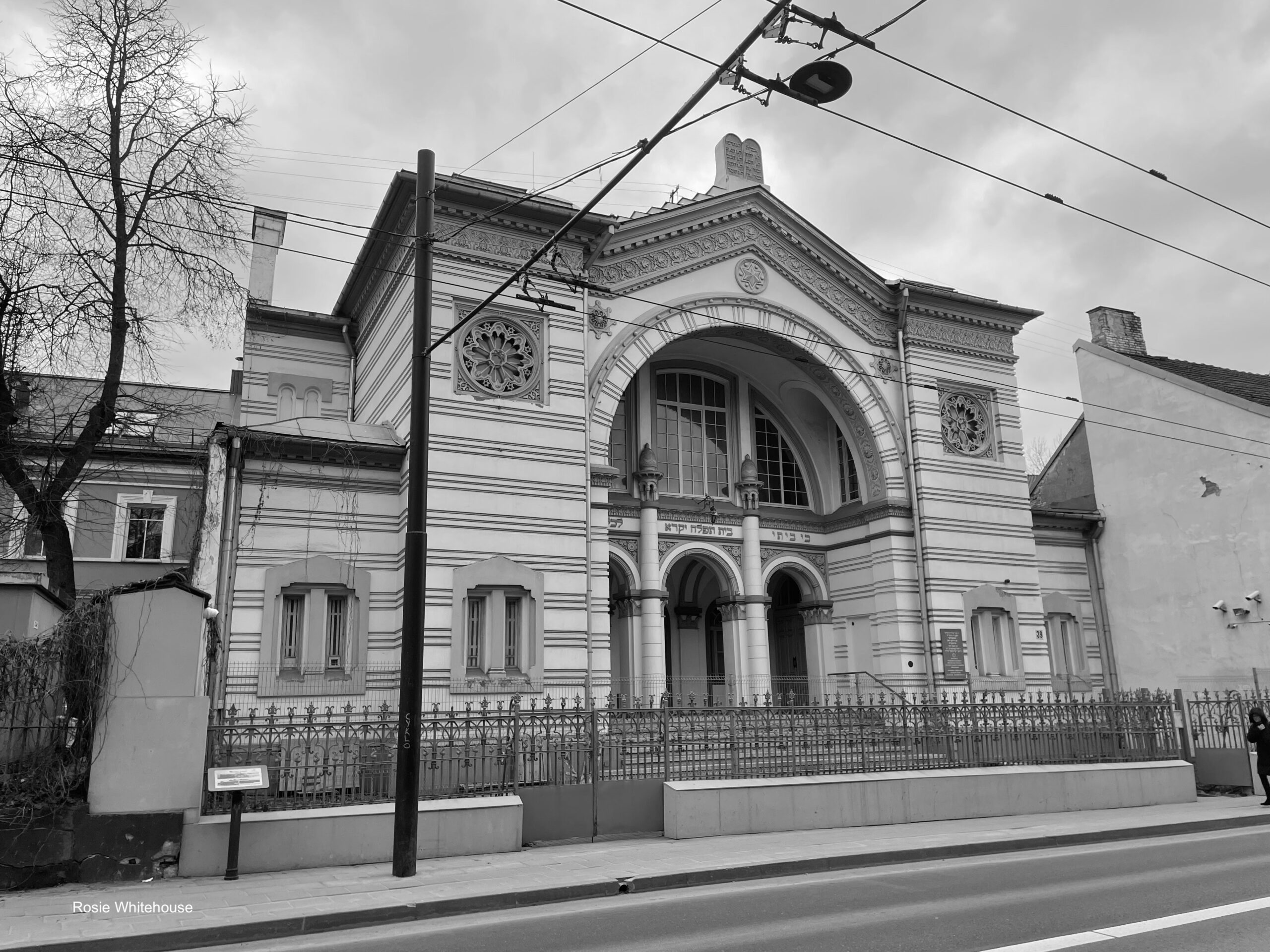
Choral Synagogue (Pylimo g. 39; ring the bell on the gate for admission) Here the partisan leader Abba Kovner made his famous rousing speech after the liberation at Jewish New Year 1944. Do not miss the fascinating old matzo-making machine on display in the women’s gallery.
Museums
Vilna Gaon Museum of Jewish History The Vilna Gaon Museum of Jewish History covers a number of important museums:
The Samuel Bak Museum in the Tolerance Centre (Naugarduko g. 10/2) Much of the museum is dedicated to the artist Samuel Bak, but it also hosts an extremely moving exhibition about children who were saved during the Holocaust. A child’s singing guides visitors to a memorial for the murdered Jewish children of Lithuania.
The Museum of Culture and Identity of Lithuanian Jews, (Pylimo g. 4A) The museum is in the Lithuanian Jewish Community headquarters in the former Tarbut School. It also exhibits the work of Rafael Chvoleso (1913–2002) in the separately named Rafaelio Chvoleso Muziejus and other Jewish cultural figures. It tells the story of Jewish life in Lithuania, notably of Jewish secular schooling.
The Holocaust Exhibition (Pamėnkalnio str. 12) Located in a wooden building known as the Green House. The museum is rather old fashioned but is due to be replaced by the new museum in the former ghetto library.
Further afield
Paneriai Forest Paneriai Paneriu Memorialas (Agrastu g. 17; w jmuseum.lt/lt/paneriu-memorialas-2; ( 24hrs; free) During the Soviet occupation, the Red Army dug several huge round pits in which to store aircraft fuel outside the village of Aukštieji Paneriai, 14km southwest of Vilnius. The Germans used them as ready-made death pits. They hold the remains of 75,000 people, mostly Jews but also Soviet prisoners of war and Poles murdered by the Germans and Lithuanian collaborators between 1941 and 1943. The events are well documented in the visitor’s centre.
Rudnicki Forest After the liquidation of the Vilnius Ghetto in 1943, Abba Kovner and his partisans hid out deep in the Rudnicki Forest, south of Vilnius near the border with modern-day Belarus. The partisans, because they had fought with the Red Army, were heroes in Soviet times, and every Soviet school child visited the old partisan bunkers. Since the present Lithuanian government does not celebrate Soviet heroes, Kovner’s hideout no longer appears on maps. If you decide to visit, pack mosquito repellent as the forest is infested. For information on visiting ask at the Jewish Culture and Information Centre.
Members of the Boys were born in Szombathely in Hungary.
The Boys were teenage and child-Holocaust survivors, who were brought to the UK after the war for rest and rehabilitation.
Members of the Boys were held in Nazi labour and concentration camps and used as slave labourers. They had also survived World War II in hiding or as lone children.
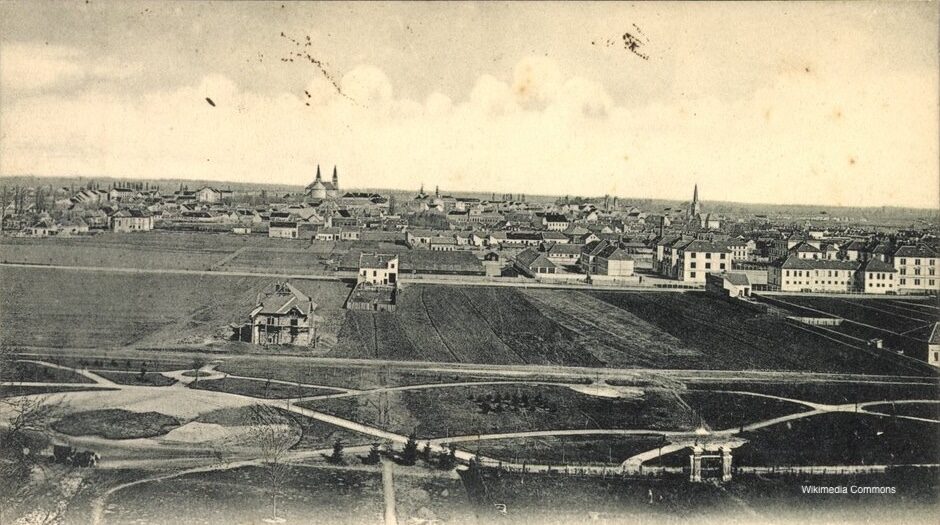
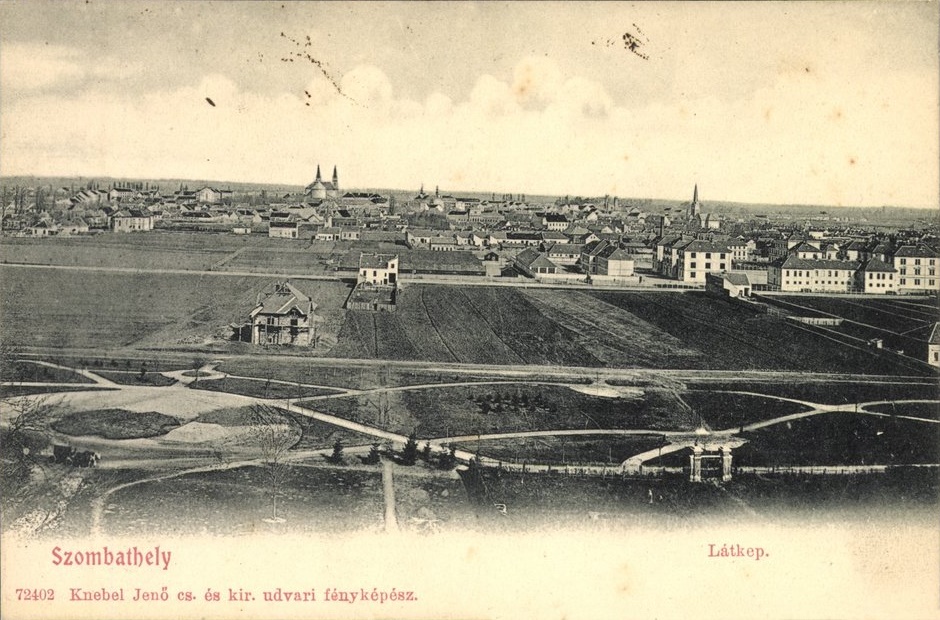
Old Photograph of Szombathely, 1904.
Szombathely is the administrative centre of Vas County in the west of the country, located near the border with Austria.
In 1941, about 3,400 Jews lived in Szombathely, amounting to nearly 10% of the population. Jews were inducted into forced labour battalions in 1942. In May 1944, Jews were concentrated in the local ghettos. A few months later they were deported to Auschwitz II-Birkenau concentration and extermination camp.
About 50 Jews survived and returned after the Holocaust.
Visiting Szombathely
>
Getting there Szombathely is easily reached via major hubs in Hungary and Austria due to its location near the western border.
What to see
Former Synagogue (Bartók Concert Hall) Built between 1880 and 1881, the stunning, large temple was designed by Ludwig Schöne with Oriental and Romantic elements. It served as the center of religious life until the community was destroyed in 1944. Since 1975, it has been transformed into a concert hall, preserving the structure, located near the city centre. Ghetto Location The ghetto centred around Thököly and Rákóczi Ferenc II Streets. This area included the main synagogues and over 700 apartments, confining the Jewish population before deportation. Holocaust Memorial A memorial stands outside the former synagogue.
Members of the Boys were born in Szabolcs District in Hungary.
The Boys were teenage and child-Holocaust survivors, who were brought to the UK after the war for rest and rehabilitation.
Members of the Boys were held in Nazi labour and concentration camps and used as slave labourers. They had also survived World War II in hiding or as lone children.
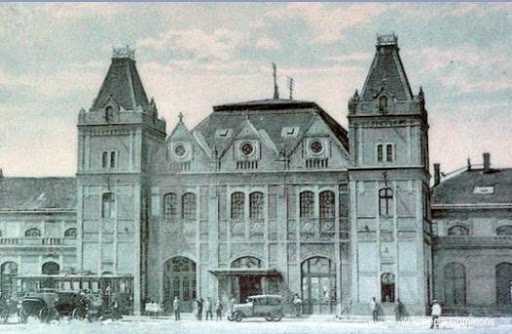
Old postcard of Nyíregyháza, Hungary.
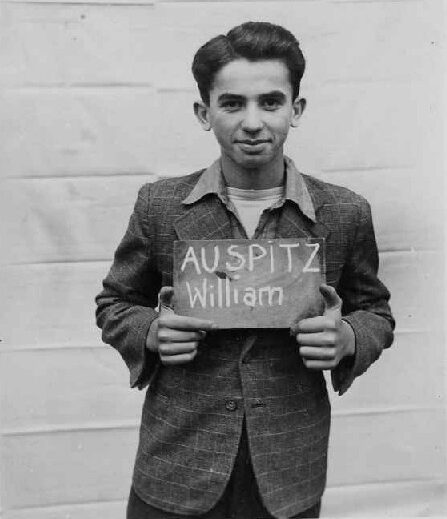
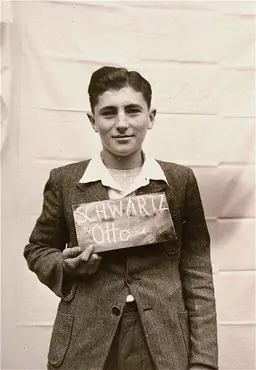
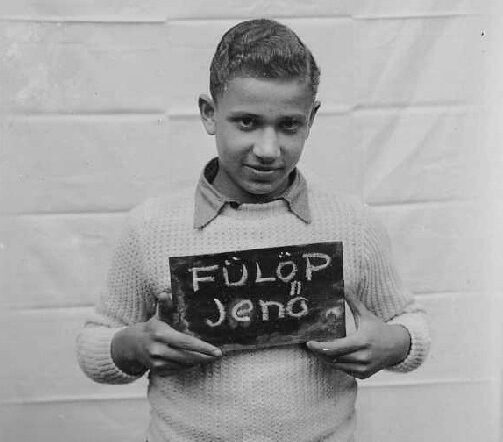
Szabolcs-Szatmár-Bereg County in Hungary is located in the north-eastern part of the country, bordering Romania, Slovakia, and Ukraine. Its principal cities are Nyíregyháza, home to William Auspitz, Kisvárda, the birthplace of Marget Berger and Nyírbátor, Otto Schwartz’s hometown.
The Szabolcs District historically had a significant Jewish population.
William Auspitz Otto SchwartzYeno Fülöp i
Three of the Boys who grew up in the region. These photographs were all taken in the Kloster Indersdorf, DP camp.
Interwar years
The 1920 Treaty of Trianon stripped Hungary of two thirds of its territory. A sense of grievance and shock fed a fanatical nationalist movement which soon acquired an authoritarian nature, which in turn fuelled growing antisemitism.
Jews in Hungary were persecuted from 1920 onwards. Hungary’s 1938–41 racial laws were modelled on Germany’s Nuremberg Laws. By reversing the equal citizenship laws of 1867, the government excluded the Jewish community from Hungarian society.
In the interwar period the villages of But, Eszeny (present-day Esen), Szalóka (present-day Solovka) and Tiszaágtelek (present-day Tisaahtelek) were part of Czechoslovakia but were occupied by Hungary from 1938 to 1945.
1944
The Germans occupied Hungary in March 1944. After which the Jews in the region were deported to the Auschwitz-Birkenau concentration and extermination camp. To find out more click here.
Present-day
Today the villages of Esen, Solovka and Tisaahtelek are part of Ukraine.
Visiting Szabolcs-Szatmár-Bereg County
>
Getting there The closest airport is Debrecen. Trains run from Debrecen and Budapest to Nyíregyháza.
There are traces of Jewish life in the following Boys’ former homes:
Nyíregyháza.
Old Jewish cemetery (Inside of the municipal cemetery at the end of Szent István Street)
Kisvarda
Synagogue Designed by Ferenc Grósz, the former synagogue on the main square now serves as the Rétközi Múzeum. There is a memorial plaque with the names of Holocaust victims.
Nyirbator
Jewish Cemetery (Hegy u. 1) The large cemetery contains approximately 900 tombstones dating from 1852 to 2019.
Nyíregyháza
Holocaust Memorial (between Dob and Holló Streets)
Jewish Cemetery (Árpád Street) This well-maintained site contains 1,207 gravestones (the oldest from 1855), four ohalim, and a Holocaust memorial.
Many members of the Boys were born in Subcarpathian Rus.
The Boys were teenage and child-Holocaust survivors, who were brought to the UK after the war for rest and rehabilitation.
Members of the Boys were held in Nazi labour and concentration camps and used as slave labourers. They had also survived World War II in hiding or as lone children.
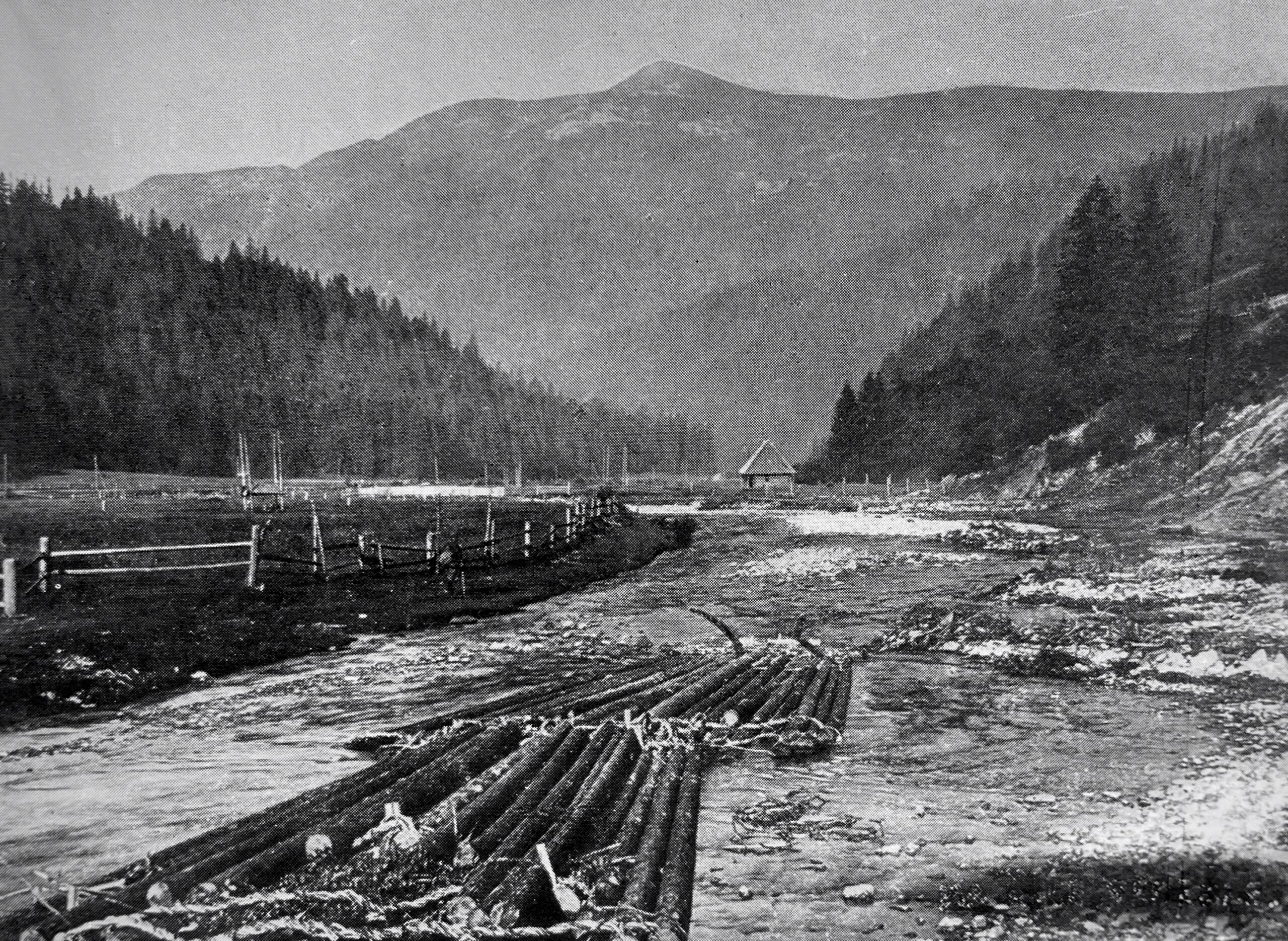
The Carpathian Mountains in the 1930s.
Subcarpathian Ruthenia was a region in the easternmost part of Czechoslovakia.
The area in Czechoslovakia was occupied by Hungary in 1938 and was annexed to Hungary in March 1939.
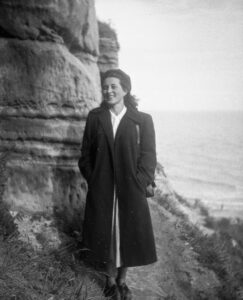
Rose Schindler.
“Even though our village isn’t very big, it has nearly everything we need. When we walk down the street, many people I see are Jewish. Momma says there are about 2,000 people in Seredne and about 30 percent of them are Jewish. I can walk from one end of town to the other in 30 minutes. We don’t leave the village very often because we don’t need to. There are some things we buy at the general store like kerosene for our lamps, rice, barley, bars of laundry soup, sugar and nails. If we need to see a doctor or get something important that our town doesn’t have, we go to the large town on a bus that travels through once a week. Tata rode the bus to get his glasses.
Tata says the two towns around us are each a three-hour walk away. Uzhhorod is to the west and Mukačevo is to the east. He says there is one dirt road that connects all three towns. Seredne is in the middle. In fact, the word seredne means ‘middle’.”
From 1939, laws were introduced banning Jews from attending school or from running businesses. In the summer of 1941, Hungarian authorities deported about 18,000 Jews from Subcarpathian Ruthenia. Those men who avoided deportation were conscripted into slave labour.
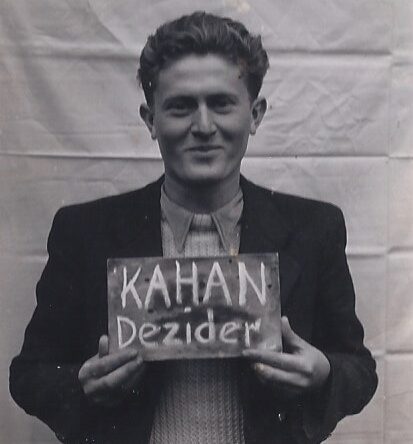
Dezider Kahan Victor Greenberg.Mechel Bandel
Three of the Boys from Transcarpathia. These photographs were all taken after the liberation.
Rachel Levy
“It changed a lot because it was Hungary at one time and when I was born it was Czech. People also spoke Romanian, people in the mountains certainly all spoke Romanian, so our village was a mixture of all languages. Actually in the village itself mostly Jews lived there, in the surrounding mountains it was Romanian speaking people … and of course the Jews all spoke Yiddish, so I was brought up speaking Yiddish mainly … the village in the Carpathian Mountains was a beautiful place; small with about a hundred Jewish families and lots of traders.”
Rachel Levy written testament
1944
In March 1944, Germany invaded Hungary.
In April 1944, 17 main ghettos were set up in the region where 144,000 Jews were held until they were transferred to Auschwitz II-Birkenau concentration and extermination camp between May and June 1944.
Over 90,000 of the more than 100,000 Jews from the region were murdered in the Holocaust.
The vast majority of the third and fourth groups of the Boys came from Subcarpathian Rus.
Aftermath
In 1945, part of the region that had been in Czechoslovakia before World War II was incorporated into the Soviet Union. Most survivors who returned decided to leave as they could not practice their religion and Zionism could lead to imprisonment.
Visiting the Carpathians
>
Getting there & around
Uzhhord is the main point of entry for the region. Trains run from Košice in Slovakia.
Note that the UK Foreign Office advises against travel to Ukraine because of the ongoing Russian invasion.
To explore the rural areas of the Carpathian Mountains you need your own transport.
The Boys came from a variety of small towns and villages. Larger towns and cities are listed separately in this section.
What to see
The synagogue building still stand in Kuzmin
Cemeteries
There are cemeteries in the following birthplaces:
Vysni Apsa is remembered in A Vanished World, Roman Vishniac’s seminal work, which highlights the isolation and poverty of the rural Carpathian Jewish communities.
 About
About History
 Education
 Quilts
 FIlms
FIlms Photos
 News Media & Events
 Publications
 Donate