Dęblin-Irena, Poland

Members of the Boys were born in Dęblin-Irena in Poland.

The Boys were teenage and child-Holocaust survivors, who were brought to the UK after the war for rest and rehabilitation.

Members of the Boys were held in Nazi labour and concentration camps and used as slave labourers. They had also survived World War II in hiding or as lone children.
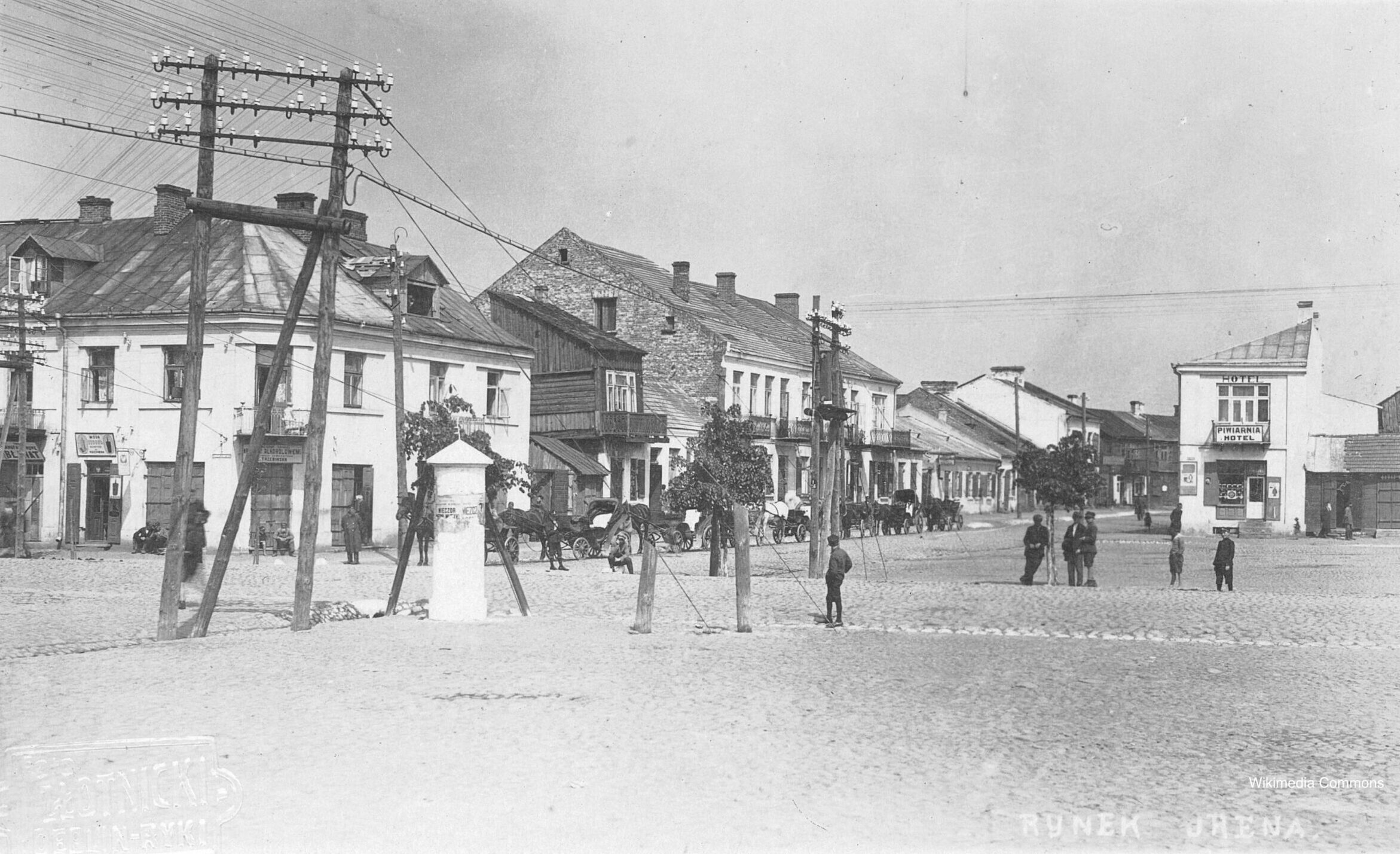
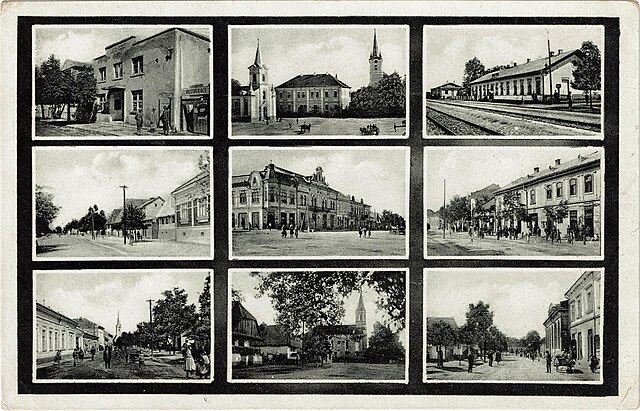
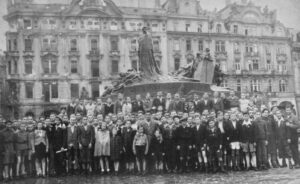
Photograph of the market in Deblin, Poland, 1928.
Market in Dęblin, Poland, 1928.

Background

Jews settled in the area around Dęblin in the 18th century. Until the partition of Poland in 1795, when the town became part of the Russian empire, Dęblin was called Modrzyce and was home to the rabbinical Taub family.

Dęblin has always been an important military town and in 1926 the biggest airport in Poland was built there. It was a centre for the training of fighter pilots. Dęblin was also an important railway junction.

There were several Jewish bakeries in the town and Jews owned the soda factory, a brewery and the timber mill. A Jewish weekly newspaper was published in Dęblin from 1929 until the outbreak of World War II.

The Frydenberg brothers were born in Dęblin and came to the UK in the First Group of the Boys in August 1945.

Although Jews were not drafted into the Polish air force, or allowed to work for the state railway, Dęblin’s Jews made a living supplying both.

Antisemitism grew in Dęblin in the interwar period and there was a boycott of Jewish shops in the late 1930s.

Wartime

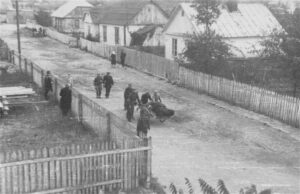
Deblin Ghetto
Deblin Ghetto

During the German invasion of Poland in September 1939, Dęblin was badly bombed, as was nearby Ryki.

The synagogue in Dęblin was burnt down in October 1939 and persecution of the Jews began in earnest. Twelve Jews were burned alive in the synagogue.

All Jews from adjacent villages were placed in the Dęblin-Irena Ghetto. To find out more about the ghetto and the Boys who were held in it click here. In May 1942, 2,500 Jews were deported to the Sobibór extermination camp where they were murdered. A further 3,250 Jews were deported to the Treblinka extermination camp in September where they were gassed. No Jews remained in Dęblin by October 1942.

Dęblin had five labour camps and the town was an important military base prior to the German invasion of the Soviet Union in the summer of 1941. The Boys worked in these camps, notably the one at Dęblin airfield. One of the last Jewish labour camps in the Lublin District, it enabled hundreds of Jews to survive the Holocaust. The camp was closed in July 1944 and the workers moved to the HASAG labour camps in Częstochowa.

Aftermath

After the end of hostilities, 82 Jews returned to Dęblin-Irena, nine of whom were murdered by Poles. All the surviving Jews left during the summer of 1945.

Present-day 

Today, no Jews live in Dęblin.

Visiting Dęblin-Irena
>

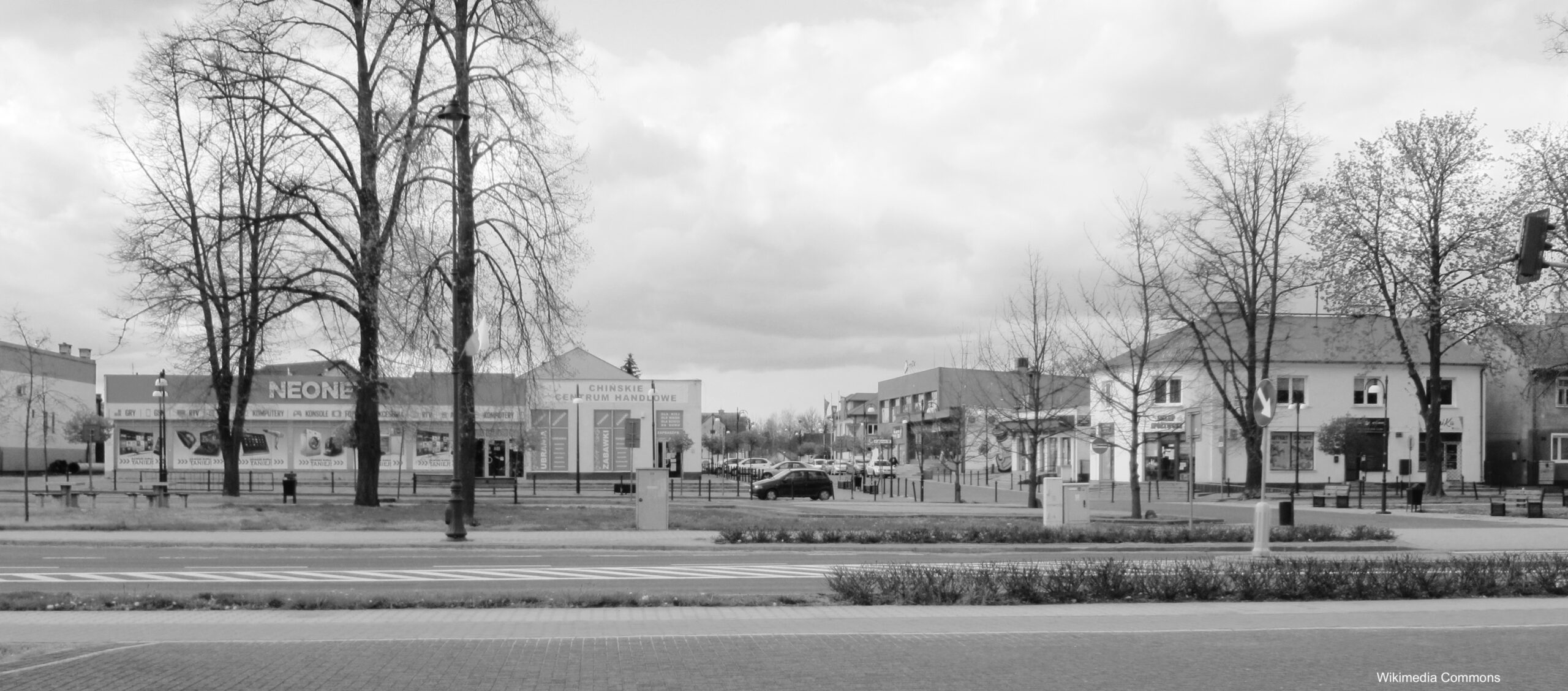
Little physical trace of this vibrant community remains in Dęblin.

Getting there Dęblin is approximately 1-1.30 hours by train from Warsaw, with trains running from Warszawa Centralna to Dęblin station. Frequent direct trains also run from Lublin Główny. Journey time by fast train is 40 minutes.

What to see

Ghetto Location The ghetto was in the Irena area. The boundaries were initially Okólna Street, the Irenka River, Bankowa, and Staromiejska Streets. Jews were subjected to forced labour at the Dęblin Fortress, local railways, and the Luftwaffe airfield.

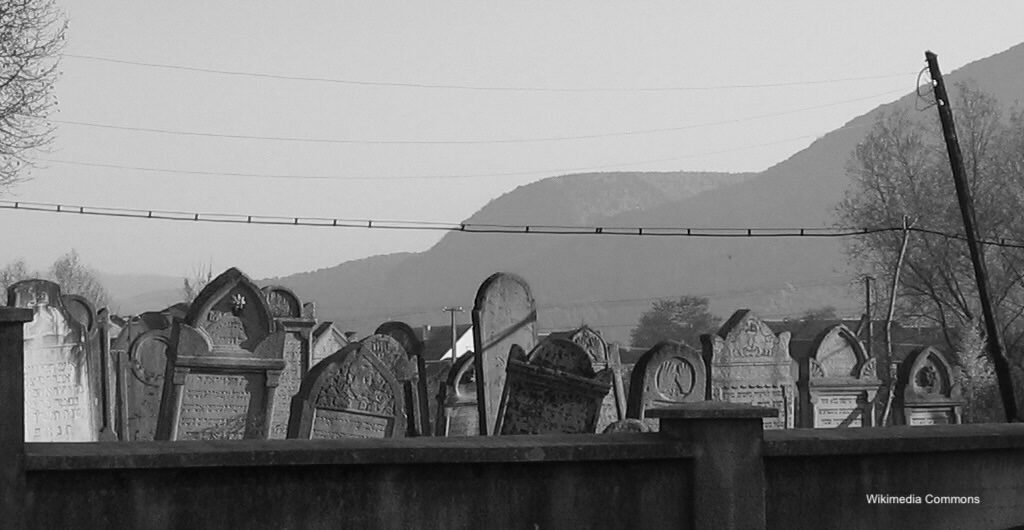
Jewish Cemetery While Dęblin’s own cemetery was destroyed, many residents were buried in the nearby Bobrowniki Jewish Cemetery (Dęblińska 14E, Bobrowniki) which contains around 47 graves and a memorial to Holocaust victims.

Dęblin, Poland

Częstochowa, Poland

Members of the Boys were born in Częstochowa in Poland.

The Boys were teenage and child-Holocaust survivors, who were brought to the UK after the war for rest and rehabilitation.

Members of the Boys were held in Nazi labour and concentration camps and used as slave labourers. They had also survived World War II in hiding or as lone children.
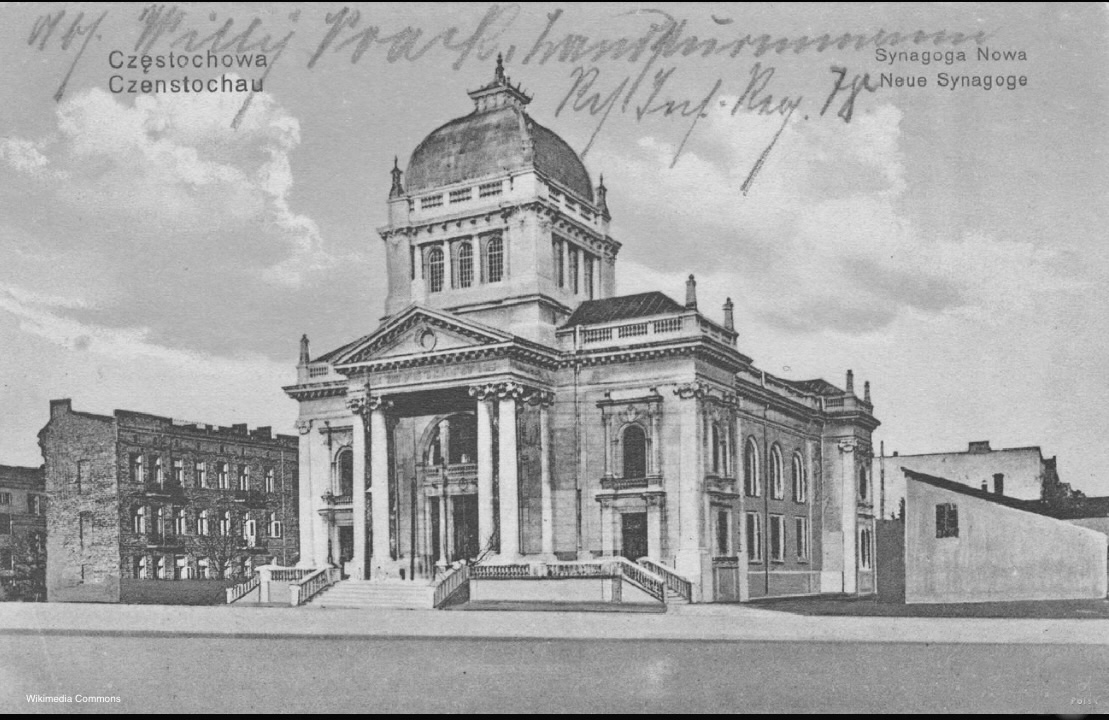
Old postcard of the New Synagogue in Czestochowa, Poland.

Old postcard of the New Synagogue in Czestochowa, Poland.

The industrial city of Częstochowa in southwest Poland is famous for the Catholic icon the Black Madonna but, before the Holocaust, it was also home to a lively Jewish community.

Częstochowa played a role in many of the Boys lives as a large number passed through the HASAG labour camp and from there were deported to the Buchenwald concentration camp in Germany. It illustrates the importance of slave labour in their survival but is also significant as it was through this period that many close friendships among the Boys were formed.

Pre-war

When World War II broke out, 28,500 Jews lived in Częstochowa. They played an active part in industry, banking, civic and commercial life. The city was also a centre for doll manufacturing and many of the toy companies belonged to Jewish families.

Częstochowa was also an important centre of Hasidism and Zionist movements. A Jewish agricultural training farm and a trade school operated in Częstochowa during the interwar years preparing young Jews for life in the Palestine Mandate. There was also a network of religious and secular Jewish schools, as in most large Jewish communities in Poland.

Wartime

The Germans entered Częstochowa on Sunday, 3 September 1939 and persecution of the city’s Jews began immediately.

A ghetto was established on 9 April 1941. Some 20,000 Jews, including a large number from Kraków, Łódź and Płock and the nearby villages were also imprisoned in the Częstochowa Ghetto.

The German company HASAG ran a series of labour camps in the city, in which many of the Boys worked as slave labourers prior to deportation to the Buchenwald and Ravensbruck concentration camps in Germany.

During World War II, HASAG became a Nazi arms-manufacturing conglomerate with dozens of factories across German occupied Europe using slave labour on a massive scale. HASAG employed women as well as men.

There was a little known underground resistance movement in the ghetto that maintained close contact with the Jewish Fighting Organisation in the Warsaw Ghetto.

Liberation

When the Red Army liberated Częstochowa, 5,000 Jews were still living in the area.

In June 1946, 2,167 Jews were living in Częstochowa. After the establishment of the state of Israel, many Jews left Częstochowa and, after the Polish Communist Party’s antisemitic campaigns of the 1960s, nearly all the remaining Jews left the city.

Visiting Częstochowa
>

Getting there Częstochowa is easily accessible by train from major Polish cities like Katowice, Warsaw, and Kraków.

What to See

Museum

Muzeum Częstochowskie (ul. Katedralna 8; entry fee) The city museum has a permanent exhibition on the city’s Jewish history. The website w czestochowa.pl/jewish-tour has an extensive list of Jewish memorial sites in the city.

Ghetto Location The area around the old city (Stare Miasto) and Dawson street was the center of the Jewish community before it was converted into a closed ghetto by the Germans in 1941. There is a commemorative plaque at Bohaterów Getta, 1–3.

Memorials

A memorial on ul. Olsztyńska 28 commemorates the victims both Poles and Jews shot by the Germans in 1939.

There are several Holocaust memorial in the Jewish cemetery on Złota, 42-202.

One of Częstochowa’s roundabouts is named after Leon Silberstein, one of the resistance leaders.

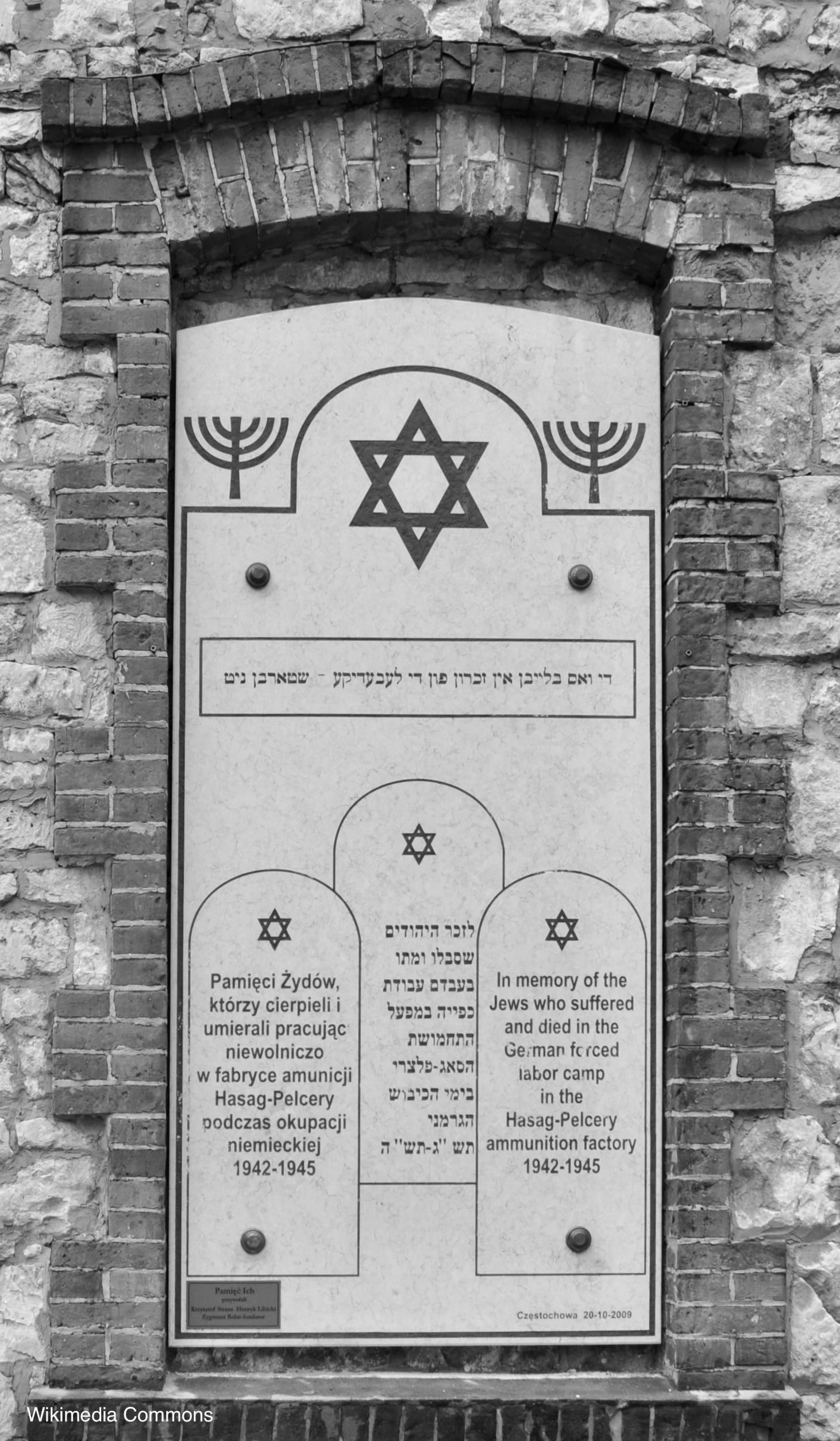
There is a memorial at the site of the HASAG labour camp on Oźmińska ul.

Cemetery

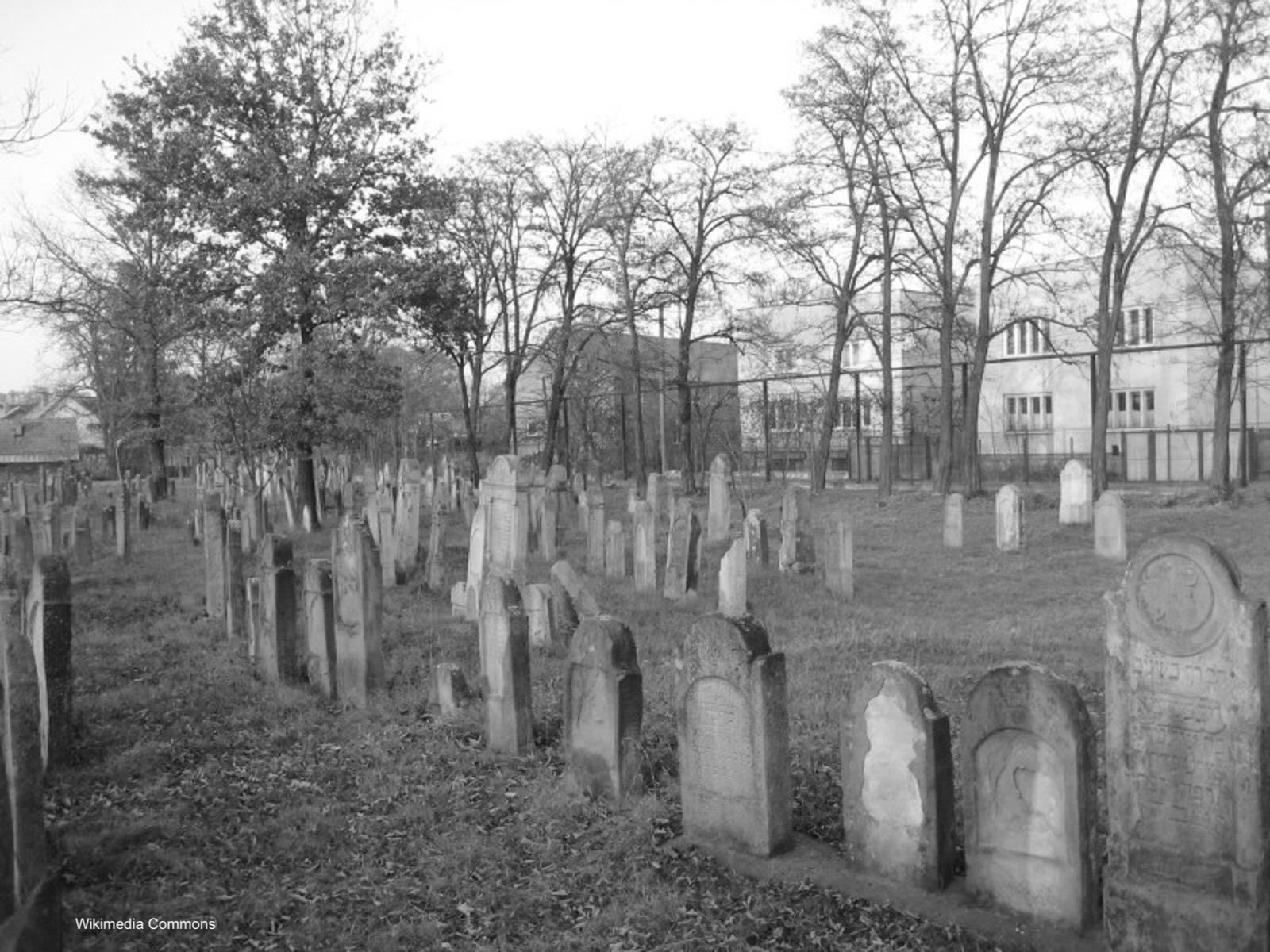
Jewish Cemetery (Złota Street 42-202) This is one of the largest in Poland. It contains around 4,000 tombstones (matzevot), the ohel of Tzaddik Pinchas Menachem Eliezer Justman, and several Holocaust memorials, including a mass grave of ghetto victims and a monument to the Jewish Combat Organisation.


Photograph of the Częstochowa Hasag Memorial Plaque.

Będzin, Poland

Members of the Boys were born in Będzin in Poland.

The Boys were teenage and child-Holocaust survivors, who were brought to the UK after the war for rest and rehabilitation.

Members of the Boys were held in Nazi labour and concentration camps and used as slave labourers. They had also survived World War II in hiding or as lone children.

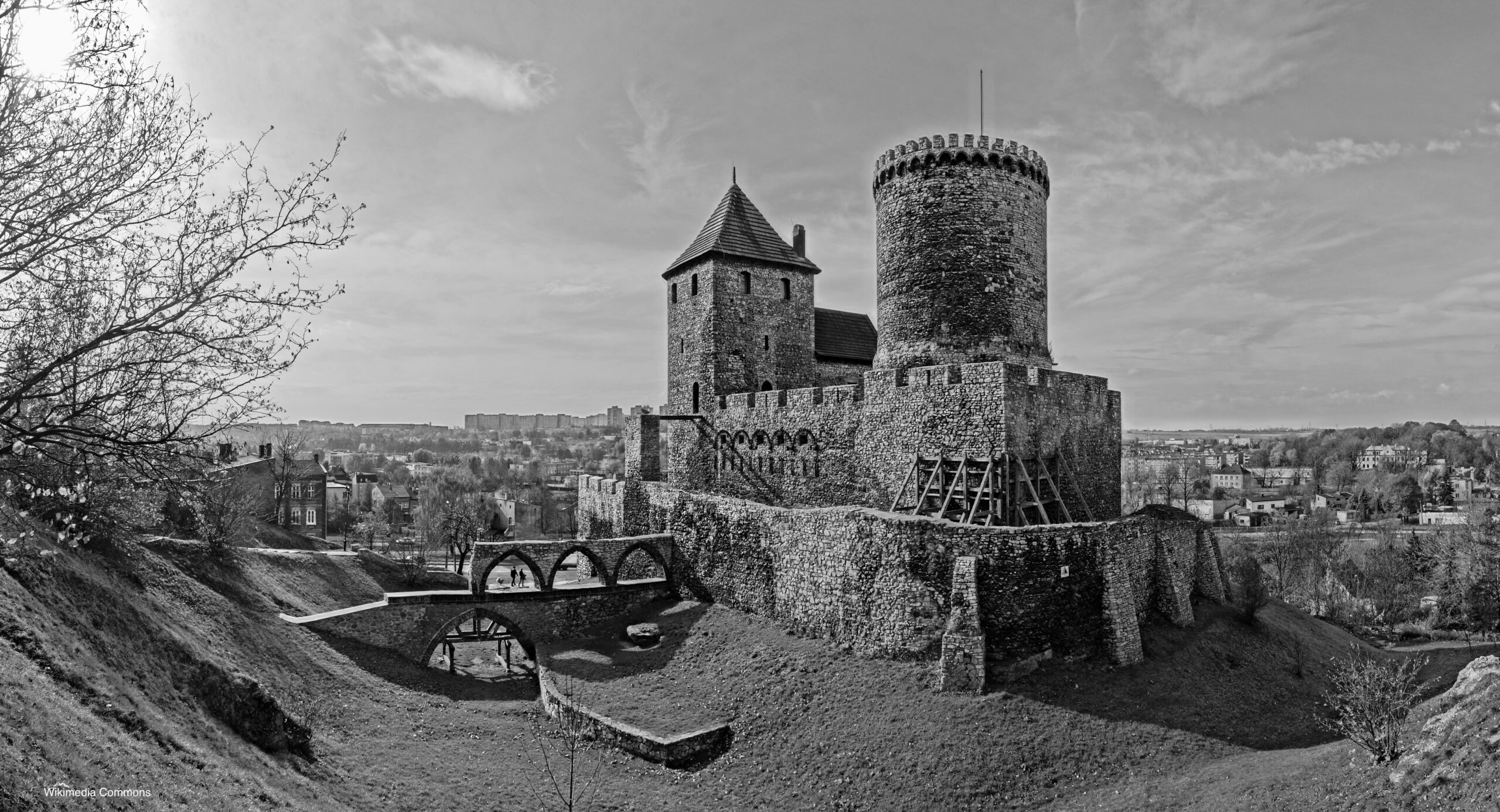
Photograph of Bedzin Castle, Poland.
Będzin Castle, Poland.

Until World War II, Będzin in southern Poland had a vibrant Jewish community. In 1938, the town’s Jewish population numbered around 22,500.

After World War I, Będzin Jews worked in iron-ore mining and metal production. Most Jews earned their livelihoods as merchants and craftsmen. They also owned chemical works and factories making paints, candles, and buttons.

Photograph of Sam Pivnik in 1945.
Sam Pivnik in 1945.

“Today you have to go on-line to see the places I remember. Kazimerz’s castle is still as a ruin, but it was a ruin when I was a kid. I remember the old market square, with its cattle, its horses, its chickens and coloured awnings of the stalls. When I was four they knocked down the nineteenth-century railway station and built a new one, all flat roofs and modern detailing, in the Art Deco movement that was sweeping all Europe. The Third May Square had a huge Art Deco statue in the centre of its tree-lined circle, a naked woman reaching into the clouds. There were trams and buses, trucks and the occasional car to remind us all that the twentieth century was here.”

Sam Pivnik, Survivor: the Death March, and My Fight for Freedom’ (2016).

Pivnik was born at Modzejowska ul. 77.

Wartime

On 5 September 1939, the German Army entered Będzin. The SS burned down the Great Synagogue, murdering 200 Jews inside. The surrounding Jewish homes also went up in flames. Those trying to escape were burned alive or shot.

In early 1940, a ghetto was established in the town. At its peak, the ghetto’s population reached approximately 27,000. To find out more about the Będzin Ghetto and see the collection of propaganda photographs from the ghetto click here.

Jewish Resistance

The Jewish underground resistance in Będzin became active at the beginning of 1940. In August 1943, during the last deportation, Jewish resistance fighters staged an armed revolt that lasted several days. One of the leaders killed in the uprising was the leading female Jewish partisan, Frumka Plotnicka, who had previously fought in the Warsaw Ghetto Uprising. All the resistance fighters were killed in the action.

Deportation

In the summer of 1943, most of the Jews in Będzin were deported to Auschwitz. The Będzin Ghetto was liquidated in August 1943.

Liberation

In January 1945, Będzin was liberated by the Red Army. Jews began to come back to the area, some intending to return to their homes.

More than 1,000 Będzin Jews survived the war, some of whom were in hiding, given help by local Poles.

In 1946, the Jewish population of Będzin numbered 150 people. Although some Jewish survivors resettled after the war, all of them later left. By the 1970s, there was little to no Jewish life remaining.

Present-day

Just a handful of Jews live in Będzin today.

Visiting Będzin
>

Będzin was established in 14th century by the King Casimir The Great and has a rich Jewish history. It is located in the Silesian Voivodeship.

Getting there & around The closest airport is at Katowice. There are direct train connections to most Silesian Voivodeship cities as well as Opole, Wrocław, Łódź, Toruń, Bydgoszcz, Gdańsk, Olsztyn, Warsaw, Białystok and Kielce.

The main sites are all accessible on foot.

Memorials

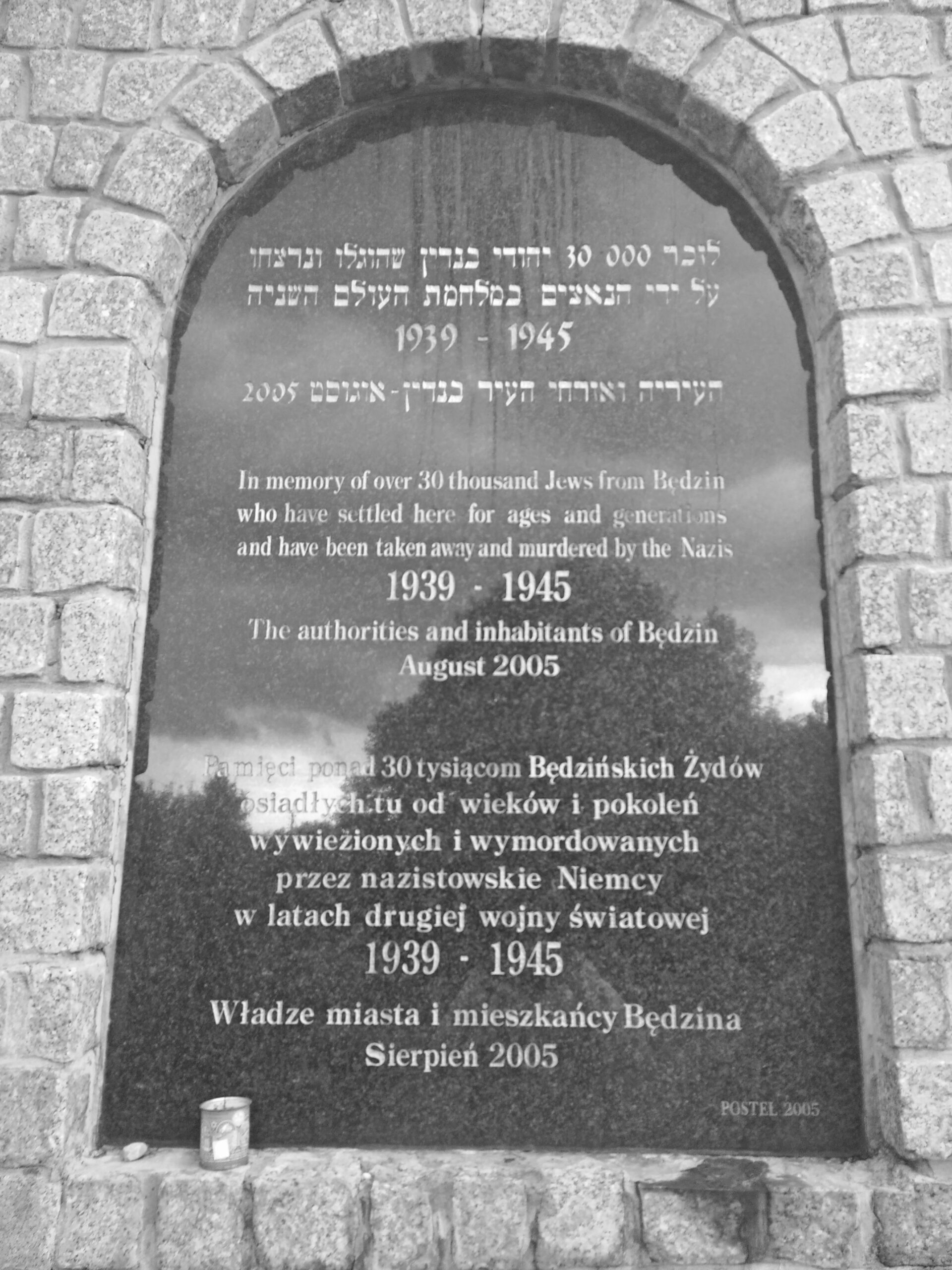
Synagogue Memorial (Zamkowa ul.) A small stone memorial commemorates the Jews murdered in Będzin.

Ghetto Fighters’ Bunker (24 Rutki Laskier ul.) Here the Jewish partisans made their last stand.

Ghetto Uprising Monument (Bohaterów Getta Bęzinskiego pl.) Unveiled in 2005 the memorial was designed by Romuald Malina.

Ghetto Location The Będzin ghetto was established by the Germans in the Kamionka district and Mała Środula, adjacent to the Sosnowiec ghetto. The borders were established in October 1942, marked by Wilcza, Wesoła, and Podsiadły streets.

Cemeteries

The Old Cemetery (intersection of Zawale and Modrzejowska Streets) The oldest Jewish cemetery in Będzin established in 1592. During World War II, on 11 May 1942, Gestapo officers publicly hanged two Jews in the old cemetery. The cemetery was levelled and is now a park adjacent to the city walls.

The Jewish Cemetery (Podzamcze ul.) Situated on the north-western slope of the Góra Zamkowa (Castle Mountain), near the Będzin castle, the cemetery still contains about 250 complete and 550 partially destroyed tombstones.

Jewish Community

Cukerman Gate Foundation  (Hugona Kołłątaja 24/28) Established in 2009, the foundation has preserved the former Jewish House of Prayer, which also serves as its headquarters. The foundation runs educational programmes across the region and has a map of Jewish Będzin w: bramacukermana.com.

Archive 

The United States Holocaust Memorial Museum holds a collection of photographs and identity cards of about 5,000 Jews interned in the Będzin Ghetto.

Bedzin
What to read
>

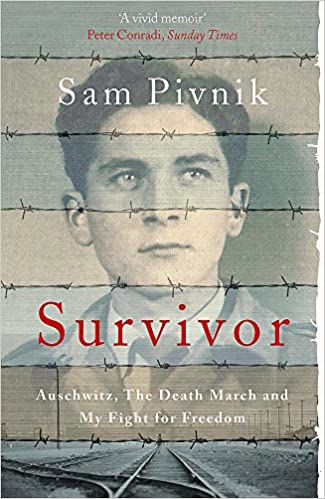
Survivor: Auschwitz, the Death March and my fight for freedom, Sam Pivnik (Hodder, 2013) A moving memoir by one of the Boys. To find out more about the book click here.

Rutka’s Notebook: A Voice from the Holocaust (Time, 2008) Rutka Laskier was 14, the same age as the Dutch teenager Anne Frank, when she wrote this 60-page diary over a four-month period in Bedzin Ghetto.

Velky Bockov, Czechoslovakia

Members of the Boys were born in Velky Bockov in eastern Czechoslovakia, which is now now Velykyi Bychkiv in Ukraine.

The Boys were teenage and child-Holocaust survivors, who were brought to the UK after the war for rest and rehabilitation.

Members of the Boys were held in Nazi labour and concentration camps and used as slave labourers. They had also survived World War II in hiding or as lone children.

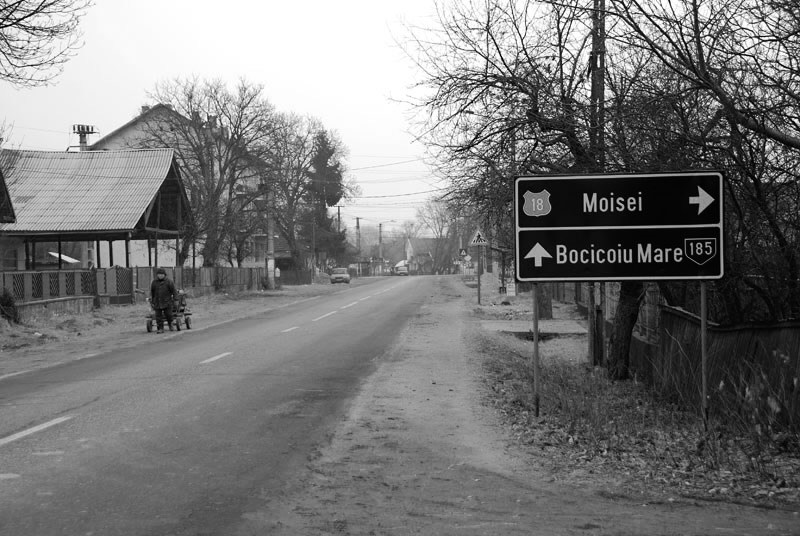
Velykyi Boychik is a village in the Zakarpattia Oblast region in south-western Ukraine, close to the border with Romania. The town is known as Velky Bockov in Czech, Nagybocsko in Hungarian, Bocicoiu Mare in Romanian and Bitshkof in Yiddish. It is 11km from Solotvyno and about 38km from Tyachiv both also home to members of the Boys.

Until the end of World War I, Velky Bockov was part of Austro-Hungary. Between the interwar period it was part of Czechoslovakia. During World War II, the region was occupied by Hungary. At the end of the war it became part of the Soviet Union.

Pre-war

Jews probably settled in Velky Bockov in the first half of the 18th century.

Two families were registered as living in the village in 1728, after which there was no record of Jews for over a century. This was probably due to the death of the Austro-Hungarian Emperor Josef II in 1790. He had granted certain privileges and freedom of worship to the Jews through his “edict of tolerance”, issued in 1782. After his death, however, there were attempts to banish Jews from the region. There was then no record of Jews in Velky Bockov until the mid-19th century.

In 1880, the Jewish population was 520, out of a total population of 3,605. By 1921, during the Czechoslovakian period, the Jewish population rose to 1,092.

Jewish families earned their livelihood mainly through trade and crafts. A number of Jews were professionals and government officials. The Zionist youth organisations were active and had branches in Velky Bockov.

In 1941, the Jewish population was 1,708.

Occupation

Following the Munich Agreement in 1938, Czechoslovakia was divided up, and in March 1939, Velky Bockov and the surrounding area were annexed by Hungary. Velky Bockov was now known by it Hungarian name of Nagybocskó.

The Hungarians imposed laws restricting Jewish access to education, trade, and the professions. Jewish businesses were taken over by Hungarians but many remained closed.

Photograph of Josef Perl in Hove in 1954.
Josef Perl in 1954.

Josef Perl was eight years old in 1938. The Czech teachers in his school were dismissed and replaced with Hungarian teachers:

“When we arrived at school, instead of sitting in our usual places with our friends, we were told where to sit. We were all, Jews and Christians alike, confused and bewildered. Suddenly we were told we were different, and that we were to be segregated. Jews sat on one side of the classroom and Christians sat on the other. It soon became evident that these new teachers were indoctrinating the non-Jewish children to hate us. Our calm, happy, peaceful world was shattered.

Older children began to harass Jewish children and to make our lives miserable, waiting for us outside school and beating us up as we left.”

Josef Perl, Faces in the Smoke: The Story of Josef Perl (2001).

In 1940, dozens of Jews from Nagybocskó were drafted into labour battalions as forced labourers. Many died on the eastern front.

In the summer of 1941, the Hungarian authorities identified as “alien” more than 100 Nagybocskó Jewish families unable to prove Hungarian citizenship, mainly the poorest ones, and deported them to Kamianets-Podilskyi in German occupied Ukraine, where they were murdered in August 1941.

Deportation

In March 1944, the Nazis occupied Hungary. At the beginning of April of that year all the Jews in Hungary were ordered to wear a yellow badge. In the same month, Jews from Nagybocskó were forced into the local synagogue, where they were kept for three days before being taken to the Mátészalka Ghetto in present-day Hungary. They were deported to the Auschwitz-Birkenau concentration and extermination camp in late May, 1944.

When the trains arrived in Birkenau a selection was made on the ramp. It offered healthy young men and women a chance of survival as they were often selected for slave labour.

An estimated 85% of the Jews of Transcarpathia perished in the Holocaust. The fact that they arrived six months before the camp was liberated in January 1945, greatly increased their chance of survival if they were selected for slave labour.

Liberation

In the autumn of 1944, the Soviet Red Army entered Nagybocskó and liberated it from the Germans.

In 1945, after World War II, Transcarpathia was annexed by the Soviet Union. Nagybocskó became part of the Ukrainian Soviet Socialist Republic and was from then onwards has been known as Velykyi Bychkiv.

The majority of the Jews from Velykyi Bychkiv were murdered in Auschwitz and most survivors settled elsewhere. A small Jewish community existed here until 1950.

Present-day

In 2016, Velykyi Bychkiv had about 9,300 inhabitants. No Jews live there today

Visiting Velykyi Bychkiv
>

Getting there

The easiest way tom reach Velykyi Bychkiv is by car from Satu Mare.

Note that the UK Foreign Office advises against travel to Ukraine because of the ongoing Russian invasion.

What to see

Former Synagogue, now a church, still stands on Myru ul.

Jewish Cemetery (Bld Vulytsya Shkilʹna) There are approximately 120 gravestones; the earliest preserved marker dates to the end of the 19th century. The cemetery is partially fenced.

Bocicoiu Mare
What to read
>

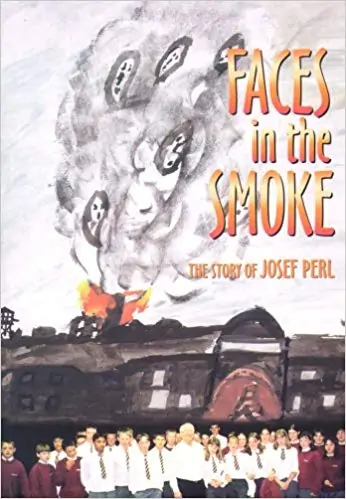
Faces in the Smoke: The Story of Josef Perl (2001), Arthur Christopher Benjamin

A brutal and honest story of the survival of Josef Perl, one of the Boys, told from the perspective of a schoolteacher and not the survivor, which gives the book a uniqueness and charm, which is enhanced by the notes written by schoolchildren that are included at the end of the book. Click here to find out more.

Veľka Sevljus, Czechoslovakia

Members of the Boys were born in Veľka Sevljus, Czechoslovakia, now Vynohradiv, Ukraine.

The Boys were teenage and child-Holocaust survivors, who were brought to the UK after the war for rest and rehabilitation.

Members of the Boys were held in Nazi labour and concentration camps and used as slave labourers. They had also survived World War II in hiding or as lone children.

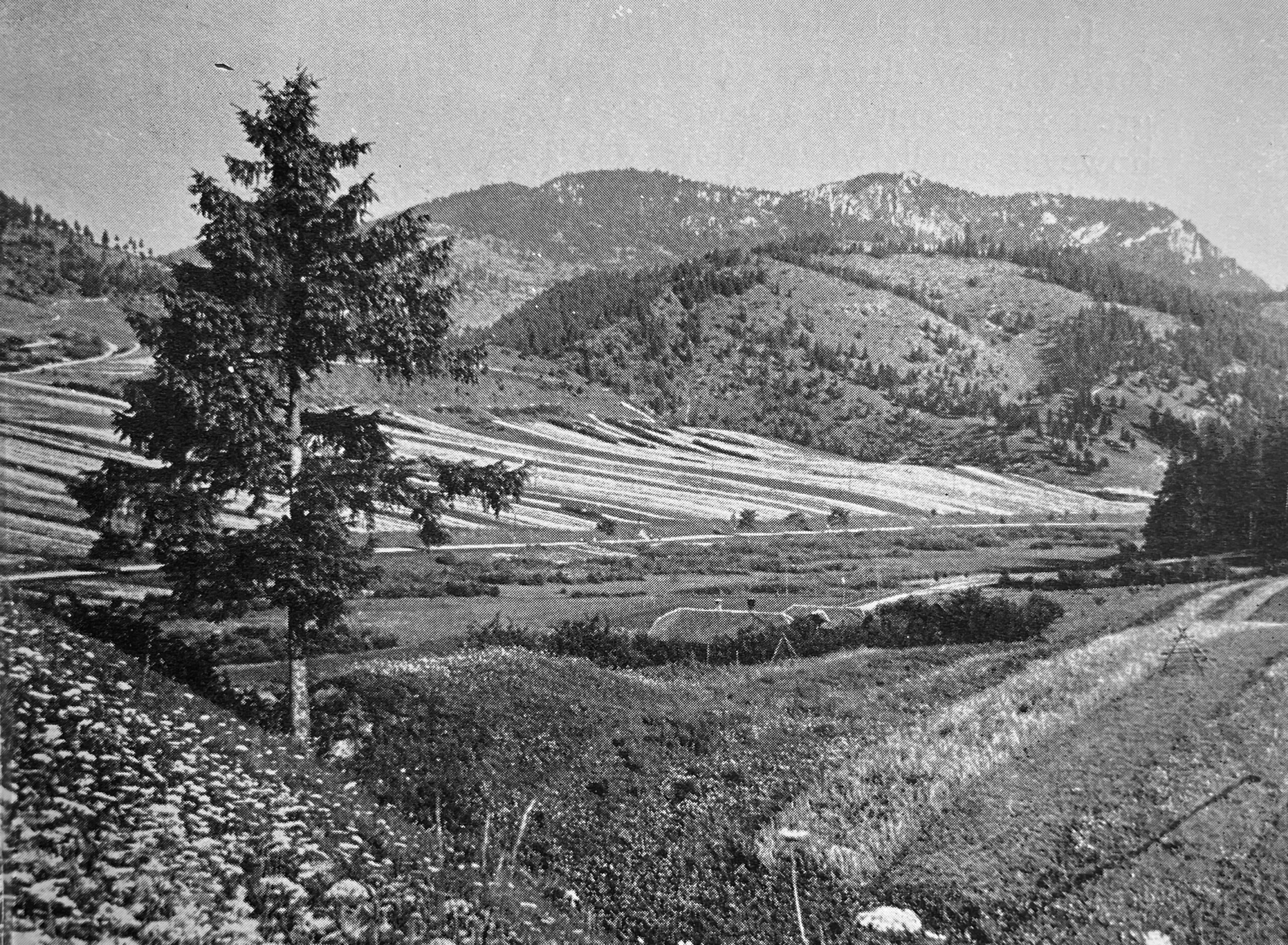
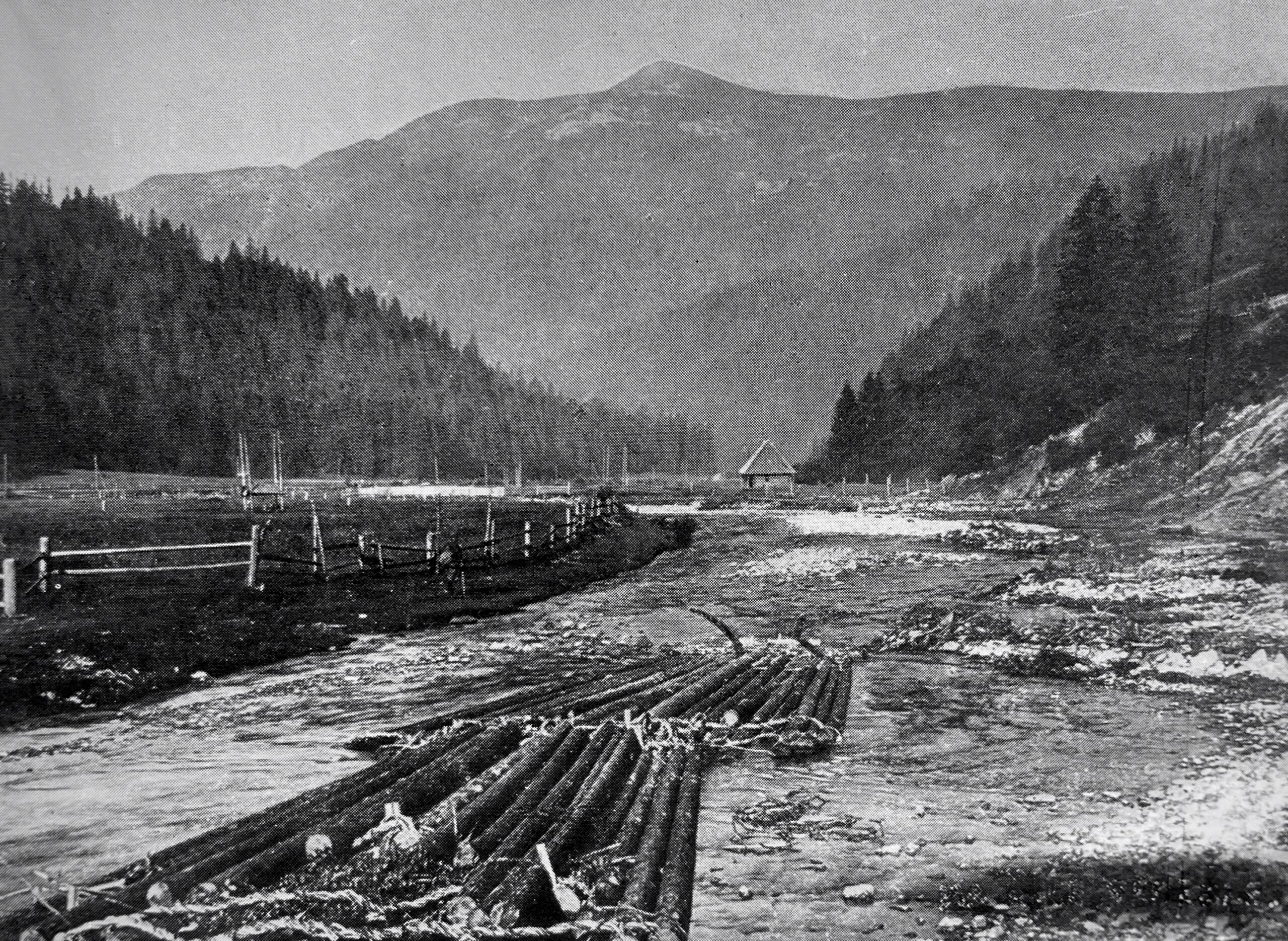
Photograph of the Carpathian Mountains in the 1930s.
The Carpathian Mountains in the 1930s.

Veľka Sevljus is situated in the region known as Transcarpathia. It is 19km west of Khust near the border with Romania and Hungary.

Until the end of World War I, Veľka Sevljus belonged to Austro-Hungary. During the period between the two World Wars it was part of Czechoslovakia. In the course of World War II the town was occupied by Hungary. At the end of the war the region became part of the Soviet Union.

Pre-war

The first Jews probably settled in Veľka Sevljus in the first half of the 18th century. Under the Austro-Hungarians, Jews specialised in the production and export of wine. 

Most of the city’s trade was in Jewish hands. Jews also owned banks, flour mills, distilleries, a canning factory and a number of farms. There were also Jewish doctors, veterinarians, lawyers and engineers. A few were administrative officials.

During the interwar period, Zionists were active in Sevljuš and in 1921 the Jewish National Party won 11 of the 36 seats in the municipal council. The Maccabi sports club had a branch in Sevljus, and there were many youth movements in the city, who sent their members to training farms and factories to prepare for emigration to the Palestine Mandate.

The Jewish population of Sevljus grew significantly after World War I, reaching 2,913 in 1921 and 4,262, out of a total of 13,331, or 32%, by 1941.

Occupation

Following the Munich Agreement in 1938, Veľka Sevljus and the surrounding area were occupied and then annexed by Hungary. The town was now known by its Hungarian name, Nagyszőlős.

The Hungarians imposed laws restricting Jewish access to education, trade, and the professions. Many Jews were persecuted and pushed out of their occupations. Jewish businesses were taken over by Hungarians but many remained closed.

In 1940, hundreds of Jews were drafted into labour battalions for forced labour on the eastern front, where many died. In August 1941, dozens of Jewish families without Hungarian citizenship were expelled to Kamianets-Podilskyi in German occupied Ukraine, where many were murdered in mass shootings.

Deportation 

In March 1944, the Germans occupied Hungary. In April 1944, on the last day of Passover, 12,000 Jews from Nagyszőlős and the surrounding districts were forced to move into the Nagyszollos Ghetto (to find out more click here). Between 20 May and 3 June 1944, the Jews in the ghetto were deported to Auschwitz II-Birkenau concentration and extermination camp in three transports among them members of the Boys and their families.

Liberation

In the autumn of 1944, the Soviet Red Army entered Nagyszőlős. After World War II, the Carpathians were annexed to the Soviet Union in 1945. Nagyszollos is now known as Vynohradiv.

Most of the surviving Jews who returned to the town after the war soon left, as it was not possible to practice religious observance under Stalinism and Zionist politics could lead to arrest.

Present-day

Today, Vynohradiv is an industrial city with a population of over 25,000 but no Jews live there

Visiting Vynohradiv
>

Getting there Trains run from Chop and Uzhhorod.

Note that the UK Foreign Office advises against travel to Ukraine because of the ongoing Russian invasion.

What to see

Synagogue (Pushkina St) The synagogue has been partially restored.

Old Jewish Cemetery (Intersection of Ukrains’ka and Promin’ streets) The cemetery contains the tombstone of Reb Yisroel Boruch Pewzner, the oldest in the region.

Ghetto Memorial A plaque at the corner of Pushkina and Myru Streets commemorates the Jewish Ghetto established by the Nazis in 1944.

Photograph of the Carpathian Mountains in the 1930s.

Tacovo, Czechoslovakia

Members of the Boys were born in Tacovo in eastern Czechoslovakia, now Tiachiv in Ukraine.

The Boys were teenage and child-Holocaust survivors, who were brought to the UK after the war for rest and rehabilitation.

Members of the Boys were held in Nazi labour and concentration camps and used as slave labourers, they had also survived World War II in hiding or as lone children.

Photograph of the Carpathian Mountains in the 1930s.
The Carpathian Mountains in the 1930s.

Tiachiv is situated in Subcarpathian Ruthenia, near the border with Romania.

Until the end of World War I, Tiachiv was part of the Austro-Hungary. During the period between the two World Wars it was incorporated in the state of Czechoslovakia. During World War II, it was occupied by Hungary. At the end of the war it became part of the Soviet Union.

Pre-war

Jews have lived in the town since at least the 17th century. For a period, they were expelled from the region, but returned in 1840 when the limitation on Jewish settlement in Hungary was revoked. The Jews of the region were among the poorest in Europe, many living in rural areas and working in agriculture.

In the 1870s a Jewish cemetery was consecrated and in 1880 there were 321 Jews living in the town. In 1895 the synagogue and prayer house were consecrated, as well as a yeshiva.

Until the beginning of World War I, the community steadily developed; in 1910 it numbered 839 Jews. 

After the war, when Transcarpathia was included in the new Czechoslovak republic and Jews from Moravia and Bohemia settled in the region. In the 1930 census 1,431 Jews, (94%) of 1,525 Tiachiv’s Jews, declared themselves as Jews by religion as well as by nationality and 6% by religion only.

In 1941, there were 2,150 Jews in Tiachiv.

Occupation

Following the Munich Agreement in 1938, Czechoslovakia was divided up and Tiachiv and the surrounding area were annexed by Hungary, and formally incorporated in 1939. The town was then known by its Hungarian name of Tesco.

The Germans occupied Hungary in March 1944.

Jews in Tecso were subjected to discrimination during the Hungarian occupation. Incidents of verbal and physical antisemitism became an everyday occurrence. Those who could not produce Hungarian citizenship were expelled, and in July 1941 about ten Jewish families were deported to Kamianets-Podilskyi in Nazi occupied Poland, where they were murdered in mass shootings. Others were conscripted into labour battalions and perished on the eastern front.

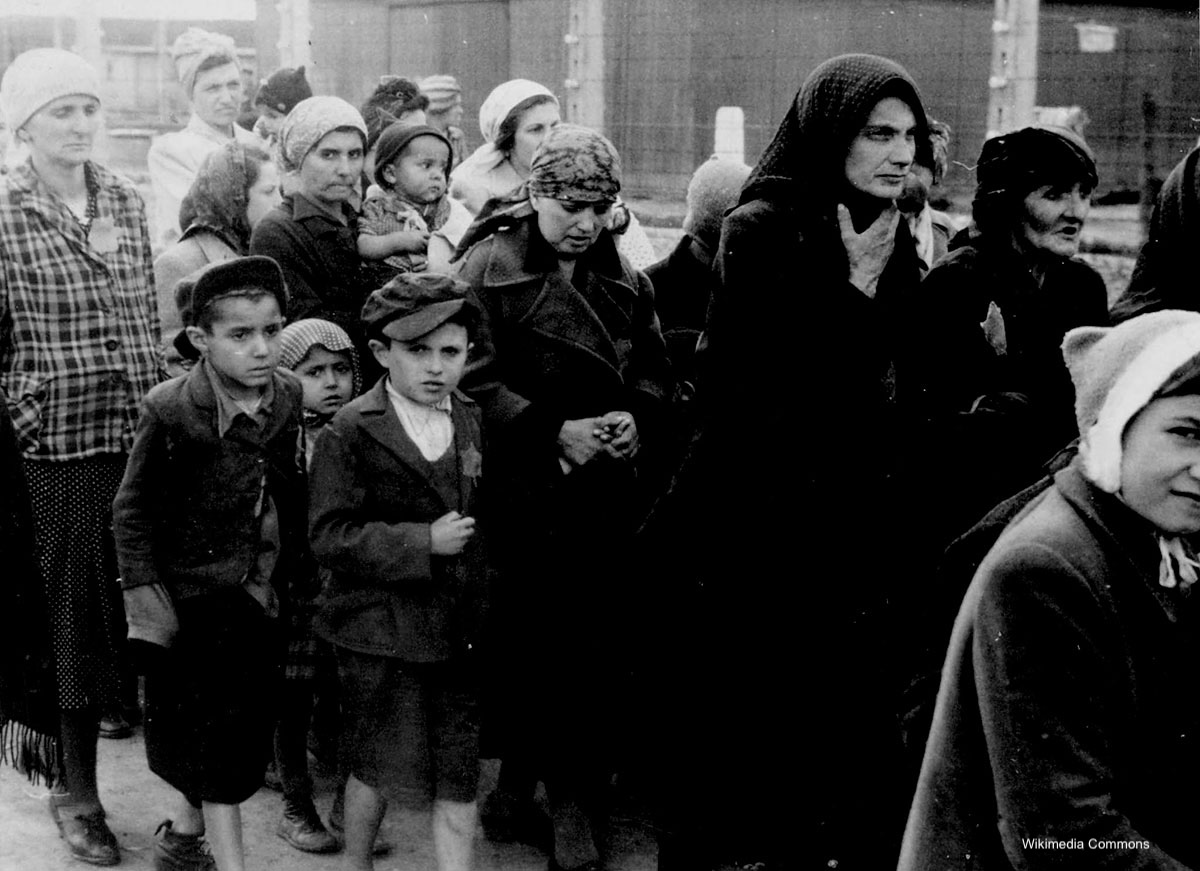
Jewish women and children from Transcarpathia arriving at Auschwitz, among them Jews from Tiachiv.

Deportation

In May 1944, most of the Jews of the district were forced into the ghetto of Mátészalka in present-day Hungary and deported to Auschwitz II-Birkenau concentration and extermination camp.

An estimated 85% of the Jews from the region perished in the Holocaust. However, the fact that the Transcarpathian Jews arrived six months before the camp was liberated in January 1945, greatly increased their chance of survival.

Tiachiv Jewish Cemetery

Liberation

Tecso was liberated in the autumn of 1944 by the Red Army. 

In 1945, Tecso became part of the Ukrainian Soviet Socialist Republic within the Soviet Union. Many Jews felt there was no future for them under Stalinism and most of the community left. The town is now known Tiachiv.

Present-day

During the early 1970s, most of Tiachiv’s remaining Jews left for Israel. In the 1980s.

Visiting Tiachiv
>

Getting there You can get to Tiachiv by bus or train from Lviv and Uzhhorod.

Note that the UK Foreign Office advises against travel to Ukraine because of the ongoing Russian invasion.

Former synagogue (Vulytsya Nezalezhnosti, 15) Now a gym.

Jewish Cemetery (Opposite Bld. Leontovycha, 70) The cemetery contains roughly 400 gravestones is surrounded by a concrete fence of two metres height with metal gates. The oldest tombstone dates back to 1865. It includes an ohel (prayer house over a grave) for several prominent rabbis.

Ťačovo/Tiachiv views

Svalyava, Czechoslovakia

Members of the Boys were born in Svalyava, now Svaliava in Ukraine.

The Boys were teenage and child-Holocaust survivors, who were brought to the UK after the war for rest and rehabilitation.

Members of the Boys were held in Nazi labour and concentration camps and used as slave labourers. They had also survived World War II in hiding or as lone children.

Photograph of the Carpathian Mountains in the 1930s.
The Carpathian Mountains in the 1930s.

Svaliava is located on the Latorica river, about 25km northeast of Mukachevo, in the Transcarpahian region.

Until the end of World War I, Svaliava was part of Austro-Hungary. During the period between the two World Wars it was incorporated into the state of Czechoslovakia. In the course of World War II it was occupied by Hungary. At the end of the war it became part of the Soviet Union.

Pre-war

Jews probably settled in Svaliava in the first half of the 18th century. In 1830, the Jewish population was 45. By 1880, the Jewish population was 319, out of a total population of 1,664.

The Jews of Transcarpathia were among the poorest in Europe, many living in rural areas and working in agriculture. Jews earned their livelihoods from trade and crafts. They worked mainly as traders and craftsmen, particularly as carpenters, blacksmiths, tailors, cobblers, glazers, tinsmiths, brush makers and painters.

At the beginning of the 20th century, two sawmills were built in order to establish a local furniture industry, as well as a chemical factory for wood, alcohol, acetone, and glue, employing Jewish workers. In 1921, during the Czechoslovakian period, the Jewish population of Svaliava rose to 1,099.

By 1941, the Jewish population rose to 1,423, out of a total population of 8,400.

Occupation

Following the Munich Agreement in 1938, Czechoslovakia was divided up and Svaliava and the surrounding area were annexed by Hungary, before being formally incorporated into Hungary in 1939. The town became known as Szolyva in Hungarian.

The Jews of Szolyva were subjected to discrimination under the Hungarian occupation. Many Jews were persecuted and pushed out of their occupations.

In 1940, 150 Jews from Szolyva were drafted into forced labour battalions for service on the eastern front, where most died.

In August, 1941, a number of Jews, who could not prove their Hungarian citizenship, were expelled to Kamianets-Podilskyi in German occupied Poland, where they were murdered in mass shootings.

The Germans occupied Hungary in March 1944.

Deportation

In April 1944, the Jews of Szolyva were gathered in the synagogue; from there they were taken to the ghetto in Mukachevo. On 22 May 1944, over 1,000 Jews from Szolyva, were deported to Auschwitz II-Birkenau concentration and extermination camp.

An estimated 85% of the Jews of Transcarpathia perished in the Holocaust.

Liberation

After World War II, Szolyva became part of the Ukrainian Soviet Socialist Republic. Many Jews felt there was no future for them under Stalinism and either did not return to their homes or decided to flee westwards.

Present-day

No Jews live there today.

Visiting Svaliava
>

Getting there Svaliava is a major stop on the Lviv-Uzhhorod railway line.

Note the Foreign and Commonwealth Office currently advises against travel to Ukraine because of the ongoing Russian invasion.

What to see

Former Synagogue (interesection of Pershotravneva and Starolyubovlyans’ka streets) Built in the 19th century, the building is currently used as an industrial bakery.
Jewish Cemetery (From the crossroads of Pershotravneva and Starolyubovlyans’ka streets, turn onto the dirt road and proceed for approximately 300 metres to the concrete fence. The cemetery is on the left.) Established in the late 18th century, it contains approximately 600 gravestones, the oldest dating to 1805. It is located on a hill and remains one of the few physical testaments to the community.

Photograph of the Carpathian Mountains in the 1930s.

Slantinske-Doly, Czechoslovakia

Members of the Boys were born in Slatinske-Doly.

The Boys were teenage and child-Holocaust survivors, who were brought to the UK after the war for rest and rehabilitation.

Members of the Boys were held in Nazi labour and concentration camps and used as slave labourers. They had also survived World War II in hiding or as lone children.

Photograph of the Carpathian Mountains in the 1930s.
The Carpathian Mountains in the 1930s.

Solotvyno is a village in the Zakarpattia Oblast region in south-western Ukraine. It is south-east of Khust and close to the border with Romania. The village’s Ukranian name, Solotvyno, comes from its salt-mining heritage, and refers to the nearby salt mine – sol means salt in Ukranian.

Until the end of World War I, Slatinske-Doly belonged to the Austro-Hungary. During the period between the two World Wars it was part of Czechoslovakia. During World War II, it was occupied by Hungary. At the end of the war it became part of the Soviet Union.

Pre-war

Jews probably settled in Slatinske-Doly in the first half of the 18th century.

An organised Jewish community appeared in the early 19th century, maintaining various welfare and charity institutions. In 1830, the Jewish population was 218, rising to 674 in 1880 out of a total population of 3,642. By 1921, during the Czechoslovakian period, the Jewish population reached 1,785. Jews owned 65 businesses and shops and flour factories. A few were white-collar workers and professionals.

In 1941, the Jewish population increased to 2,537. Zionist and religious political parties were especially active.

Occupation

Following the Munich Agreement in 1938, Czechoslovakia was divided up and, in March 1939, Slatinske-Doly and the surrounding area were annexed by Hungary. The town became known as Aknaszlatina in Hungarian.

The Hungarians imposed laws restricting Jewish access to education, trade, and the professions. Many Jews were persecuted and pushed out of their occupations. Jewish businesses were taken over by Hungarians but many remained closed.

In 1940, dozens of Jews from Aknaszlatina were drafted into Hungarian labour battalions for forced labour or service on the eastern front, where many died.  In August 1941, a few Jewish families without Hungarian citizenship were expelled to Kamianets-Podilskyi in Nazi occupied Poland (modern-day Ukraine), where they were murdered.

Deportation

In March 1944, the Nazis occupied Hungary.

At the beginning of April 1944 all the Jews in Hungary were ordered to wear a yellow badge on their clothes. In the same month, 2,044 Jews from Aknaszlatina, and another 3,000 Jews from the surrounding area were transferred to an improvised ghetto. They were deported to the Auschwitz II-Birkenau concentration and extermination camp in late May 1944.

Liberation

In the autumn of 1944, the Soviet Red Army entered Aknaszlatina. A few dozen surviving families returned after their liberation, but most chose to leave.

In 1945, after World War II, Transcarpathia was annexed by the Soviet Union. Aknaszlatina became part of the Ukrainian Soviet Socialist Republic and is now known as Solotvyno.

Present-day

In 2013, only three Jews were recorded to be living in Solotvyno.

Visiting Solotvyno
>

Getting there Take the train to Chop and then a bus.

Note that the UK Foreign Office advises against travel to Ukraine because of the ongoing Russian invasion.

What to see

Synagogue The surviving building on Prikordonna Street dates back to the 19th century and was restored in 2010.
Jewish Cemetery (At the crossroads of Enhelsa and Narodna Streets) The cemetery contains approximately 400 gravestones. The oldest preserved stones date from the mid-19th century.

Solotvyno Jewish Cemetery

Rachov, Czechoslovakia

Members of the Boys were born in Rachov, now Rachiv in Ukraine.

The Boys were teenage and child-Holocaust survivors, who were brought to the UK after the war for rest and rehabilitation.

Members of the Boys were held in Nazi labour and concentration camps and used as slave labourers, they had also survived World War II in hiding or as lone children.

Photograph of the Carpathian Mountains in the 1930s.
The Carpathian Mountains in the 1930s.

Rachiv was in the most easterly part of Czechoslovakia in the inter-war period. Today, it is part of western Ukraine and is located close to the Romanian border.

Until the end of World War I, Rachiv was part of the Austro-Hungary. During the period between the two World Wars it was incorporated into the state of Czechoslovakia. In the course of World War II it was occupied by Hungary. At the end of the war it became part of the Soviet Union.

Pre-war

Jews settled in Rachiv in the 1860s but had lived for far longer in the surrounding villages.

As in many towns and cities in Transcarpathia, Jews predominated in Rachiv’s commercial life. The town had a multi-ethnic population made up of Ruthenians, Hungarians, Schwarbs and Jews.

Jews were active in local politics and the town had Jewish doctors, lawyers and dentists. In the interwar period both Zionist and religious political parties, primarily Agudas Israel, were active in the town and a number of Rachiv’s Jews emigrated to Palestine but many who hoped to do so were prevented by the introduction of the British 1939 White Paper that restricted Jewish immigration into the Palestine Mandate, which was then part of the British empire.

In 1941 the population of Rachiv was 12,455 of which 1,707 were Jewish.

Occupation

Following the Hungarian occupation in 1938, the town became known as Rahö. Some of the town’s Jews fled into the Soviet Union. Some were the first to join the Czechoslovak brigade that fought against the Nazis on the eastern front in 1941 but others were arrested and shot as spies.

In March 1939, the Hungarians occupied the region and imposed laws restricting Jewish access to education, trade, and the professions.

Many Jewish men were drafted into slave labour battalions as forced labour on the eastern front. Jews who could not prove that they had Hungarian citizenship were deported to Poland and many were murdered there by the SS in mass.

In March 1944, the Germans invaded Hungary.

Deportation

The day after Passover, 16 April 1944, the Germans and Hungarian police began a general roundup of all Rachiv’s Jews. The Jews were held in the school opposite the town council building while it took eight days to complete the roundup.

On the ninth day they were all taken to the train station and sent to the ghetto, more akin to a camp, in Mátészalka, almost 200km away in modern-day Hungary. This was the first transport to arrive in Mateszalka.

The Jews of Rachiv spent a month here with 17,000 other Jewish people. They were then deported to the Auschwitz II-Birkenau concentration and extermination camp. Eyewitnesses say the Jews of Rachiv fought back after the selection.

It is estimated that about 1,200 of Rachiv’s Jews died at Auschwitz or in other concentration camps.

Liberation

Rachiv was liberated by the Red Army in the autumn of 1944. As the Nazi concentration camps were liberated in 1945, a handful of survivors returned to Rachiv. Most of the survivors found that their home’s occupied by strangers.

Transcarpathia was annexed to the Soviet Union in 1945 and the town was renamed Rakhiv. Most of Rakhiv’s Jews were either very religious and or Zionists. It was not possible to practice religious observance under Stalinism and Zionist politics could lead to arrest. As a result, most survivors chose to leave the region.

A few Jews remained in Rakhiv, but the overwhelming majority left for Israel in the 1970s.

Present-day

The town has a population of around 15,000 and no Jews live there today.

Visiting Rachiv
>

Getting there

Rakhiv is 200km from Chernivtsi. Regular train services operate from Kiev, Lviv, and Ivano-Frankivsk to Rakhiv station. To explore the Carpathians, it pays to have your own transport.

Note that the UK Foreign Office advises against travel to Ukraine because of the ongoing Russian invasion.

What to See

Jewish Cemetery (Vulytsya Kyyivsʹka, 52) On a hill 200m from the main road, this is all that remains of the town’s Jewish heritage.


Photograph of the Carpathian Mountains in the 1930s.

Prague, Czechoslovakia

Members of the Boys were born in Prague in Czechoslovakia, now in Czechia.

The Boys were teenage and child-Holocaust survivors, who were brought to the UK after the war for rest and rehabilitation.

Members of the Boys were held in Nazi labour and concentration camps and used as slave labourers. They had also survived World War II in hiding or as lone children.

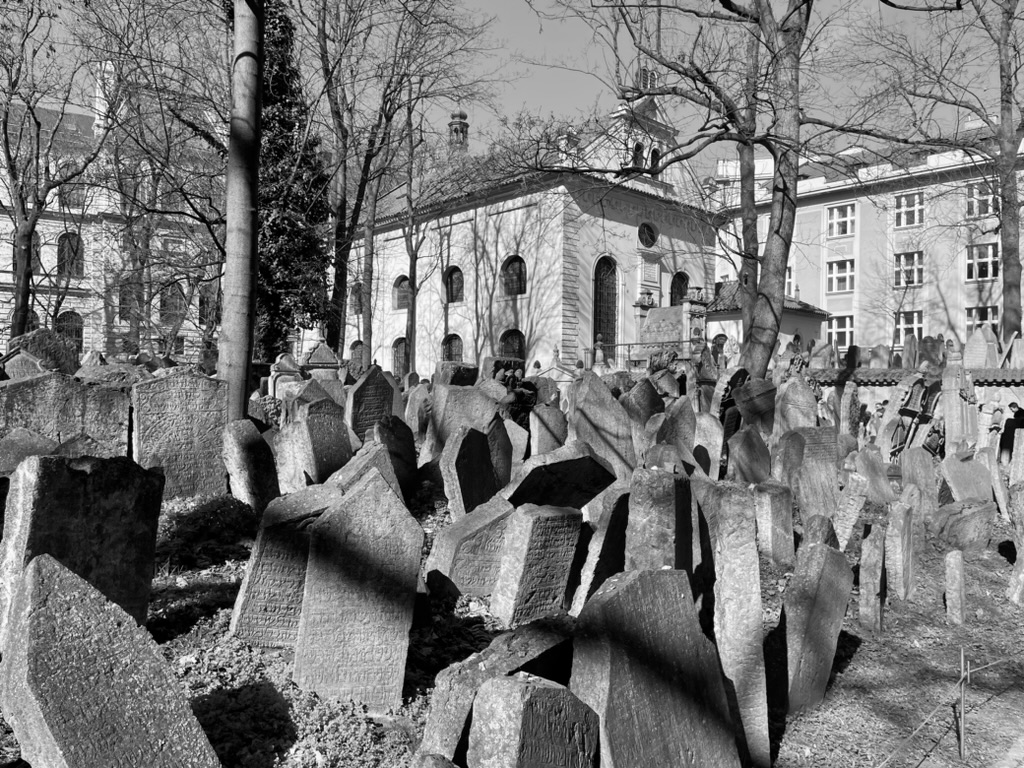
Photograph of the Old Jewish Cemetery, Prague.
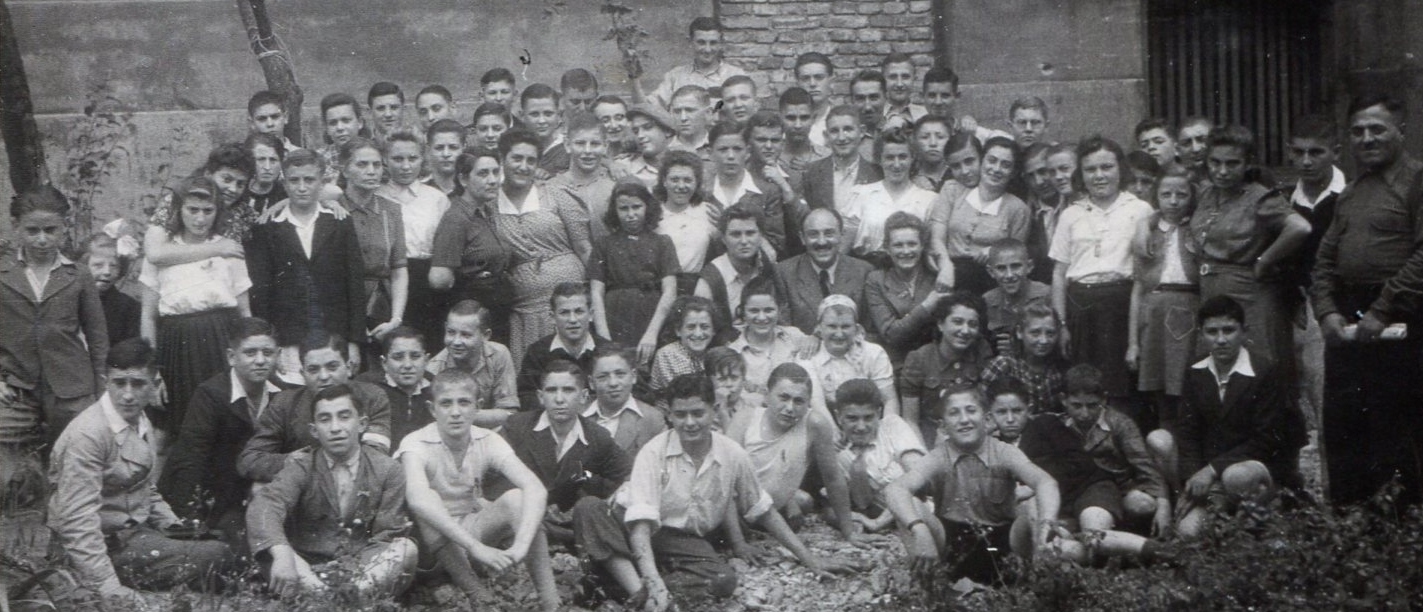
Photograph of the first group of the Boys in Prague 1945.
The first group of the Boys in Prague 1945.

Although only four of the Boys came from Prague, the great majority of them passed through the Czech capital city on their way to the UK. Prague played a central role in the story of the Boys, four of the five groups of the Boys left from the city.

The first of the Boys were flown to Britain from Prague in August 1945. The third and fourth groups of the Boys also travelled to the UK from the Czech capital 1946. The fifth group left in 1948.

Many of the Boys were also repatriated by the British to Prague after liberation in the Bergen-Belsen concentration camp.

Part of the Austro-Hungary until 1918, Prague then became the capital of Czechoslovakia until 1993, when the country split in two and was divided into Czechia and Slovakia.

Prague is home to one of Europe’s longest-standing Jewish communities. Jews have lived in Prague and the surrounding region since the 10th century. 

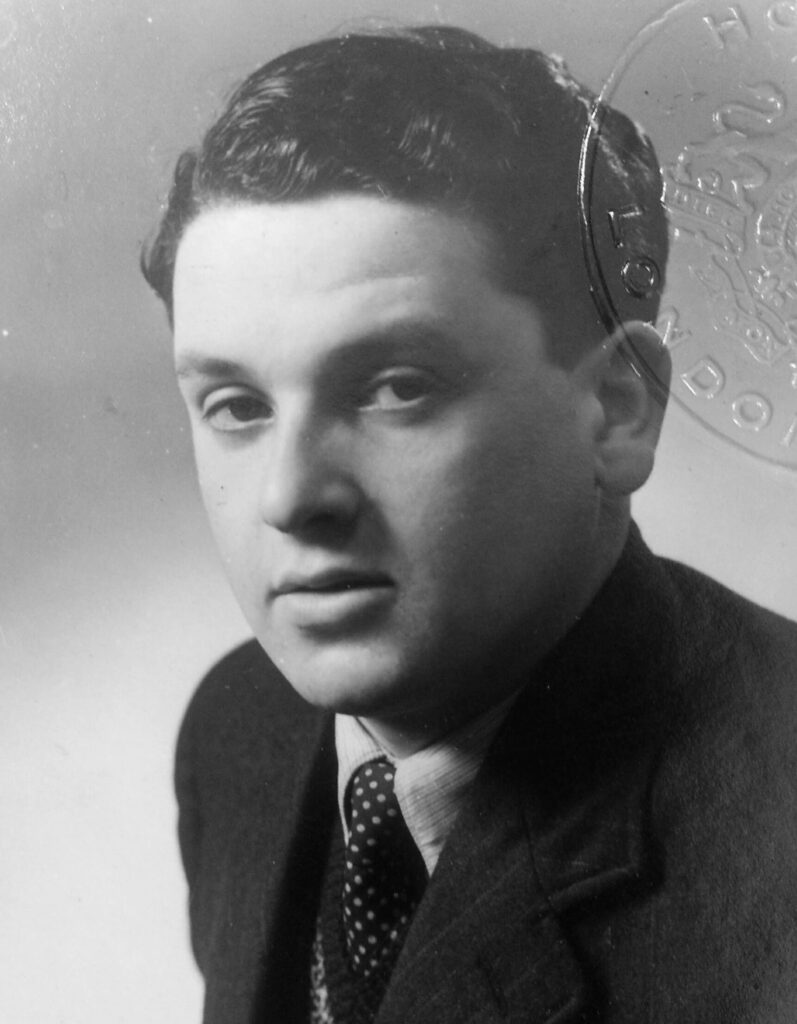
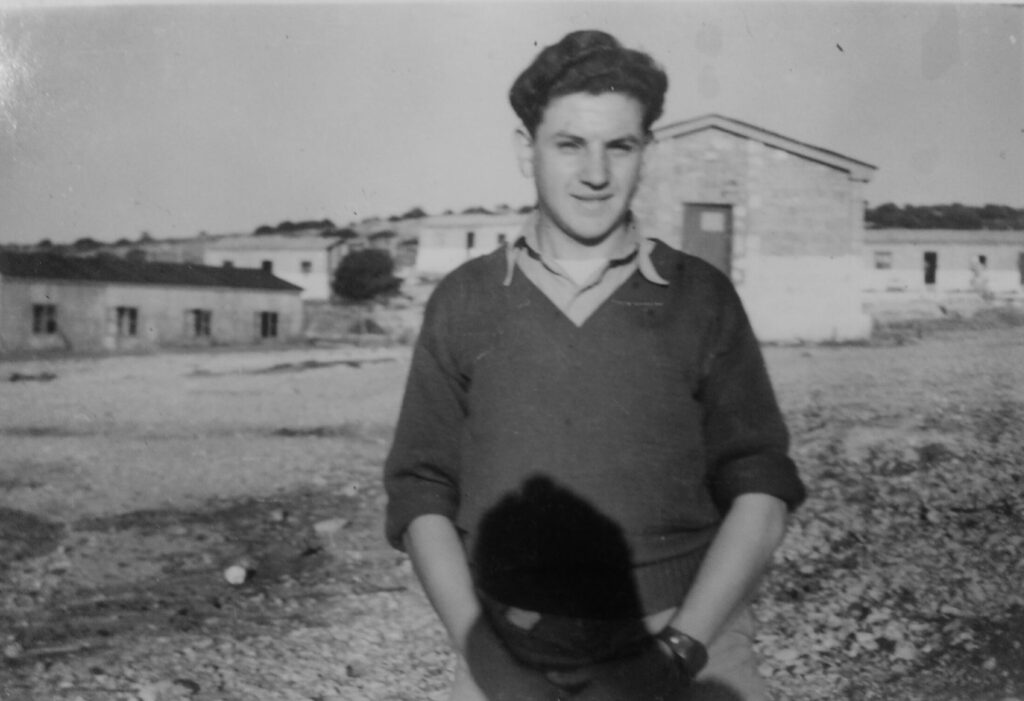
Three of the Boys born in Prague. These photographs were all taken after World War II.

At the outbreak of World War II, over 92,000 Jews lived in Prague, almost 20% of the city’s population. Thousands of Jews had fled to the city from Germany, greatly increasing the size of the community.

Deportation

In March 1939, Germany invaded Czechoslovakia and established the German protectorate of Bohemia and Moravia in the west of the country.

Between October 1941 and March 1945, about 46,000 Jews were deported from Prague mostly to the Theresienstadt Ghetto. From there, most Czech Jews were transported to their death in the Auschwitz-Birkenau concentration and extermination camp and other killing fields in the east. At least two-thirds of the Jewish population of Prague perished in the Holocaust.

Liberation

On 9 May 1945, the Soviet Red Army entered Prague.

In the immediate post-war period Prague became a hub for Jewish refugees trying to flee westwards. Until 1989, Czechoslovakia was part of the Soviet controlled eastern block.

Aftermath

From the late 1960s to the late 1980s, any mention of the Holocaust and Prague’s Jewish history was stifled. It was not until the mid-1980s, as communist attitudes began to reform throughout Europe, that there was a surge in interest in Prague’s Jewish heritage.

Vaclav Havel, the last president of former Czechoslovakia and the first president of the newly-established Czech Republic, was sympathetic towards the Jews and was quick to establish a diplomatic relationship with Israel and initiate the restitution of Jewish property in Prague.

Since then, there has been a revival of Jewish life in Prague. 

Present-day

During the Communist era, many Jews learned to hide their identity. Now, Prague’s Jewish community has seen a rise in young Czechs who have only recently discovered their heritage. It is as a result difficult to calculate the exact number of Jews living in the city. Estimates put the number of Jews in Prague at 1,500-5,000, with an additional 10,000 -15,000 unregistered Jews across the country.

Visiting Prague
>

Prague is now home to many Jewish tourist sites spanning multiple historical synagogues, museums and an old Jewish cemetery dating from the 15th century. The city is also home to a Jewish nursery, schools and old age home, as well as kosher restaurants and a kosher hotel.

Getting there

Prague, the Czech capital, has excellent air and train connections. Most European and many international airlines fly to the city. It is four hours by train from Berlin, and is also easily accessible by car and bus from most continental capitals and major cities.

Getting around

Terezín, the former Theresienstadt Ghetto, can be visited as a day trip from Prague. Note that organised tours are expensive. There is a direct bus from Prague’s Holešovice train/bus station (bus platform 7 direction Litomerice). It is just under an hour’s drive from Prague to Terezín. Park in the car park at the Jewish cemetery.

Pitters castles in the villages of Olešovice and Štiřín – 25km south of Prague are accessible by car or bus. All four castles were within walking distance of each other.

Photograph of the Belgicka Orphanage, Prague, August 1945.
What to see
>

The heart of Jewish Prague is the Josefov district, named after the Austro-Hungarian Emperor Josef, who passed the Edict of Tolerance in 1782 abolishing some of the discriminatory measures against Jews.


Prague

Memorials

Pinkas Synagogue (Široká 23; entry fee) The synagogue is the second oldest in the city and functions as a memorial to the almost 80,000 Czech Jews who were murdered in the Holocaust. Their names are engraved on the walls. The list of victims was compiled using card files discovered shortly after the war, as well as transport schedules, registration lists and lists of survivors. In the 1950s it became a memorial to Jews from Czech lands murdered in the Holocaust but was closed from 1966 to 1989. On the first floor there is an exhibition of pictures drawn by children in the Theresienstadt Ghetto. Artist Friedl Dicker-Brandeis (1898–1944) encouraged the children to grapple with the harsh realities of the world they lived in through their art. Most of the children and Dicker-Brandeis were murdered in Auschwitz.

The is also the site of the Old Jewish Cemetery.

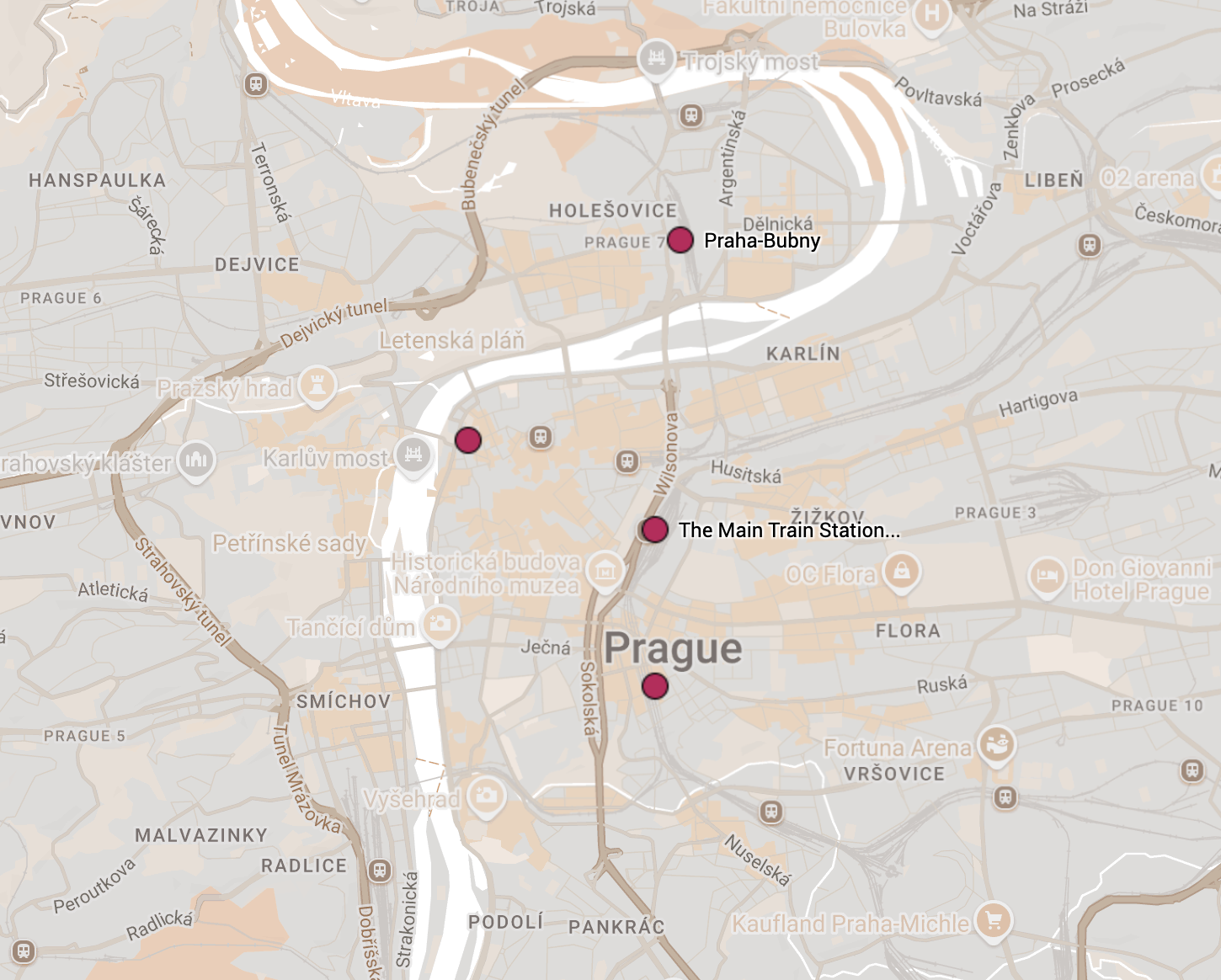
Praha hlavní nádraží Prague’s main station, then known as Wilsonova Station, was a scene of heartbreak as parents said farewell to their children who left the country on the Kindertransport. About 10,000 of the children came to Britain, while smaller numbers were taken into other European countries. Most of their parents did not survive the war.

There are two important memorials to the Kindertransport inside the station. On Platform 1 there is a statue of the British humanitarian Sir Nicholas Winton, who on the eve of World War II, arranged eight trains that enabled a total of 669 Jewish children to escape Nazi-occupied Czechoslovakia, an operation now known as the Czech Kindertransport. His accomplishments remained unrecognised until

The Fantova café in the original entrance to the station is further along the platform. The Farewell Memorial is directly underneath. It is designed to look like a train door with the hands of children on one side and those of their parents on the other.

Holešovice Deportations were carried out at Bubny Station in Holešovice. The transports began 16 October 1941, when the first of five trains departed for the Łódź Ghetto in Poland. Trains then left for the Theresienstadt Ghetto. In all, 50,000 Jews were deported from Bubny, of whom fewer than 300 survived.

The Gate of Infinity by Aleš Vesely, erected in 2015, remembers the victims. It resembles Jacob’s ladder and is in the form of a railway track. There are also plans to turn the dilapidated station into a Holocaust memorial and educational centre, the Memorial of Silence (w pamatnikticha.cz). Prior to deportation Jews were held in the nearby Holešovice exhibition hall at Dukelských hrdinů 47, where there is a memorial on the roadside wall of the hotel on Veletržni.

Vinogrady

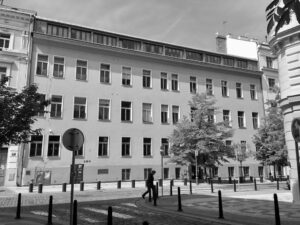
Photograph of the former Belgická orphanage in Prague, Czechia.
The former Belgická orphanage.

The residential district not far from the National Museum, Vinogrady was a centre of Jewish life in Prague in the first half of the 20th century. Before World War II, it was home to the city’s largest synagogue, which was destroyed in a bombing raid. A memorial marks the spot on ul. Sázavská.

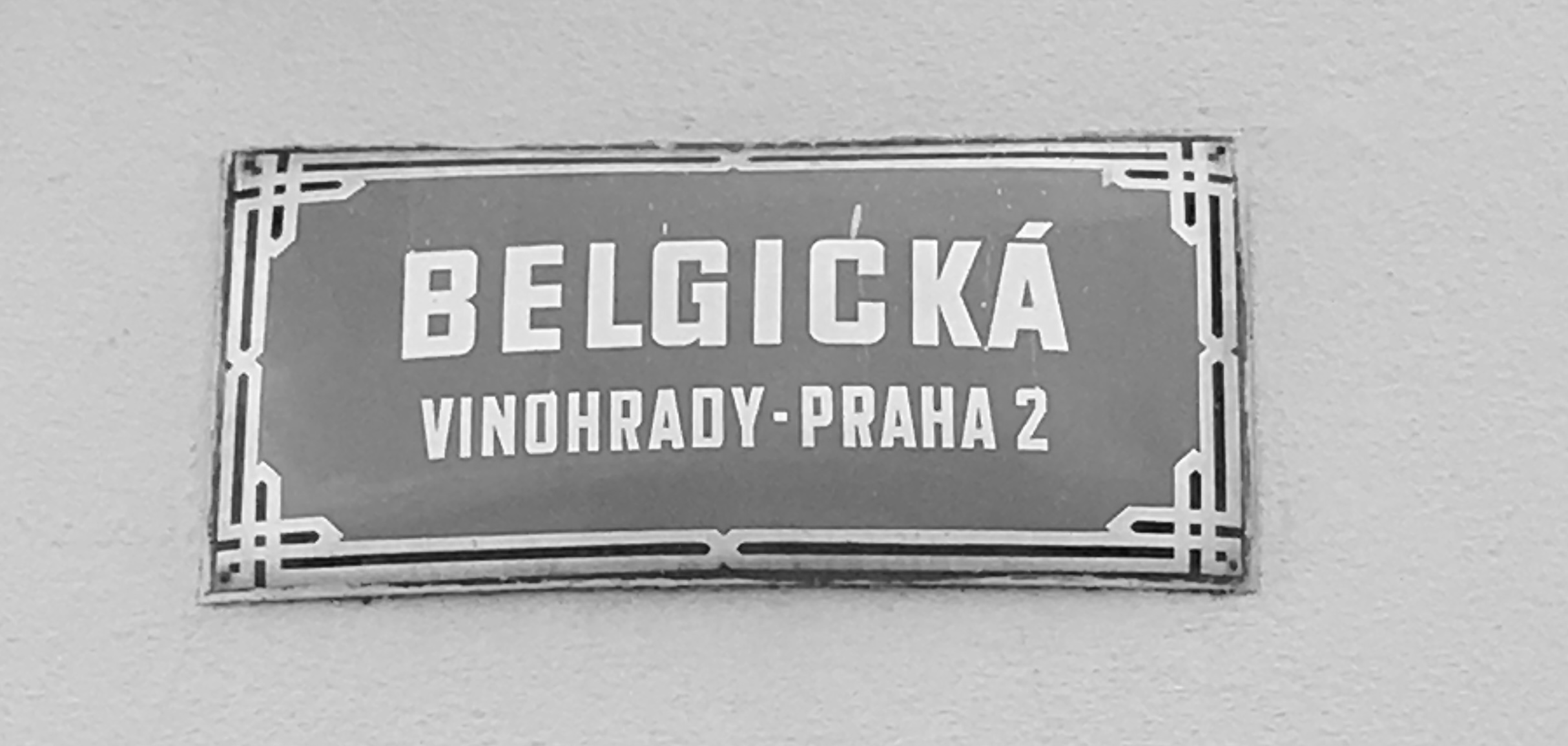
Vinogrady is also one of the key sites in the story of the Boys. Hundreds of the Boys were cared for in the former Belgická orphanage prior to their departure for the UK in 1945 and 1946. The building still stands on Belgická ul. and is today the Lauder school.

To find out more about the history of the orphanage and the Boys who stayed there click here.

Photograph of a street sign.
Visiting Theresienstadt
>

Terezín/Theresienstadt Memorial

The most important Holocaust site in Czechia, 61km north of Prague, played a key role in the story of the Boys.

Photograph of Theresienstadt
Theresienstadt

To find out about the history of the ghetto and the sites related to the Boys click here. To find out about the Ghetto after liberation and the story of the Boys who were in the Terezín DP camp click here.

The memorial comprises two main areas, the small and large fortresses, which are surrounded by a star-shaped wall and fortifications.

Good to Know The Large Fortress takes 2 hours to explore, but budget 3–4 hours to include the Small Fortress. The Boys were only held in the Large Fortress, essentially the town itself, which was the ghetto area. Admission times apply to the Ghetto Museum and Small Fortress, otherwise Theresienstadt can be visited any time. Your visit will be greatly enhanced by taking a tour with one of the museum’s knowledgeable guides. Including Terezín on a tour itinerary from Prague can be very expensive and it is not difficult to visit on your own steam.

 Pitter’s Castles

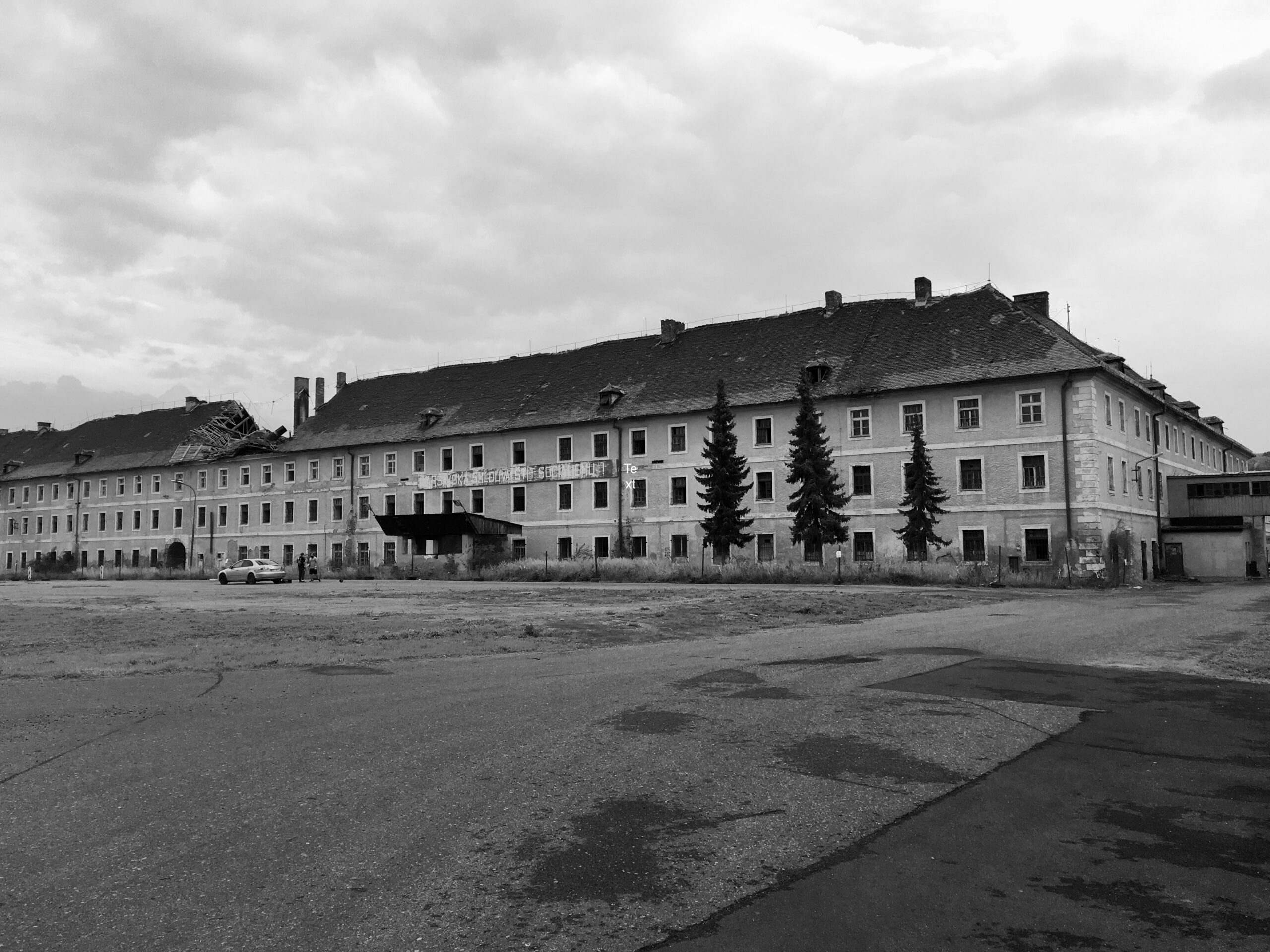
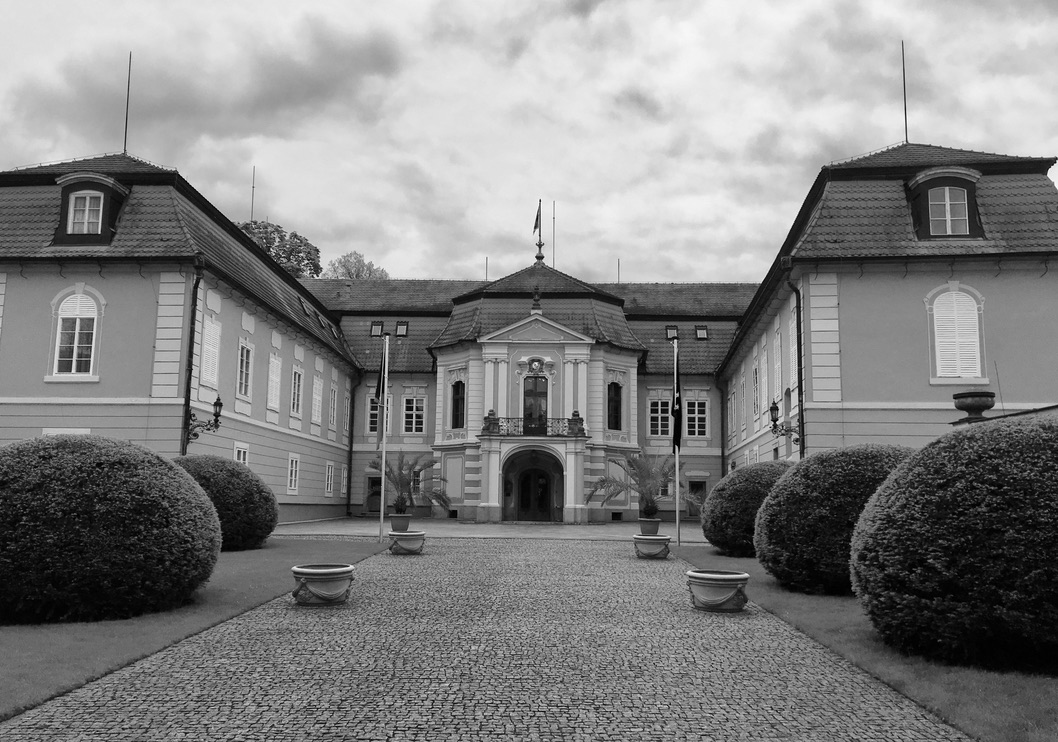
Photograph of Stirin Castle
Stirin Castle

Premysl Pitter (1895–1976), a Christian humanitarian and pacifist, cared for the youngest members of the Boys in four of large country houses in the villages of Kamenice, Lojovice, Olešovice and Štiřín, 25km south of Prague. To find out more about Pitter’s Castles click here.

On 15 May 1945, Pitter requisitioned four castles, which had been confiscated from their former German owners in Aktion Zamek (zamek means castle in Czech).

Just one week later, Pitter brought the first 40 Jewish children from Theresienstadt to their new home in Olesovice. By July 1945, Pitter was caring for 150 children who had been liberated in the ghetto, and many more orphans soon joined them. 40 of his children left for Britain in August 1945 in the first group of the Boys.

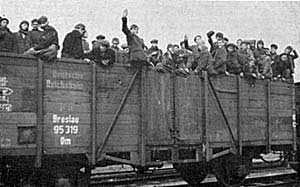
Photograph of the Death Train from Buchenwald to Theresienstadt 8 May 1945.
45 Aid Copyright 2026
45 aid society is a registered charity in England and Wales (243909)
Design and development: Graphical