Irshava, Czechoslovakia (now Irshava, Ukraine)

The small town of Irshava was the home to eight of the Boys.

There are several alternative names used for this town: Ilosva in Hungarian, Irsava in Czech, Irshava in Romanian and Orsheve in Yiddish.

Irshava is situated in the region known historically as Subcarpathian Ruthenia, now western Ukraine. It is about 30 kilometres southeast of Mukachevo. Other nearby towns home to many of the Boys include Uzhorod, Khust, Vynohradiv, Svaljus, Berehovo, and Tacovo.

Until the end of World War I, Irshava belonged to the Austro-Hungarian empire. During the period between the two World Wars it was part of Czechoslovakia. In the course of World War II it was occupied by Hungary. At the end of the war it became part of the Ukrainian republic of U.S.S.R.

PRE-WAR IRSHAVA

It is not known when the Jewish community of Irshava was established. The oldest tombstone of the Jewish cemetery is from the end of the 19th century.

Irshava was known among the Jewish communities mainly thanks to its yeshiva, established by Rabbi Yoel Teitelbaum, who had come to the town from Satmar before World War I. After the war, many Jews came to live near him at Irshava and rabbis and heads of communities were among his disciples.

The Jews of the Subcarpathian region were among the poorest in Europe, many living in rural areas and working in agriculture. Jewish families earned their livelihoods from trade and crafts. They worked mainly as traders and craftsmen, particularly as carpenters, blacksmiths, tailors, cobblers and painters.

At the beginning of the twentieth century, two sawmills were built in order to establish a local furniture industry, as well as a chemical factory for wood, alcohol, acetone, and glue, employing Jewish workers.

The Jews of Irshava lived close to the main road which crossed the town. It was called “the Jewish road” in Yiddish. Most of the Jews had their own houses, with a flower garden in front and a vegetable garden and fruit trees at the back.  Daily prayer services were held at the central synagogue. On Shabbat and religious festivals, the entire community attended the services. One of the entrances to the synagogue was through the fields.

In 1941, 1,393 Jews were living in Irshava. Most of its citizens were Ruthenians. Their language was Ruthenian, but Hungarian, Russian and Czech were also spoken. The majority of the Jews spoke Yiddish among themselves.

OCCUPATION

Following the Munich Agreement in 1938, Czechoslovakia was divided up and Irshava and the surrounding area were annexed by Hungary. The town became known as Ilsova in Hungarian.

In March 1939, the Hungarians occupied the region and imposed laws restricting Jewish access to education, trade, and the professions. Many Jews were persecuted and pushed out of their occupations. Jewish businesses were taken over by Hungarians but many remained closed.

In 1940, 150 Jews from Ilsova were drafted into forced labour battalions and others were drafted for service on the Eastern front, where most died.

In August, 1941, a number of Jewish families, who could not prove their Hungarian citizenship, were expelled to Kamenets-Podolski in Nazi occupied Ukrainian territory, where they were murdered. A number of Jewish families of Ilsova managed to secure false documents with the help of a school official, and so evaded expulsion.

DEPORTATION

The Nazis occupied Hungary in March 1944 and installed a puppet government. That government participated in the Holocaust.

At the beginning of April of that year all the Jews in Hungary were ordered to wear the yellow badge on their clothes.

In April 1944, just after Passover, the Jews of Ilsova were forced into a ghetto with Jews from surrounding localities. Local Hungarian police confiscated all jewellery and watches.

On 22 May 1944, the ghetto was emptied and all its inhabitants were deported to the Auschwitz-Birkenau concentration and extermination camp in occupied Poland.

When the trains arrived in Birkenau a selection was made on the ramp. It offered healthy young men and women a chance of survival as they were often selected for slave labour. The fact that they arrived six months before the camp was liberated increased their chance of survival.

An estimated 85% of the Jews of Subcarpathian Ruthenia perished in the Holocaust. About 1,900 Jews from Ilsova were murdered, most of them in Auschwitz. Among them was also the last rabbi of Ilsova, rabbi Moshe Wirzenberger.

The number of Ilsova Jews who survived the war is not known.

LIBERATION

Ilsova was liberated by the Red Army in the autumn of 1944.

After the Second World War, the Carpathians were annexed to the Soviet Union in 1945. Ilsova became part of the Ukrainian Soviet Socialist Republic and was renamed Irshava.

As the Nazi concentration camps were liberated in 1945, a handful of survivors returned to Irshava. Most of the survivors found that their home’s occupied by strangers.

Most of Irshava’s Jews were either very religious and or Zionists. It was not possible to practice religious observance under Stalinism and Zionist politics could lead to arrest. As a result, most survivors chose to leave the Carpathians and emigrated to Israel or the West.

PRESENT-DAY IRSHAVA

In 2016, Irshava had about 9,000 inhabitants. It is thought that no Jews live there today. The former synagogue is now a boutique, its original purpose no longer recognisable.
Bratislava, Czechoslovakia (now Slovakia)

Bratislava, now the capital of Slovakia, was home to 12 of the Boys.

Jews first arrived in Bratislava in the 10th century but a community only began to develop in the 17th century. The city was known by it German name of Pressburg for much of its history.

PRE-WAR BRATISLAVA

In 1930, approximately 15,000 Jews lived in Bratislava, which had a total population of 120,000. On the eve of the Holocaust the Jewish community was the largest in Slovakia.

Jews were active in local politics and cultural life. The city was a Jewish religious and political center and home to the renowned Pressburg Yeshiva, as well as the Zionist Organization of Slovakia.

In March 1938, following the annexation of Austria to Germany, hundreds of Jewish refugees arrived in the city.

Antisemitism was an issue in the inter-war period, as after the city’s inclusion in Czechoslovakia, the local Slovak population identified the Jews with the city’s former German and Hungarian elites. There were serious anti-Jewish riots in 1938 and 1939. As a result many Jews left Bratislava, some settling abroad.

Imi Lichentefeld helped to defend the community by teaching martial arts. It was a movement that is today known as Krav Maga.

WARTIME

After the creation of the Slovak state in March 1939, a Nazi ally, persecution of the Jews began immediately. By March 1942, when the deportations began, nearly half of the city’s Jews had been evicted, and dispersed in smaller towns across the country.

German forces occupied Bratislava in September 1944 and approximately 2,000 of the remaining Jews were sent to the Auschwitz-Birkenau concentration and extermination camp in occupied Poland.

The vast majority of Bratislava’s Jews were murdered in the Holocaust.

LIBERATION

Of the over 15,000 Jews living in Bratislava in 1940 about 3,500 survived. Jews returning to Bratislava from the war met with indifference and sometimes even hostility.

Immediately after the war, Bratislava became the centre of Slovak Jewry due to the fact that many Slovak Jewish survivors preferred to settle in the relative safety of Bratislava as opposed to their former hometowns in the country.

Restitution issues and high levels of antisemtism led most of those survivors to believe that there was no future for the Jewish community in Slovakia. There were anti-Jewish riots in 1946 and 1948.

Despite this, Bratislava was a major transit point in the Jewish exodus out of eastern Europe in the years after the Holocaust, as Jews headed for the American occupied zone of Austria.

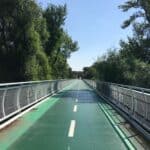
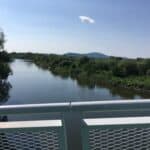
From 1945 until February 1949, more than 150,000 Jewish migrants passed through Bratislava, most of them walking across the bridge at nearby Devinska Nova Ves. The refugees met with no sympathy from the citizens of Bratislava and its surroundings, who feared that the migrants might settle in the city.

In 1949, the communist regime came into power in Czechoslovakia. The bridge was destroyed and the river then formed part of the Iron Curtain that divided Europe in the Cold War.

A new bridge commemorates the end of communism but there is now mention of the site’s importance in Jewish history.

PRESENT DAY BRATISLAVA

About 2,000 Jews remained in Bratislava in 1949, when the communist government took control of the country. Under communism Jewish religious and cultural life was gradually restricted and the property of Jewish organizations was nationalised.

The Jewish quarter in Podhradie, a historical part of Bratislava, was demolished in the 1960s. At the same time, however, restrictions on Jewish life were eased and some Jews allowed to leave for Israel. Many more Jews left the city after the fall of communism.

It is estimated that about 800 Jews now live in Bratislava.

The Museum of Jewish Culture was established in 1994 and there is a memorial to the Slovak Jews who perished in the Holocaust on the site of the former Neolog synagogue. A Holocaust Documentation Center is dedicated to research on Slovakian Jewry.

Berehove, Czechoslovakia (now Ukraine)

Eight of the Boys came from Berehove, a town in the region of Subcarpathian Rus, in eastern Czechoslovakia.

The city has many different variations of spelling its name: Romanian: Berehovo, Hunagrian: Beregszasz, Russian: Beregovo, Czech and Slovak: Berehovo, Yiddish: Beregsaz, German: Bergsaß and Polish: Bereg Saski.

Berehove is situated in the region known historically as Subcarpathian Ruthenia, now south-western Ukraine. It is about 30 kilometres south of Mukachevo, near the border with Hungary. Other nearby towns home to many of the Boys include Uzhorod, Khust, Irshava, and Svaljus.

Until the end of World War I, Berehove belonged to the Austro-Hungarian empire. During the period between the two World Wars it was part of Czechoslovakia. In the course of World War II it was occupied by Hungary. At the end of the war it became part of the Ukrainian republic of U.S.S.R.

PRE-WAR BEREHOVE

The first Jews arrived in Berehove mainly from Poland during the 18th century, and the town was known then as Beregszasz. They lived on the estates of the nobles of the House of Schoenborn.

In 1768, when Jews first arrived, there were four Jewish families living in Berehove; by 1830 there were 200 Jews living in the city.  By 1838 the Jews living in Berehove had established an organized community. The majority of Jews in the city spoke Hungarian, while many also spoke Yiddish and German.

The first rabbi was Rabbi Yitzchok Rochlitz. From 1930 until 1944, when the community was liquidated by the Nazis, the rabbi was Abraham Solomon Hirsch.

The city had a Jewish school as well as a number of small yeshivas. During the 1930s a Hebrew school was founded.

On the eve of the Holocaust in 1941, Berehove was home to almost 6,000 Jews out of a population of 19,000. Some worked in agriculture, trade and crafts. Others owned factories, flour mills and banks, worked in agriculture and were doctors, lawyers, engineers, pharmacists or public officials.

OCCUPATION BY HUNGARY

Following the Munich Agreement in 1938, Czechoslovakia was divided up and Hungary annexed Berehove and the surrounding region. The town was renamed Beregszasz in Hungarian.

The Hungarians were pro-German, and imposed laws restricting Jewish access to education, trade, and the professions. The Jews in Beregszasz had their business licenses taken away, and five hundred males were conscripted into the Hungarian army, where many perished on the eastern front.

In August 1941, many Jewish families who could not prove their Hungarian citizenship were expelled to Kamenets-Podolski in Nazi occupied Ukraine, where they were murdered.

DEPORTATION

In 1944, the Nazis invaded Hungary and occupied the Subcarpathian Rus. Jewish ghettos were set up in towns such as Munkacs, Uzghorod, Chust, Velka Selvjus and Berehove.

In May 1944, around 3,600 Jews from Beregszasz as well as others from the surrounding area were deported to Auschwitz-Birkenau concentration and extermination camp in occupied Poland.

When the trains arrived in Birkenau, a selection was made on the ramp. It offered healthy young men and women a chance of survival as they were often selected for slave labour.

An estimated 85% of the Jews of Subcarpathian Ruthenia perished in the Holocaust.

The fact that the Beregszasz was one of the last ghettos to be liquidated by the Nazis, meaning the Subcarpathian Jews arrived six months before the camp was liberated in January 1945, greatly increased their chance of survival.

LIBERATION

In the autumn of 1944, the Soviet Red Army entered liberated the town.

After the Second World War, the Carpathians were annexed to the Soviet Union in 1945. Beregszasz became part of the Ukrainian Soviet Socialist Republic and was renamed Berehove.

After the war, survivors attempted to restore the community. However, they met with a hostile reception from the city's inhabitants. When they returned home, most of the survivors found that their home’s were occupied by strangers.

Most of Berehove’s Jews were either very religious and or Zionists. It was not possible to practice religious observance under Stalinism and Zionist politics could lead to arrest.

These reasons prompted Jewish survivors to leave the Carpathians, many emigrating to Israel and the West.

PRESENT-DAY BEREHOVE

In 1970, an estimated 300 Jewish families were living in Berehove. It is likely that many of them left during the 1990s.

As the town is so close to the Hungarian border, all of the clocks in Berehove are set to Hungarian time (1 hour behind the Ukraine) and Hungarian is the prevailing language.

The current population is about 24,000 and it is not known whether any Jews live there today.

Warsaw, Poland

Before the Second World War, Warsaw was one of the world’s most important Jewish cities. It also played an important part in the story of many of the Boys families.

It was home to 26 of the members of the Boys, who were born in the city, but far more members of the Boys found themselves in the Warsaw ghetto, among them Pinchas Gutter from Lodz and Sam Freiman, who was born in the nearby village of Jeziorna.

Jews, who lived in the surrounding villages, were forcibly moved into the ghetto and many families fled to the capital during the German invasion.

Around 7,000 Jews from Kalisz were transported to the Warsaw ghetto, most of whom died in the gas chambers of the Treblinka and Birkenau concentration and extermination camps. Jews were also transferred to the Warsaw ghetto from Bedzin and 2,000 Jews from Wiskitki were resettled to the Warsaw ghetto.

Many of the Boys’ families were also in the Warsaw ghetto.

PRE-WAR WARSAW

Jews first lived in Warsaw in the 14th century but were forbidden to live in the city from 1527 to 1768. After the third partition of Poland in 1795, Warsaw was part of the Russian empire and Jews from further east flooded into the city.

The Polish capital was an important centre for both Jewish religious and secular life. All social classes and political persuasions were represented in the community.

As the war approached, however, life became increasingly difficult for the city’s Jews as Jewish shops were boycotted and antisemtic legislation was introduced.

The Germans invaded Poland on 1 September 1939 and laid siege to Warsaw, which finally capitulated on 29 September. Persecution of the Jews began immediately.

LIFE IN THE GHETTO

In November 1940, the Germans established a ghetto in Warsaw in the district of Muranow. It was the largest ghetto in occupied Poland and at its height 460,000 Jews were imprisoned there.

It is estimated that 92,000 people died of starvation in the ghetto.

A lot is known about conditions in the ghetto as Emanuel Ringelblum, an intellectual and social activist, kept an account of daily life, which he buried before he was murdered by the Nazis in 1944. From the files we have evidence of the soup kitchens and charities that existed, of the musical concerts and cabarets and the fifty or so underground newspapers that were produced.

Deportations to the Treblinka extermination camp began on 23 July 1942. As many as 270,000 of the ghettos residents were murdered there in the two months that followed.

When deportations resumed in January 1943, a resistance movement came into being in the ghetto.

THE UPRISING

When the liquidation of the ghetto began on 19 April 1943, the Germans encountered an massive and unexpected resistance. It was the first large scale act of resistance by any civilian population in occupied Europe.

The ghetto was completely demolished in May 1943 and a number of the members of the Boys were brought to Warsaw from labour camps to sort through and level the ruins.

The Uprising is regarded as the symbol of Jewish resistance and is often mistakenly cited as an exception. Jewish resistance was far more common than is widely believed and the Jewish underground fought back against the Germans in numerous ghettos and even in the concentration and extermination camps.

Even the children selected for the gas chamber in the children’s round up in Auschwitz, during the Jewish holidays in autumn 1944, resisted violently.

LIBERATION

About 2,000 Jews were liberated in Warsaw and by the end of 1945, 5,000 Jews settled in the city. The population doubled when Jews who survived the war in Russia returned to the capital.

The city became the seat of the Central Committee of Polish Jews and a number of Jewish cultural institutions were opened in 1949.

The community immediately set about raising money to build a monument to commemorate the uprising which had already been designed by Nathan Rapoport while in exile in the Soviet Union. It was unveiled in 1948.

Antisemitism and communist persecution drove many Jewish survivors out of Poland in the post-war period. The first group left after the Kielce pogrom in July 1946, others left in the late 1950s and after the anti-Zionist campaign of the 1960s.

PRESENT-DAY WARSAW

About 2,000 Jews live in Warsaw today, although the figure is probably far higher as many of the Jews who live in the city are secular and come from families that hid their Jewish identity under communism.

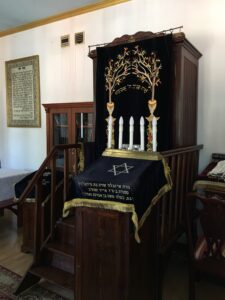
The Nozyk Synagogue survived the war and is once again used as an active synagogue and is the centre of religious life in Warsaw. There is also a community centre where secular Jews meet.

The state of the art Polin Museum stands opposite the Ghetto Memorial and is a celebration of Polish Jewish culture.

The best preserved fragments of the ghetto wall are located 55 Sienna Street, 62 Złota Street, and 11 Waliców Street.

Munkacs, Czechoslovakia (now Mukachevo, Ukraine)

Thirty-five of the Boys came from Mukachevo, originally known as Munkacs.

PRE-WAR MUNKACS

Jews lived in Munkacs and the surrounding villages as early as the second half of the seventeenth century. By 1851, Munkacs was home to a large yeshiva.

The Jews of the region were among the poorest in Europe, many living in rural areas and working in agriculture.

Munkacs had a large Hasidic community. On the eve of the Holocaust, there were nearly 30 synagogues in town, many of which were shtieblech - small Hasidic synagogues. Much of the town was closed on Shabbat, and the first cinema in the town, established by a Hasidic Jew, also closed on Shabbat and Jewish holidays.

The Chief Rabbi of Munkacs, Rabbi Chaim Elazar Spira, led the community from 1913 until his death in 1937, and was the most outspoken voice of religious anti-Zionism.

In 1920, the first Hebrew-speaking school in Czechoslovakia was established in Munkacs, followed by the Hebrew Gymnasium in 1925, which soon became the most prestigious Hebrew high school east of Warsaw.

In the interwar period, the Jews of Munkacs constituted almost half of the town's population, and about 10 percent the Jewish population of Subcarpathian Rus.

On the eve of the Holocaust, Munkacs was the largest and most prominent Jewish community in Subcarpathian Rus, eastern Czechoslovakia. According to the 1941 census, 42.7% of the town’s population were Jewish.

HUNGARIAN OCCUPATION

Following the Munich Agreement in 1938, Czechoslovakia was divided up and Hungary annexed Munkacs and the surrounding region.

There was widespread Hungarian antisemitism and life became difficult for Munkacs’ Jews. Polish and Russian Jewish residents, as well as native Jews who could not prove their citizenship, were deported over the Ukrainian border into the hands of the German commando. Many men were conscripted into the Hungarian army, forced into battle on the eastern front.

In his memoir David’s Story, David Herman recalled that “Everything in my life changed when Munkacs became occupied by Hungary. I had not realised that there was such a thing as antisemitism until this period.”

He writes that after being transferred from a Czech to a Hungarian school: “All the Hungarian teachers were deeply antisemitic, and harassed the Jewish children, encouraging the non-Jewish children to do the same.”

In autumn 1943, a two-metre-high wooden fence was erected by the Hungarians around much of the Jewish neighbourhood, and all Jews were forced to move into the area.

That area was then turned into a ghetto by the Nazis.

DEPORTATION

In March 1944, the Nazis invaded Hungary and occupied the Subcarpathian Rus, taking over control of Munkács from the Hungarians.

“Things began to happen very quickly,” remarked Herman, “the Germans tightened guard on the ghetto, fences were reinforced and even more barbed wire was erected. It was now impossible to sneak in and out... All contact with the outside world was completely severed.”

The new ghetto was extremely overcrowded, with 10,000 people crammed into buildings which had previously housed just 3,000. Jewish ghettos were also set up in towns such as Uzhorod, Khust, Vinohradiv and Berehovo.

In May 1944, the SS liquidated the ghetto, with the help of the Hungarian Nyilasi Police. Herman recalled “With only half an hour’s warning, everyone was told to be packed and standing outside their apartments. The announcement caused chaos.”

As they left the ghetto, they were watched by hundreds of local residents, “jeering and spitting at us”, who were then allowed to loot the empty Jewish homes.

The Munkacs Jews were marched to the Sajovitz brick factory, three kilometres outside of town. Many of the elderly could not walk and died on the way. Upon arrival, they were forced to live in the factory’s giant kilns, where they were kept for a week.

After a week, under the supervision of Adolf Eichmann, the architect of the Final Solution, they were put into freight wagons and deported to Auschwitz-Birkenau concentration and extermination camp in occupied Poland.

On 30 May 1944, Munkacs was officially declared Judenrein, free of Jews. Over 27,000 Jews from Munkacs and surrounding villages had been deported to Auschwitz.

An estimated 85% of the Jews of Subcarpathian Ruthenia perished in the Holocaust.

LIBERATION

An estimated 2,000 Munkacs Jews survived the Holocaust. As Munkacs was one of the last ghettos in Europe to be emptied, the Carpathian Jews had a relatively higher survival rate.

In 1945, around 1,000 of these returned, searching for family members. David Herman and his brother Abraham Herman were two of them. He recalls: “we had difficulty recognising our home town... It was bleak and barren, there were no trees, no wooden fences, and no gates. Everything made of wood had been burned by the German army” during the winter. In the absence of law and order, gangs fought each other for control of different parts of the town.

After the war, the region of Subcarpathian Rus was annexed by the Soviet Republic of Ukraine. Following the annexation, many Jews left, migrating mainly to Israel and the Americas. In the late 1960’s, there were between 1,000 and 2,000 Jews living in the mostly Ukrainian/Russian city of Mukachevo.

After 1969, the Jewish community of the city was reduced to about 300 elderly people, only a handful of whom had been born there pre-World War II and survived the Holocaust.

In 1994, a documentary was made on Hungarian television titled ‘A kövek üzenete: Kárpátalja’ (The Message of the Stones: Subcarpathia). It followed the remnants of Jewish life in the major towns along the Latorica River, 50 years after the deportations. The film showed a small group of elderly men praying in Mukachevo’s one remaining synagogue. By then, only around 70 Jews still remained.

PRESENT-DAY MUKACHEVO 

Today, Munkacs is known as Mukachevo, and out of a population of over 85,000, only about one hundred Jews remain.

However, Mukachevo is experiencing something of a Jewish renaissance, with the establishment of a kosher kitchen, mikveh, Jewish summer camp and daily prayer services. In 2006, a new synagogue was dedicated on the site of a pre-war Hasidic synagogue.

But there is little more to indicate Munkacs’ rich Jewish heritage, a community which has almost completely vanished.

Vienna, Austria

Jews have lived in the Austrian capital, Vienna, since the 12th century. At the dawn of the 20th century Vienna was one of the most prominent centres of Jewish culture in Europe.

Vienna has an important place in the story of the Boys. It was home to 13 of the children brought to the UK between 1945 and 1946 and some of the youngest members of the Boys. Jona Spiegel (now Jackie Young) was born in Vienna in December 1941 and was just three years old when he arrived with the first group of the Boys in August 1945.

Like many of the members of the Boys born in Vienna, Spiegel had been deported to the Theresienstadt ghetto in Czechoslovakia.

Vienna was also the home of child psychologist Anna Freud, who played an important role in caring for the younger members of the Boys.

PRE-WAR VIENNA

In 1934, 174,034 Jews lived in Vienna making up 9% of the city’s population. The community represented all social classes and consisted of highly assimilated Jews as well as Orthodox. All political persuasions were also represented.

The Jewish question dominated Austrian politics from the creation of the state of Austria after the First World War to the Anschluss with Germany in 1938. It was rejected or adopted to suit political parties’ needs. Politicians regularly scapegoated the Jews to obscure their own failings, which drove antisemitism to new heights. The overwhelming majority of the country’s Jews lived in the capital Vienna but the political rhetoric was so widespread that you could be antisemitic without ever having met a Jew.

The Austrian Nazis wanted unification with Germany and opposed the Chancellor Engelbert Dollfuss not just for his general political outlook but were furious that he had signed a loan deal that ruled out such an Anschluss.

The Nazi’s were not alone in thinking that Austria’s economic woes – among the worst in Europe - would only be solved by a unification with Germany and the Nazi party membership grew significantly after the 1929 Wall Street Crash and Hitler’s accession to the Chancellorship in Germany.

The party was then outlawed and its members took refuge in southern Germany, among them Adolf Eichmann, the architect of the Final Solution, Franz Stangl, the future commandant of the Treblinka extermination camp, and Odilo Globocnik, the future head of the SS and the Lublin Police.

DEPORTATION

After Germany annexed Austria in the 1938 Anschluss, the Austrian Nazis returned home triumphant. Eichmann was appointed the head of the Central Office for Jewish Emigration in Vienna. Persecution and humiliation of the Jews began immediately with the intention of driving Austria’s Jews to flee the country. In the months that followed 120,000 Jews left Austria.

It was extremely difficult to leave the country and a substantial departure tax had to be paid. It was also hard to obtain a visa to enter another country.

Many of the children who left after the Anschluss were helped by the Central British Fund, who brought the Boys to the UK after the Second World War.

When the decision was taken at the Wannsee Conference in January 1942 to annihilate the Jewish population, the Jews who had remained in Vienna became victims of the Holocaust.

Of the more than 65,000 Viennese Jews who were deported to concentration camps, only about 2,000 survived.

LIBERATION

In 1946, only 4,000 Jews remained in Vienna but the population swelled as Jews fled from antisemitism and communism in eastern Europe in the post war years.

After the liberation Austria housed approximately 300,000 refugees in displaced persons’ camps across the country.

Vienna was a centre for the Jewish underground who helped Jews leave Europe on route to the British controlled Palestine Mandate. Severe restrictions on Jewish immigration led many Jews to try to reach the territory illegally.

PRESENT-DAY VIENNA

It was only in the 1980s that the Austrian government made the first explicit statement in parliament concerning the participation of Austrian citizens in the crimes of Nazi Germany.

Vienna has a Museum of Jewish history and a Holocaust memorial. A new memorial to the 65,000 Austrian Jews murdered in the Holocaust was under construction at time of writing. Austria also has an extensive Holocaust education programme.

Around 7,000 Jews live in Vienna today, the vast majority of them came as refugees from the former Soviet Union. It is one of the reasons that the story of the pre-war Kindertransport is little known in Austria.

Uzhorod, Czechoslovakia (now Uzhhorod, Ukraine)

Uzhhorod in the Carpathian Mountains was home to 22 members of the Boys and played an important part of their story.

Slave labour played a major role in ensuring their survival but it was not only the antisemitism that greeted them on their return home but the annexation of the region by the Soviet Union after World War Two that turned them into refugees.

PRE-WAR UZHGOROD

Jews have lived in Uzhhorod since the 16th century.

Until 1920, Uzhorod was part of the Austro-Hungarian Empire. In 1920, Uzhgorod became the capital of Carpathian Ruthenia, the most easterly corner of the newly created state of Czechoslovakia. In the inter-war period the Jewish community flourished.

In 1930, 7,357 Jews, a third of the population lived in Uzhorod.

The city had a number of Jewish schools, a yeshiva, a Jewish hospital and an old aged people’s home. Uzhorod was an important Hasid and Orthodox religious centre. Many books were printed in the city in Hebrew and Yiddish.

Jews played an important role in the economy and were active in local politics. The vast majority of the Jewish population of Uzhorod were tradesmen and shopkeepers, although there were also wealthy families who owned large factories that still exist. The Weiser family were owners of the flour mills on Mukacsevskaja Street, which still produces bread and baked goods.

Under the 1938 Munich Agreement, Hungary occupied the area. In March 1939, the Hungarians officially annexed the region and imposed laws restricting Jewish access to education, trade, and the professions.

Many Jewish men were drafted into slave labour battalions sending them east for forced labour on the eastern front. Jews who could not prove that they had Hungarian citizenship were deported to Poland and many were murdered there by the SS.

DEPORTATION

In March 1944, Germany invaded Hungary and established a puppet government. That government took part in the Holocaust.

On 21 April two ghettos were established outside the town. One in the ghettos was in a brick factory, which belonged to the Jewish Moschkowitch family and the other in a timber warehouse, owned by the Gluck family, who were also Jewish. Jews from the surrounding area were brought into the ghettos and approximately 25,000 people were held there. Other member of the Boys from neighbouring towns and villages were also taken to the ghetto in Uzhorod, among them Rushka Swartz from Seredne, Moric Friedman from Velky Berezny, now Velykyi Bereznyi and Lazar Brandt from Medzilaborce.

In June 1944, the majority of the ghetto’s inhabitants were sent to Auschwitz-Birkenau concentration and extermination camp in occupied Poland.

Prisoners on the ramp warned new arrivals to say they were healthy, and teenagers were told to say they were older than they were. These inmates spoke Yiddish, which increased the chance of the Boys survival. Many arrivals from Greece, France, Italy and Holland did not understand the warnings.

Although Auschwitz is the symbol of the Holocaust and the genocide carried out against the Jews, it was significantly different from the other extermination camps as it was not just a place where Jews were deported to be murdered.

When the trains arrived in Birkenau a selection was made on the ramp. It offered healthy young men and women a chance of survival as they were often selected for slave labour. The members of the Boys from the Uzhorod ghetto, who survived Auschwitz were taken to work as slave labourers. The fact that they arrived six months before the camp was liberated increased their chance of survival.

LIBERATION

On October 27 1944 the city was liberated by the Soviet Red Army. About 2,000 Jews from Uzhorod survived the Holocaust. Many of those who returned home were not made welcome and found other people living in the homes.

The Carpathians were annexed to the Soviet Union in 1945. Most of Uzhorod’s Jews were either very religious and or Zionists. It was not possible to practice religious observance under Stalinism and Zionist politics could lead to arrest. As a result most survivors chose to leave the Carpathians

PRESENT DAY UZHHOROD

In 1994, out of a total population of about 120,000 residents, there were only 2,200 Jews living in Uzhhorod. Many of those Jews had not originally come from the city.

Uzhhorod has a small Jewish community, a synagogue, community centre and a day school. It oversees the remaining Jews in the nearby towns of Khust, Mukachevo, Rachiv and Vinogradov.

The original synagogue was converted into a concert hall. On the façade is a plaque that remembers the 85,000 from Zakarpattia Oblast who were murdered in the Holocaust.

The Jewish community of Uzhgorod have been subject to antisemitic attacks in recent years.

Piotrkow-Trybunalski, Poland

Poitrkow-Trybunalski played a significant part in the story of the Boys, despite the fact that Jewish life in the city was totally destroyed during the Holocaust.

Over 30 of the Boys were born in Piotrkow and many more were interned in the ghetto after the German invasion of Poland in September 1939.

Piotrkow is situated in an industrial area of Poland in the Lodz Voivodeship. Many of the Boys came from this area survived because the factories, mills and brickyards were vital to the German war effort. They were run by German companies and used forced and slave labour.

The vast majority of the Boys worked as slave labourers, and thus evaded deportation to the extermination camps, where many of their relatives were murdered. This shared experience bonded the group together.

It was two of the older brothers of the Boys, who were born in Piotrkow, who arrived in the Theresienstadt ghetto in Czechoslovakia in the final weeks of World War Two, brought the young teenage orphans into one unit that would be cared for together. They became part of the first group of the Boys.

PRE-WAR PIOTRKOW

Jews had lived in Piotrkow, one of Poland’s oldest cities, since the early 16th century. In 1939, Jews, numbering about 15,000 people, made up 27% of Piotrkow’s population.

As Piotrkow industrialised in the 19th century, it was Jewish families who established the city’s first factories and most of the city’s shops. Piotrkow was at this point part of the Russian Empire. The city became part of Poland after the First World War.

Piotrkow was a centre for timber, textiles and glass manufacturing. In 1928, 65% of the registered traders and craftsmen were Jewish. Commercial life in Piotrkow was badly affected by the 1930s depression and many Jewish families lived in extreme poverty

Piotrkow was a major hub of the Jewish printing industry, which produced a wide range of publications that included Yiddish newspapers, secular and rabbinic literature.

The city was a centre for Talmudic study and produced many notable rabbis but the Jewish community was diverse and included Orthodox families as well as assimilated secular Jews.

During the interwar period Piotrkow was home to branches of all the Jewish political parties represented in Poland: the religious Agudat Yisrael, the various Zionist factions, and the socialist Bund.

Toward the beginning of the Second World War, antisemitic attacks became frequent.

LIFE IN THE GHETTO

The Germans army arrived in Piotrkow on 5 September 1939. Persecution of the Jews began immediately. A month later a ghetto was established, the first in occupied Poland.

The ghetto had a population of around 10,000 people but the numbers soon began to swell as Jews from the surrounding area arrived in Piotrkow. This included a number of the Boys. The brothers Jonah Fuks and Chaim Fuks were among those imprisoned in the ghetto who did not actually live in the city.

Eventually, almost 25,000 people were confined to the ghetto. The refugees were virtually destitute.

Conditions in the ghetto were dire and many of the Boys remembered that they sneaked out of the ghetto, which was not fenced, to find food. Jewish men were seized in the streets for slave labour, beatings and random killings became commonplace.

The Judenrat, the Jewish council, that was placed in charge of the daily running of the ghetto by the Germans, organised for men and teenage boys to work in the city’s factories, which provided a tiny source of income for their families.

DEPORTATION

As news of deportations and mass killings began to reach the city, the Judenrat learned that the Germans planned to keep slave labourers in the city and set out to increase the number of workshops.

On 14 October the ghetto was surrounded by SS and Ukrainian militia and in the days that followed approximately 22,000 people were deported to the Treblinka extermination camp, where they were murdered. There are only 67 known survivors of Treblinka, where there was no selection made on arrival and prisoners were sent directly to the gas chamber.

Some of the Boys witnessed the selection in the market square but others heard the departure of the trains while at work in the factories.

Artek Poznanski, who was not yet fifteen and his brother Jerzy Poznanski, aged twelve, both worked at the Hortensia glass factory and heard the trains leaving. On returning to the two and a half streets that now comprised the ghetto, Artek was handed a note hastily scribbled by their mother, it read:

“We are being taken. May God help you, as we cannot do anything more for you. And whatever may happen, look after Jerzyk. He is but a child and has got no one else.”

Having first worked in the Hortensja and Kara factories, Poznanski was ordered by the SS to clear the houses in the former ghetto and sort the possessions left behind by the deported Jews.

In November 1942, those Jews who had hidden in the ghetto and did not have work permits were rounded up and held in the synagogue. Among them were a number of the Boys.

When the manager of the Hostensia glass factory discovered that this was the reason some of his work force had not arrived for work the Boys were immediately released as key workers.

The Jews remained in the synagogue for some days before they were shot in a nearby forest. Among them were Benek Helfgott and Mala Helfgott’s mother, Sara, aged thirty-seven and their little sister Luisa, aged eight.

SLAVE LABOUR

The 2,400 Jews who remained alive were now all confined in forced labour camps, among them many members of the Boys.

South central Poland had been a centre of the armaments industry since the area had been part of the Russian empire. Many of the Boys from Piotrkow were taken to munitions camps, notably one at Skarzysko-Kamienna, which was run by the German company HASAG.

There the members of the Boys became highly skilled workers and although they were treated with abject cruelty, they played an important part of the German war machine. One thousand five hundred other Jews were deported to the forced labour camps at Bilzyn, Pionki and Starachowice.

Those Jews who remained in Piotrkow worked in Hortensia glass factory, which produced jars and bottles, the Kara factory that produced glass plate, and the Bugaj timber yards.

In November 1944, the Jewish workers at the glass factories and a smaller part from the Bugaj were sent to the HASAG factories in Czestochowa. The larger part of those from the Bugaj, including about 50 people from the glassworks, were sent to Buchenwald concentration camp in Germany, among them were many members of the Boys.

The women and small children from both factories were also sent to Germany, to the Ravensbruck concentration camp and those who survived were liberated in the Bergen Belsen concentration camp. Among them was Mala Helfgott, also one of the Boys.

LIBERATION

Piotrkow was liberated by the Soviet Forces on 16 January 1945. Less than 2,000 of the Jews who had been in the ghetto survived.

Some returned to Piotrkow, among them Benek Helfgott. He was arrested and Polish policeman threatened to shoot him before letting him go.

Only about half of the people that left Piotrkow in November 1944, survived the atrocious conditions in various German concentration camps and on the death marches.

Most of the surviving Jews of Piotrkow chose to leave Poland. Today, there are no known Jews in the city.

MODERN DAY PIOTRKOW

The traces of the Jewish community of Piotrkow-Trybunalski include two preserved synagogue buildings.

One of them was the Great Synagogue built at the end of the 18th century; it is one of the best preserved synagogues in the region. It is now home to the town library. The other synagogue, the so-called Small Synagogue, also dating back to the 18th century, is the children’s library.

Łódź, Poland

Łódź was Poland’s second largest city in the inter-war period and was home to 72 of the Boys.

Many of those members of the Boys were incarcerated in the ghetto in Łódź, as were many more of the Boys, who were born elsewhere in the region and in Germany. Łódź played a part in the story of over a 100 of the Boys.

The ghetto was a significant factor in their survival as it was the longest lasting of all the ghettos established in occupied Poland.

PRE-WAR LODZ

Łódź was a major manufacturing centre and it grew exponentially in the late 19th century. Jews made up a third of the population, numbering some 223,000 on the eve of the war.

It was a diverse community which included all social classes, political views and religious orientation. Łódź was a centre of Jewish literary, theatrical, and artistic activity.

A centre for textile manufacturing, Jews dominated retail trade and by the eve of the First World War, Jewish entrepreneurs operated more than half of the city’s factories. Jewish skilled workers dominated tailoring, shoemaking, meat-cutting, printing, and paper workshops and factories. Jewish merchants controlled wholesale and retail commerce, marketing most of the textile production and operating thousands of small grocery stores and market stalls. Jews also owned many of the city’s apartment houses.

Nevertheless, interwar Łódź was a multi-ethnic society with interlocking interests and frictions, where anti-Jewish violence was an occasional, but not predominant phenomenon.

LIFE IN THE GHETTO

The Germans invaded Poland on 1 September 1939 and occupied Łódź a week later. Łódź was immediately renamed Litzmannstadt and incorporated directly into the Third Reich.

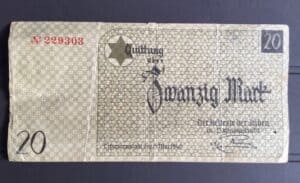
A ghetto was created in spring 1940. Although the Germans had ultimate control, a considerable degree of authority, more than in any other ghetto, remained with the Jewish Council and its leader, Chaim Rumkowski.

Rumkowski is a controversial figure regarded either as a quisling or a saviour. Rumkowski set out to make the ghetto so productive it would be indispensable to the German war effort but he was also prepared to draw up deportation lists in order to save the ghetto as a whole.

By the summer of 1942, there were almost 100 factories in the ghetto in which the vast majority of the Boys worked in forced labour.

Conditions in the ghetto were terrible and disease rampant but employment and the solidarity of friendship made survival more likely.

DEPORTATION

In January 1942, the Germans began to deport Jews to the nearby Chelmno extermination camp, the first of its kind, where many experiments in mass killing were undertaken. By September 1942, 70,000 Jews and 5,000 Roma had been murdered there.

From then, until May 1944, there were no significant deportations and the ghetto resembled a forced labour camp. The Germans then decided to liquidate the ghetto and the remaining inhabitants were deported to the Auschwitz-Birkenau concentration and extermination camp in occupied Poland.

Although Auschwitz is the symbol of the Holocaust and the genocide carried out against the Jews, it was significantly different from the other extermination camps was not just a place where Jews were deported to and murdered. When the trains arrived in Birkenau a selection was made on the ramp. It offered healthy young men and women a chance of survival as they were often selected for slave labour.

Those members of the Boys who were deported from the Lodz ghetto were selected to work as slave labourers. The fact that they arrived six months before the camp was liberated increased their chance of survival.

They were deported with large groups of friends who looked after each other in the camps. This was another significant factor in their survival.

Prisoners on the ramp warned new arrivals to say they were healthy, and teenagers were told to say they were older than they were. These inmates spoke Yiddish which increased the chance of the Boys survival. Many arrivals from Greece, France, Italy and Holland did not understand the warnings.

About 12,000, Łódź ghetto residents survived Auschwitz and other camps.

LIBERATION

A number of the Boys returned to Lodz after the liberation to search for relatives.

Thirty-eight thousand survivors passed through the city in the months after the liberation. It became a major hub in the underground movement to take the survivors illegally to the British controlled Palestine Mandate. Youth groups were housed at Zadocnia 66. Conditions were harsh and the children slept on the floor and were fed only potatoes and bread.

With the consolidation of communist power, all independent Jewish political parties, organizations, and institutions were closed by the end of 1949.

Most of the Jews who originally lived in Lodz but survived the Holocaust joined the exodus of survivors from Poland and many of the Jews who now live in the city arrived from much further east. Finding Łódź far safer than the post-war situation they had experienced in their hometowns, they settled in the city.

By the early 1960s, Łódź had fewer than 3,000 Jews. In 1967-68, the Polish communist authorities carried out an anti-Zionist purge and many Jews fled the country. More than 1,000 Jews left the city after March 1968, immigrating to Israel, the United States, and Scandinavia. By the 1970s, Łódź had fewer than 1,000 Jews. Many left after the fall of communism.

PRESENT DAY LODZ

Łódź is a run-down former industrial city with much in common with Detroit. It is, however, possible to glimpse the city’s Jewish past.

The History Museum is in the pre-war palace of one of the city’s leading industrialists, Israel Poznanski, and the factory complex that he owned, which is situated behind the museum, is now a cinema and entertainment complex.

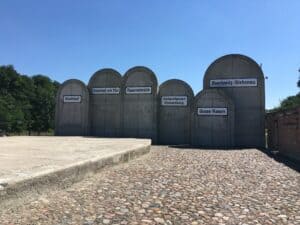
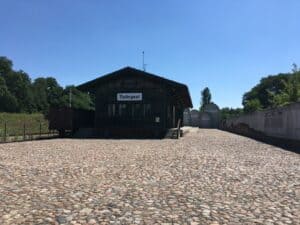
There is a major memorial at the Radegast station from where the city’s Jews were deported. The Jewish cemetery is also preserved.

As arguments rage over how to memorialise the Holocaust in Poland, a new museum has opened at the Kulmhof death camp, as the Chelmno extermination camp is now called.

It includes a research lab and educational centre where local school children can learn what happened there during the Second World War. It was the first and fifth most deadly extermination camp on modern day Polish soil but receives less than 20,000 visitors a year.

Members of the local Jewish community, who are the children of Holocaust survivors, attend events at Chelmno and meet schoolchildren, especially during Chanukah, but with few remaining Jews in Lodz they are pessimistic about what will actually be remembered when they are gone.

Although since 2004, much has been done to commemorate the city’s Jewish history, it is still possible to find people in Lodz who have never heard of the camp of Chelmno, although they are aware of the fate of the city’s Jews in Auschwitz.

Place of Birth:

Associated Boys:

Chust, Czechoslovakia (now Khust, Ukraine)

Located in the pretty Tisza River Valley at the foot of the Carpathians, Khust is the third largest city in Transcarpathia and was home to 14 members of the Boys.

Slave labour played a major role in ensuring their survival. It was not only the antisemitism that greeted them on their return home but the annexation of the region by the Soviet Union after World War Two that turned them into refugees.

Until the end of the First World War, the city was part of the Austro-Hungarian Empire. In 1920, the Carpathians became the most easterly part of the newly created state of Czechoslovakia

A Jewish community developed in Chust in the 18th century. The city was a centre of religious learning and was an important Hasid centre. The Chust yeshiva opened in 1861.

PRE-WAR CHUST

By 1941, the Jewish population, just under a third of the total, had increased to 6,023.

In the inter-war period, Jews were involved in all aspects of civic, cultural, and economic life. Most of the Jews of Chust were tradesmen or ran shops. Jews also owned cinemas, hotels, taverns, three banks, factories and flour mills. Many of them worked in liberal professions as doctors, pharmacists, lawyers, and clerks.

Various Jewish political parties were active in Chust. they included the Agudat Israel which represented newly formed political-religious Orthodoxy, as well as several Zionist parties.

OCCUPATION

In October 1938, following the Munich Agreement, Chust became part of Hungary. Chust and the surrounding area was officially annexed to Hungary in 1939. Chust’s Jewish families without Hungarian citizenship were expelled to the Nazi-occupied territory of Ukraine. Many of them were executed in Kamianets-Podilskyi in 1941.

Many Jewish men were taken into labour battalions and sent to the Russian front.

In March 1944, Germany invaded Hungary and installed a puppet government. That government participated in the Holocaust.

In April 1944, three ghettos were set up in the area: one in Chust and two in the villages of Iza and Sokyrnytsia. Several dozen Jews managed to escape from Chust and join the Ukrainian partisan units.

DEPORTATION

On 14 May 1944, Jews in the Chust ghetto were deported to the Auschwitz-Birkenau concentration and extermination camp in occupied Poland.

Prisoners on the ramp warned new arrivals to say they were healthy, and teenagers were told to say they were older than they were. These inmates spoke Yiddish which increased the chance of the Boys survival. Most arrivals from Greece, France, Italy and Holland did not understand the warnings

Although Auschwitz is the symbol of the Holocaust and the genocide carried out against the Jews, it was significantly different from the other extermination camps as it was not just a place where Jews were deported to be murdered.

When the trains arrived in Birkenau a selection was made on the ramp. It offered healthy young men and women a chance of survival as they were often selected for slave labour. The fact that the Boys arrived six months before the camp was liberated increased their chance of survival.

LIBERATION

On 24 October 1944, the Soviet Red Army liberated Chust and by February, the first Jewish survivors began to return to the city. By mid-1946, the Jewish population of Chust had grown to 400 people.

Most of the survivors found that their home’s occupied by strangers.

The Carpathians were annexed to the Soviet Union in 1945. Most of Chust’s Jews were either very religious and, or, Zionists. It was not possible to practice religious observance under Stalinism and Zionist politics could lead to arrest. As a result most survivors chose to leave the Carpathians.

The Soviet government deported much of the city's German and Hungarian populations.

PRESENT DAY KHUST

The 18th century Old Synagogue survived the war, but it was converted under communism into a cinema. The Old Jewish cemetery also remains, although it was closed for burials in 1960.

Only one synagogue, built at the end of the 19th century, has retained its original appearance and function. It is the only synagogue in Transcarpathia which has operated continuously as a Jewish prayer house since its construction.

Today, about 165 Jews live in Khust and still pray in the synagogue.