Whereas the majority of the Boys spent years in the ghettos, slave labour and concentration camps, some of the Boys were hidden children.
They survived the war either living alone in the towns, countryside and forests of occupied Europe or successfully concealed their Jewish identities for some or all of the duration of World War II.
The Boys were teenage and child-Holocaust survivors, who were brought to the UK after the war for rest and rehabilitation.
Those members of the Boys who had been hidden, lived alone or concealed their identities made their way to the Jewish orphanages and displaced persons’ camps after the defeat of Nazi Germany.
Some members of the Boys were taken in by Aryan families in Nazi occupied in Poland and Czechoslovakia. Some were hidden briefly but some children were hidden throughout the war. It was often simply too dangerous for people to hide the children or in some cases the children wanted to return home despite the dangers.
Sometimes those people who took the children in were paid but often not.
Mala Tribich was hidden with her cousin Idzia in Częstochowa during the mass deportation from the ghetto in Piotrków in 1942:
Saved by Neighbours
Arie Czeret was taken in by Ukrainian peasants after his family were killed in the liquidation of the Trembowla Ghetto in what was then eastern Poland. He remained with the family until the liberation. It is not known what happened to the family after the war.
Avrom Dichter was also hidden by a Polish family, but they were too frightened to protect him for long. Odd as it may sound, he then felt that it was safer for him to join other Jews in the labour camp at Budzyń.
Hidden in the Hitler Youth
Others like Mendel Silberstein spent one and half years as a hidden child with a Volksdeutsche family. His father had been at school with the family’s father and as he was in Polish territory annexed to the Reich, he even attended Hitler Youth meetings. He was not the only Jewish child hidden in the village. After the other children had been discovered by the Nazis and killed, the family thought it was safer for Silberstein to rejoin his family in the ghetto. Again it is not known what fate befell the family who hid him.
Many families who took in Jewish children were too frightened after the war to talk about what they had done for fear of reprisal. Others did not talk about it because they considered it was a natural thing to do so and not something to be boasted about.
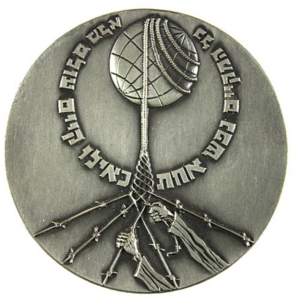
Many of those who protected Jews during the Holocaust have been recognised as Righteous Among Nations by the Israeli Holocaust Memorial Yad Vashem.
On behalf of the State of Israel and the Jewish people, it recognises non-Jews who risked their lives to save Jews during the Holocaust. This is one of its founding duties.
It is a unique attempt by victims to pay tribute to people who stood by their side at a time of persecution when the overwhelming majority of bystanders did nothing.
The criteria for someone to be recognised as Righteous Among the Nations are extremely strict. It must be proved that the victim was indeed in danger of losing their life and that the person who helped them did so for purely altruistic reasons. That help must have been substantial or repeated.
Only a Jewish person can put forward a nomination.
Individuals recognised as Righteous Among the Nations are awarded a medal and certificate. Their name is added to the Wall of Honour in the Garden of the Righteous at Yad Vashem. Awards can be given posthumously.
Those who have received the award come from all walks of life, from different countries, economic backgrounds and faiths.
Although the Righteous are often used to bolster a country’s image of how its population responded to the Holocaust, focus on the Righteous is important as it turns the spotlight away from the victims and asks ‘What would you have done to help your neighbours?’.
During the1961 trial of Adolf Eichmann in Jerusalem, frequent reference was made to the Righteous Among the Nations at the request of David Ben Gurion, Israel’s first prime minister, to minimise the negative impact of the trial on Israeli foreign policy. It prompted many Jews to write to Yad Vashem suggesting candidates for an award. In 1963, the Israeli government then set up a special commission to judge applications. Almost 28,000 people have been awarded the title Righteous Among the Nations.
Jews who helped fellow Jews and risked their own lives in the process are not considered for the award. As no such award for Jews exists, it means that the level of Jewish resistance is often underestimated.
That said there are thousands of people who offered a helping hand, even if it was just a passing gesture, to children that they knew were Jewish who have never been recognised.
The following members of the Boys were helped by people recognised as Righteous Among Nations:
Hetty Fisch, who was Dr Majercik and his wife Anna, who hid her in Zilina, Slovakia. The couple had pulled her inside their apartment as she was walking down the stairs towards the Gestapo officers during a deportation.
Among those helped by the Swedish diplomat Raoul Wallenberg were Erika Grossman and Zolly Stern the brother of Meir and Eliska Stern.
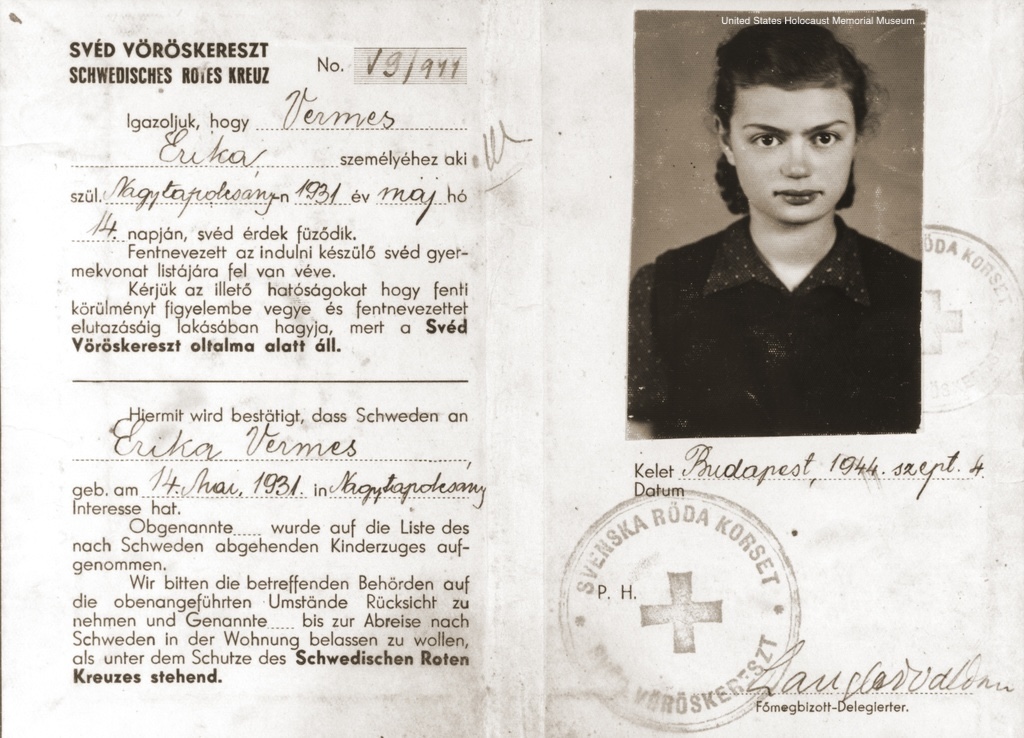
Being a hidden child was not without trauma. Many hidden children spent months even years alone in barns and hideouts, and some were mistreated by those who hid them.
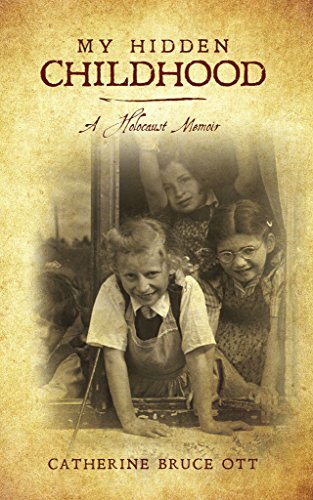
Mirjam Stern was a hidden child in Slovakia. She was too small to remember what year she was born but believed it was 1936 or 1937.
“The soldiers’ frequent visits terrify me. I hide under the furniture when I hear them in the house. The sound of unfamiliar voices downstairs causes my heart to race, and I recall in grisly detail the warnings that Mrs Dvorak has given about my fate if I am discovered. Every new sound portends danger. Today I hear booted footsteps on the stairs. As I rush to hide under the bed, the small area rug slides slightly sideways. I stare at it, afraid to move, afraid to blink. To me the rug is a giant arrow pointing to my hiding place …
The injustice of my situation does not escape me. I recall looking out of the window one day and seeing two girls, about my age, playing together and talking happily. They must be good friends, I think. I wish I could play with them. For some reason, this particular memory stands out in colour, while most other memories of this period of my life are grey. I keep praying but each vigil ends the same – no Papa, no sister, brother or cousins coming to rescue me and take me home, just disappointment and the ever-present feelings of longing and sadness.”
Catherine Ott, My Hidden Childhood: A Holocaust Memoir (2018).
Some of the Boys survived alone living by their wits in the forests, countryside and even in the cities. During the Holocaust, lone or unaccompanied children were extremely vulnerable.
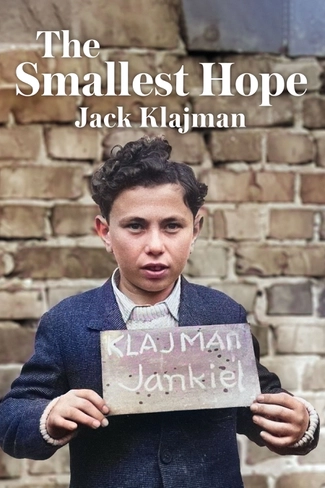
Jankiel Klajman, later Jack Klajman, was told by his older sister to escape from the Warsaw Ghetto in 1942 as rumours were circulating that the ghetto was about to be liquidated. Klajman’s parents had both already died of exhaustion in the ghetto. Klajman was 11 years old when he escaped with his brother Eli, who was nine. They lived feral on the streets of Warsaw.
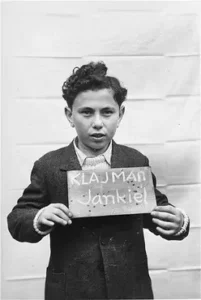
“Eli and I were a great team – two brothers who both loved one another and got along like best friends.
Often, on days when we didn’t do well begging, we had no choice but to steal food to survive. In the summer and early fall, I stole from the twice-weekly farmers’ market. I took turnips, apples, carrots – whatever was easiest at that moment. I remember many autumn breakfasts of cold turnip.
Eli, on the other hand, was much better at the game than me. He never chose the easiest picking. He went for what he wanted most – and that wasn’t turnip. He wanted to steal fresh bread and baked goods …
Between the two of us, we were making enough to eat every day. The only problem was where to sleep at night.”
When Klajman sneaked back into the ghetto to take part in the Warsaw Uprising, his little brother was caught by the Polish police, and he never saw him again.
“The first few nights after learning Eli had died were emotionally devastating. It was early springtime, warm enough that I could sleep in the park or other outdoor sites. I would cry myself to sleep, thinking constantly about how much I missed my brother. I still don’t know how I managed to remain sane.”
Klajman found himself alone in the world at the age of 12 years old.
Jack Klajman then survived by singing in the countryside, as did Sam Frieman. Frieman was always known by his nickname, Dundela, which was the title of one of his favourite songs.
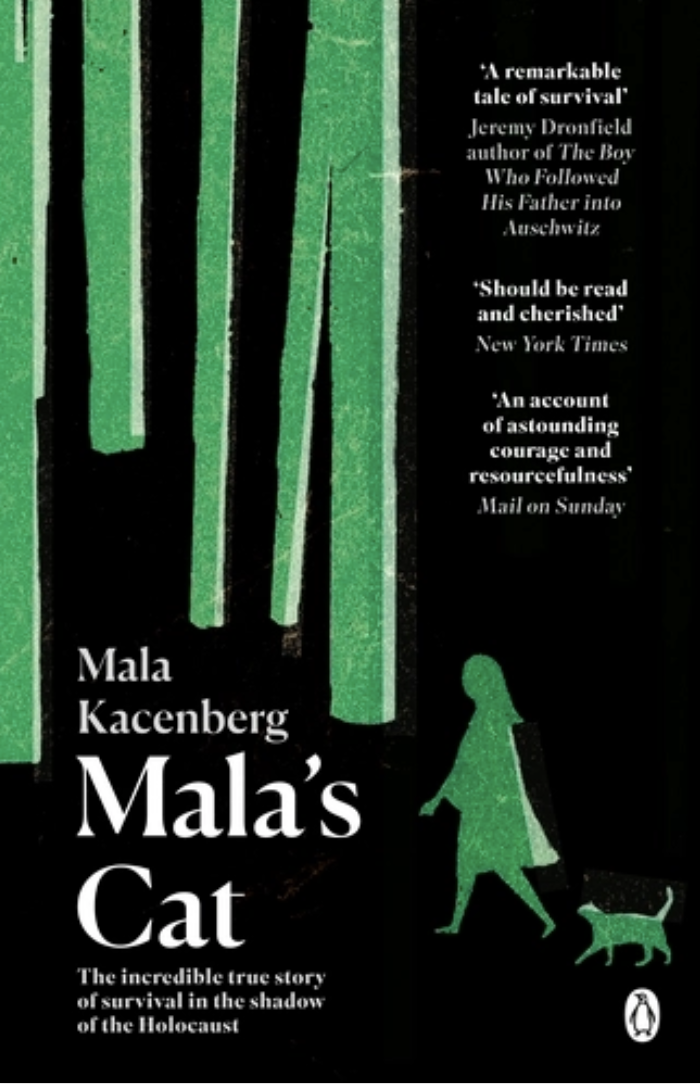
Mala Kacenberg also lived feral for several years before she managed to sign up for a German labour exchange in Bilgoraj for young Poles and was shipped off to Germany, despite having no documents to prove she was a Catholic from a Polish family.
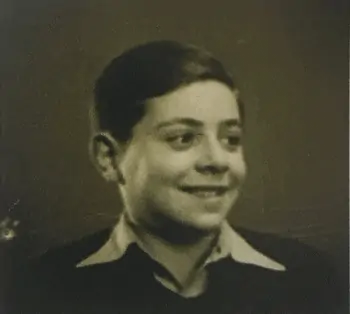
Yossi Gerstein was told by his mother to run away from the Warsaw Ghetto after his father disappeared. He was six years old:
The ’45 Aid Society is active in Holocaust education.
To find out more about the resources we offer click here.
Our Education Team can advise on how to deliver the story of the Boys by booking a suitable speaker and can help teachers devise lesson plans.
Critical Thinking Questions
On the Page
Between the Lines
Beyond the Page
For a full list of Critical Thinking Questions click here.
Aktion A Nazi military or police operation to forcibly assemble Jews prior to shootings or deportation.
Aryan Term used in Nazi Germany to refer to non-Jewish and non-Gypsy Caucasians — white Europeans, especially northern Europeans with blonde hair and blue eyes — who were considered by the Nazis to be the most superior of races and members of a “master race.”
Concentration Camp A prison camp used to detain those deemed enemies of the Nazi state, including Jews, Gypsies, political and religious opponents, members of national resistance movements, homosexuals, and others. Imprisonment was of unlimited duration, not linked to a specific act, and not subject to any judicial review. Inmates were often forced to undertake hard labour..
Deportation Forced removal of Jews in the Third Reich and German occupied countries from their homes.
For a full Glossary click here.
 About
About History
 Education
 Quilts
 FIlms
FIlms Photos
 News Media & Events
 Publications
 Donate