Members of the Boys were born in Chust in eastern Czechoslovakia, now Khust in Ukraine.
The Boys were teenage and child-Holocaust survivors, who were brought to the UK after the war for rest and rehabilitation.
Members of the Boys were held in Nazi labour and concentration camps and used as slave labourers. They had also survived World War II in hiding or as lone children.
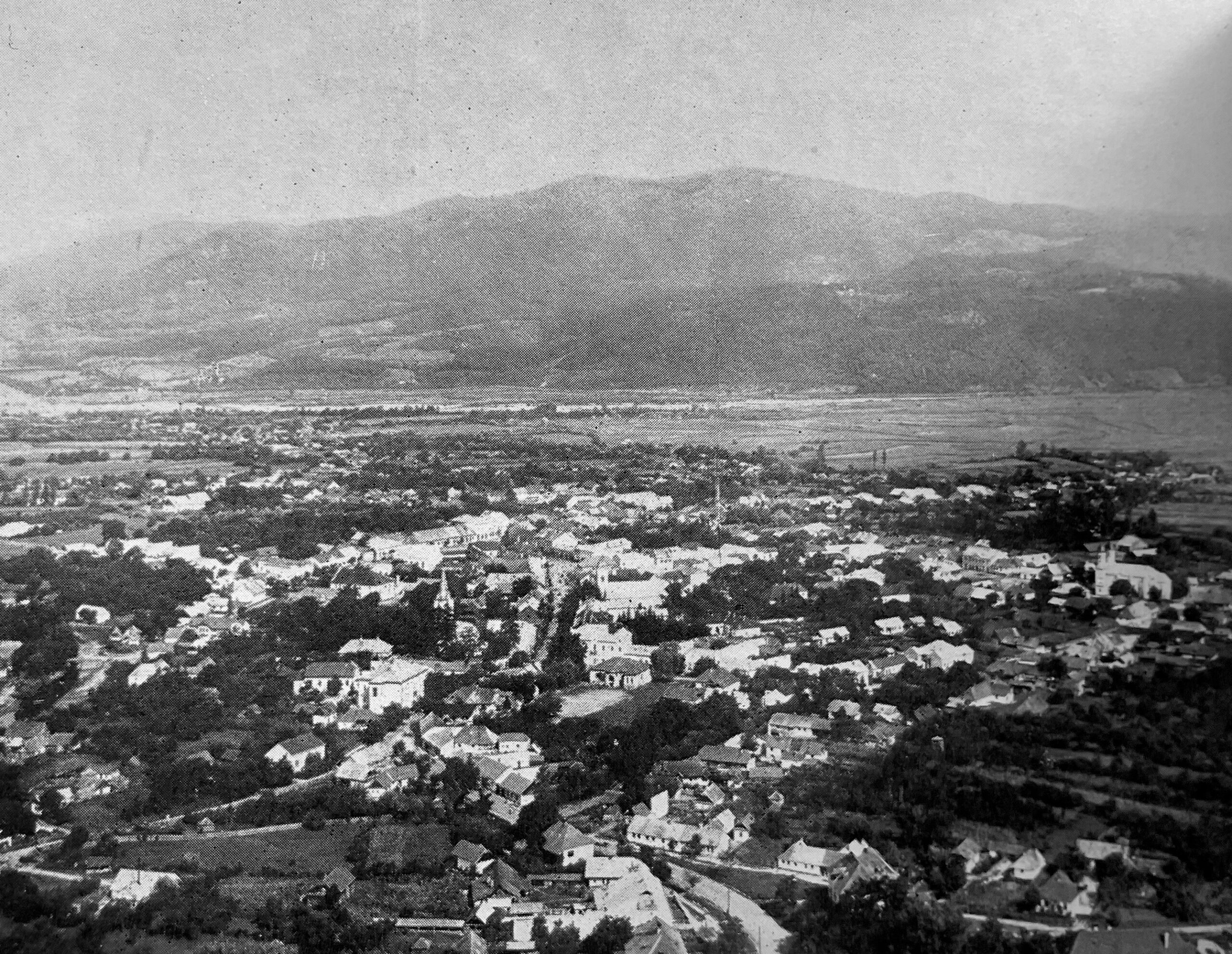
Chust in the 1930s.
Located in the pretty Tisza river valley at the foot of the Carpathian Mountains, Chust, now Khust in Ukraine, is the third largest city in Transcarpathia and was home to 13 members of the Boys.
Slave labour played a major role in ensuring their survival. It was not only the antisemitism that greeted them on their return home but the annexation of the region by the Soviet Union after World War II that turned them into refugees.
Until the end of World War I, the city was part of the Austro-Hungary. In 1920, the Carpathian region became the most easterly part of the newly created state of Czechoslovakia
A Jewish community developed in Chust in the 18th century. The city was a centre of religious learning and was an important Hasid centre. The Chust yeshiva opened in 1861.
Pre-war
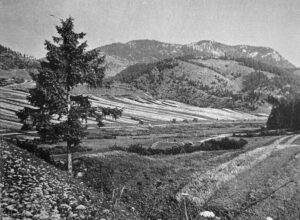
The Carpathian Mountains in the 1930s.
In the mid-19th century, the Jewish community of Khust became one of the largest and most influential in Transcarpathia.
By 1941, the Jewish population, just under a third of the total, had increased to 6,023.
In the inter-war period, Jews were involved in all aspects of civic, cultural, and economic life. Most of the Jews of Chust were tradesmen or ran shops. Jews also owned cinemas, hotels, taverns, three banks, factories and flour mills. Many of them worked in liberal professions as doctors, pharmacists, lawyers, and clerks.
Various Jewish political parties were active in Chust. they included Agudas Israel, which represented newly formed political-religious Orthodoxy, as well as several Zionist parties.
Occupation
In October 1938, following the Munich Agreement, Chust became part of Hungary. Chust and the surrounding area was officially annexed to Hungary in 1939. Chust was now known by its Hungarian name of Huszt.
Chust’s Jewish families without Hungarian citizenship were expelled to the Nazi-occupied territory in present-day Ukraine. Many of them were executed in Kamianets-Podilskyi in 1941.
Many Jewish men were taken into labour battalions and sent to the Russian front.
In March 1944, Germany invaded Hungary.
In April 1944, three ghettos were set up in the area: one in Chust and two in the villages of Iza and Sokyrnytsia. Several dozen Jews managed to escape from Chust and join the Ukrainian partisan units.
Deportation
On 14 May 1944, Jews in the Huszt Ghetto were deported to the Auschwitz II-Birkenau concentration and extermination camp.
Liberation
On 24 October 1944, the Soviet Red Army liberated Chust and in February, the first Jewish survivors began to return to the city. By mid-1946, the Jewish population of Chust had grown to 400.
Most of the survivors found that their homes were occupied by strangers.
Transcarpathia was annexed by the Soviet Union in 1945. Most of Chust’s Jews were either very religious and, or, Zionists. It was not possible to practice religious observance under Stalinism and Zionist politics could lead to arrest. As a result most survivors left Transcarpathia.
The Soviet government deported the city’s German and Hungarian populations.
Present-day
Today, about 165 Jews live in Khust.
Visiting Khust
>
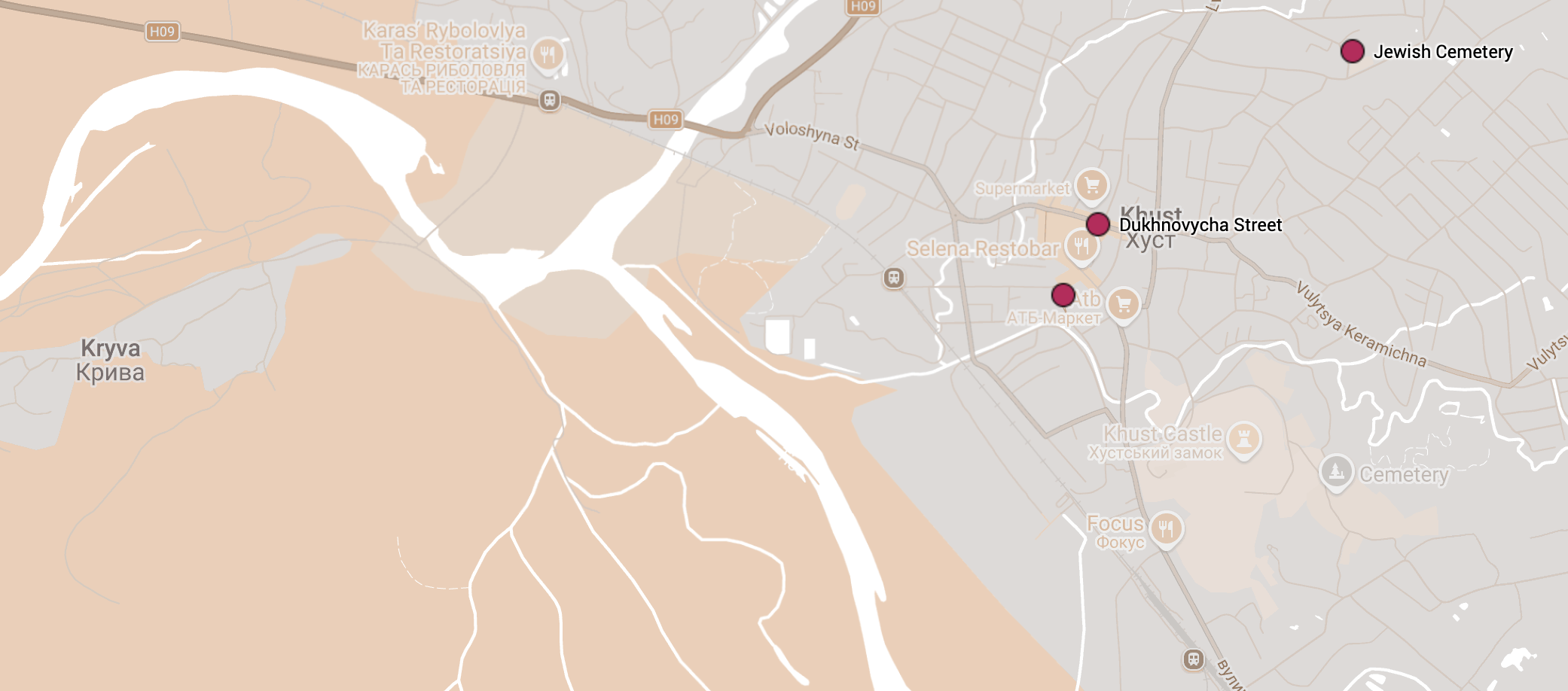
The area around Maidan Nezalezhnosti and Dukhnovycha was the principal Jewish quarter.
Getting there If you do not have your own transport, take the train to Chop and then change.
Getting around The city is small, and it takes less than an hour to walk anywhere.
Note that the UK Foreign Office advises against travel to Ukraine because of the ongoing Russian invasion.
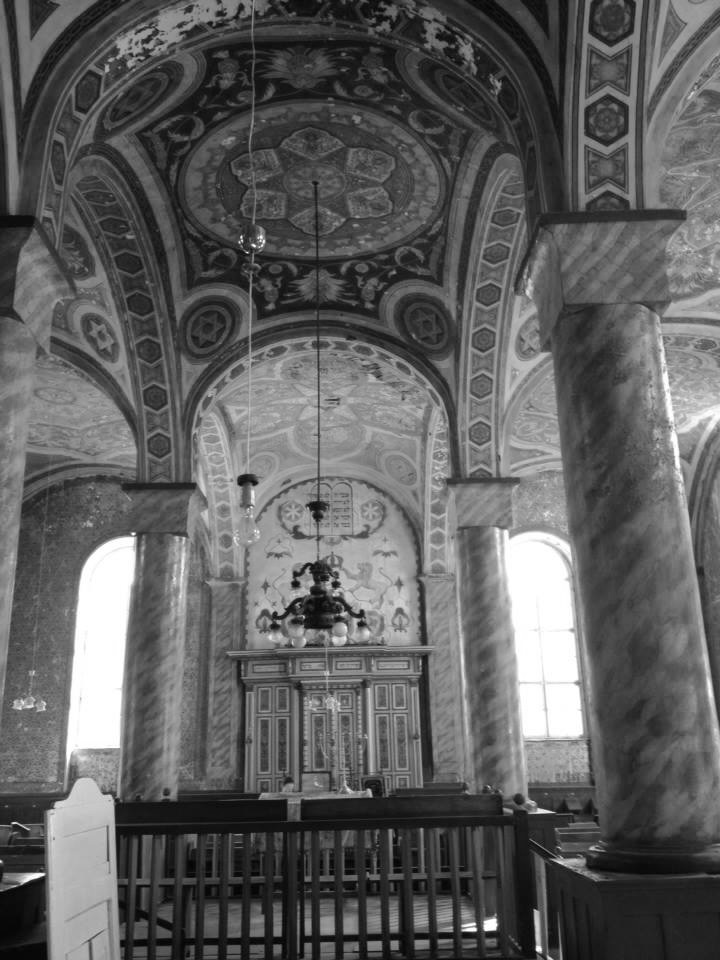
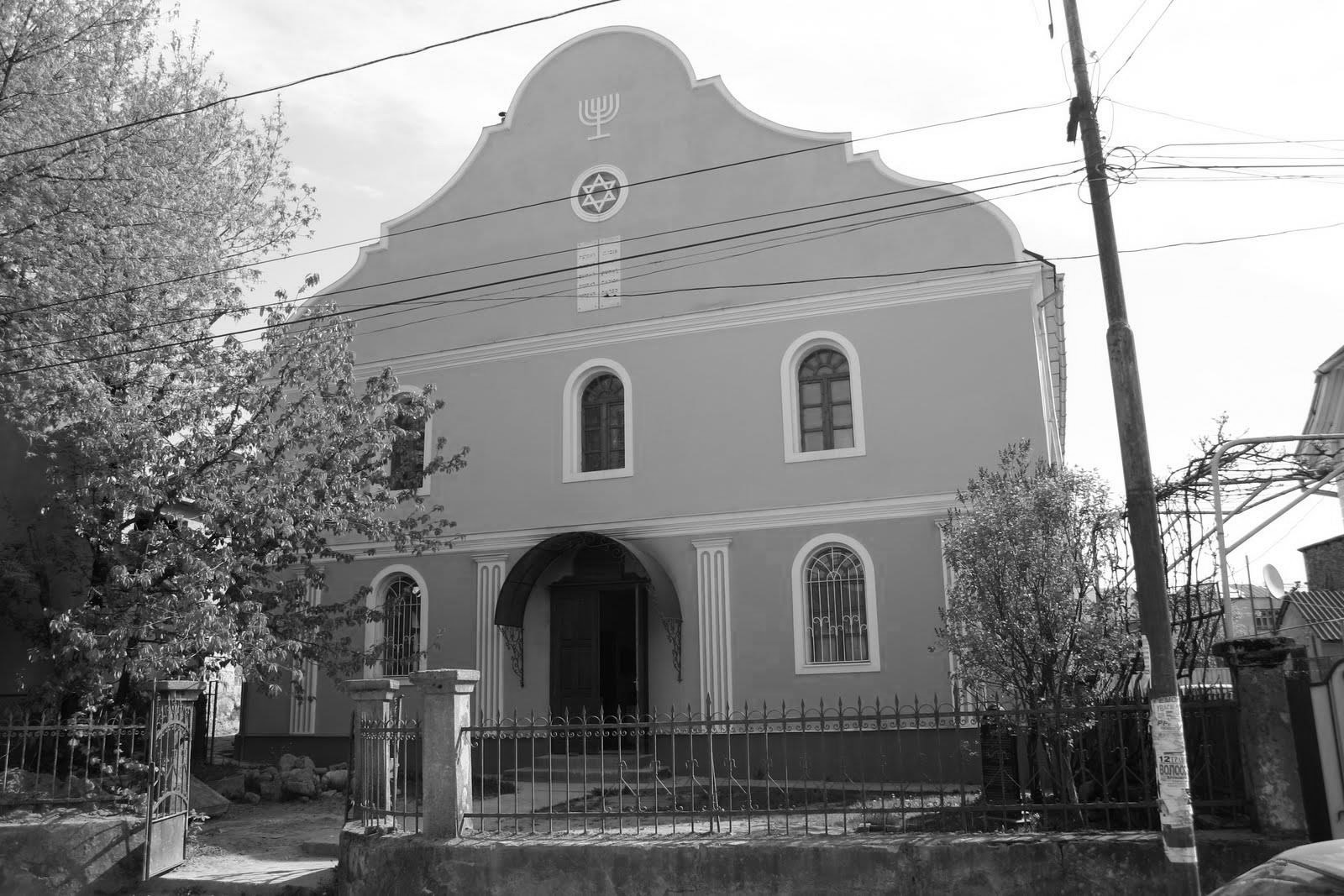
Khust Synagogue pre-World War II
Ghetto Location
There were three ghettos: one in Khust in the main Jewish quarter and two in the villages of Iza and Sokyrnytsia. Prior to deportation the Jews were held in a brickyard and other assembly points on Dobryanskoho st (now бывш. Lomonosova), Dukhnovycha and Khmyelnytskoho Sq.
Jews were also held in a camp in Kryvka before being shot on the bank of the Tisza River near Veliatynskyi Bridge. Their bodies were thrown in the river.
Synagogue
The New Synagogue (11 Maidan Nezalezhnosti) features an ornate interior with decorated vaults and is one of the few synagogues in the region to have survived with its interior largely intact. Built in a Neo-Baroque style, the building was never closed by Soviet authorities. It is the only synagogue in Transcarpathia which has operated continuously as a Jewish prayer house since its construction.
One of the other former synagogues is currently the library and another the Soviet era cinema.
Cemetery
Jewish Cemetery (Ostrovskoho Street) It has more than 1,500 matzevot. Those buried here include Rabbi Moshe Schick and Rabbi Moshe Grinwald, prominent rabbinic scholars and communal leaders. The cemetery was closed for burials in 1960.
The exact sites of mass burials of Khust Jews killed by Hungarian police as they attempted to flee the deportation are not known.
Members of the Boys were born in Berlin in Germany.
The Boys were teenage and child-Holocaust survivors, who were brought to the UK after the war for rest and rehabilitation.
Members of the Boys were held in Nazi labour and concentration camps and used as slave labourers. They had also survived World War II in hiding or as lone children.
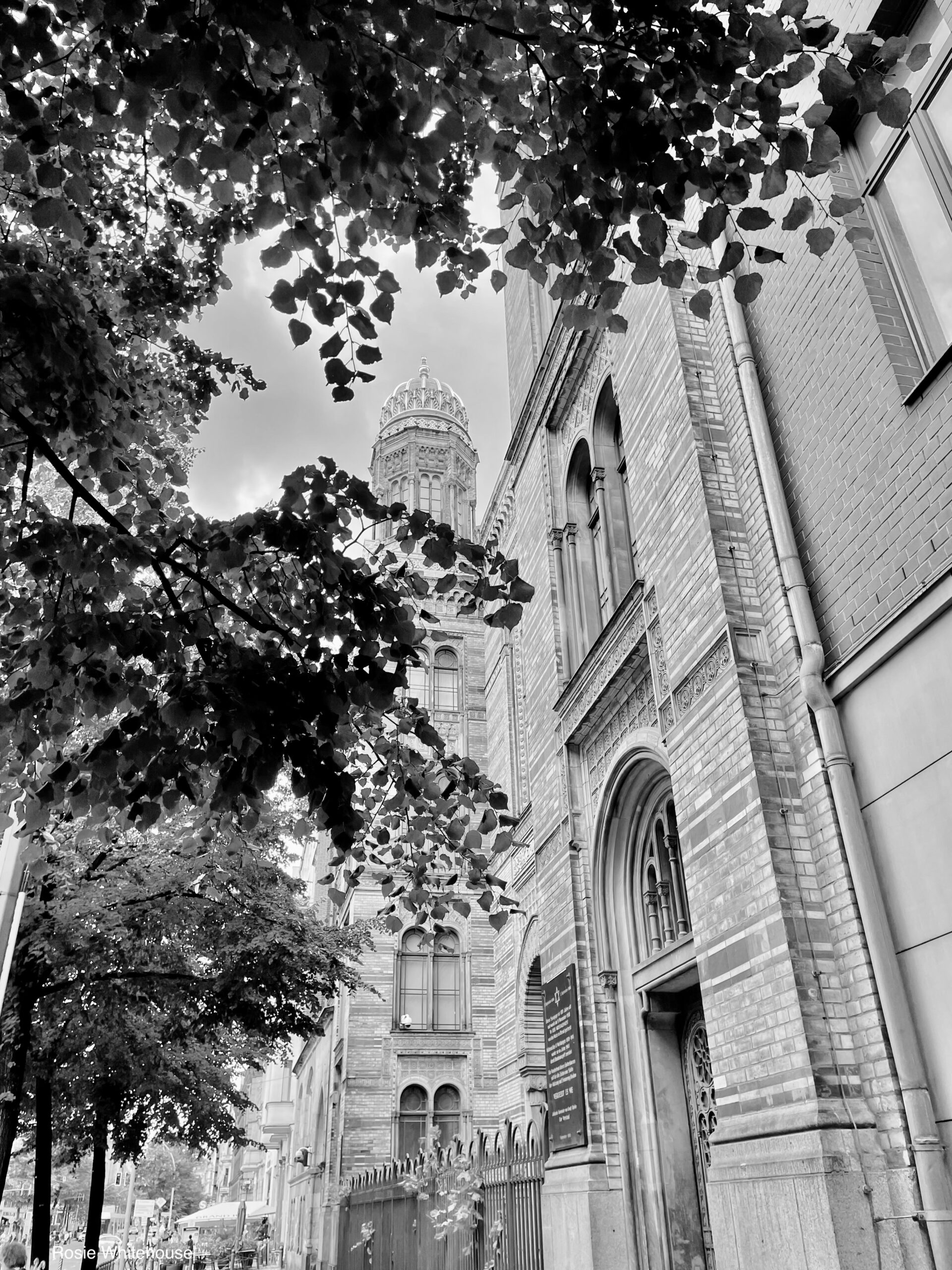
New Synagogue in Berlin, Germany.
Berlin played a crucial role in the story of the Boys, as it was the seat of the Nazi government, but it was also home to 16 of the Boys, who were born in the German capital, as well as one who joined the group in the UK.
A further three members of the Boys were deported from Berlin in 1942. Many of the Boys from Berlin were among the youngest children to survive the Holocaust. Gad Josef, the youngest of the Boys, was born in Berlin in 1942.
Josef like many of the Boys born in Berlin had been deported to the Theresienstadt Ghetto. About 15,000 of the city’s Jews were deported to Theresienstadt.
Pre-War Jews had lived in Germany since Roman times but the Jewish community in Berlin was only properly established in the 18th century and flourished before the Nazis took power. The community was highly assimilated but also included Orthodox Jews. It was represented in all areas of public life and in all social classes.
In 1933, Berlin was home to about 160,000 Jews and the community was the largest in Germany. Jews made up less than 1% of the German population.
Immediately after Adolf Hitler became Chancellor in January 1933 the Jews faced persecution.
On Kristallnacht in November 1938, Berlin’s synagogues were burned down and Jewish-owned shops and homes were looted. Thousands of Jews were arrested and taken to concentration camps.
Berlin and the Boys
Germany played a major role in the Boys’ story not just because it was the capital of the Third Reich.
After the Nazis took control the Central British Fund for Germany Jewry (CBF) was established in London. It was the CBF who organised the pre-war Kindertransports and who after World War II brought the Boys to the UK.
About 80,000 Jews were living in Berlin in 1939. Deportations began in October 1941. Jews were sent to ghettos, such as Łódź and Theresienstadt and to killing centres in the east. This is illustrated by the story of the Boys. The majority of the Jews who remained in the capital had been deported by April 1943.
Present-day
Since the fall of the Berlin Wall in 1989, Jewish life has returned to the German capital. About 30,000 Jews now live in Berlin but few are descendants of the Jews who lived in Berlin before World War II. The community includes a number of young Israelis.
Visiting Berlin
>
Germany’s capital was the beating heart of the Third Reich, which Hitler’s architect, Albert Speer, hoped to turn into a new glittering city called Germania. It has a fascinating and deeply moving collection of memorials and museums.
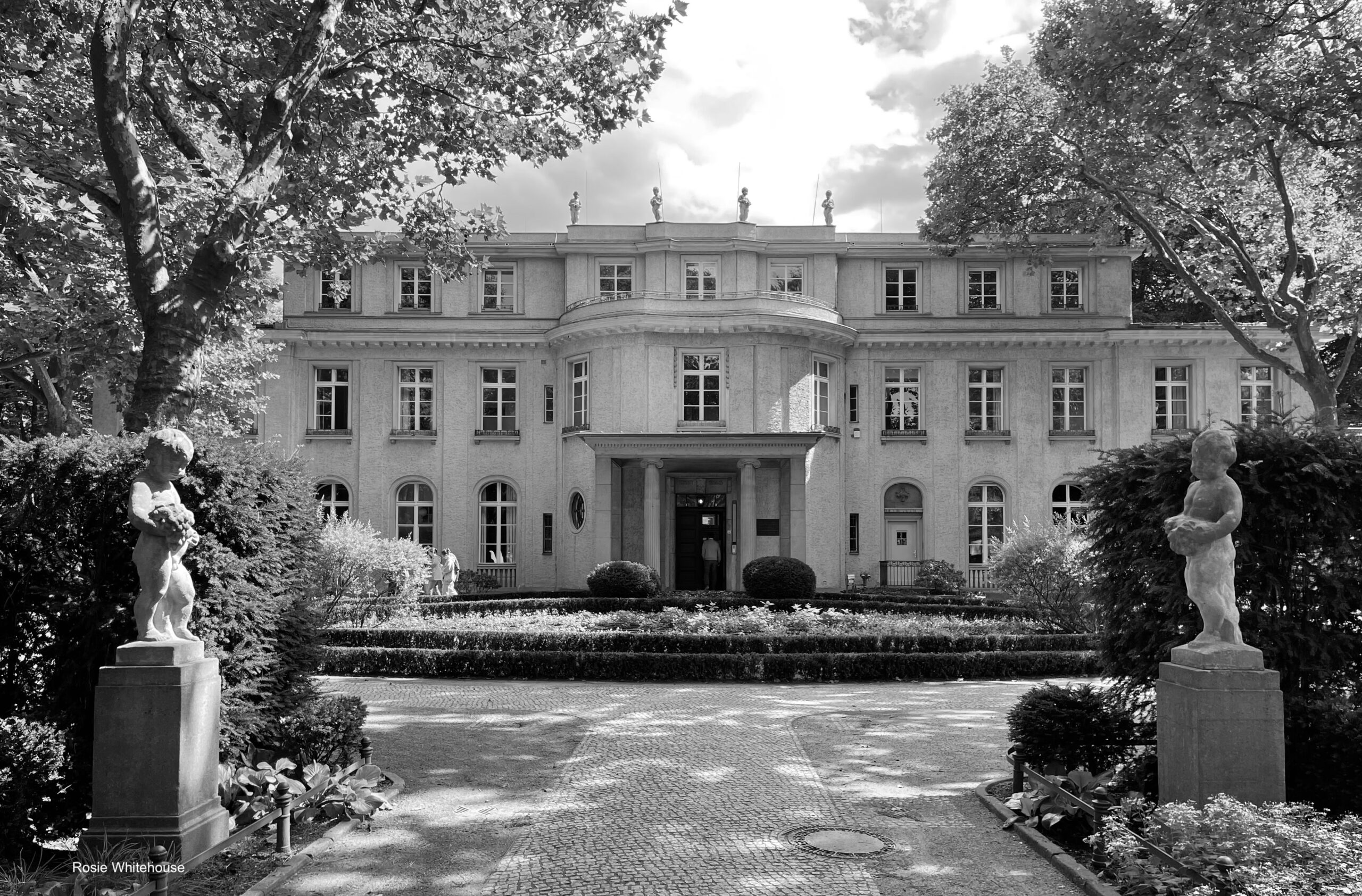
The Nazi policies that gave rise to the genocide of World War II were drawn up in the German capital, Berlin and one of the most important sites to see is the Wannsee Conference House where the plans for the Holocaust were finalised.
Getting there Berlin is connected to all major European capitals by air, rail and road. There are many long-distance flights.
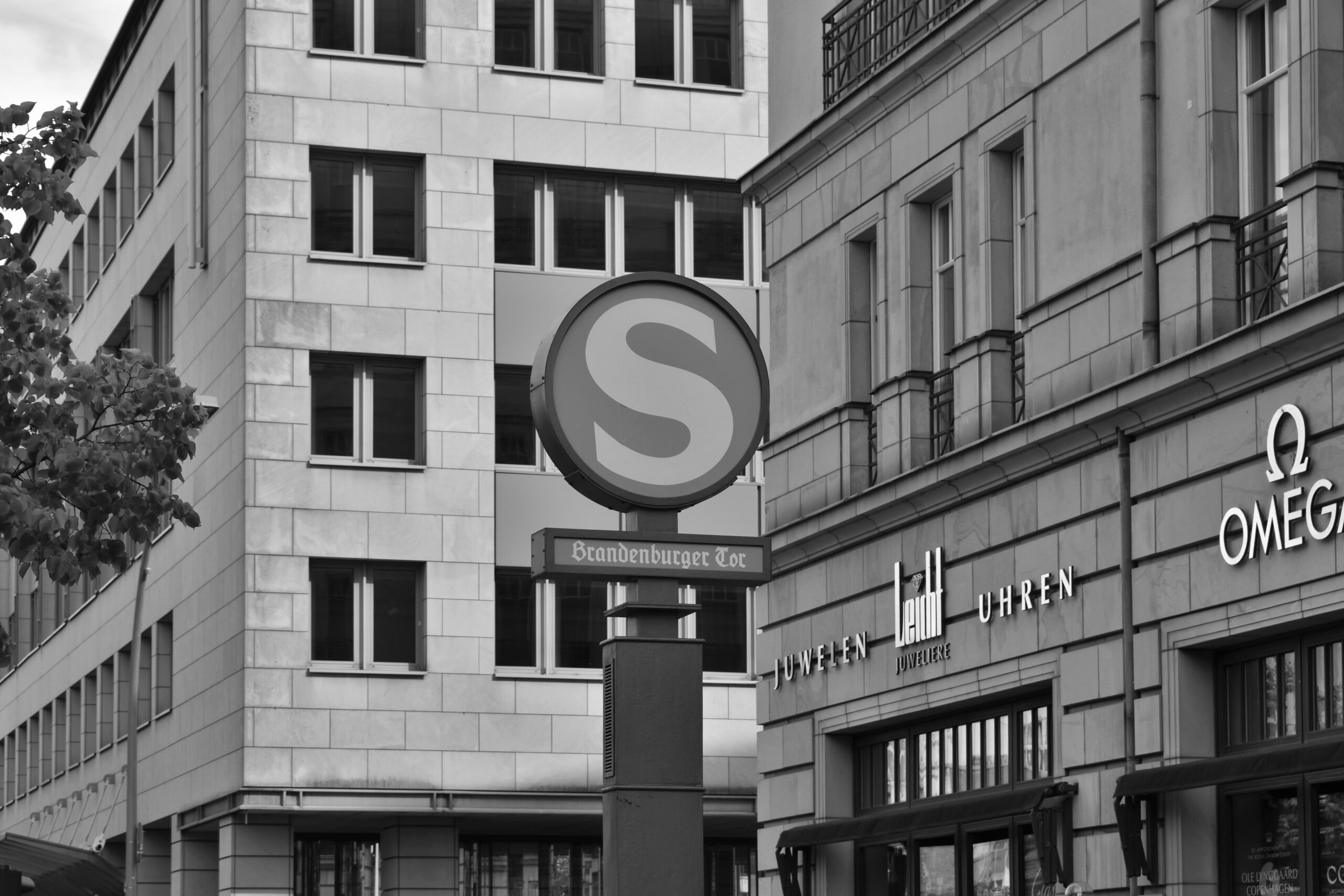
Getting around Both the U-Bahn (underground rail) and S-Bahn (commuter train) systems are the best way to get around but can be confusing, so it helps to have a good transport map.
Berlin is a surprisingly easy city to visit by car. It has no congestion charge and, compared with other western European cities, parking is easy to find and moderately priced.
To see the former Sachsenhausen concentration camp 30km north of Berlin, take S-Bahn 1 to Oranienburg, then walk 20 minutes; or take bus 804/821.
What to see
>
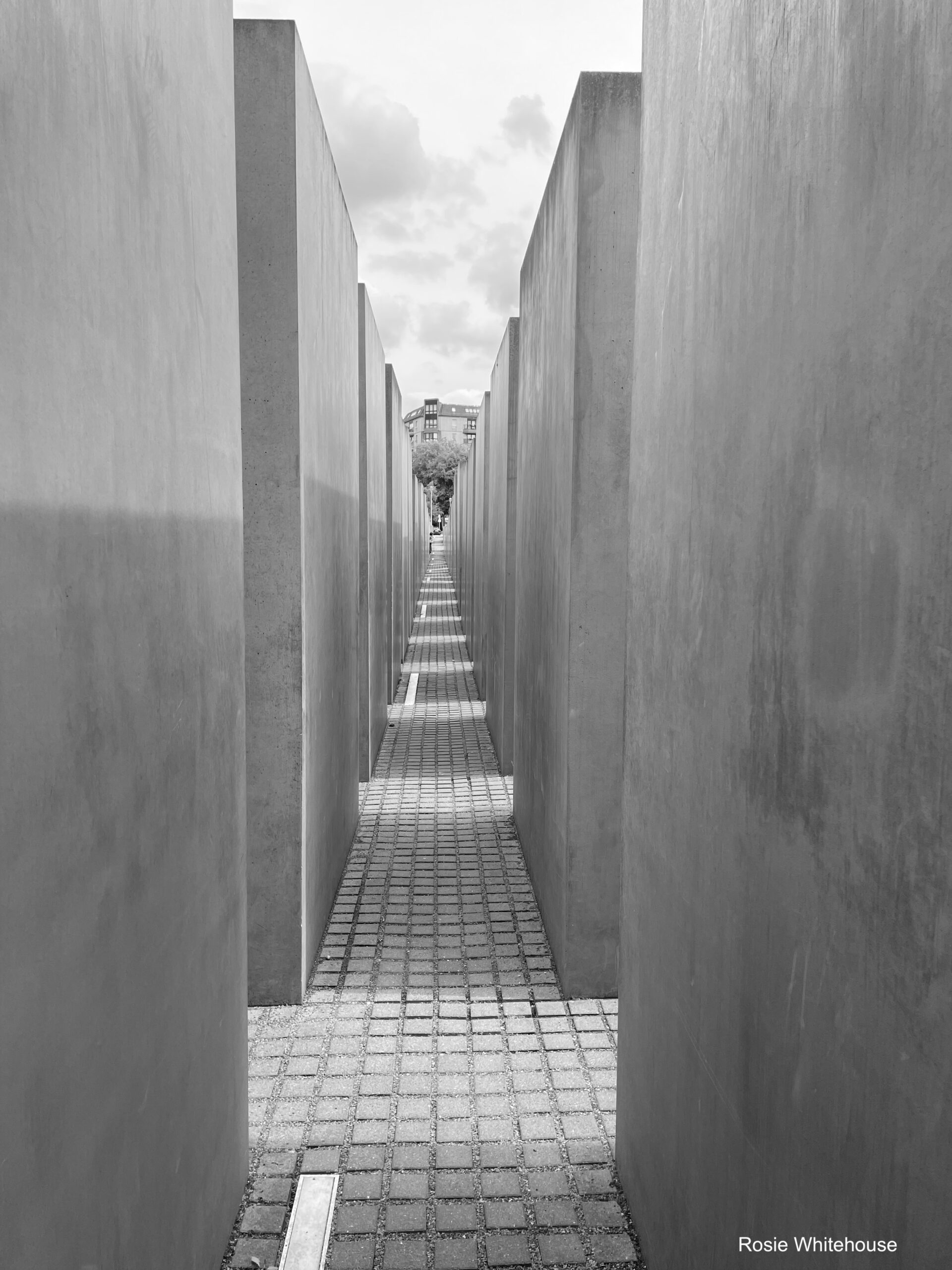
Holocaust Memorial, Berlin
Memorials
Memorial to the Murdered Jews of Europe (Cora-Berliner-Str. 1; w stiftung-denkmal.de; memorial: 24hrs daily; free) was unveiled in 2005. Made up of 2,711 grey stele of various sizes, symbolising Europe’s Jewish communities destroyed during the Holocaust, it covers an area the size of three football fields. The memorial receives 4 million visitors a year – be prepared to see people jumping from stele to stele or sitting on them drinking wine or having a snack. There is an excellent information centre below the memorial.
Kindertransport Memorial (Friedrichstrasse Bahnhof) Entitled Trains to Life – Trains to Death, the privately funded memorial was erected in 2008. It remembers the 20,000 children who left the Reich between 1938 and 1939 and those who were deported to their deaths.
The Rosenstrasse Women Memorial (near the Hackesche Höfe) The memorial erected in 1995, recalls the 1943 demonstrations by Christian women outside the Gestapo headquarters on Rosenstrasse after the arrest of their Jewish husbands, who were eventually released.
The Deserted Room (Koppenplatz) Karl Biedermann’s bronze sculpture depicts a table and two chairs, one of which has been overturned in a round-up.
Orte des Erinnerns (Places of Remembrance) 80 panels by American artists Renata Stih and Frieder Schnock, were put up in 1993 on lampposts around Schöneberg. They recall the successive steps the Nazis took in the persecution of the Jews. One outside a radio shop recalls the ban on Jews owning radios.
Wittenbergplatz U-Bahn station A striking memorial lists the names of concentration and extermination camps as if they were a schedule for commuter trains.
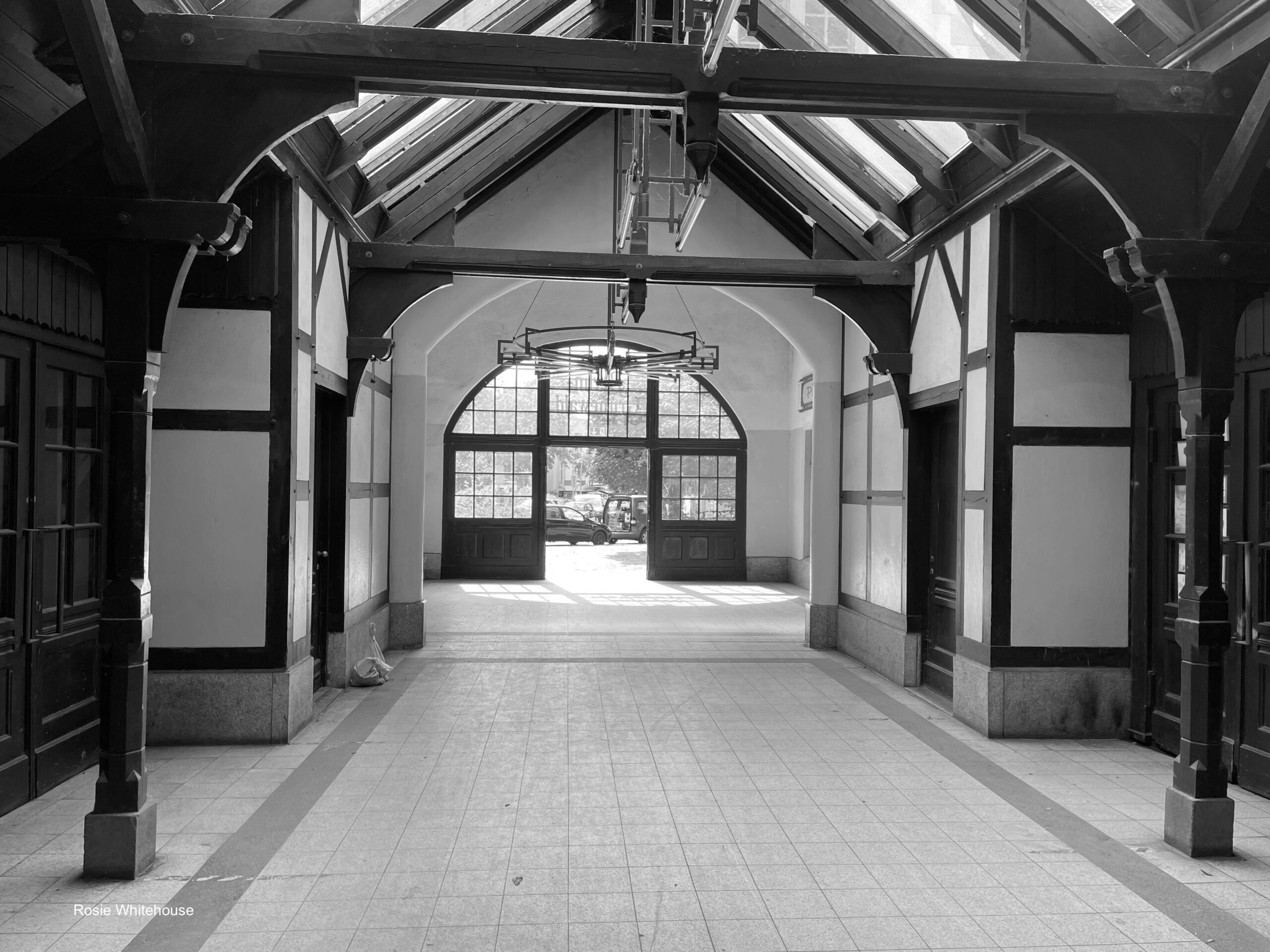
Grunewald S-Bahn station
Platform 17 (Grunewald S-Bahn station; free) This is the most moving of all of Berlin’s Holocaust memorials. It is located in a wealthy, leafy suburb west of the city. The first train left for the Łódź Ghetto from the station on 18 October 1941. Plaques next to the tracks list the transports that left Berlin between 1941 and 1945, the number of people, and their destinations – Auschwitz, Riga and Theresienstadt. Each transport consisted of roughly 1,000 people.
Herman Ehlers Platz Memorial (In the southern suburb of Steglitz near the Botanical Gardens) A mirrored wall lists 1,723 names of Jews from the deportation lists, among them 229 from Steglitz. The memorial stands on the site of the former synagogue which has been rebuilt and now stands at Düppelstrasse 41.
Star of David Memorial (Putlitzbrücke) On the bridge that connects the districts of Moabit and Wedding, remembers the 30,000 Jews who were deported from the Moabit Freight Depot.
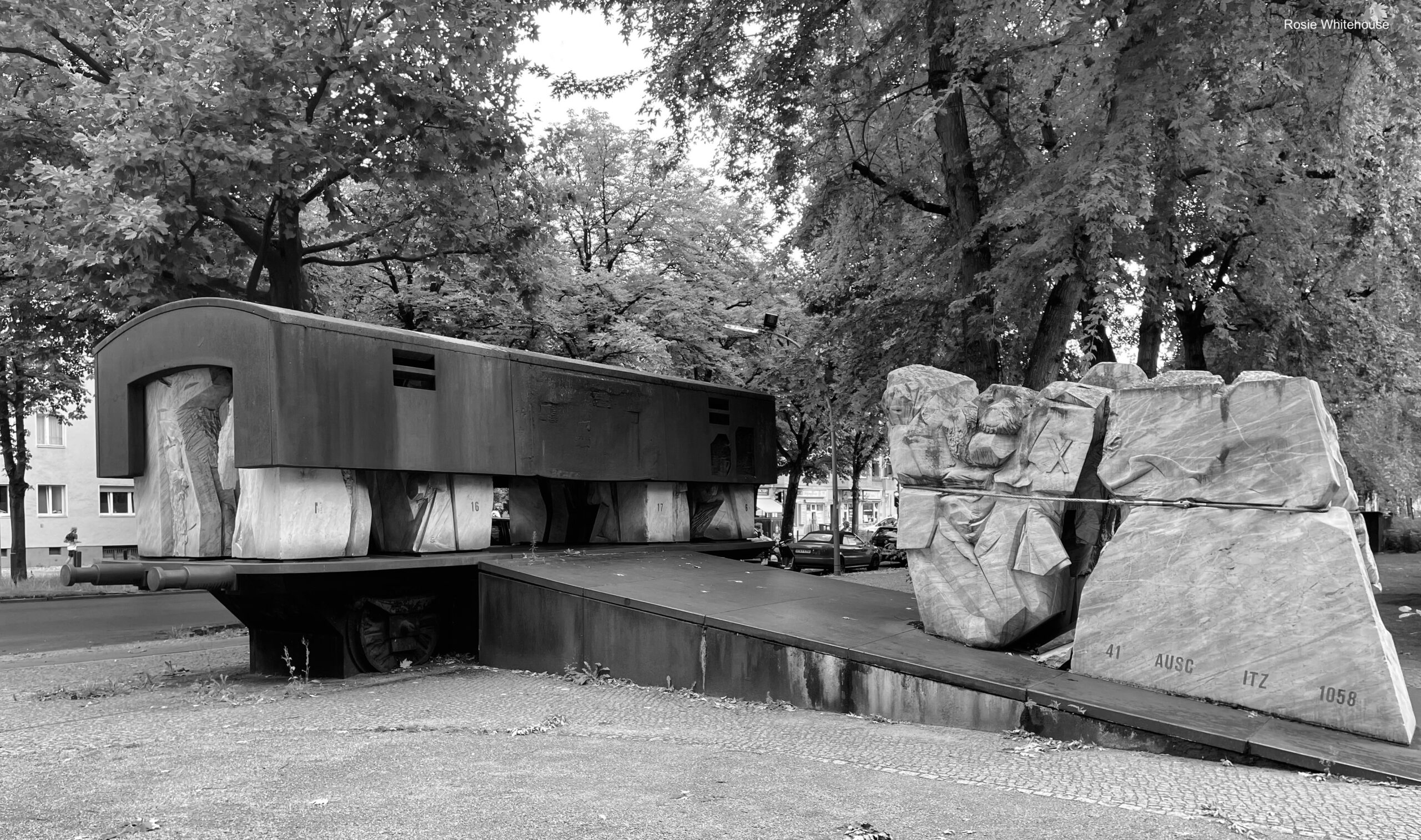
Levetzow Synagogue Memorial (Levetzowstrasse 7/8) The synagogue was damaged in the bombing raids and demolished in the 1950s. Jews were gathered here prior to deportation. The current monument, put up in 1988, is in the form of a stylised freight car.
Auerbach Orphanage (Schönhauser Allee 162) In 1942, 60 children and three staff from the orphanage were deported to Riga, where they were shot in the forest. In November, 75 children aged between 10 months and 16 years old were deported to Auschwitz and gassed. The building was destroyed in Allied bombing raids in 1943. Since 2014 the names of the murdered children and staff have been inscribed on the only remaining wall of the building.
The Central Office of Jewish Emigration Memorial (In a bus stop by Kurfürstendamm 115/116). Adolf Eichmann ran the bureau from 1938 which attempted to encourage Jewish emigration.
Museums
New Synagogue (Oranienburgerstr. 28–30; entry fee) The Moorish New Synagogue was built in 1866 and was the largest synagogue in Germany, seating 3,200 people. Religious practice here corresponded with liberal Judaism. Partially destroyed during Kristallnacht in 1938, and damaged by Allied bombing in 1943, the main synagogue hall was demolished in 1958. After the war, Jewish survivors in East Berlin used the adjacent building, the former premises of the Jewish community council, as a meeting place. Reconstruction of the façade and entrance lobby began in 1988. Today the building houses the Centrum Judaicum Foundation a museum, archive and research centre.
German Resistance Memorial Centre (Stauffenbergstrasse 13, free). The German High Command was housed in the building which is still part of the Ministry of Defence. It is here that Count von Stauffenberg, who had attempted to assassinate Hitler in the doomed July Bomb Plot of 1944 in the Wolf ’s Lair, was executed. The permanent exhibition covers anti-Nazi resistance. The Silent Heroes Memorial Centre is part of the same museum and commemorates Jews who resisted Nazi persecution and those who helped them.
Topography of Terror Documentation Centre (Niederkirchnerstrasse 8; free) The permanent exhibition in German and English that focuses on the central institutions of the SS and police in the Third Reich and the crimes they committed across Europe. It is an important and rare site that looks at the perpetrators. The street, formerly Prinz-Albrechtstrasse, was the centre of the Nazi terror machine.
Jewish Museum Berlin (Lindenstrasse 9–14; w jmberlin.de; free) The museum, a short walk from Checkpoint Charlie, was designed by the architect Daniel Libeskind, who was born in Łódź in Poland in 1946 to survivor parents. The museum opened in 2001 and is the biggest Jewish museum space in Europe. The children’s museum, Anoha (w anoha.de; free; book online), is on the opposite side of the road.
Anhalt Station (Möckernstrasse, southeast of Potsdamer Platz) More than 9,600 people were deported from the now ruined Anhalter in 116 transports, which usually took place in the morning during the normal commuter bustle, with one or two third-class passenger cars attached to scheduled trains. The first Kindertransport also left from Anhalter on 1 December 1938 destined for the UK. A new Exile Museum is due to open here in 2027.
We Were Neighbours (John-F-Kennedy-Platz 1; free) A small exhibition in the Schöneberg town hall explores the stories of 170 Jews who lived in the area. On the walls are 6,000 handwritten file cards with the names, addresses and biographical data of the deported.
German Museum of Technology (Trebbinerstrasse; entry fee), The museum has an interesting exhibition on the role of the Deutsche Reichsbahn, the German Reich Railway, in the Holocaust.
Otto Weidt’s Workshop for the Blind Museum (free) This museum in the Hackesche Höfe near the New Synagogue documents the extraordinary bravery of Otto Weidt, who ran a broom and brush workshop which supplied the German army and employed many blind and deaf Jews.
The Anne Frank Centre (entry fee), also in the Hackesche Höfe complex, tells the story of perhaps the Holocaust’s most famous victim. The museum is aimed at teenagers and school trips.
Wannsee Conference House
House of the Wannsee Conference (Am Grossen Wannsee 56; free) On Tuesday 20 January 1942, in the middle of a freezing cold winter, an extraordinary meeting took place in the southwestern suburbs of Berlin hosted by the director of the Reich Main Security Office, SS Obergruppenführer Reinhard Heydrich. The house became a memorial in 1992. The exhibition here documents the systematic process which led to the Holocaust and shines a spotlight on the desk perpetrators. The museum also has interesting online exhibitions, one of which uses 1,000 photographs and 380 diaries and letters by Wehrmacht soldiers who took part in the invasion of Poland in 1939.
Cemeteries
Berlin has several Jewish cemeteries, some of them are still in use.
The Old Jewish Cemetery (Grosse Hamburgerstrasse, a short walk from the New Synagogue) This was the city’s oldest Jewish cemetery, used between 1672-1827; today, the site is a small park. In 1943, the cemetery was turned into an air-raid shelter, and the gravestones used to reinforce its walls. It was also used for mass burials of civilians and soldiers killed in the air raids. A heartrending collection of sculpted figures, the Monument to Jewish Victims of Fascism, was placed by the entrance in 1985.
The other cemeteries are in Schönhauser Allee, Weißensee and Heerstraße.
Visiting Sachsenhausen
>
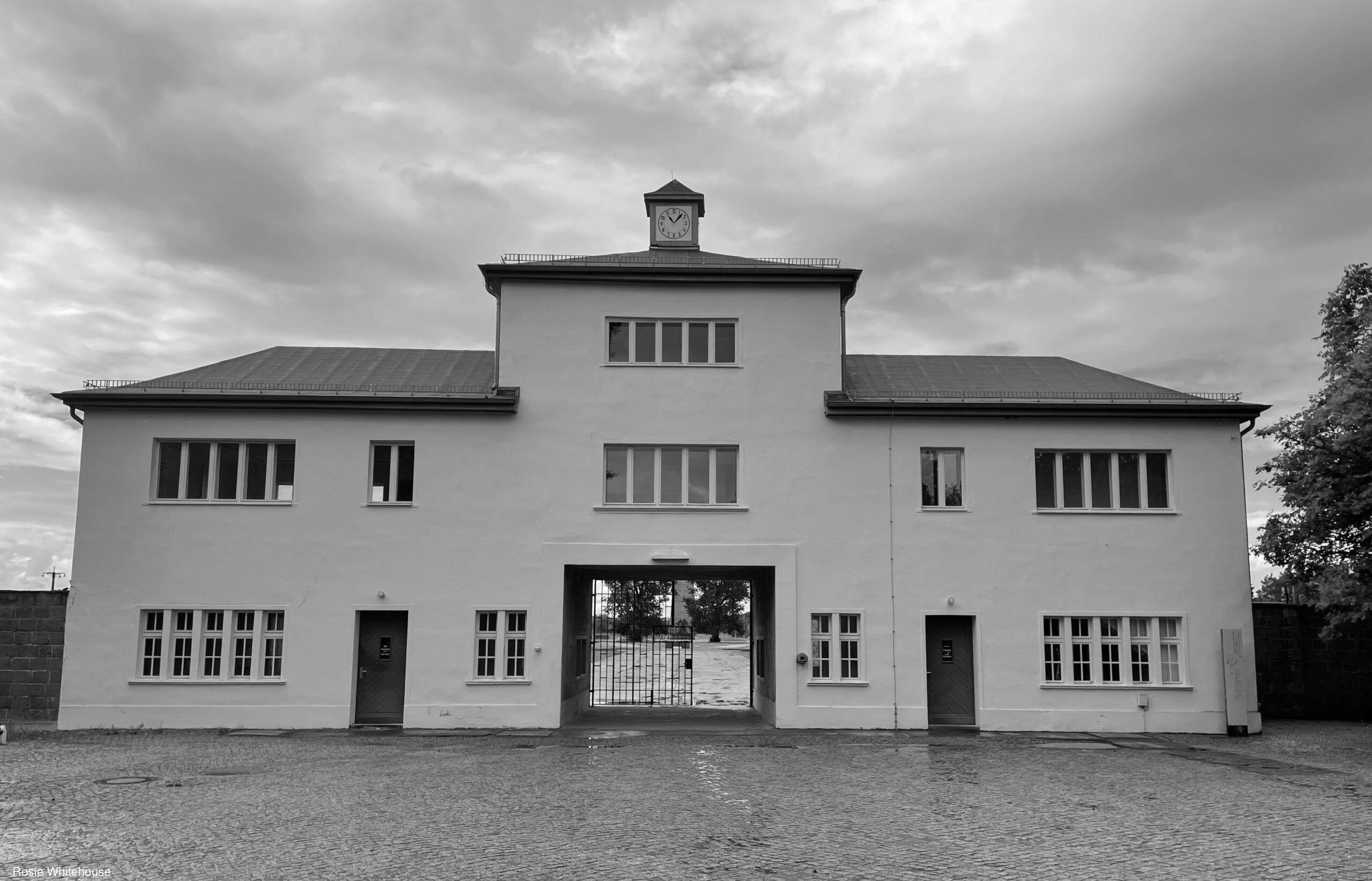
Sachsenhausen Memorial and Museum (Oranienburg; Strasse der Nationen 22; w sachsenhausen-sbg.de; free) The former concentration camp of Sachsenhausen, 30km north of Berlin, is now a museum and memorial site.
Sachsenhausen played an important part in the story of the Boys. The camp built in 1936 originally held high-profile political prisoners, but after Kristallnacht 5,000 Jews were imprisoned here. In 1942 many Jewish prisoners were deported to Auschwitz from Sachsenhausen, among them Polish or stateless Jews from Berlin. Around 200,000 prisoners are thought to have passed through Sachsenhausen, and an estimated 30,000 people died here, of whom 10,000 were Soviet prisoners of war.
At the end of the war, death marches arrived in Sachsenhausen, notably the march from Auschwitz which left the camp in November 1944. To find out more about Sachsenhausen and its subcamps click here.