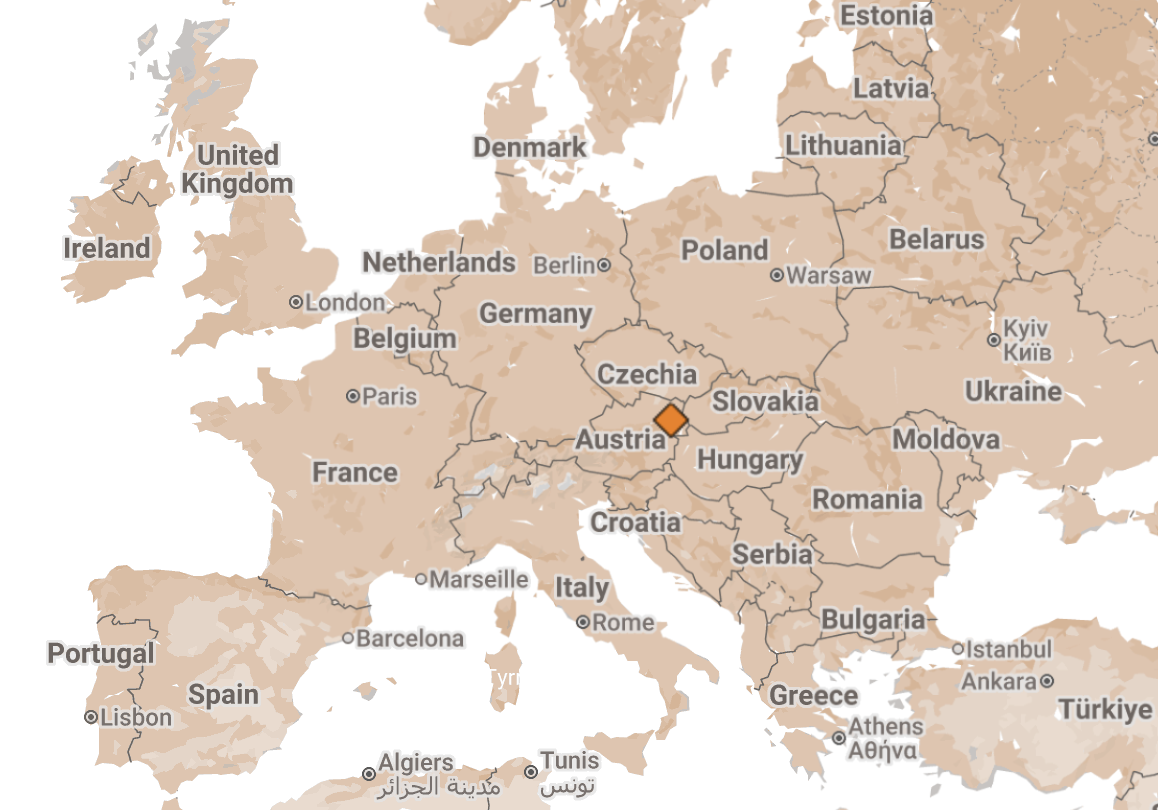
Jews have lived in Austria since the 3rd century. Jewish life there has always centred around Vienna, its capital. In 1938, the Jewish population of Austria was approximately 192,000, some 4% of its population. Most lived in Vienna, where they made up 10% of the city’s inhabitants.
Background
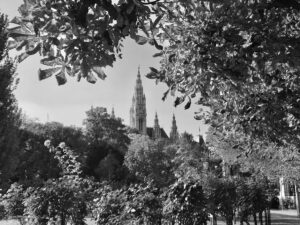
1421: Vienna’s entire Jewish population was burned to death, forcibly baptised or expelled. After that there was no Jewish life in Vienna for 150 years. The Jews were expelled again in 1669.
1782: The Edict of Tolerance, part of a series of reforms by Emperor Joseph II, extended religious freedom to Jews across the Hapsburg lands.
1848: Jews played an important part in the leadership of the 1848 Revolution, which resulted in the gradual granting of equal rights to Jews. In 1852 permission was granted for the establishment of a Jewish community in Vienna.
Rising Antisemitism: Austrian Jews put their trust in the empire’s modernising culture. However not all of this was positive. Freedom of the press meant antisemitic publications had a wide readership.
Before World War I, antisemitism was rife, particularly in Vienna, where Adolf Hitler was then living. In the early 20th century, there was an influx of Jews from poor Galicia and Slovakia to Vienna and they soon they made up 80% of its Jewish community. They were less assimilated than Austrian Jews and were regarded with suspicion by the general population.
Interwar years
Treaty of Saint Germain: The post-World War I settlement deprived Austria of much of its territory and forbade a union with Germany. It also left 4m Austrian Germans outside the borders of the new state. As a result, a similar ‘stab-in-the-back’ myth that the country had been betrayed by Jews and communists developed – just as it had in Germany.
Economic Instability: Economic instability also made many Austrians believe that their future lay in a union with Germany. Jews were accused of stockpiling and price hikes.
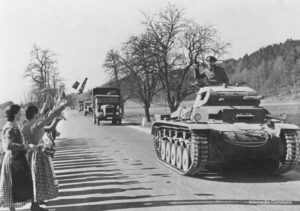
Nazi Interference: Hitler meddled in Austrian politics, supporting the Austrian Nazi Party as he hoped to destabilise the country. When it was outlawed, many of its activists fled to Germany, among them many of those who would number amongst the chief perpetrators of the Holocaust.
March 1938: After the Anschluss, the annexation of Austria to the Reich, Jewish shops and apartments were ransacked and their property stolen. Jews were even forced to clean the pavements on their hands and knees.
At this point Nazi policy was focused on forcing the Jews out of the Reich, and Adolf Eichmann was given the job of ridding Austria of its Jewish population. The Kristallnacht pogroms of 9-10 November 1938 which occurred across the Reich were especially vicious.
World War II
Jews were not concentrated into ghettos, but many were forced to live in ‘Jewish houses’.
Nisko Plan: Between October 1939 and April 1940, some 1,600 Jewish men were sent to the Nisko concentration camp near Lublin in Poland. The Nisko Plan was a failure and abandoned.
October 1941: A decision was made to deport the Jews from the Old Reich territories. It was a tipping point that propelled mass murder into genocide. Viennese Jews were deported to Theresienstadt, Auschwitz and ghettos in the east, notably Minsk, Riga and Łódź.

The overwhelming majority in the Minsk and Riga ghettos were shot.
November 1942: Vienna’s Jewish community was officially dissolved.
Aftermath
After World War II thousands of Jews fleeing continuing antisemitism in Poland and the Soviet Union arrived in Austria, which was dotted with displaced persons camps.
Many of the survivors left for the Palestine Mandate or the Americas.
In 1945, Austria, like Germany, was divided into four Allied-occupied zones, each with its own military administration.
The advent of the Cold War meant that the Allies’ interest in prosecuting Nazi war criminals quickly faded. Former perpetrators were reintegrated into Austrian society.
This German film of the entry into Austria was shot in 1938. It served as propaganda for the Nazi annexation of Austria.
Wikimedia Commons: Public Domain
Memorialisation: Good to Know
After World War II, Austrians chose to believe that they were the ‘first victim’ of the Nazis despite the fact that the Anschluss of 1938 was welcomed by most of them.
In the mid-1980s the revelations of the Nazi wartime activities of Kurt Waldheim, Austria’s president from 1986 to 1992, sparked a national debate on the country’s role in the Holocaust. In a 1991 speech before the Austrian parliament and one in before the Israeli Knesset Chancellor Franz Vranitzky finally acknowledged the shared responsibility borne by Austrians for Nazi crimes.
Despite the enormous efforts made by recent Austrian governments to commemorate the Holocaust and tackle antisemitism, research conducted in 2023 on behalf of the Austrian parliament, showed that antisemitism was on the rise with almost 60% of Austrians having witnessed antisemitic language or behaviour in 2022.
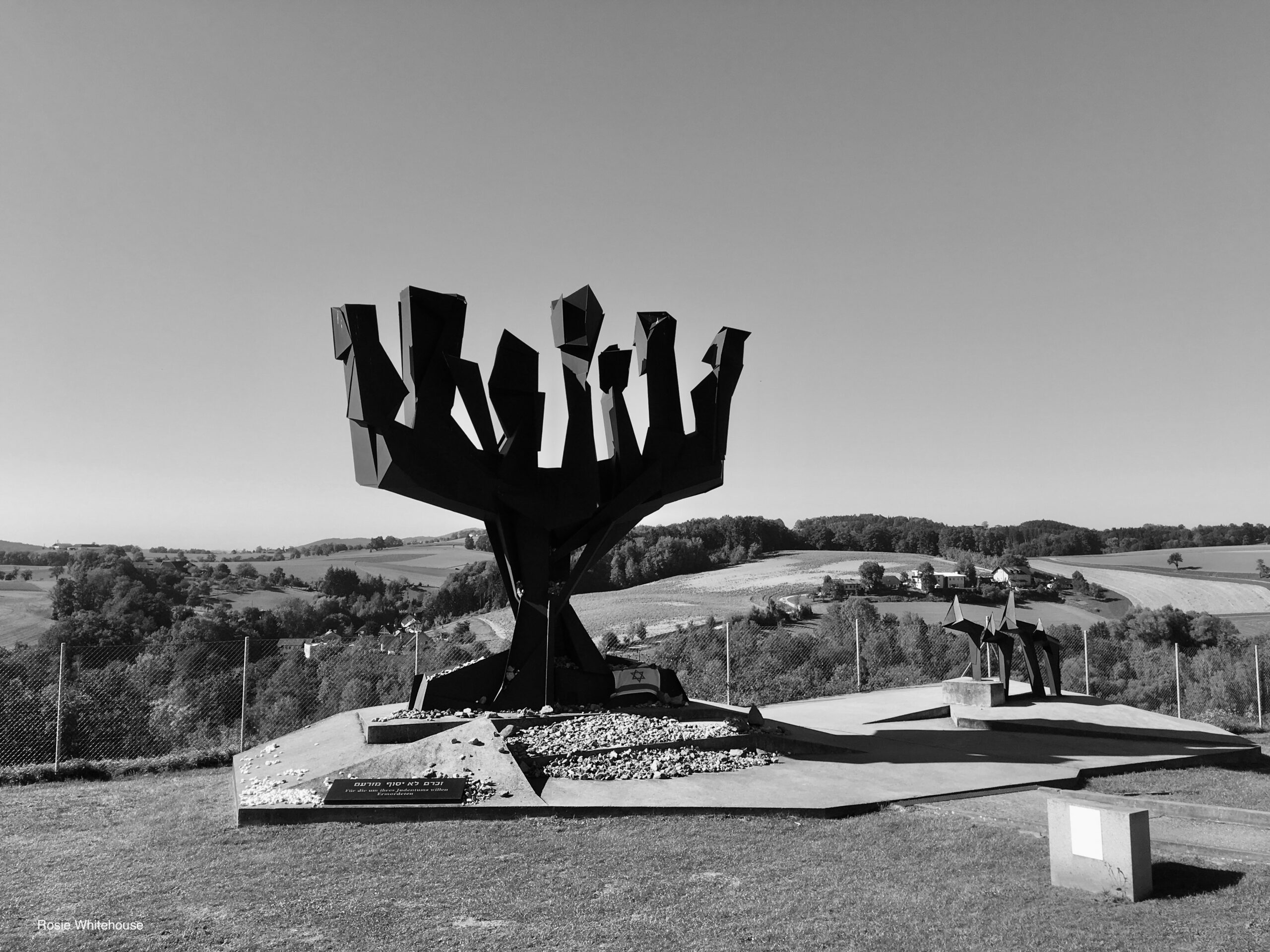
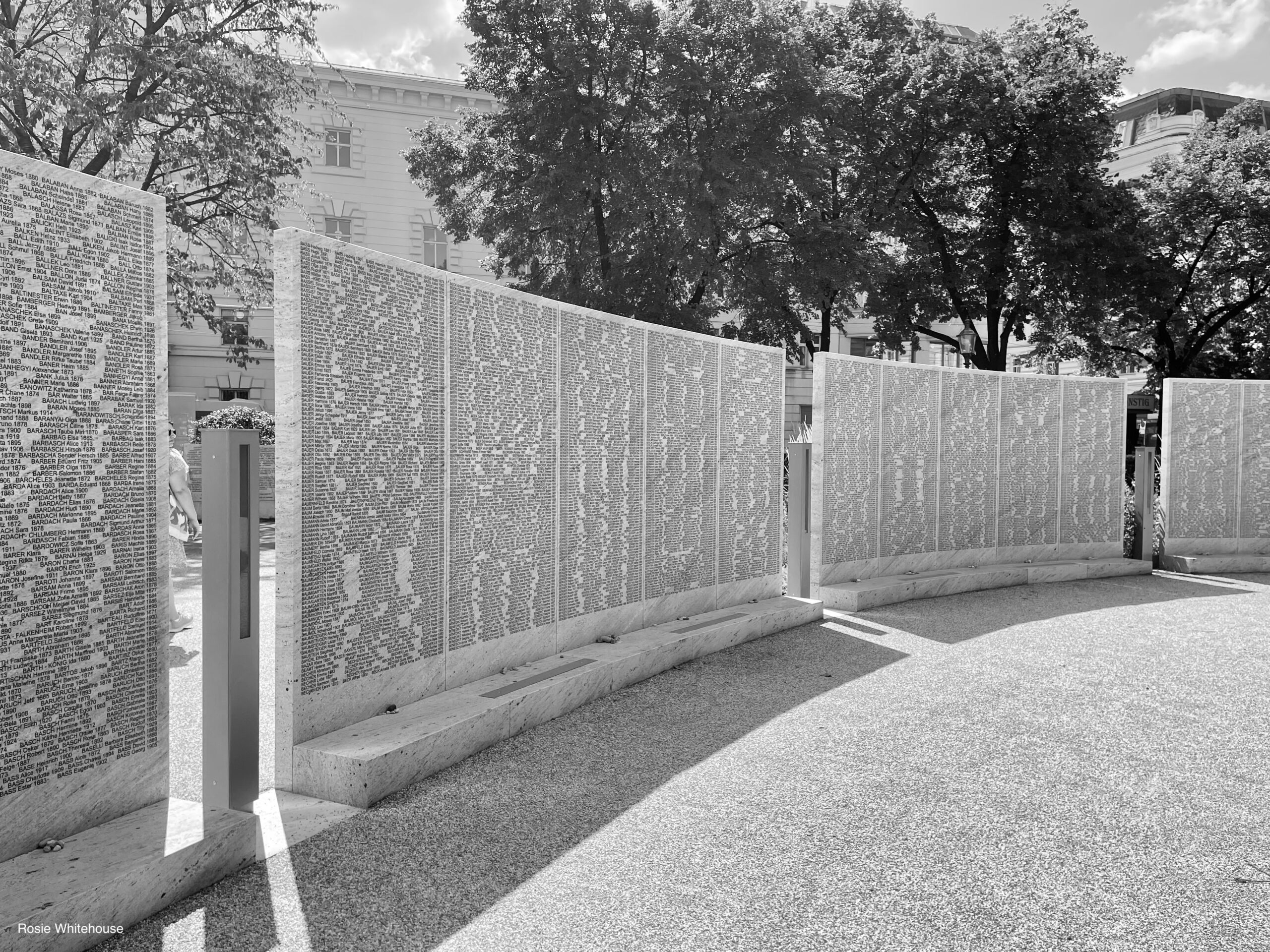
There is a Holocaust memorial in Vienna, but the country does not have a Holocaust museum.
 About
About History
 Education
 Quilts
 FIlms
FIlms Photos
 News Media & Events
 Publications
 Donate