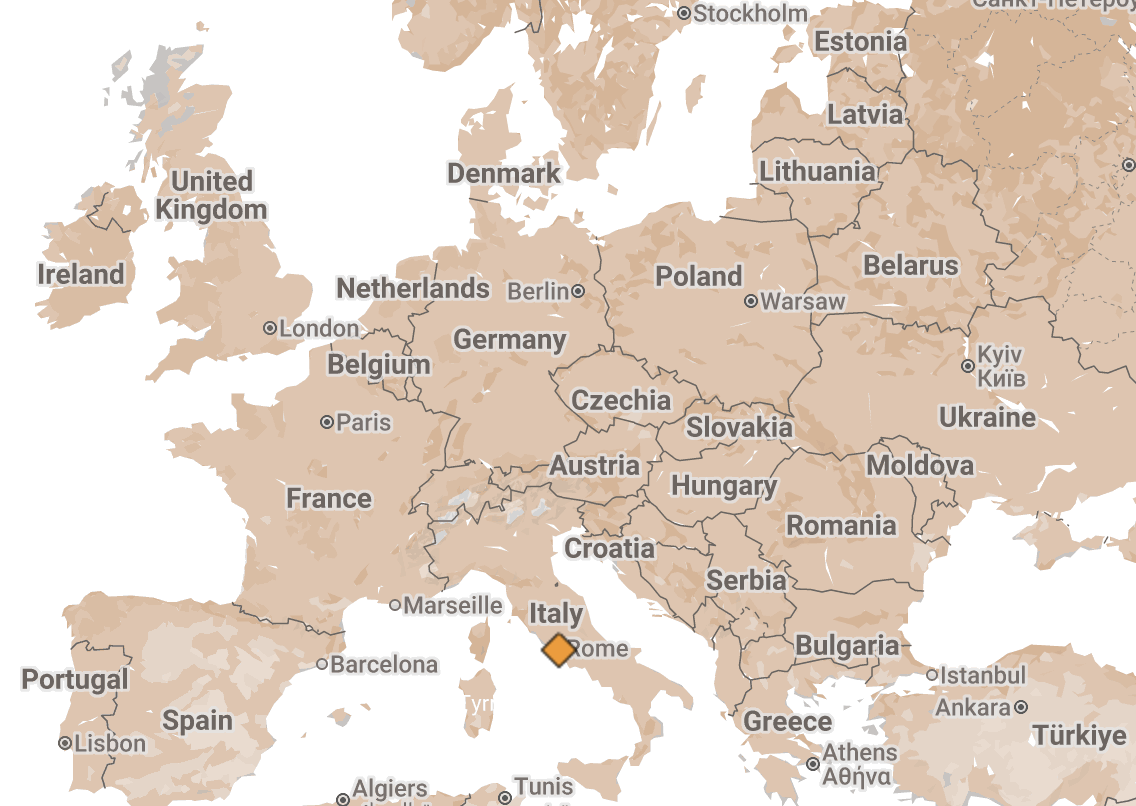
Jews have lived on the Italian peninsula for more than 2,000 years and are one of the oldest communities in the Western diaspora.
Background
Although the Jewish community has always been small in number, Jews have played an important role in Italian society. Italy’s Jewish community was emancipated in 1870, during the Risorgimento (1861–71) when the country was unified into one state.
Interwar Years
Fascism was invented in Italy and became a model emulated by Hitler and other right-wing European governments in the interwar period.
1922: King Victor Emmanuel III appointed Benito Mussolini, the leader of the Italian Fascist Party (Partito Nazionale Fascista), as prime minister. Over the seven years that followed, Mussolini created a one-party dictatorship. Political opposition was suppressed, and many opponents were sent into internal exile. Antisemitism was not as entrenched in Italy as in many other European countries and the Fascist Party had many Jewish members.
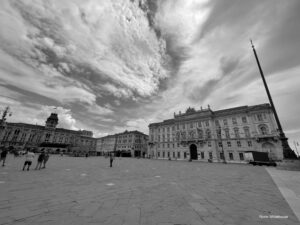
1938 onwards: Mussolini declared the 1938 Racial Laws in Trieste. Italy then persecuted its Jewish community under these draconian racist antisemitic laws.
Nevertheless, the Delegazione per l’Assistenza degli Emigranti Ebrei (DELASEM) was set up in 1939 to help foreign Jews in Italy to emigrate. Jewish emigration through Italy was encouraged by Mussolini as it was good business for Italian shipping companies. After the German invasion in 1943, DELASEM went underground.
World War II
1939: Italy became an ally of Nazi Germany in 1939. Mussolini wanted to create a new Roman Empire in the Mediterranean. He invaded Albania in 1939 and took part in the German invasion of Greece and Yugoslavia in 1941. Italy was Nazi Germany’s principal ally and carried out anti-Slavic and antisemitic acts, often with extreme violence, in some of the territories it occupied but not in others.
1943: The defeats and failure of the Axis offensive in North Africa undermined the legitimacy of the Fascist regime and after the Allied landings in Sicily in July 1943, the Fascist Grand Council issued a vote of no confidence in Mussolini and negotiated a ceasefire. Mussolini was arrested.
The Germans then invaded Italy. Mussolini was freed by SS paratroopers and became the head of the pro-German Italian Social Republic based in Salo on Lake Garda.
Deportations: There were major Jewish and anti-fascist round-ups. There was a strong anti-fascist resistance movement and tens of thousands of Italians were deported.
The unwillingness of some policemen to assist in the round-up of Jews and the sympathy of the general population meant that only 4,733 Jews were deported to Auschwitz, of whom just 314 survived.
Italy’s Jewish community had the third highest survival rate after Denmark and Bulgaria, with 15–20% of Italian Jews murdered in the Holocaust.
Aftermath
April 1945: Communist partisans captured and murdered Mussolini and his mistress Clara Petacci.
The National Liberation Committee (CLN), made up of anti-fascist parties, was set up in Rome in September 1943 and took control of the rest of the country as the Germans retreated. The CLN was to rule Italy until 1946, when Italians voted for a republic in a referendum.
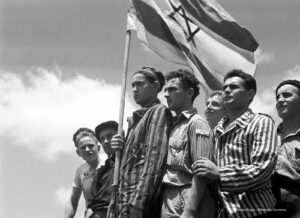
In the post-war period, Italians helped over 70,000 desperate Jewish refugees who arrived in the country.
Many former partisans helped more than 25,000 Jewish refugees leave for Palestine in the run-up to 1948, and they also illegally trafficked arms that were used in the battles against Arab forces.
Memorialisation: Good to Know
The memory of the Holocaust has always been present in Italian culture. Italy has produced some of the most powerful Holocaust literature and cinema. Yet despite this, there is a tendency, not just in Italy, to see Mussolini as a benign dictator, who did many good things but made one fatal mistake in allying with Nazi Germany.
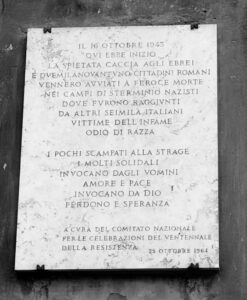
The fact that the deportations began only after the German invasion in 1943 allowed a story that Italians were a brava gente, good people, not capable of holding antisemitic prejudices, to grow in the post-war years. That the Italian government had excluded Jews from society and identified them in registers is often ignored. Although in some places occupied by Italy, the Italians did not hand over the Jews to their German allies, it was not out of benevolence but as part of a game of power politics between the two countries.
The fact that Italy changed sides in the middle of the war has also confused the way the Holocaust in Italy is perceived. Nor were there any trials of Fascist officials akin to the Nuremberg trials to focus public attention on crimes committed by the Italian state. Many Fascist officials continued to work in public office.
As a result, Italy has accepted little responsibility for the persecution of the Jews. Commemoration events tend to focus on German responsibility and highlight Italian resistance and the help given to survivors after the war.
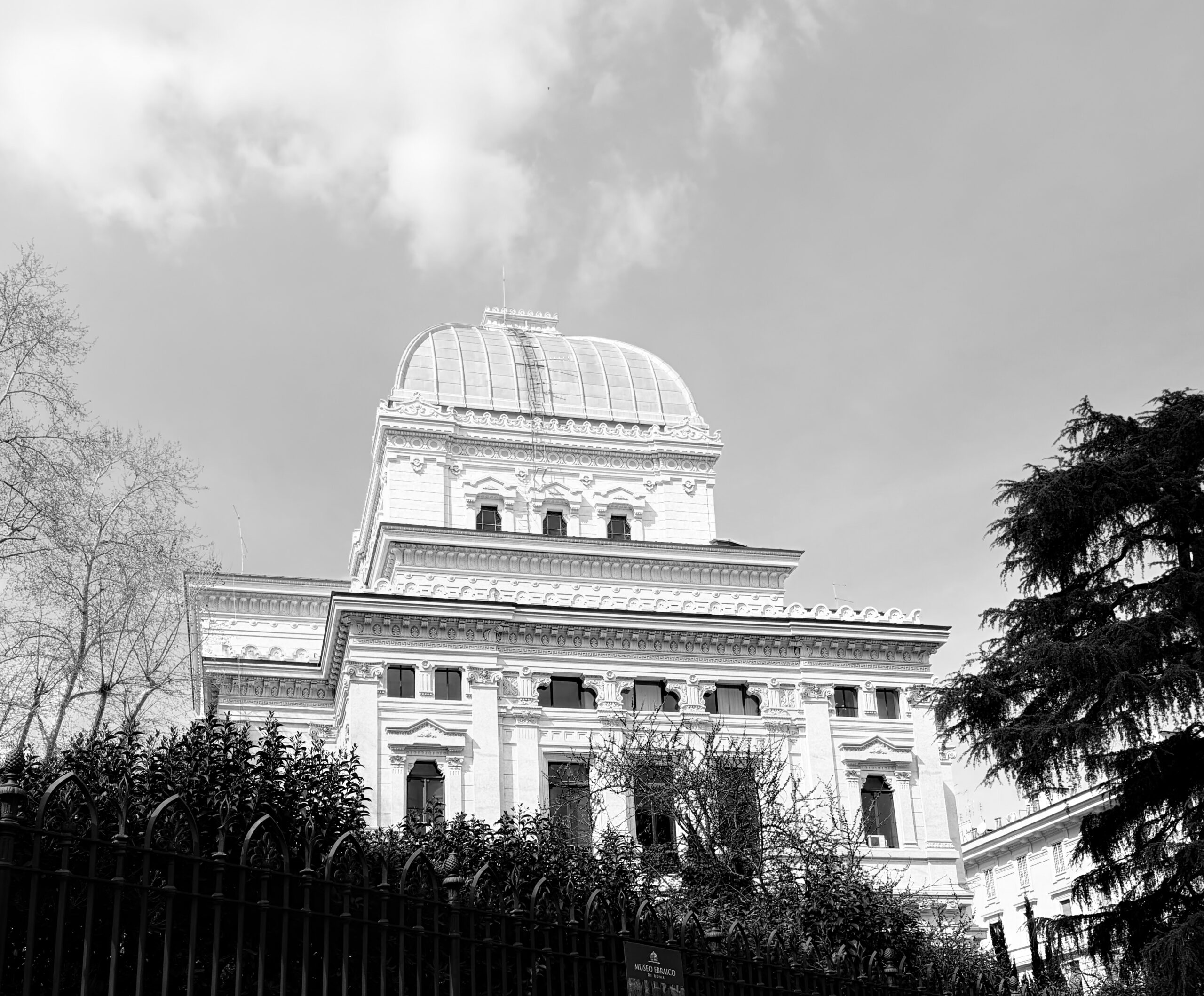
Although there are now plans to build a Holocaust museum in Rome, there is still no documentation centre that addresses the crimes of Fascism.
 About
About History
 Education
 Quilts
 FIlms
FIlms Photos
 News Media & Events
 Publications
 Donate