Members of the Boys were born in Ozorków in Poland.
The Boys were teenage and child-Holocaust survivors, who were brought to the UK after the war for rest and rehabilitation.
Members of the Boys were held in Nazi labour and concentration camps and used as slave labourers. They had also survived World War II in hiding or as lone children.
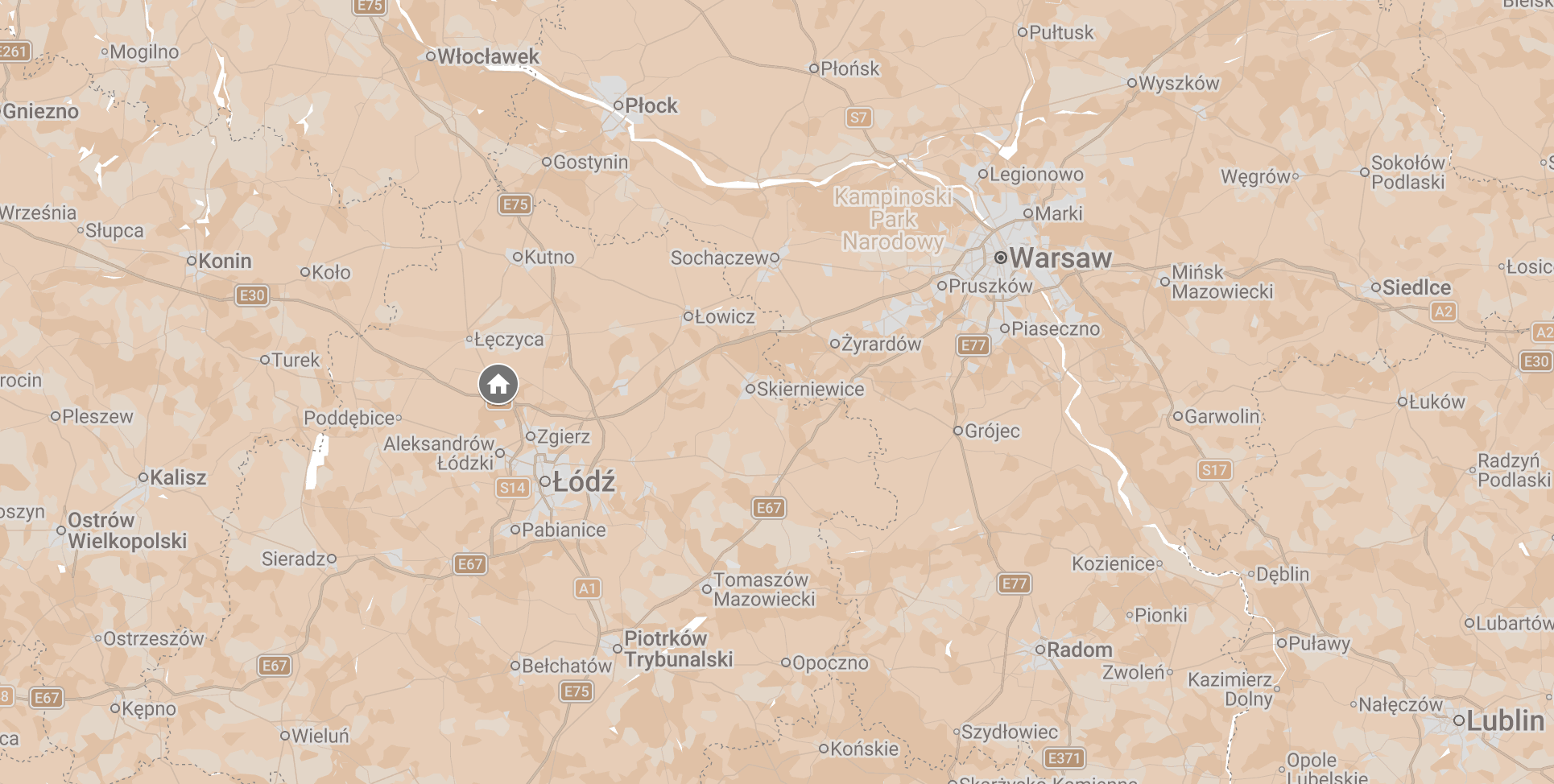
Ozorków is indicated by the house symbol.
Ozorków, was the home of Bob Obuchowski. The town was one of the key manufacturing centres of the Łódź textile district.
At the outbreak of World War II, it had about 15,000 inhabitants including just over 5,000 Jews; the others being about equal numbers of ethnic Germans and Poles.
Ozorków Key Facts
Country Pre-1939: Poland
Country 1939-1945: German Reich
Country Post-1945: Poland
Location: 32km (20 miles) northwest of Łódź.
German name: Brunnstadt.
Population 1939: Approximately 15,000
Jewish Population 1939: 5,000-5,500
Population 2026: Approximately 17,122 to 17,643
Jewish Population 2026: 0
Background
Ozorków was founded in 1807 and Jewish merchants and tradesmen soon settled there attracted to the town by its growing textile industry.
Prior to World War I, Ozorków was part of the Russian Empire. Until the outbreak of the First World War, textiles were exported to Russia.
Interwar Years
After World War I when the new Polish state was established, Ozorków manufacturing lost Russian markets, which caused an immediate decline in the number of employees in the factories. As a result, living standards in the town deteriorated drastically. Many Jews left for nearby Łódź or emigrated.
The 1929 depression caused a definitive turn for the worse. In October 1937, the tensions caused by the difficult economic conditions came to a boil and resulted in antisemitic riots and boycotts of Jewish shops. The events significantly worsened the economic situation and living conditions of the Jewish population.
The antisemitic atmosphere increased in Poland during the 1930s. The town council elected in 1934, in which the majority was from the government party (Sanacja), refused to provide social assistance to the Jews. During that time, attacks on the Jews increased, often ending in fatalities. When the Jews who had been attacked attempted to demand their rights in court, it often ruled against them.
Jewish Life in Ozorków
Jews formed a vibrant part of life in Ozorków and were integrated into the textile industry.
The town featured two large synagogues, a Bet ha-Midrash, and several Hasidic prayer houses (shtieblach). Culturally, the community was very active, with multiple Zionist and religious political parties, Jewish public libraries, drama circles, and sports societies like Maccabi.
The city was also a centre for Jewish learning with many prominent rabbis. A wide variety of Political organisations was represented in the Jewish community in the interwar years among them Orthodox political parties, the socialist Bund and Zionist organisation.
World War II
Fierce battles took place in Ozorków in September 1939 after the German invasion of Poland. The Germans finally took control of the city on 5-7 September.
Jews from other towns— among them Kalisz and Zgierz— arrived in Ozorków soon after the occupation.
In the days that followed, the Germans burnt down the synagogue and Bet ha-Midrash. The Jews were prevented from putting out the fire, and were ordered to take down the walls of the burned synagogue. The Nazis began to hunt for Jews and sent them to forced labor – among other things, to bury the many bodies around the city. After the German occupation in September 1939, the Polish and German populations turned openly against the Jews.
In 1940, the Germans expelled hundreds of Poles from the town, and also established a transit camp at the local cinema for Poles expelled from the area. Young people were then deported from the camp to forced labour in Germany, and children and older people were deported to the General Government (German-occupied central Poland), while their homes, shops and workshops were handed over to German colonists.
Ozorków Ghetto
At the end of 1939, the Jews were evacuated from the main streets in the town centre and ordered to move to alleyways that were assigned for them. They were not allowed to take anything with them. The adut Jews were not allowed to work so often young children became the family breadwinners.
“I tried to earn some money by delivering coal. I made myself up a little barrow. And I also had a cousin, who arrived from Lódź to live with us. And the two of us were trying to get customers to deliver coal to the Polish people.
But as there was also Polish boys doing the same job, there was a lot of victimisation. One day it was so bad that we finished up in a fight, and I got knifed.
It was very cold. I didn’t even feel the way he cut my stomach. But I felt blood.
And they rushed me to hospital, and I had a few stitches on my stomach. I’ve still got the scar.”
Berek Obuchowski, Imperial War Museum testament 1995.
A hunt for Jews hiding in the town was carried on Purim, 1940. The Nazis often carried out punitive actions on Jewish festivals. Men, women, and children were brought to the courtyard of the police station, where the Nazis burned a Torah scroll and forced the Jews to dance. (To find out more about the festival of Purim click here).
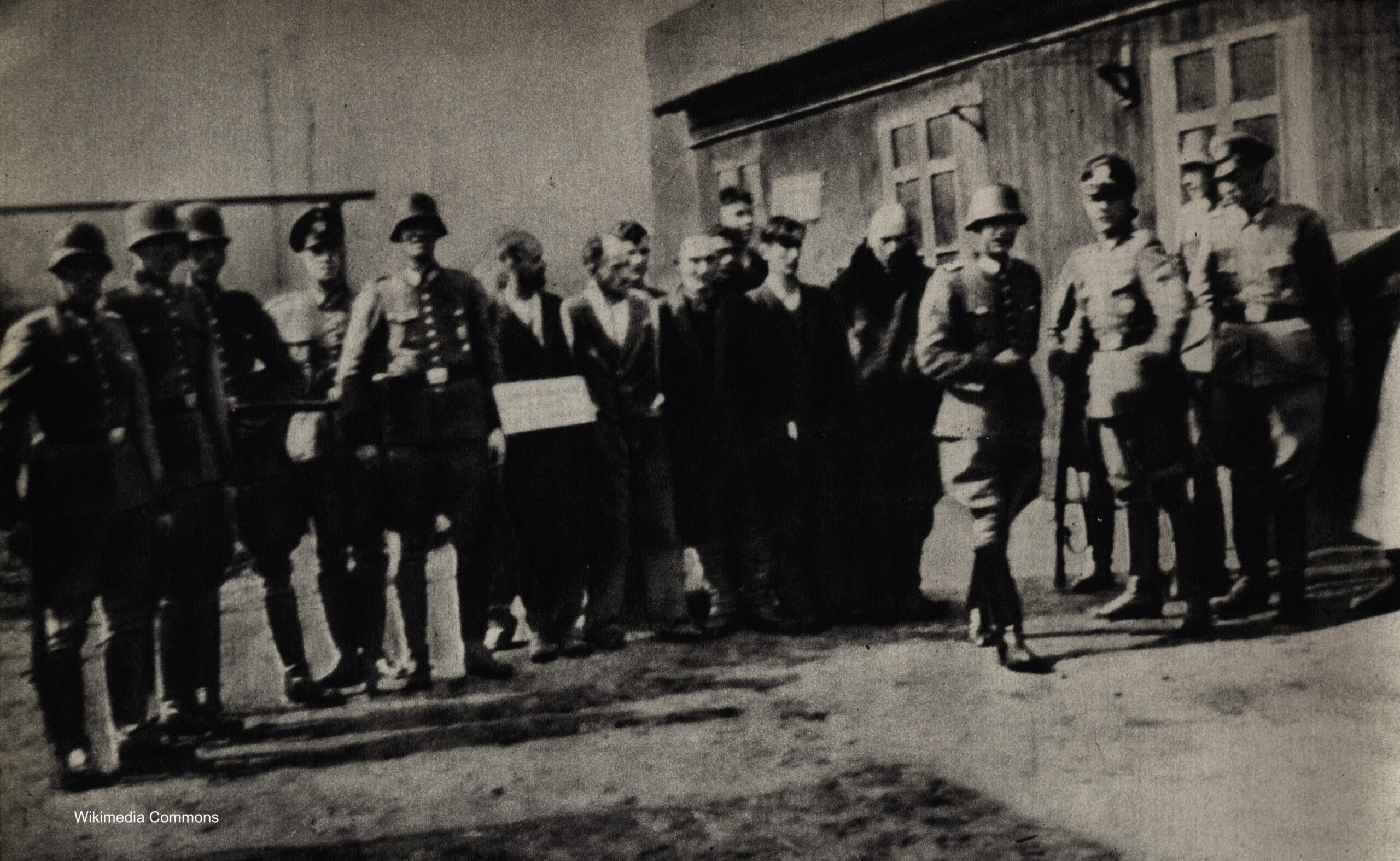
By the summer of 1941 an open ghetto had been established. About 6,000 Jews were held in the ghetto in Ozorkow. Living and sanitary conditions in the ghetto were harsh; food and space were both in short supply. Only limited medical assistance was available, and according to one source, about 150 people died, most of them from typhus.
The ghetto’s Jews, including children as young as 10, were employed to clean streets, working on fortifications along the Bzura River, and producing uniforms for the Wehrmacht. Work outside the ghetto provided an opportunity to obtain a little extra food by bartering or scavenging, but most work details were closely guarded, allowing little or no contact with local non-Jews. Although, There is some evidence that a few Poles brought food to Jewish neighbours in the ghetto.
In the spring of 1941, several hundred young Jews (especially those aged between 17 and 21) were rounded up and sent to forced labour camps near Gdansk and Poznan.
Ghetto Liquidation
In April 1942, the first step in liquidating the ghetto was the execution of Jews accused of assisting in the escape of a Jewish woman. The Germans ordered for all the residents of the Ozorków ghetto to witness the execution.
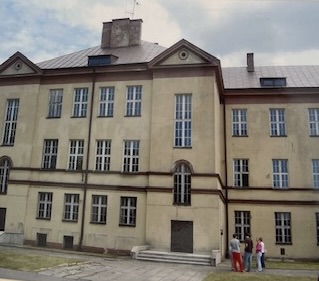
Immediately after the hangings on 21-23 April, all the Jews were taken to an open field and forced to march to the “white school” located outside the ghetto, where they were surrounded by armed Polish gendarmes and SS men. The Jews were ordered to undress. After a quick examination by German doctors, their bodies were marked: the young and strong with the letter “A,” and all the rest with a “B.” The marks could not be washed off.
The Germans deported 1,700–2,000 Jews, mostly children, the elderly, and women, who had been marked with a ‘B’ to the Nazi extermination camp in Chełmno (Kulmhof).
After the action, about 1,000 Jews remained in Ozorków and were used for hard labour until August 1942. On 20-21 August, German guards surrounded the ghetto and the Jews were transported to the Litzmannstadt Ghetto by tram.
A handful of Jews remained in the ghetto for a few more days to clean it up and prepare the Jewish property for shipping to Germany.
After the war, close to 30 Jews lived in Ozorków for a short period of time.
Getting there Ozorków can be reached by train, car, or bus using the nearby city of Łódź or Warsaw as your transit hubs. Ozorków sits 30km north of Łódź and 160km west of Warsaw.
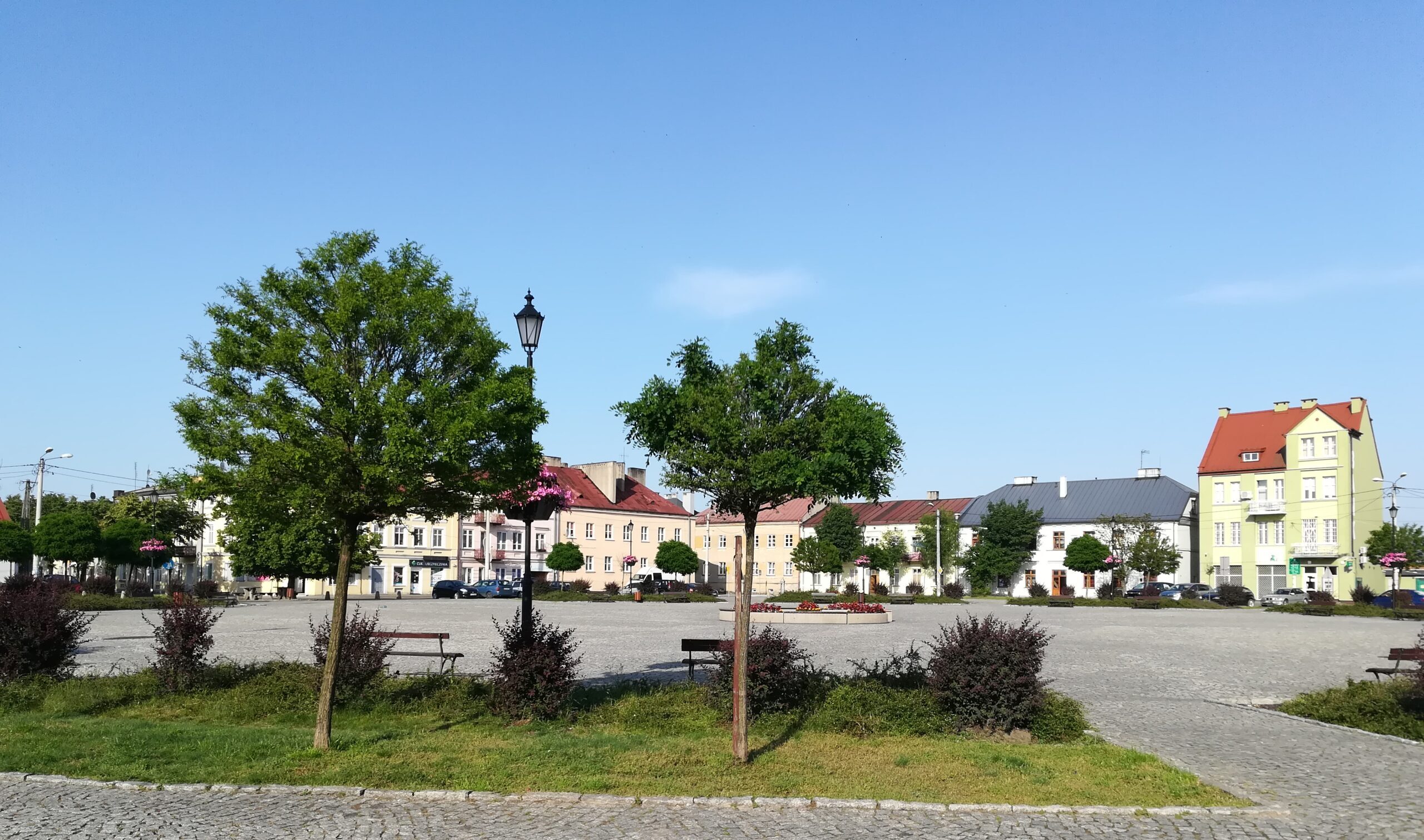
Today, Ozorków has lost its former industrial character.
Jewish Area
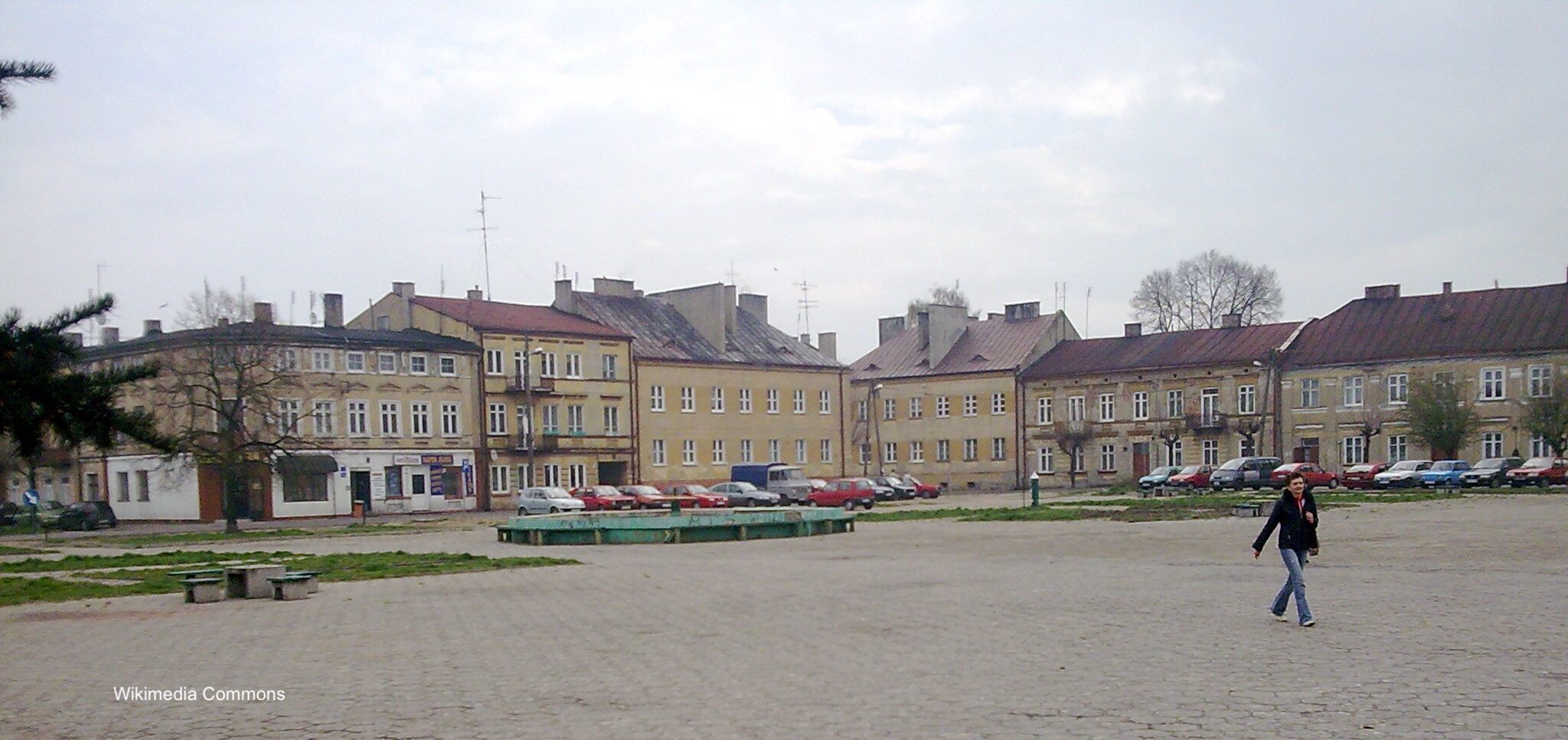
The Jewish population of Ozorków settled down mainly in the vicinity of (today) Jana Pawła II Square (the former Old Market) and the streets of Berka Jeselewicza, Listopadowa, T. Kościuszki, I. Starzyńskiego and Ks. Kardynała S. Wyszyńskiego.
Ghetto Location
The ghetto was located in the Wiatraki suburb along Partyzantów, Polna, and Krasicki Streets.
Synagogue
The Great Synagogue was on Ks. Kardynała Stefana Wyszyńskiego Street (formerly Marszałka J. Piłsudskiego). It was completely destroyed during World War II. Initially, the Germans vandalised the building and then blew it up. The rubble was used for repair and construction work in the town. A post office building now stands on the site.
Jewish Cemetery
The site is located at the corner of Sosnowa and Graniczna streets. The cemetery is in the forest and overgrown. The area is unfenced and unmarked.
 About
About History
 Education
 Quilts
 FIlms
FIlms Photos
 News Media & Events
 Publications
 Donate