Members of the Boys were born in Kalisz in Poland.
The Boys were teenage and child-Holocaust survivors, who were brought to the UK after the war for rest and rehabilitation.
Members of the Boys were held in Nazi labour and concentration camps and used as slave labourers. They had also survived World War II in hiding or as lone children.
The oldest city in Poland, Kalisz also played a pivotal role in Polish Jewish history. In 1264, Bolesław the Pious, ruler of the western part of Poland (Wielkopolska), was the first to grant a charter to the local Jewish community, giving them settlement rights, legal protection, and certain religious and financial freedoms. This ‘Statute of Kalisz’ was extended to the whole country by King Casimir the Great and expanded by later Polish rulers. It provided the legal foundation for Jewish rights in Poland.
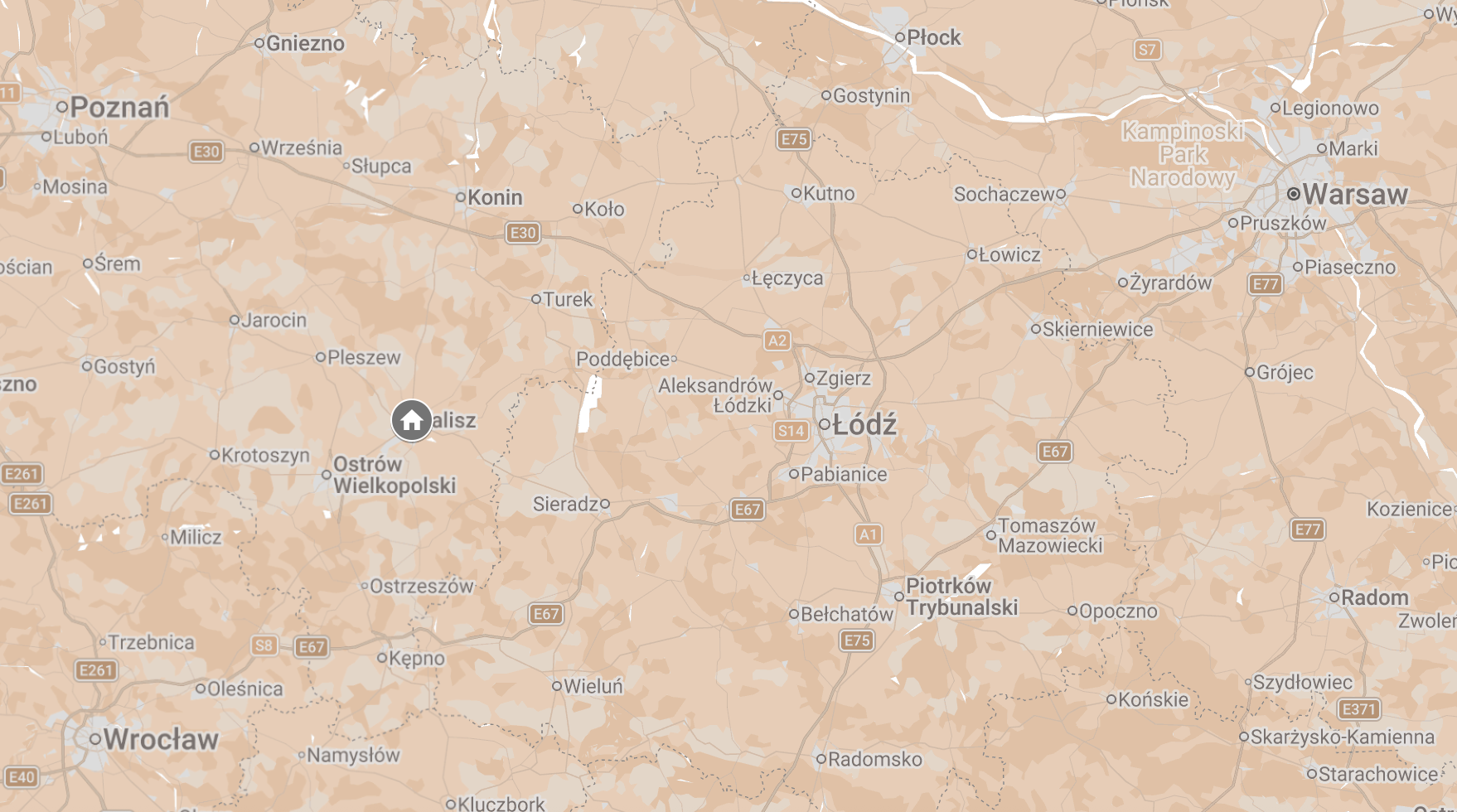
Kalisz Key Facts
Country pre-1939: Poland
Country 1939-1945:
Country Post-1945: Poland
Yiddish name: Kalish
German name: Kalisch
Location: 120km west of Łódź
Population 1939: 81,052
Jewish Population 1939: Approximately 27,000
Population 2026: Approximately 89,000 to 91,000
Jewish Population 2026: Under 10
Background
The first Jews came to Kalisz in the mid-12th century, seeking refuge from persecution in Bohemia and Germany. By the 13th century, they had already established one of the most important Jewish communities in Greater Poland.
The Jewish presence in Kalisz was not without friction with the Polish community and in the early 19th century Jewish residency was limited to a specific area. When this was lifted in the later half of the century the Jewish population grew considerably. By 1875 Jews made up 45% of the total population.
A dark day for Kalisz Jews came on 26 June 1878, when violent riots broke out during a Corpus Christi procession. A mob armed with sticks and stones began to attack Jewish houses and stores and the synagogue. The Russian authorities who then controlled this part of Poland did nothing.
The town’s Jewish community was dynamic and diverse. The majority represented traditional Orthodox Judaism, but a noteworthy and steadily growing group was made up by assimilated Jews from the intelligentsia, wealthy merchants and industrialists.
In the early 20th century, progressive Jews erected a Reform synagogue (the so-called German Synagogue) on Krótka Street. Despite their differences, Kalisz Jews worked together towards cultivating common traditions, supporting charity organisations, the Jewish hospital, and homes for the elderly.
Interwar Years
The period of the Second Polish Republic saw intensive reconstruction from the ravages of war and was a time of considerable development for Kalisz.
In the interwar period, Kalisz, which had a long history of producing lace and other textiles, became a centre for the garment industry. In 1921, of the over 500 Jewish-owned factories and enterprises, 400 produced clothing or textiles (other products included metals, lumber, and leather). Flour from the 12 Jewish-owned mills in Kalisz reached all parts of Poland. There was also a handful of Jewish professionals.
The Jews of Kalisz were not immune from the antisemitism that swept across Poland in the late 1930s. The town had an active antisemitic press, and bands of ruffians would often attack Jewish traders and peddlers on isolated roads as they were making their way to area markets. The situation deteriorated to the point that in 1936 a delegation of merchants traveled to Warsaw to present their case to the Prime Minister and the Ministry of Interior.
In 1937, Jews were forced to set up shop in a separate area in the town market, and Polish nationalists stood guard to ensure that Christians did not patronise Jewish-owned stalls.
Jewish Life in Kalisz
In the interwar period, Kalisz boasted numerous Jewish social, cultural, and charitable organisations. Kalisz also had active Jewish sports associations. The performing arts were also cultivated in Kalisz. Jews could enjoy performances by a Jewish orchestra, a brass band, and a theatrical troupe. Local Bund members were especially active in this arena, creating a cultural club, a drama club, a Working Women’s Club, and the Comet Amateur Theatre.
By the 1890s Kalisz boasted two large synagogues and close to 40 smaller prayer houses. Three more synagogues, including one in the style of German Reform Judaism, were built in Kalisz in the first decade of the 20th century.
Kalisz also had an array of Jewish political parties: Zionist, socialist Bundist and religious orthodox. These differing political visions were mirrored in the Jewish schools of Kalisz which by World War I included a bilingual Jewish high school, two Yiddish-oriented schools, and an Orthodox educational network of 1,800 students. Since Jewish workers constituted 45 percent of all wage-earners in Kalisz, it is not surprising that Jews played an important role in the town’s trade unions.
Youth movements played an important role in the Kalisz Jewish community and could be found on all points of the political spectrum.
World War II
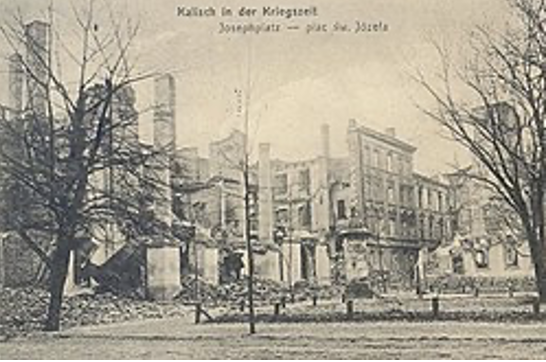
The Germans invaded Poland in September 1939. The part of Poland were Kalisz is located was then incorporated into the Reich as the Warthegau.
German violence towards the Jews of Kalisz started the moment that Wehrmacht troops entered the town. Following the outbreak of World War II, a large proportion of Kalisz’ Jewish population, which was about 20,000.
The town began to take on a decidedly more German character. All Polish signs were removed and replaced with German ones, streets received German names, and portraits of Hitler began appearing in display windows.
German soldiers demolished the Great Synagogue on Złota Street and threw the Torah scrolls and other religious items into a canal on the Prosna River. In mid-November, an order came in to mark all Jews (regardless of age or sex). They were to wear a 10-centimetre-wide yellow band on their right arm. In addition, they were forbidden from leaving their houses between 5pm and 8am. Failure to abide by these regulations was punished with death.
Beatings of Jews, desecration of places of religious worship, pillaging, persecution, and humiliation all went unpunished and made up the everyday life for the Jewish population in September 1939. Soon, round-ups began, with the captured people sent to perform back-breaking labour, during which they were both physically and mentally abused. For base entertainment, German soldiers began to “toy” with Jews, forcing them to conduct prayers in the street, to dance and sing. A favourite past time of Wehrmacht troops was stopping Orthodox Jews in the street and shaving, burning, or ripping off their beards and payot, and forcing them to perform their ablutions in the Prosna River. Women were also rounded up and ordered to clean floors (often using their own clothes) or peel potatoes. This was only a prelude to what these people would soon face – displacement and the Holocaust.
Deportations
The German plan to “cleanse” the territories incorporated into the Reich was to be implemented through the relocation of all Jews to the General Government between November 1939 and February 1940. Mass deportations of Jews began on 10 November, starting with the wealthier streets, where Germans would then place Baltic Germans arriving in Kalisz. Jews were given ten minutes to pack and they were only allowed to take basic items. Their luggage could not exceed 15 kg. The Jews were temporarily placed in the Bernardine monastery; some managed to escape.
Kalisz Ghetto
All Jews still remaining in Kalisz by the spring of 1940 were moved to Lustig’s factory and other industrial buildings on Złota Street. It is estimated that there were 612 Jews in Kalisz at the time, and the following year, only 430. The ghetto’s population worked in craft workshops, local businesses, and performed cleaning works around the town.
In November 1940, many of the 1,000 patients from the Jewish hospital were taken into sealed, black trucks. A total of 270 old and infirm people were gassed in the trucks. In November 1941, the black trucks showed up once again, and 290 Jews were killed. The victims gassed in the trucks were buried in the forests around Kalisz.
After Liberation
Following the war, Jewish Holocaust survivors returned to the city, by 1946 numbering some 500. By the late 1940s only some 100 remained, and those few who stayed blended into non-Jewish society. Today, Kalisz has no Jewish community.
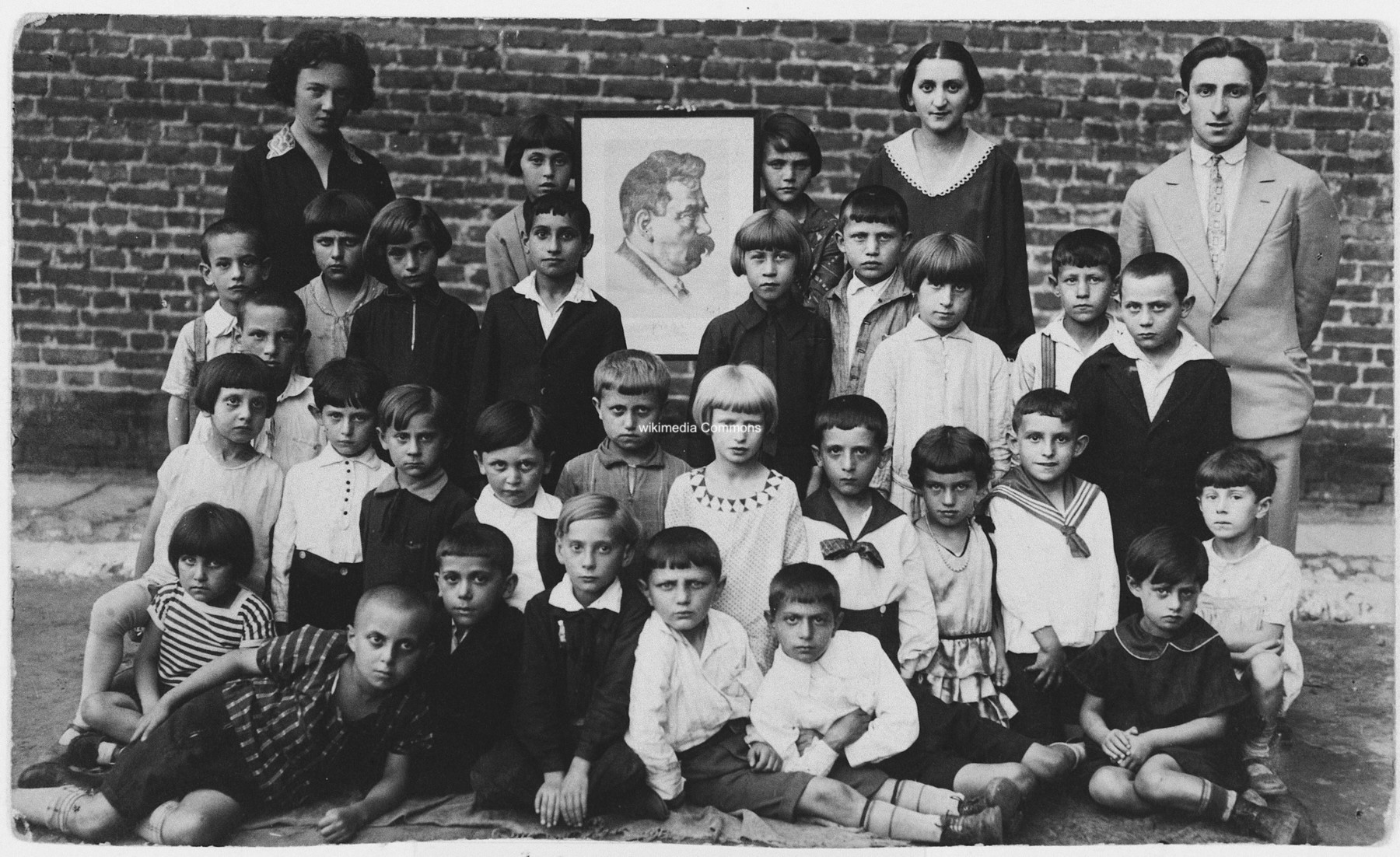
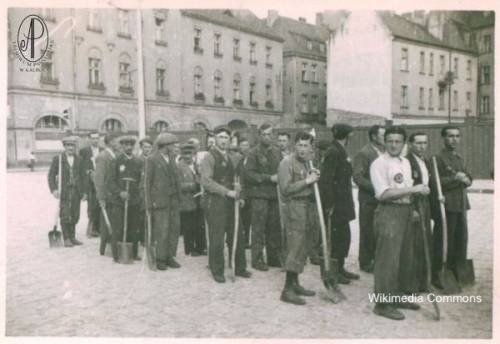
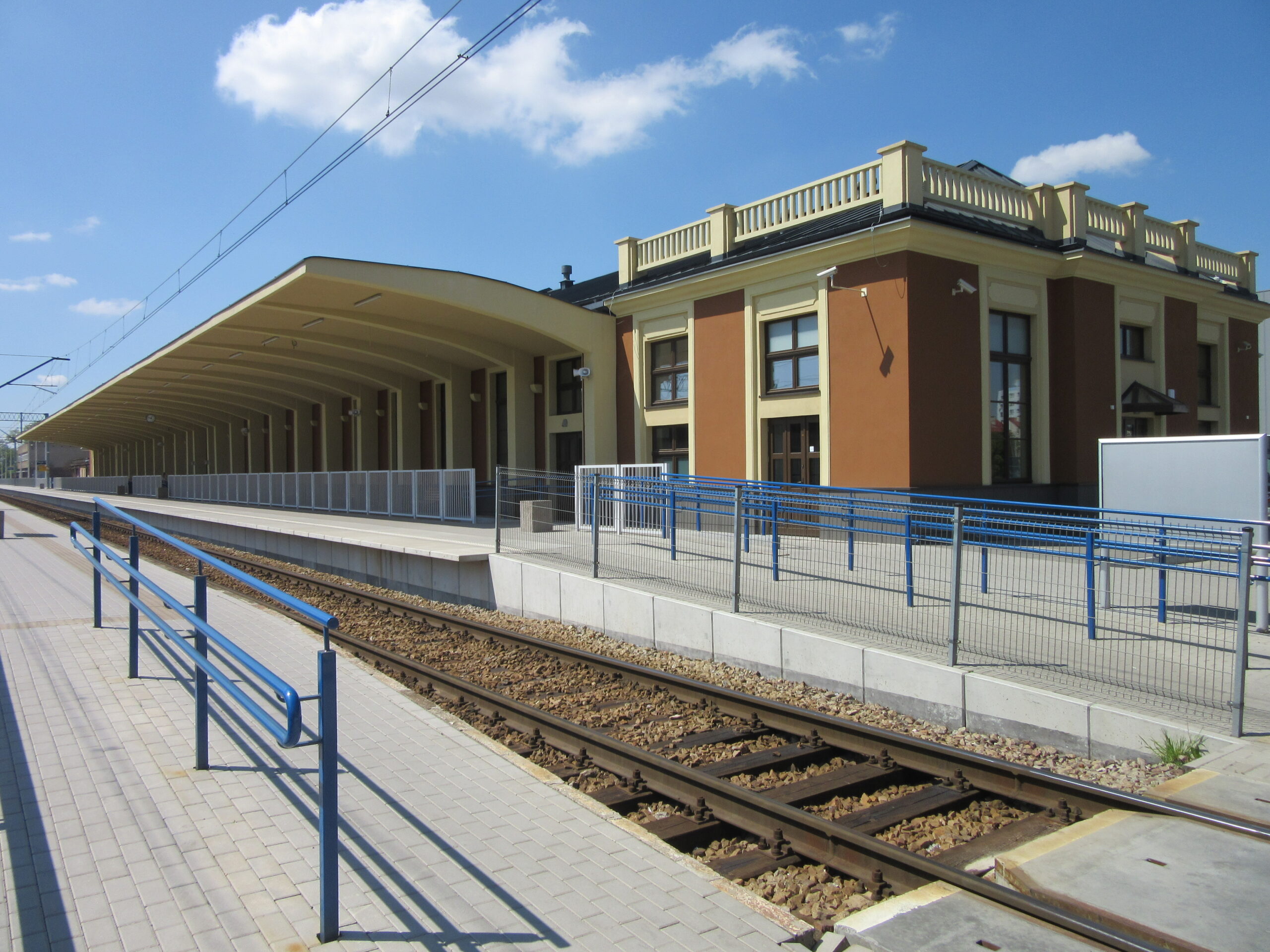
The Jewish quarter was centered around Nowa Street (now mostly Złota and Alfons Parczewski Streets). It was a vibrant hub of economic, cultural, and religious life with numerous synagogues, prayer houses, Yiddish schools, and active political parties.
The Jewish neighbourhood of Kalisz was in the northwest area of the central city, along the main Nowa Street boulevard. Nowa and adjacent streets were the site of the Great Synagogue and the House of Study. The bridge that carried Nowa Street over a branch of the Prosna River was the heart of Jewish activity. Well-to-do Jewish families lived in various areas of the city.
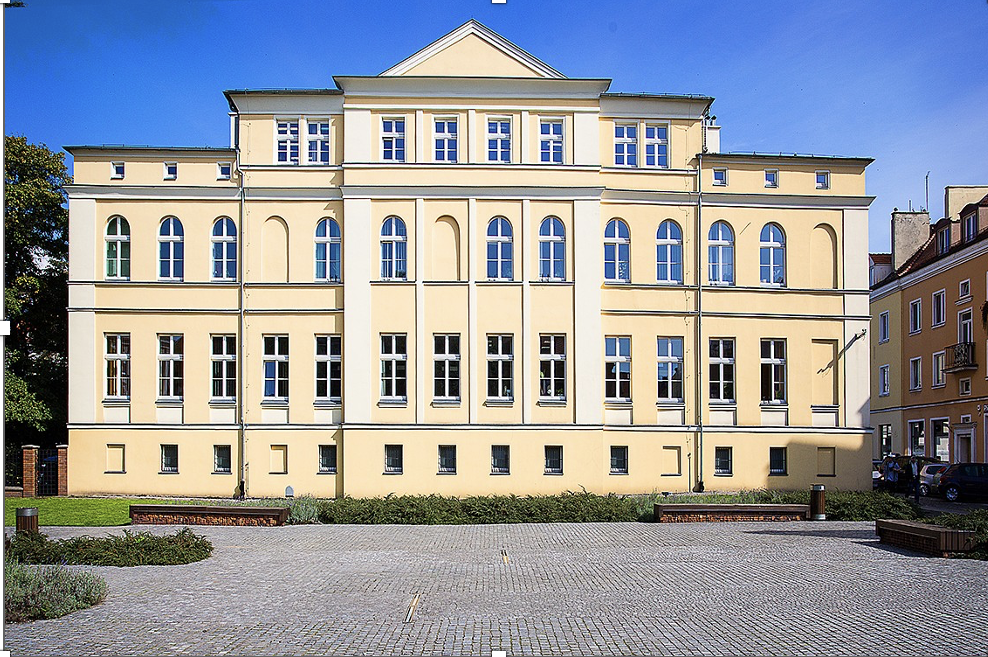
The Talmud-Torah building, a religious school for boys in Kalisz, still stands today at the intersection of today’s Złota and Targowa Streets (address: ul. Targowa 1). It underwent significant transformations after World War II. It currently houses the Second Tax Office.
Synagogue
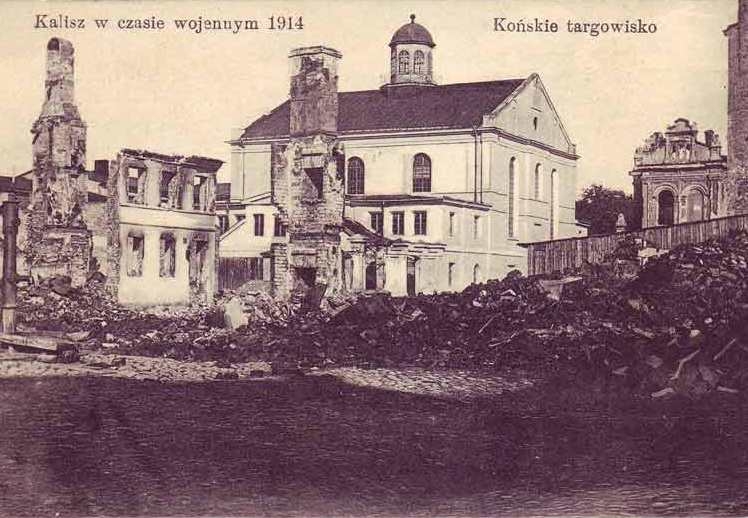
The Great Synagogue (currently nonexistent, located by the former Horse Market on the so-called Rozmarek and on the corners of Żydowska Street (currently Złota Street) and Nadwodna Street (currently Alfons Parczewski Street).
The privilege of building the synagogue was granted to the Jews in 1358 by Casimir the Great (Polish: Kazimierz Wielki). This oldest synagogue was probably wooden. In the middle of the 17th century a brick synagogue was erected by so-called Rozmarek. It was burnt during the great fire of the town in 1792. It was rebuilt thanks to the wealth of the Kalisz community but it was consumed by fire in 1852. Another synagogue, the so-called Great, could not match the predecessor in its architectural form. It was surrounded by various extensions serving economic and ritual purposes. Its closest neighbourhood was created by the square called the “Horse Market”. The synagogue, where there were objects of worship of great artistic value, was robbed and then demolished by the Nazis during World War II. In order to commemorate the Kalisz Jewish community and the destroyed synagogue, Kalisz local government funded a commemorative plaque at the Rozmarek Square in 2014
Memorials
The monument of books – Planty in Kalisz (Babina Street)
It is an unusual monument commemorating thousands of books from Kalisz libraries – Polish and Jewish. In the years 1940-42 the Nazis threw them into the Babinka channel – the arm of the Prosna River – which was being filled in at that time. The memorial plaque in the form of an open book was made in 1978 by the sculptor Jerzy Sobociński according to the design of the Kalisz artist Władysław Kościelniak. It is the only monument in Europe dedicated to “murdered books”, which are a symbol of culture and a testimony to the intellectual potential of occupied nations.
Cemeteries
The Old Jewish Cemetery
The New Jewish Cemetery
The old Jewish cemetery in the Rypinek district functioned since the end of the 13th century. In 1919, due to the lack of places for burials, a new Jewish cemetery was established by the current Podmiejska Street. In 1921 a fence was erected, and in 1926 the construction of a pre-burial house began. The new cemetery became the resting place of mainly reformed and assimilated Jews. Therefore inscriptions in German and Polish can be found on the preserved in situ sandstone matzevahs (Jewish headstones), or wealthy monuments of black marble. In 1932 Rabbi Jechaskiel Lipszyc, respected not only in the Jewish community, was buried in the cemetery. The rabbi’s ohel has survived to our times. Jews who come to Kalisz pray and leave their requests there. During World War II, the Germans devastated the area of the cemetery, which was also the place of execution of 326 Poles. The cemetery and the pre-burial house survived the occupation. In 1998 the then Governor of Kalisz province conveyed the cemetery area to the Jewish religious community in Wrocław. It is the legal successor of the nonexistent Kalisz community. Thanks to Zenon Sroczyński, a businessman and Baruch (Bolek) Kolski, the pre-burial house was renovated – it became the House of Remembrance.
.
OLD CEMETERY: The first, established at the end of 18th century on the hill between the villages of Dobrzec and Rypinek, is on the site called “On czaszkach” at today’s streets: ulicami: Skalmierzycką, Handlową, and Nowy Świat. Prince Przemyslaw II enabled the purchase of land for the cemetery in 1287 as follows in documentation: “Rupinjusz, the son of Jews and Jaska kaliscy, … said of his own free will that of his savings … of his inherited wealth Podgórze … their community [needs] the cemetery for elderly Jews; fees for the century are 9 and 2 talents of pepper saffron.” The cemetery was used for the next several hundred years and completely destroyed during WWII. Antique gravestones, at the order of the Nazis, were used to shore up the banks of the Prosna. In 1946, by decree, the State Treasury acquired the “abandoned” cemetery land. Subsequently, the site between blocks of flats contains an educational center for children with special needs and the ambulance station.
NEW CEMETERY: At the end of the 19th century, the old Jewish cemetery was full. The new cemetery was established. The main entrance to the cemetery is from ul. Podmiejskiej. On the right side of the gate is the renovated preburial house, now functioning as a memorial meeting house holding a collection of photos, many books, articles, and other memorabilia of the Kalisz Jewish population including a complete Torah scroll and ritual candlesticks. The building also functions for classroom lectures for schools and conferences on Jewish topics. On the left side of the entrance are the ruins of a brick building from the 1930s, a monument dedicated to victims of the Holocaust, unveiled in 1967 for ashes of a destroyed Jewish cemetery in Błaszkach. In the southern part is an obelisk commemorating the Jews murdered 1939-1945. In the middle of the cemetery are preserved gravestones partly in suit and others flat on the ground or set vertically.
The cemetery also has a symbolic grave of Kalisz Jews murdered in the Holocaust, erected after the war by their families.

 About
About History
 Education
 Quilts
 FIlms
FIlms Photos
 News Media & Events
 Publications
 Donate