Members of the Boys were slave labourers in the Pölitz labour camp, a subcamp of the Sachsenhausen concentration camp.
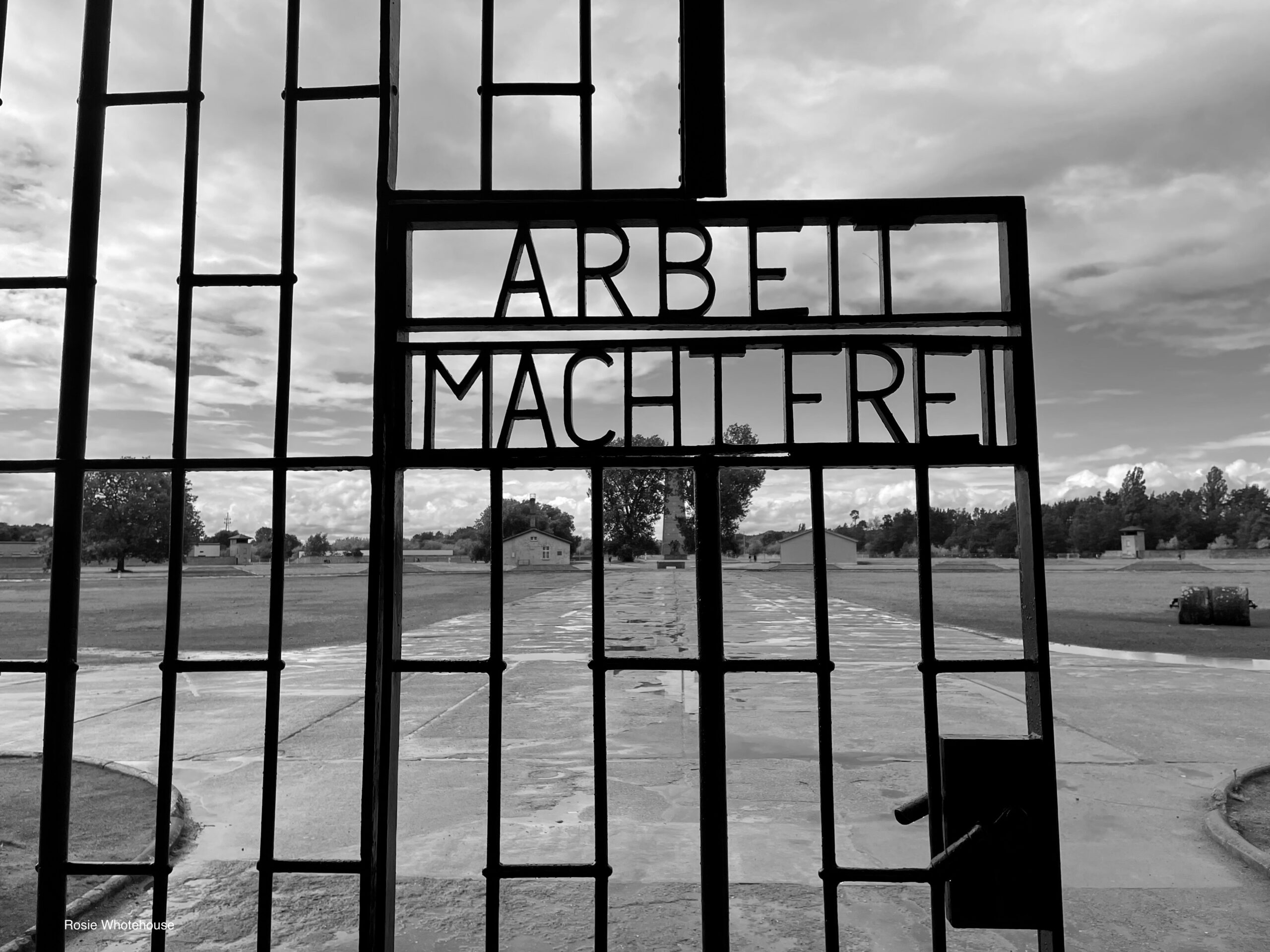
Sachsenhausen concentration camp was operated by Nazi Germany. The camp had 92 subcamps.
The Boys were teenage and child-Holocaust survivors, who were brought to the UK after the war for rest and rehabilitation.
The Pölitz labour camp was a synthetic-fuel plant.
History
Pölitz was at the time the camp functioned part of Germany but is now Police in Poland, 10km from present-day Szczecin. It strategically placed between the Baltic Sea port and the Silesian coal mines that could be transported by river and train.
The industrial plant Hydrierwerke Pölitz AG opened in 1937 and was jointly owned by IG Farben, Rhenania-Ossag, and a German subsidiary of Standard Oil. It produced fuel for the German army. The fuel played a crucial role in the 1941 invasion of the Soviet Union.
The plant was badly bombed in Allied raids in which a number of prisoners were killed. About 13,000 prisoners died at the site.
I.G. Farben (I. G. Farbenindustrie AG) was a giant German chemical and pharmaceutical conglomerate – the largest in the world in 1939.
A major Nazi Party donor and government contractor, the company relied heavily on slave labour notably at its massive industrial complex at Auschwitz III (Buna/Monowitz), where tens of thousands of prisoners, including members of the Boys, worked under brutal conditions.
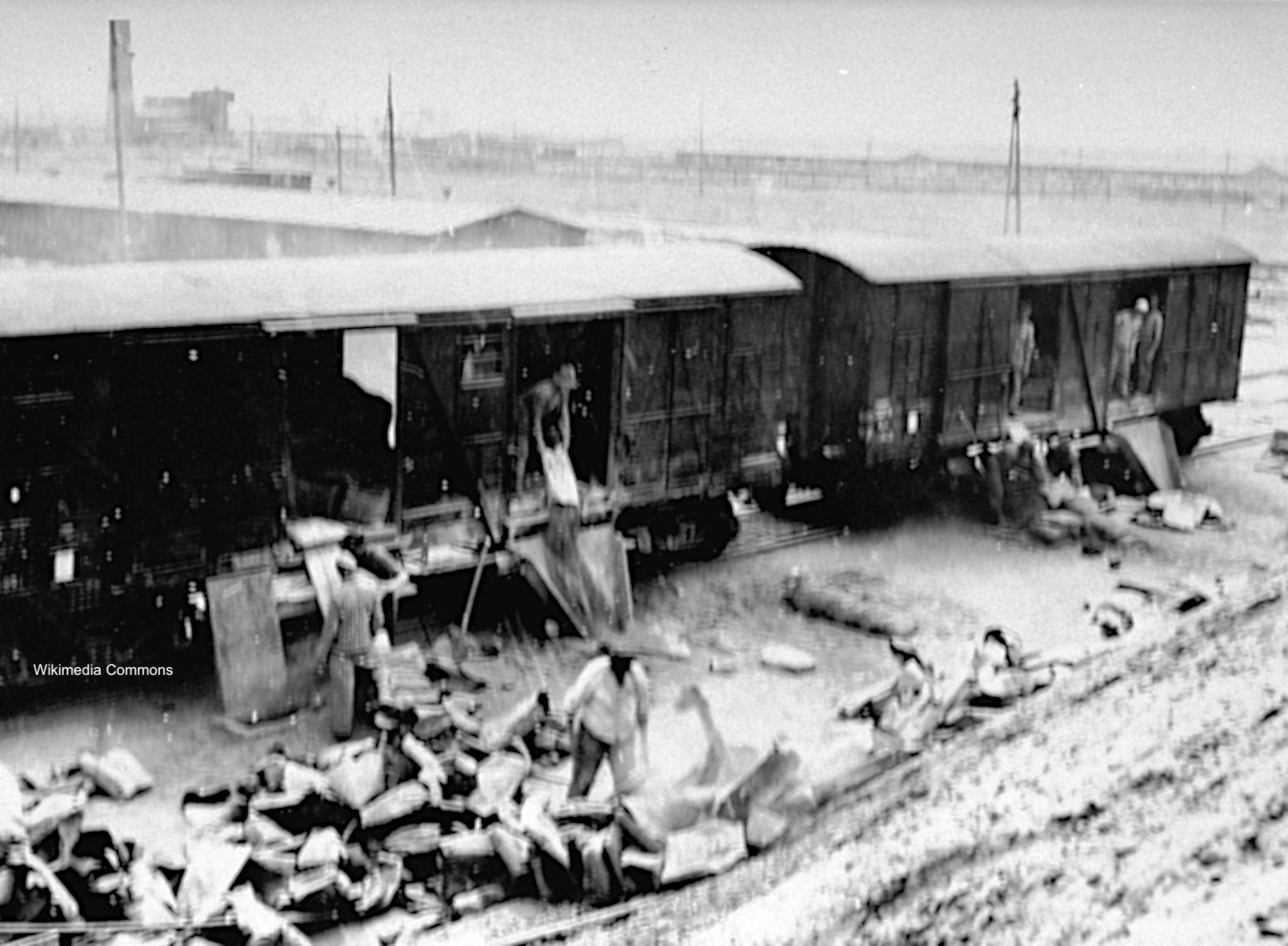
One of its subsidiary companies Degesch also manufactured Zyklon B, a cyanide-based pesticide supplied to Nazi concentration camps and used to murder millions of people in gas chambers during the Holocaust.
The conglomerate was also involved in medical and pharmacological experiments conducted on concentration camp inmates.
Seized by Allied forces in 1945, company directors and executives were put on trial in 1947 at Nuremberg for war crimes and crimes against humanity. However, by 1951 all of those convicted were released from prison early after the U.S. military instituted good time credits in its war crime program.
The conglomerate was subsequently broken up and officially liquidated. Its six constituent companies continued to function. Following several later mergers the main successor companies are Agfa, BASF, Bayer and Sanofi.
Aftermath
The Red Army forces scavenged the plant for metals and dismantled most of the former camps, erasing evidence of Nazi crimes in the process. The site was then abandoned and is now in ruins. Subsequently, the area was transferred to the Polish authorities and designated as military land.
Post-war efforts to clean up the site for potential reuse were abandoned due to the presence of unexploded bombs and chemical pollution.


 About
 History
 Education
 Quilts
 FIlms
 Photos
 News Media & Events
 Publications
 Donate
