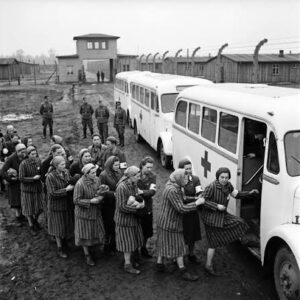
The Red Cross is an international humanitarian organisation founded in the 19th century to provide medical assistance, protection, and relief in times of war and crisis. It played a key role in looking after members of the Boys after the liberation.
The Boys were teenage and child-Holocaust survivors, who were brought to the UK after the war for rest and rehabilitation.
Background and Mission
During World War II, the ICRC’s ability to intervene was restricted by its mandate to remain neutral and by diplomatic pressure from Axis and Allied governments. The Red Cross often struggled to gain access to concentration camps, and has been criticised for inaction.
Liberation One important exception was the Polish Red Cross, whose members were among the first relief workers to enter the Auschwitz-Birkenau complex after it was liberated on 27 January 1945. Their medical teams carried out health assessments, helped evacuate the sick, and transported bodies. They also documented camp conditions and searched for missing children and relatives.
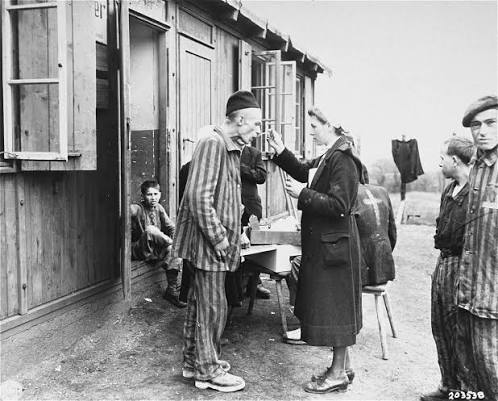
Red Cross teams worked with displaced persons (DP) in the months that followed, operating mobile clinics, supplying medicines, and assisting with repatriation. In the British and American zones, the Red Cross cooperated with UNRRA, the JDC, and local Jewish welfare organisations to deliver food, clothing, and medical aid.
Legacy
Today, both the ICRC and national Red Cross societies continue humanitarian work worldwide, preserving archives that help families trace survivors.
 About
About History
 Education
 Quilts
 FIlms
FIlms Photos
 News Media & Events
 Publications
 Donate