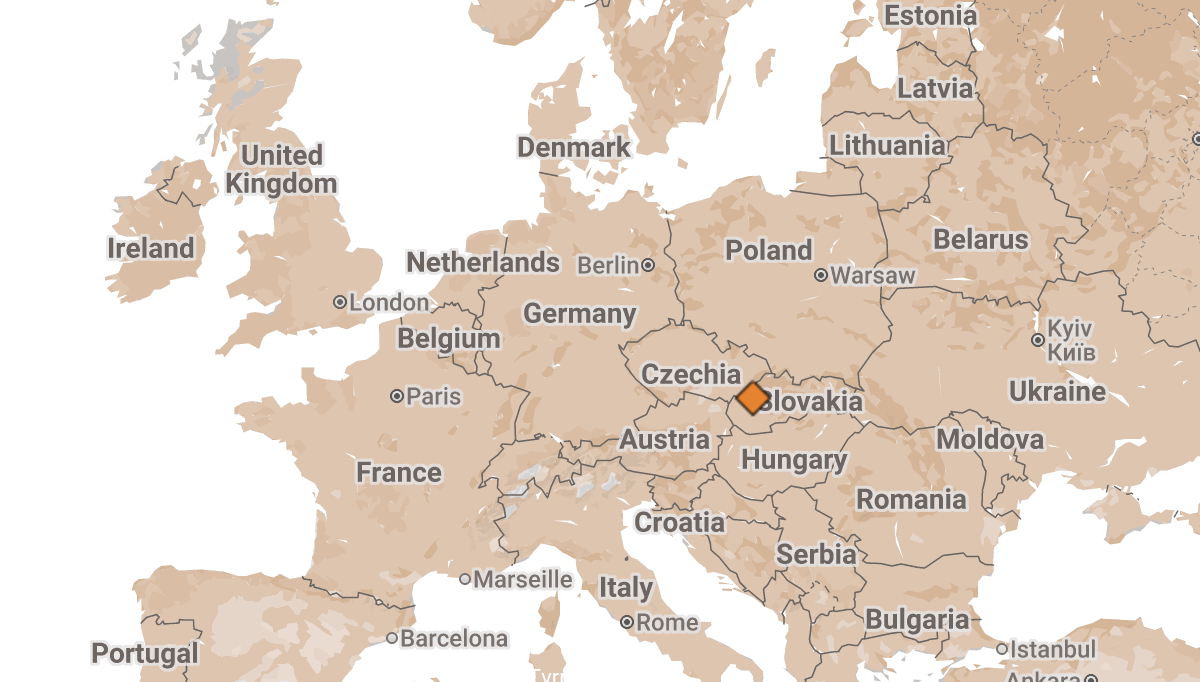
Czechoslovakia was proclaimed as an independent republic following the collapse of Austria-Hungary.
The new constitution was formally adopted, establishing a stable, prosperous parliamentary democracy. It becomes a beacon of democracy, treating its Jewish population with full equality and granting them national minority status.
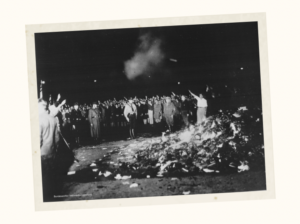 30 January
Adolf Hitler is appointed Chancellor of Germany.
Fleeing the rise of Nazism, many German and Austrian Jews seek refuge in Czechoslovakia.
30 September
Munich Conference. Britain, France and Italy agree to German occupation of the Sudetenland.
1-10 October
German troops occupy the Sudetenland. Tens of thousands of Czechs and Jews flee the annexed territory into the remaining parts of Czechoslovakia.
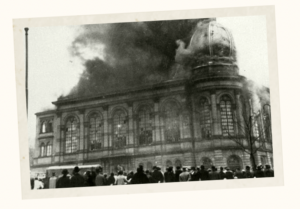 9-10 November
Kristallnacht a nation-wide anti-Jewish pogrom organised by the Nazis takes place throughout Germany, Austria and the Sudetenland region of Czechoslovakia.
14 March
The Slovak State declares formal independence, becoming a fascist puppet state heavily subordinate to Germany.
15 March
Germany occupies Czechoslovakia, which is dismembered.
Slovak Republic declares independence. Carpathian region of eastern Czechoslovakia occupied and later annexed by Hungary. Anti-Jewish laws are extended to the area.
16 March
Adolf Hitler proclaims the Protectorate of Bohemia and Moravia from Prague Castle. Systematic anti-Jewish persecution begins through decrees excluding Jews from public life, banning them from schools, and confiscating their properties.
23 May
British government severely restricts immigration to the Palestine Mandate in the 1939 White Paper.
 1 September
Germany invades Poland.
17 October
The German authorities begin the first experimental, forced deportations of Czech and Austrian Jews to Nisko in occupied eastern Poland.
2 November
Under the First Vienna Award the Second Czechoslovak Republic is forced to cede the southern third of Slovakia.
September
Jewish Code passed in Slovakia stripping Jews of their rights.
October
The Nazi regime bans all Jewish emigration from the Protectorate and begins systematic, large-scale deportations. Nearly 20,000 Czech Jews are sent directly to the Łódź Ghetto in Poland.
24 November
The Nazi authorities officially establish the Theresienstadt (Terezín) Ghetto near Prague as a transit camp. The first transport of 342 Czech Jewish men arrives to build its infrastructure.
30 November
Mass, systematic transports of Czech Jewish civilians to Theresienstadt begin.
20 January
Wannsee Conference.
1 March
Auschwitz II-Birkenau begins operation
March
The Slovak puppet government begins the mass deportation of Slovak Jews directly to German killing centers in occupied Poland, including Auschwitz and Majdanek.
27 May
Czechoslovak resistance agents attack and mortally wound SS General Reinhard Heydrich, the Reichsprotektor, in Prague.
9-10 June
In brutal retaliation for Heydrich’s assassination, the Nazis completely destroy the Czech village of Lidice, murdering all the men and deporting the women and children to concentration camps.
June
Large-scale systematic deportations from Theresienstadt to extermination camps (such as Treblinka, Bełżec, and Sobibór) accelerate sharply.
 February
Germany surrenders at Stalingrad.
April
Slovak Jewish prisoners Alfred Wetzler and Rudolf Vrba successfully escape from Auschwitz. They compile the Vrba-Wetzler Report, providing the first highly detailed eyewitness evidence of mass murder operations to the Western Allies.
August–October
The Slovak National Uprising erupts against the fascist regime. German troops immediately move in to crush the revolt, accompanied by SS mobile killing units (Einsatzgruppen).
September
Direct German deportations of the remaining 12,600 Slovak Jews resume, sending them mostly to Auschwitz and Theresienstadt.
Summer
The massive Soviet offensive prompts SS chief Heinrich Himmler to order prisoners in all concentration camps and sub-camps be forcibly evacuated toward the interior of the Reich.
October
Carpathian Ruthenia occupied by the Red Army. The Soviet administration declares the independent state of Transcarpathian Ukraine.
Winter
SS authorities increasingly evacuate concentration camp prisoners from both east and west on foot.
 January–April
As Soviet forces advance, the Nazis evacuate concentration camps further east, sending tens of thousands of starving prisoners on brutal “death marches”. Thousands of international prisoners are marched into the overflowing Theresienstadt ghetto.
8 May
Germany surrenders. End of the Third Reich. Liberation of Theresienstadt.
29 June
Czechoslovakia officially cedes Carpathian Ruthenia to the Soviet Union.
August
First Group of the Boys leaves from Prague.
March
Third Group of the Boys leaves from Prague.
June
Fourth Group of the Boys leaves from Prague.
4 July
The Kielce Pogrom prompts the exodus of a large part of the surviving Polish Jewish population. Many Jewish refugees arrive in Czechoslovakia.
February
The Communist Party takes power in Czechoslovakia. Many surviving Jews choose to emigrate to the newly established state of Israel.
April
Fifth Group of the Boys leaves from Prague.
 About
About History
 Education
 Quilts
 FIlms
FIlms Photos
 News Media & Events
 Publications
 Donate