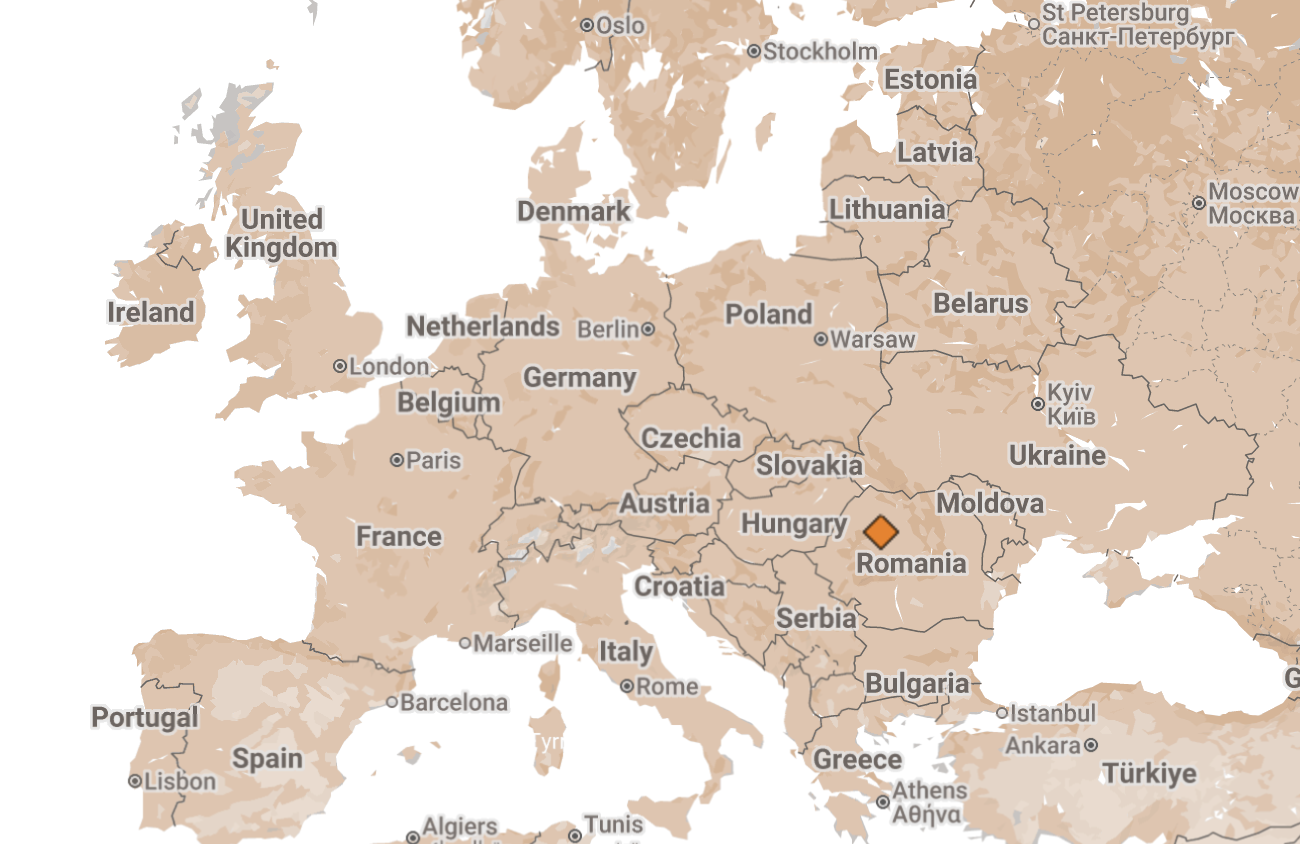
Widespread pogroms in the Russian Empire in the late 19th century prompt mass emigration of Jewish communities. Many settle in Romania.
Anti-Jewish riots in Bucharest.
Kishinev Pogrom leads many Jews to feel that there is no future for Jews in eastern Europe. The pogrom fuels antisemitism and leads to the publication of the infamous antisemitic forgery The Protocols of the Elders of Zion. Many Jews seek refuge in Romania.
Attacks on Jews continue during localised conflicts in eastern Europe. The period sees the rise of the Judeo-Bolshevik myth.
Following World War I, Romania absorbs regions with high Jewish populations including part of the Banat, Bessarabia, Bukovina and Transylvania.
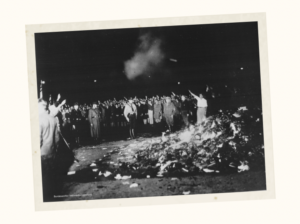 30 January
Adolf Hitler is appointed Chancellor of Germany.
Antisemitic legislation begins to be passed in Romania.
September
The Nuremberg Laws are declared in Germany.
December
The antisemitic Goga-Cuza government takes power.
Romania passes a law to review the citizenship of Jews. Romania becomes the second overtly-antisemitic state in Europe
22 January
Goga’s government issues Decree-law no. 169, which invalidated the citizenship which Jews had obtained at the beginning of World War I, and required all Jews who lived in Romania to present their documentation for review. A total of 225,222 Jews lose their citizenship as a result of the law, and many more found themselves out of their jobs and deprived of political rights.
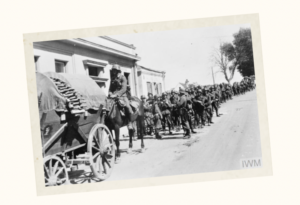 1 September
Germany invades Poland.
10 May
Germany invades the Netherlands, Belgium, Luxembourg and France.
June
Fall of France leaves Romania diplomatically isolated.
August
Romania is forced to cede Northern Transylvania to Hungary, Bessarabia and Northern Bukovina to the USSR, and Southern Dobruja to Bulgaria. Looking for a scapegoat Romanians attack Jewish communities.
A decree-law strips Jews of their rights, excludes them from certain professions and the expropriation of Jewish property begins.
September
King Carol forced to abdicate. Ion Antonescu forms a fascist dictatorship, bringing the Iron Guard to power.
November
Romania formally joins the Berlin-Rome-Tokyo Axis alliance.
21-26 January
The Iron Guard stages a violent attempted coup in Bucharest, during which they brutally massacre over 120 Jews in what becomes known as the Bucharest Pogrom.
A series of laws are introduced stripping Jews of their right to work and property.
6 April
Germany attacks Yugoslavia and Greece.
21 June
Romania joins Nazi Germany in invading the Soviet Union to reclaim Bessarabia and Bukovina. Antonescu uses false propaganda accusing Jews of collaborating with Soviet authorities to justify mass violence.
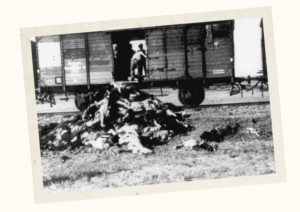 28 June–6 July
The Iași Pogrom. Romanian authorities and military incite a massacre, slaughtering up to 15,000 Jewish residents in Iași and loading survivors onto suffocating “death trains.”
July – October
Romanian and German Einsatzgruppen (mobile extermination squads) murder 100,00-120,000 Jews in Bessarabia and Bukovina. Jews are crammed into temporary transit ghettos.
August
Germany grants Romania administration over a strip of occupied Ukraine, designated as the Transnistria Governorate.
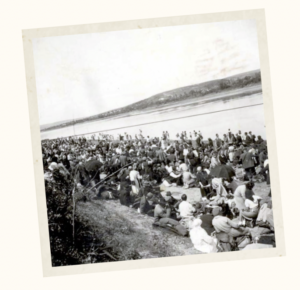 September
Mass, systematic deportations begin, forcing hundreds of thousands of Jews from Bessarabia, Bukovina, and Dorohoi to march on foot into Transnistria. An estimated 150,000 to 250,000 Jews die there due to starvation, disease, and mass executions.
22-24 October
Following a bomb blast at the Romanian military headquarters in Ukraine, Antonescu orders the catastrophic Odesa Massacre. Over 25,000 Jews are shot or burned alive in warehouses.
Winter 1941–1942
Mass executions and devastating outbreaks of typhus, starvation, and extreme exposure kill tens of thousands of deported Jews in Transnistria camps like Bogdanovka, Akhmetchetka, and Domanevka.
May–August
Antonescu orders the forced deportation of roughly 25,000 nomadic and sedentary Roma to Transnistria, where over half perish due to starvation and disease.
Summer
Plans are drawn up between Nazi Germany and Romanian authorities to deport the remaining Jewish populations of the Old Kingdom (Regat) and Southern Transylvania directly to the Bełżec extermination camp.
October
Recognising that Germany may lose the war following the Axis vulnerability at Stalingrad, Antonescu abruptly cancels the scheduled deportations to Nazi death camps, effectively saving around 290,000 Jews in the southern regions.
Summer
Under Antonescu’s orders, Romanian authorities deport approximately 25,000 Roma to Transnistria, where thousands die from exposure and disease.
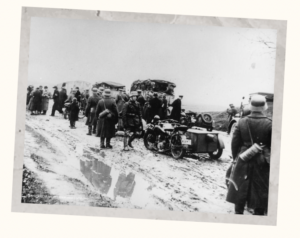 February
Germany surrenders at Stalingrad.
Spring
Soviet forces advance into Romania, halting the genocide and prompting the Romanian leadership to negotiate an armistice.
22 August
Antonescu’s regime is overthrown in a coup led by King Michael I. Romania switches sides to join the Allies.
December
Facing an advancing Soviet army, the Romanian government begins permitting the gradual return of some Jewish and Roma survivors from Transnistria.
19 March
Germany invades Hungary.
May
In Northern Transylvania (which was under Hungarian rule during the war), Hungarian authorities cooperate with Nazi Germany to deport roughly 90,000 to 130,000 local Jews to Auschwitz.
23 August
King Michael I leads a successful coup against Ion Antonescu. Romania breaks its alliance with Nazi Germany and switches to the Allied side, effectively ending the Holocaust on Romanian territory.
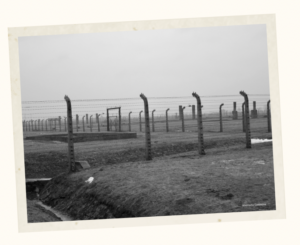 27 January
Auschwitz is liberated by the Red Army.
8 May
Germany surrenders. End of the Third Reich. Liberation of Theresienstadt.
Antonescu executed.
The Soviet-backed communist regime takes power, subsequently dissolving Jewish political organisations and suppressing Zionism.
Dictator Nicolae Ceaușescu allows hundreds of thousands of Jews to emigrate to Israel in exchange for cash payments and agricultural technology from the Israeli government.

 About
About History
 Education
 Quilts
 FIlms
FIlms Photos
 News Media & Events
 Publications
 Donate